

Стадия разложения гидрата метана при снижении давления с применением био-ПАВ и последующей закачке углекислого газа
- 1 — канд. техн. наук доцент Национальный исследовательский Томский политехнический университет ▪ Orcid
- 2 — аспирант Национальный исследовательский Томский политехнический университет ▪ Orcid ▪ Elibrary ▪ Scopus ▪ ResearcherID
- 3 — канд. техн. наук старший научный сотрудник Институт теплофизики им. С.С.Кутателадзе СО РАН ▪ Orcid ▪ Elibrary ▪ Scopus
- 4 — младший научный сотрудник Институт теплофизики им. С.С.Кутателадзе СО РАН ▪ Orcid ▪ Scopus
- 5 — д-р физ.-мат. наук профессор Национальный исследовательский Томский политехнический университет ▪ Orcid ▪ Elibrary ▪ Scopus
Аннотация
Разведанные запасы природного газа в гидратных месторождениях существенно превышают запасы углеводородных топлив, добываемых традиционными способами. Недостаточное внедрение технологий на основе гидратов природного газа связано с их дороговизной. Для развития данных технологий необходимо понижение себестоимости добычи, хранения и транспортировки гидратов. Применение технологии фазового перехода, заключающейся в разгерметизации гидрата СН4 с применением био-ПАВ, и последующего образования гидрата СО2 позволяет снизить себестоимость добычи и решить экологические проблемы за счет захоронения углекислого газа. Присутствие в природных пластах био-ПАВ приводит к усилению роста гидрата и повышению скорости замещения СН4-СО2. Методика образования высокопористого льда при наличии био-ПАВ позволяет достичь повышенных значений скоростей синтеза и сократить временные затраты. Важнейшим преимуществом разработанной методики является отсутствие риска образования двойного гидрата, что ранее являлось серьезной проблемой, снижающей эффективность замещения. Предложенная методика последовательного фазового перехода позволяет уменьшить полное время синтеза гидрата CO2 на два-три порядка по сравнению с прямым замещением СН4-СО2. Методика наиболее перспективна в условиях регионов вечной мерзлоты. Данный подход предоставляет дополнительные возможности использования газогидратных месторождений с улучшенными экологическими показателями за счет сокращения выбросов метана и захоронения углекислого газа.
Исследование выполнено в рамках научного проекта, поддержанного Министерством науки и образования Российской Федерации (соглашение 075-15-2020-806/7).
Введение
Газовые гидраты представляют соединения молекул газа и воды в кристаллической решетке, пребывающие в замороженном состоянии [1]. Мировые запасы газовых гидратов представлены на суше, участках морского дна, а также в районах вечной мерзлоты [2-4]. Открытые мировые ресурсы природного газа, находящиеся в газогидратном состоянии, оцениваются как 2·1016 м3 [5-7] и существенно превышают запасы природного газа, который добывается традиционными методами [8]. В связи с ухудшением экологического состояния планеты в последние десятилетия ужесточились требования по уменьшению вредных выбросов при работе энергетических и двигательных установок. Это приводит к росту потребности в природном газе как экологически чистом энергетическом ресурсе [9]. Увеличение добычи природного газа из газогидратных месторождений остаточного льда гидрата принято считать одним из важных шагов на пути решения совокупности экологических, экономических и энергетических задач мирового уровня.
В настоящее время довольно полно исследованы газогидратные месторождения на морском дне, а также в областях, где температура породы существенно выше точки плавления льда. Однако газовые гидраты могут существовать и под вечной мерзлотой при относительно невысоких положительных температурах или внутри вечной мерзлоты при отрицательных температурах [10]. Внутримерзлотные газогидратные залежи в северных территориях, расположенных в областях вечной мерзлоты, остаются слабо исследованными [11]. Вследствие ограниченной продолжительности полевых испытаний, проводимых на суше Канады и Аляски [12], а также в вечной мерзлоте гор Китая [13], не удалось получить данные, позволяющие определить интегральные характеристики взаимосвязанных физико-химических процессов в пласте и подтвердить долгосрочные прогнозы добычи. Механизм образования внутримерзлотных газовых гидратов на Северном склоне Аляски описан в работе [14]: термогенные газы из глубинных слоев Земли поднимались вверх по трещинам горы Элберт и накапливались в проницаемом песчанике, покрытом непроницаемым слоем песка. Когда наступило четвертичное оледенение, создались благоприятные условия для образования устойчивых газогидратов, что и привело к формированию крупного газогидратного резервуара на Северном склоне Аляски. Схожий механизм образования газовых гидратов в вечной мерзлоте России (Мессояха) [15]. Механизм образования газовых гидратов в вечной мерзлоте горы Цилянь в Китае можно описать следующим образом: генерация газа из материнских пород контролировалась тектоническим опусканием и подъемом, миграция и накопление газа контролировались разломами и плотными образованиями, образование и накопление газовых гидратов – вечной мерзлотой [13].
Открытыми остаются вопросы по содержанию природного газа в этих месторождениях, закономерностям распределения по разрезу, свойствам гидратонасыщенных отложений [16]. В области вечной мерзлоты глубина залегания газогидратного пласта может достигать 100 м.
В последние годы наблюдается усиление интереса к исследованиям газогидратных месторождений Арктики и Сибири. Низкие температуры создают возможность для образования гидратов природного газа в мелководных шельфовых морях [17, 18]. Большие объемы природного газа в гидратных залежах находятся в областях Чукотского моря [19, 20]. Перспективы и сложности производства природного газа из гидратных месторождений вечной мерзлоты обоснованы в работах [21, 22]. Для добычи природного газа, содержащегося в гидратах, наиболее перспективными методами считаются разгерметизация [23], термостимулирование [24, 25], применение ингибиторов и промоутеров физико-химических процессов [26, 27], замещение CH4-CO2 [28-30].
Образование газовых гидратов из ледяной крошки представляет перспективный метод, который активно изучается для повышения эффективности добычи газа из природных месторождений путем замещения метана углекислым газом. Этот процесс является частью исследований альтернативных методов извлечения природного газа, особенно из труднодоступных залежей, таких как подводные месторождения и вечная мерзлота. Замещение метана углекислым газом позволяет извлекать природный газ из гидратных структур, сохраняя стабильность окружающей среды и предотвращая выбросы парниковых газов.
Получение пористого льда возможно при давлении ниже точки образования гидрата. Известно [31], что скорость образования гидрата из льда выше, чем при образовании из воды; гидрат, сформированный из льда, имеет более высокое газосодержание. Пористый лед имеет большую площадь поверхности для зародышеобразования гидрата, что увеличивает количество точек кристаллизации и интенсифицирует процесс гидратообразования [32]. При исследовании процесса образования вторичного гидрата метана из пористого льда, полученного в результате разложения первичного гидрата метана в [33] показано, что скорость образования вторичного гидрата метана из пористого льда в два раза больше, чем при образовании первичного гидрата метана из воды. Кинетическая модель образования гидрата из льда, учитывающая падение давления, представлена в [34]. Газ проникает внутрь частиц льда и образует слой гидрата, увеличивающийся со временем. Молекулы СО2 проникают в пористый лед и образуют гидрат в три раза быстрее, чем молекулы СН4 [35]. Таким образом, метод замещения метана на углекислый газ в высокопористом льде позволяет увеличить скорость извлечения метана при сохранении стабильности пласта.
В пластах с газовыми гидратами содержатся различные виды био-ПАВ, которые усиливают кинетику гидратообразования [36]. Такие био-ПАВ зачастую служат промотирующей добавкой для ускорения роста гидрата за счет присутствия трех длинных алкильных цепей и нескольких сульфонатных групп, что усиливает их взаимодействие с молекулами воды и газа. С другой стороны, макроскопический механизм и взаимодействие между различными добавками и гидратом представляют сложную проблему, которую невозможно решить без проведения экспериментальных исследований на разноразмерных стендах.
Разные виды микроорганизмов обитают в местах расположения газовых гидратов в океанских отложениях, а также на суше [37]. На морском дне активность микроорганизмов в местах нахождения газовых гидратов существенно выше, чем в пластах без гидратов [38]. Исследование образцов природного газового гидрата, добытого из Мексиканского залива, показало наличие бактерий и архей, в которых преобладали последовательности генов, относящиеся к группам Proteobacteria, также как Actinobacteria и low-G+C Firmicutes [39]. Микроорганизмы Bacillus subtilis и Pseudomonas aeruginosa также обнаружены в залежах газовых гидратов в Мексиканском заливе [40].
Вещества, вырабатываемые различными видами рода Bacillus, являются наиболее эффективными био-ПАВ, поскольку снижают поверхностное натяжение воды с 72,5 до 27 мН/м [41]. Такие ПАВ сокращают время индукции природного газового гидрата на 71 % в песчаных и глиняных породах, пропитанных морской водой, по сравнению с контрольным образцом (в котором не было био-ПАВ) [42]. ПАВ также способствует росту крупных узелкообразных гидратов [43]. Rhamnolipid продуцируется штаммом Pseudomonasaeruginosa А11 и приводит к снижению поверхностного натяжения воды от 72 до 36 мН/м при критической концентрации мицелл 70 мг/л [44]. Применение Rhamnolipids в системе силикагеля С-типа увеличивает скорость образования гидрата метана на 42,97 % и сокращает время индукции гидратообразования на 22,63 % по сравнению с водонасыщенным силикагелем C-типа [44]. Наиболее полно исследованы свойства и влияние на кинетику синтеза гидратов и гидратообразование при наличии следующих био-ПАВ: Surfactin, Rhamnolipid, Emulsan, Snomax.
В настоящее время отсутствуют данные по влиянию следующих био-ПАВ на характеристики диссоциации гидратов: Lipoamino acid biosurfactants и Lipopeptides, которые продуцируются такими микроорганизмами, как Bacillus, Lactobacillus, Streptomyces, Pseudomonas и Serratia [41]. Данные микроорганизмы и био-ПАВ широко представлены в донных отложениях мирового океана. Пока не определено их влияние на рост гидратов CO2, CH4 и CH4-CO2. Технология замещения CH4-CO2 обеспечивает одновременно добычу природного газа из гидратного пласта и захоронение CO2 в нем [45-47]. Важные результаты моделирования производства природного газа из гидрата с применением метода замещения CH4-CO2 приведены в работах [48, 49]. В отличие от добычи природного газа с применением только разгерметизации, метод замещения CH4-CO2 не наносит ущерба окружающей среде – не приводит к негативным глубоководным экологическим проблемам [50, 51]. Однако использование метода замещения сдерживается плотной структурой пластов гидрата, что препятствует диффузии углекислого газа в глубокие слои. Предварительная подготовка гидратного пласта, заключающаяся в его разгерметизации для образования высокопористого льда, позволит увеличить скорость и эффективность процесса замещения CH4-CO2.
Процессы замещения в клатратных гидратах, в которых CO2 используется для замены газообразного метана, захваченного соединениями включений, привлекают все большее внимание как возможный метод извлечения газа из гидрата и захоронения CO2 [52]. Генерация СО2 является ключевым фактором изменения климата [53, 54]: большая часть СО2 выбрасывается в атмосферу предприятиями различных отраслей промышленности [55-57]. Хранение углекислого газа в гидратной форме может выступать в качестве временного решения до тех пор, пока не будут разработаны более эффективные технологии улавливания и хранения СО2. Метод замещения СН4-СО2 имеет двойное преимущество – обеспечение добычи газа из гидрата без нарушения целостности пласта и сокращение выбросов углекислого газа в атмосферу [58]. Потенциальная возможность процесса замещения CH4-CO2 обоснована термодинамически в работах [17, 52, 59-61], но данный метод сложен в реализации и пока не оптимизирован под компонентный состав газов.
При транспортировке нефти и газа по трубопроводам могут формироваться газогидратные пробки [62-64], возникновение которых наносит экономический ущерб. Применение ПАВ позволяет эффективно предотвращать образование газогидратных пробок. Данные по влиянию био-ПАВ (в частности, липопептидов), широко представленных в гидратных пластах, на кинетику роста и распада гидрата метана, а также на кинетику замещения CH4-CO2 отсутствуют. Также малоизученным остается процесс замещения CH4-CO2 в высокопористом льде, образовавшемся после разгерметизации гидрата метана. Совокупность использования био-ПАВ и предварительной разгерметизации пласта гидрата для образования высокопористого льда позволит увеличить эффективность процесса замещения CH4-CO2 и добычи газа из гидратного пласта.
Методика эксперимента
Для синтеза гидратов применялась вода без и с добавлением био-ПАВ (липопептиды) концентрацией 0,1 %. После добавления к дистилляту био-ПАВ жидкость помещалась в магнитно-перемешивающую камеру, длительность перемешивания составляла 60 мин, частота вращения 1000 об/мин. Физические свойства водного раствора: вода – плотность 998,2 кг/м3, поверхностное натяжение 0,0727 Н/м, динамическая вязкость 0,001 Па·с; вода с концентрацией био-ПАВ (липопептиды) 0,1 % – плотность 998,2 кг/м3, поверхностное натяжение 0,0382 Н/м, динамическая вязкость 0,001 Па·с. Для измерения поверхностного натяжение жидкости использовался метод отрыва кольца, плотность раствора измерялась с помощью тензиометра, вязкость жидкости – при помощи ротационного вискозиметра с диапазоном измерения (1-6)·106 мПа∙с и относительной погрешностью ±1 %.
Установка для синтеза и диссоциации гидрата метана, а также для замещения СН4-СО2, представлена на рис.1. Для поддержания заданной температуры в рабочем объеме реактора применен термостат со следующими параметрами: диапазон температуры от –20 до +200 °С, точность поддержания температуры ±0,1 °C. Термостат обеспечивал охлаждение реактора путем циркуляции жидкости. Для контроля давления в рабочей камере применялись датчики давления с рабочим диапазоном от 0 до 250 бар. Интенсификация тепломассообмена в рабочей камере реактора осуществлялась магнитной мешалкой с постоянной частотой вращения электродвигателя. Для синтеза гидрата метана и гидрата углекислого газа в рабочую камеру подавалась вода (с добавлением био-ПАВ и без него) объемом 150 мл. Воздух из камеры удалялся с помощью вакуумного насоса, после чего температура поддерживалась около –2 °С. Далее в камеру реактора подавался газообразный метан/углекислый газ до достижения давления 80 бар. Скорость вращения магнитно-перемешивающего устройства равнялась 300 об/мин.
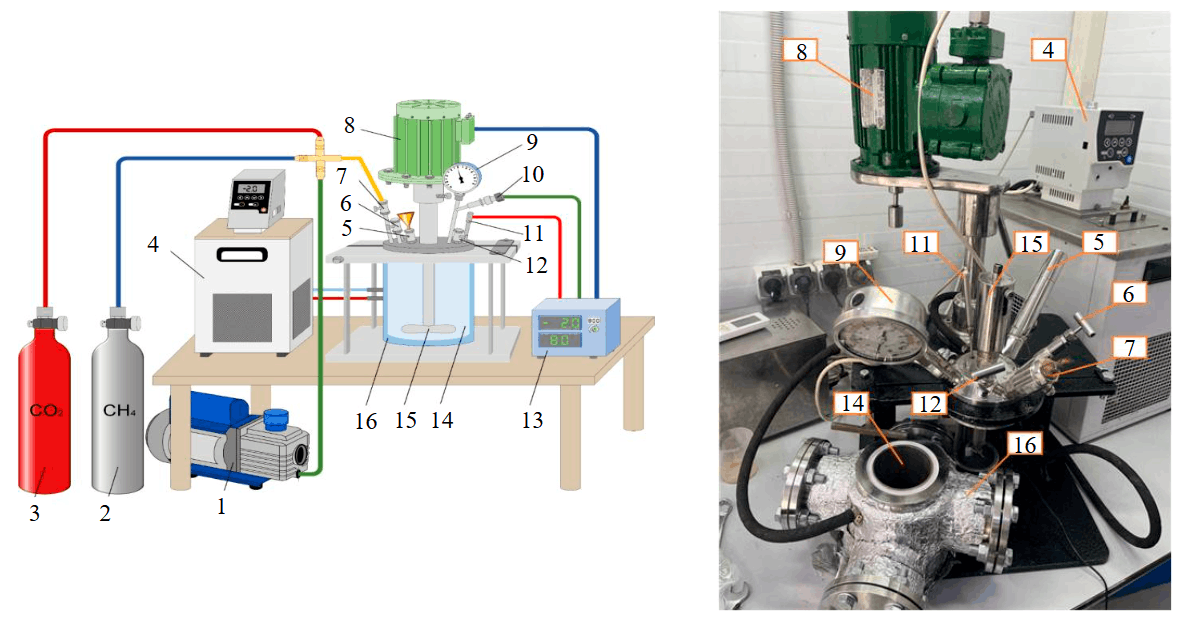
Рис.1. Схема и внешний вид установки для синтеза и диссоциации гидрата
1 – вакуумный насос; 2 – баллон CH4; 3 – баллон СО2; 4 – термостат; 5 – заливная воронка; 6 – аварийный клапан; 7 – клапан подачи газа; 8 – электродвигатель; 9 – манометр; 10 – датчик давления; 11 – термопара; 12 – клапан сброса давления; 13 – блок управления; 14 – реактор; 15 – магнитно-перемешивающее устройство; 16 – рубашка охлаждения
После завершения синтеза гидрата метана на термостате устанавливалась температура –7 °С и сбрасывалось давление. Полученный гидрат метана имел рассыпчатую структуру, размер агломератов не превышал 5 мм. Данные агломераты представляли собой отдельные слабо связанные частицы, не демонстрирующие адгезии к поверхности реактора или соседним частицам гидрата. Процесс гидратообразования продолжался до установления равновесных термобарических условий газа: СН4 – Teq = 0 °C,Peq = 26,4 бар; СО2 – Teq = 0 °C,Peq = 12,3 бар. Подробное описание использованной методики синтезирования гидратов СН4 и СО2 приведено в работах [65, 66].
После завершения процесса гидратообразования на термостате устанавливалось значение температуры в –7 °С. Когда на блоке управления 13 значение температуры на датчике 11 (т.е. фактическая температура в реакторе) составляло –5 °С, из реактора 14 сбрасывалось давление путем открытия клапана сброса давления 12. Это приводило к самоконсервации гидрата метана, что позволяло избежать преждевременной диссоциации. Затем оставшийся в реакторе метан удалялся с помощью вакуумного насоса 1. На термостате устанавливалось значение температуры в –5 °С. С помощью клапана подачи газа 7 из баллона 3 в реактор 14 подавалась двуокись углерода до достижения давления в реакторе 30 бар.
Далее происходил процесс замещения СН4-СО2. В процессе образования гидрата СО2 из гидрата СН4 из реактора отбирались три пробы газовой шапки, которые анализировались с помощью газоанализатора. Показания давления и температуры регистрировались в течение всего эксперимента блоком управления 13. При неизменных давлении и температуре в реакторе в течение 60 мин процесс образования гидрата СО2 из гидрата СН4 считался завершенным. В результате сброса давления и разложения гидрата метана образовывался высокопористый лед. Затем в реактор подавался углекислый газ. Реализовывался синтез гидрата углекислого газа с био-ПАВ и без него при температурах –3 °С и +3 °С. Массовая доля газа в гидрате метана составила около 11,04 %, а в гидрате углекислого газа – 25,1 %.
Обсуждение результатов
Наличие ПАВ привело к ускорению роста гидрата, за счет чего время синтеза сократилось в 1,5 раза (рис.2). В реальных статических (без интенсификации тепломассообмена за счет вращения) условиях эффект ПАВ может быть гораздо существеннее (при высокой пористости пластов). Добавление в воду ПАВ привело к ускорению распада гидрата (рис.2, г). Усиление роста и распада при наличии ПАВ обусловлено двумя факторами – уменьшением размера агрегатов гидратных частиц (рост площади реакции) и снижением поверхностного натяжения воды.
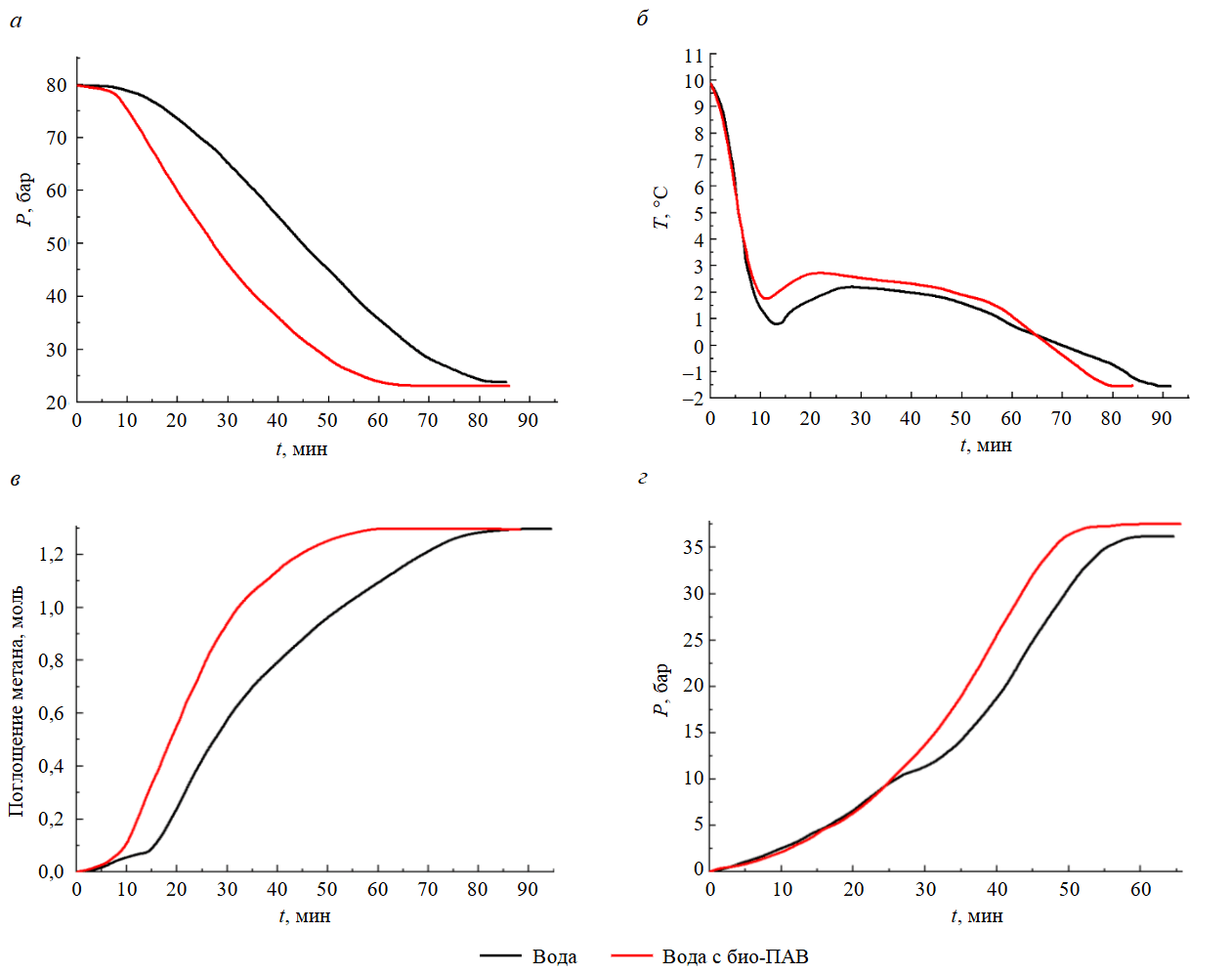
Рис.2. Давление P (а), температура T (б) и газопоглощение (в) при синтезе и давление при диссоциации (г) гидрата метана
По завершении синтеза газового гидрата при конечной температуре –2 °С на термостате устанавливалось значение температуры –3 °С, после чего давление сбрасывалось до 0 бар (т.е. до атмосферного давления). Распад начинался при значении давления ниже равновесного. Процесс диссоциации гидрата метана считался завершенным при постоянстве давления в реакторе более, чем в течение 30 мин. По истечении 30 мин крышка реактора снималась для визуальной оценки диссоциации гидрата. Отсутствие гидрата и наличие воды дополнительно подтверждало завершение процесса диссоциации.
Самоконсервация, характеризующаяся аномально низкой скоростью распада, свойственна только толстому сплошному слою газового гидрата (с нулевой пористостью слоя) или для больших частиц [24]. У частиц диаметром существенно менее 1 мм самоконсервация проявляется слабо [24]. Агрегаты частиц следует рассматривать не как отдельные частицы, а как пористый слой, состоящий из частиц. Установленная относительно быстрая скорость распада гидрата метана (рис.2, б) показывает, что самоконсервацией можно пренебречь, а размер частиц в агрегатах менее 1 мм. В природном пласте имеются области как монолитного гидрата с большим размером газогидратных частиц, так и области более пористые с большим содержанием вкраплений (песка, минералов, глины, льда), представляющие собой песчано-пылеватый скелет. При распаде больших монолитных областей (размером 1-10 мм и более) необходимо учитывать как самоконсервацию, так и пористость ледяной корки, образующейся при распаде газогидратной частицы, и пористость и проницаемость гидратосодержащей системы.
Для пористых областей с большим содержанием примесей важно учитывать пористость всего слоя. При положительных температурах рассматривается только пористость пласта. При отрицательных температурах в породе необходимо учитывать пористость многофазного пласта и пористость газогидратных частиц внутри него вследствие формирования корки льда на их поверхности. При диссоциации газогидратных формирований образуется высокопористая корка льда с порами, через которые удаляется газ.
Настоящая экспериментальная работа не рассматривает эффект масштабирования с переносом полученных результатов на реальный пласт из-за отсутствия возможности воспроизведения соответствующих условий на стендах. Одной из ключевых задач являлся сравнительный анализ способов повышения скорости процессов разложения гидрата метана при снижении давления и последующем образовании гидрата CO2 из гидрата CH4, когда диффузионное сопротивление слоя незначительно. Геометрические размеры установки и пласта различались. В дальнейшем необходимо учесть геометрию пласта (геометрическое масштабирование) и скорость выхода газа из пласта, которая зависит как от пористости пласта, так и от отношения поперечного размера пласта к продольному (длине пласта). В эксперименте предполагается, что данные размеры одного порядка и диффузионное сопротивление пористой породы (слоя порошка) много меньше сопротивления пористого льда.
Сброс давления приводит к повышению пористости частиц, состоящих из газа и пористого льда. Пористость льда существенно влияет на скорость распада гидрата. В общем виде выражение для диссоциации гидрата метана связано с кинетическим сопротивлением kr и фильтрационным (диффузионным) сопротивлением kd [25]. Без самоконсервации гидрата и при высокой пористости давление в порах частицы и слоя Pf становится равным давлению внешней среды P0. Связь Pf с равновесным давлением гидрата Peq выражается через параметр, отражающий влияние сопротивления пор(β = f(kr, kd) [25, 26]:
Принято допущение, что при повышенной пористости (плотность пор σp = 1010 1/м2 [25]) выполняется условие β ≈ 0 (под плотностью пор понимается количество пор на поверхности внешней оболочки льда газового гидрата (1/м2). Давление в порах становится равным внешнему давлению (Pf ≈ P0), тогда скорость диссоциации определяется только кинетикой (кинетическим сопротивлением) и тепломассообменом гидрата с внешней средой. В этом случае β → 0. Выражение для распада гидрата метана имеет следующий вид:
где Mh – текущая масса газового гидрата; M0 – начальная масса газового гидрата; b – концентрация метана; R0 – радиус частиц; j – скорость диссоциации гидрата; ρh – плотность газового гидрата.
Параметр β эквивалентен kd–1, а kd эквивалентен (σp)3(dp)8 [25]. При повышенной плотности пор выполняется условие β → 0. Связь скорости распада с плотностью пор характеризуется кубической зависимостью. Наличие ПАВ приводит к уменьшению размера частиц R0 и повышению пористости. Это способствует росту скорости диссоциации, в соответствии с уравнением (2). Данное выражение имеет предельное асимптотическое значение при β → 0.
Методы синтеза гидрата углекислого газа представлены на рис.3. Для всех кривых, как рассматривалось в методике эксперимента, первоначально синтезировался гидрат метана при температуре, близкой к 0 °С, который далее распадался при отрицательной (−3 °С) температуре. После распада гидрата метана и при давлении ниже точки равновесия гидрата CO2 (5 бар) подавался углекислый газ, который заполнял поры льда без инициирования синтеза газового гидрата (так как рост гидратной корки, даже пористой, создал бы дополнительное диффузионное сопротивление для диффузии газа внутрь пористой частицы льда). Заполнение пор углекислым газом ускоряло диффузию при последующем гидратном росте. Затем температура и давление постепенно повышались до условий гидратообразования. Вследствие медленного плавления льда газовый гидрат, вероятно, образуется из смеси льда с водой (мокрый лед), который насыщен углекислым газом. При образовании гидрата СО2 температура в реакторе увеличивалась на 0,5-1,5 °C в связи с экзотермическим характером гидратообразоования. Установлено, что минимальная скорость синтеза гидрата CO2 достигалась без био-ПАВ (кривая 1, рис.3). В этом случае имеется минимальное среднее значение производной dP/dt. Максимальное количество льда не переходит в гидратное состояние (для разных экспериментов доля льда составляла 20-40 %). При t ≥ 50 мин квазигоризонтальный участок давления имеет максимальное значение для трех кривых.
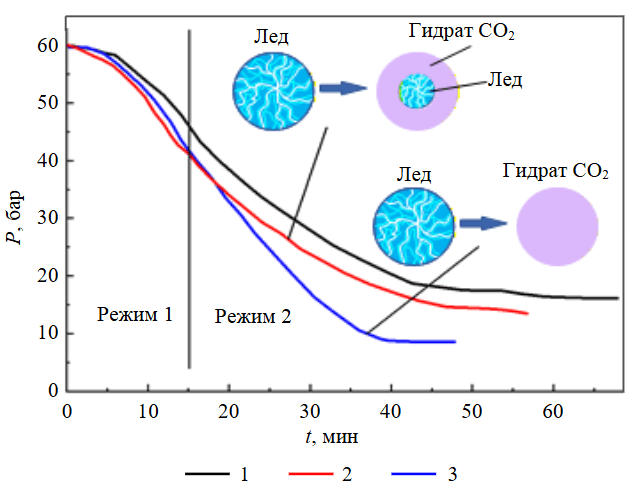
Рис.3. Изменение давления P при синтезе гидрата CO2
1 – вода без ПАВ, синтез при температуре –3 °C; 2 – вода с ПАВ, синтез при температуре –3 °C; 3 – вода с ПАВ, синтез при температуре +3 °C
Максимальная скорость синтеза газового гидрата соответствует максимальной производной давления от времени для большей части интервала синтеза (кривая 3, рис.3). Максимальное количество льда и CO2 переходит в гидратное состояние также для кривой 3 (минимальное давление для заключительного пологого участка). Наличие ПАВ (кривая 2, рис.3) приводит к уменьшению диаметров агрегатов частиц льда, а также к большей дефектности льда, чем вода без ПАВ (кривая 1, рис.3). Меньший размер агрегатов газового гидрата (средний размер около 0,5-1 мм) образуется при наличии ПАВ в воде. Средний размер определен при вынимании порошка газового гидрата из реактора после синтеза. Более высокая пористость газового гидрата при добавлении ПАВ отмечается во многих исследованиях, что фиксируется микроскопом. Синтез при отрицательной температуре реализуется примерно с одной скоростью, как и для положительной температуры (кривая 3, рис.3), только для режима 1. В гидратное состояние переходит около 30 % льда (окончание режима 1). Данное количество газового гидрата следует из расчета количества молей газа, перешедшего в газовый гидрат, путем пересчета давления относительно общего количества молей газа при завершении гидратного синтеза. Кривая 3 (рис.3) демонстрирует существенно более высокую скорость гидратообразования по сравнению с кривой 2. Можно предположить, что в режиме 2 образуется более прочная внешняя корка газового гидрата, которая существенно замедляет диффузию CO2 внутрь частицы льда (кривая 2, рис.3). Положительные температуры приводят к образованию пленки воды на фронте реакции (границе фазового перехода (рис.4). Это повышает скорость диффузии CO2, а также приводит к уменьшению разницы термодинамических потенциалов фазового перехода (при наличии льда, воды и ПАВ (кривая 3, рис.3). Вследствие медленного плавления льда газовый гидрат образуется из смеси льда с водой (мокрый лед), который насыщен углекислым газом.
Без образования высокопористого льда, а также без первоначального удаления метана, скорость гидратообразования в десятки раз ниже, чем при приведенных методах (рис.3). Так, например, в работе [18] замещение CH4-CO2 при одновременном распаде гидрата метана, частичном удалении метана, внедрении углекислого газа и синтезе гидрата CO2, происходило в течение 120 ч. Масса гидрата метана была в 15-20 раз меньше, чем при синтезе по методикам представленного исследования. Кратное повышение массы образца приводит и к многократному росту полного времени замещения CH4-CO2. При организации прямого перехода CH4-CO2 образуется двойной гидрат CH4-CO2. Часть молекул метана занимают гидратные ячейки. Это уменьшает эффективность данной технологии. Данные негативные эффекты могут быть исключены при адаптивном управлении тепломассобменными процессами в гидратном пласте.
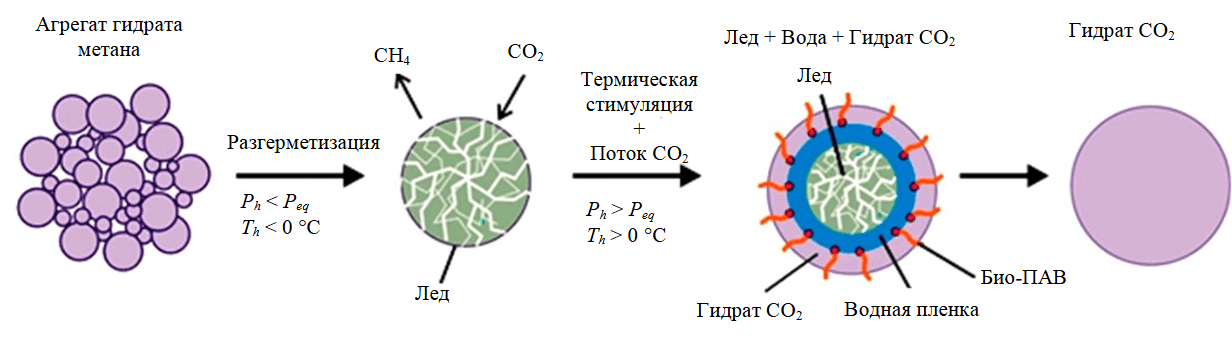
Рис.4. Схема замещения СН4-СО2 при образовании высокопористого микрозернистого льда
Ph – давление гидрата; Peq – равновесное давление гидрата; Th – температура гидрата
Синтез гидрата в высокопористом льде можно рассмотреть по аналогии с распадом гидрата метана с применением выражения (2). Высокая пористость (β ≈ 0) исключает диффузионное сопротивление. Скорость синтеза определяется кинетикой роста, диаметром частиц (их удельной поверхностью) и тепломассообменом. Повышенные скорости синтеза обосновывают слабую роль диффузии. При реализации процесса замещения СН4-СО2 и наличии метана в породе образуется двойной гидрат (СН4-СО2). Увеличить количество добываемого метана можно совместным применением нескольких методов. При бурении воспроизводятся условия для искусственного нарушения герметичности гидратного пласта, что вызывает снижение давления и запускает процессы деградации гидрата CH4. Метан высвобождается и может быть извлечен наружу. Нагрев пласта путем циркуляции теплоносителя приводит к увеличению температуры, что снижает стабильность гидрата и ускоряет выделение метана. Биологически активные добавки способствуют разрушению структуры гидрата, что ускоряет выход метана из пород. Выделяют три этапа выхода метана: сначала осуществляется первичное вскрытие пласта и его разгерметизация, позволяющая начать постепенное разрушение гидрата; затем применяется тепловое воздействие, которое увеличивает температуру и создает благоприятные условия для разрушения гидрата; далее добавляется био-ПАВ, ускоряя выход метана и снижая вероятность повторного формирования гидрата. Таким образом, полное удаление метана достигается поэтапным сочетанием указанных методов, обеспечивающих максимальную экстракцию газа перед подачей углекислого газа для дальнейшего замещения. Совмещение разгерметизации и термостимулирования в газогидратной породе (кривая 3, рис.3) позволяет реализовать плавление льда и образование пленки воды. Это усиливает влияние ПАВ и ускоряет кинетику. Схема замещения СН4-СО2 при образовании высокопористого микрозернистого льда представлена на рис.4.
Наличие в водной пленке ПАВ позволяет ускорить кинетику гидратного роста. Добавление ПАВ приводит к снижению избыточной поверхностной энергии, а также к уменьшению разности термодинамических потенциалов Δµ при фазовом переходе от газа и жидкости к CO2 гидрату. Таким образом, высокие скорости замещения СН4-СО2 обеспечивают следующие факторы: уменьшение размера частиц и агрегатов, высокая пористость частиц льда и слоя частиц, уменьшение разности термодинамических потенциалов.
Результаты исследований целесообразно учитывать при разработке технологий извлечения природного газа из гидратосодержащих пластов методом снижения давления, подачи био-ПАВ и последующей закачки СО2. При вскрытии и разгерметизации гидратосодержащего пласта из него начинает выделяться метан. В связи с этим пласт гидрата становится более пористым. Это важно, так как изначально газогидратный пласт обладает низкой проницаемостью, что препятствует проникновению био-ПАВ внутрь пласта. После вскрытия и разгерметизации в гидратосодержащий пласт закачивается био-ПАВ. Таким образом, нарушается структура кристаллической решетки гидрата, что дополнительно способствует высвобождению метана. Затем в пласт закачивается углекислый газ, одновременно с этим начинается откачка природного газа. Такой процесс осуществим, поскольку при наличии био-ПАВ гидрат углекислого газа образуется с большей вероятностью, чем гидрат метана. Для отделения СО2, содержащегося в добытом метане, на выходе из скважины устанавливается сепаратор. Добытый газ проходит через воду в сепараторе, при этом СО2 растворяется в воде, а на выходе формируется очищенный метан. Полученные математические выражения позволят спрогнозировать время распада гидрата метана, что исключит момент неопределенности при подаче углекислого газа в пласт.
Заключение
Наличие био-ПАВ приводит к ускорению роста и диссоциации гидрата метана. Усиление роста гидрата при наличии био-ПАВ обусловлено уменьшением размера агрегатов гидратных частиц и поверхностного натяжения воды. Высокая скорость распада гидрата метана обусловлена повышенной пористостью льда, достигнутой за счет снижения давления в реакторе. Наличие био-ПАВ позволяет ускорить рост гидрата CO2. Высокая скорость образования гидрата СО2 из гидрата СН4 достигается за счет следующих ключевых факторов: уменьшение размера частиц и агрегатов, достижение высокой пористости частиц и слоя льда, термодинамические факторы вследствие уменьшения поверхностного натяжения воды.
Предложенная методика последовательного фазового перехода позволяет уменьшить полное время синтеза гидрата CO2 на два-три порядка по сравнению с прямым замещением СН4-СО2. Схема замещения метана углекислым газом в высокопористом льде позволяет избежать образования двойного гидрата (метан-углекислый газ).
Литература
- Jinlong Cui, Zhenfeng Sun, Xiaohui Wang et al. Fundamental mechanisms and phenomena of clathrate hydrate nucleation // Chinese Journal of Chemical Engineering. 2019. Vol. 27. Iss. 9. P. 2014-2025. DOI: 10.1016/j.cjche.2018.12.016
- Nakane R., Shimosato Y., Gima E. et al. Phase equilibrium condition measurements in carbon dioxide hydrate forming system coexisting with seawater // The Journal of Chemical Thermodynamics. 2021. Vol. 152. № 106276. DOI: 10.1016/j.jct.2020.106276
- Minshull T.A., Marín-Moreno H., Betlem P. et al. Hydrate occurrence in Europe: A review of available evidence // Marine and Petroleum Geology. 2020. Vol. 111. P. 735-764. DOI: 10.1016/j.marpetgeo.2019.08.014
- Yan Xie, Rui Li, Xiao-Hui Wang et al. Review on the accumulation behavior of natural gas hydrates in porous sediments // Journal of Natural Gas Science and Engineering. 2020. Vol. 83. № 103520. DOI: 10.1016/j.jngse.2020.103520
- Gambelli A.M. Methane replacement into hydrate reservoirs with carbon dioxide: Main limiting factors and influence of the gaseous phase composition, over hydrates, on the process // Chemical Engineering Journal. 2023. Vol. 478. № 147247. DOI: 10.1016/j.cej.2023.147247
- Na Wei, Jun Pei, Haitao Li et al. Classification of natural gas hydrate resources: Review, application and prospect // Gas Science and Engineering. 2024. Vol. 124. № 205269. DOI: 10.1016/j.jgsce.2024.205269
- Wenfeng Ruan, Cong Hu, Zhenghui Li, Yonggang Jia. Effects of the Last Deglaciation climate warming on hydrate dissociation in the northern South China Sea // Journal of Marine Systems. 2024. Vol. 242. № 103945. DOI: 10.1016/j.jmarsys.2023.103945
- Sinehbaghizadeh S., Saptoro A., Mohammadi A.H. CO2 hydrate properties and applications: A state of the art // Progress in Energy and Combustion Science. 2022. Vol. 93. № 101026. DOI: 10.1016/j.pecs.2022.101026
- Yamamoto K., Nagakubo S. Review of Energy Efficiency of the Gas Production Technologies From Gas Hydrate-Bearing Sediments // Frontiers in Energy Research. 2021. Vol. 9. № 741715. DOI: 10.3389/fenrg.2021.741715
- Чувилин Е.М., Буханов Б.А., Гребенкин С.И., Жмаев М.В. Влияние газогидратной компоненты на свойства мерзлых пород // Георесурсы. 2025. Т. 27. № 3. С. 101-110. DOI: 10.18599/grs.2025.3.8
- Jinjie Wang, Hon Chung Lau. Thickness of gas hydrate stability zone in permafrost and marine gas hydrate deposits: Analysis and implications // Fuel. 2020. Vol. 282. № 118784. DOI: 10.1016/j.fuel.2020.118784
- Dallimore S.R., Collett T.S. Summary and implications of the Mallik 2002 Gas Hydrate Production Research Well Program // Scientific Results from the Mallik 2002 Gas Hydrate Production Research Well Program, Mackenzie Delta, Northwest Territories, Canada. Natural Resources Canada, 2005. Geological Survey of Canada, Bulletin 585. 36 p. DOI: 10.4095/220714
- Bing Li, Youhong Sun, Wei Guo et al. The mechanism and verification analysis of permafrost-associated gas hydrate formation in the Qilian Mountain, Northwest China // Marine and Petroleum Geology. 2017. Vol. 86. P. 787-797. DOI: 10.1016/j.marpetgeo.2017.05.036
- Collett T.S., Lee M.W., Agena W.F. et al. Permafrost-associated natural gas hydrate occurrences on the Alaska North Slope // Marine and Petroleum Geology. 2011. Vol. 28. Iss. 2. P. 279-294. DOI: 10.1016/j.marpetgeo.2009.12.001
- Yakushev V.S., Chuvilin E.M. Natural gas and gas hydrate accumulations within permafrost in Russia // Cold Regions Science and Technology. 2000. Vol. 31. Iss. 3. P. 189-197. DOI: 10.1016/S0165-232X(00)00012-4
- Gavrilov A., Malakhova V., Pizhankova E., Popova A. Permafrost and Gas Hydrate Stability Zone of the Glacial Part of the East-Siberian Shelf // Geosciences. 2020. Vol. 10. Iss. 12. № 484. DOI: 10.3390/geosciences10120484
- Tian Wang, Lunxiang Zhang, Lingjie Sun et al. Methane recovery and carbon dioxide storage from gas hydrates in fine marine sediments by using CH4/CO2 replacement // Chemical Engineering Journal. 2021. Vol. 425. № 131562. DOI: 10.1016/j.cej.2021.131562
- Xuemin Zhang, Shanling Zhang, Shaoqi Yin et al. Research progress of the kinetics on natural gas hydrate replacement by CO2-containing mixed gas: A review // Journal of Natural Gas Science and Engineering. 2022. Vol. 108. № 104837. DOI: 10.1016/j.jngse.2022.104837
- Kim Y.-G., Kim S., Lee D.-H. et al. Occurrence of active gas hydrate mounds in the southwestern slope of the Chukchi Plateau, Arctic Ocean // Episodes. 2020. Vol. 43. № 2. P. 811-823. DOI: 10.18814/epiiugs/2020/020053
- Shakhova N., Semiletov I., Chuvilin E. Understanding the Permafrost–Hydrate System and Associated Methane Releases in the East Siberian Arctic Shelf // Geosciences. 2019. Vol. 9. Iss. 6. № 251. DOI: 10.3390/geosciences9060251
- Chang Chen, Yu Zhang, Xiaosen Li et al. Experimental investigation into gas production from methane hydrate in sediments with different contents of illite clay by depressurization // Energy. 2024. Vol. 296. № 131181. DOI: 10.1016/j.energy.2024.131181
- Lei Yang, Yulong Liu, Hanquan Zhang et al. The status of exploitation techniques of natural gas hydrate // Chinese Journal of Chemical Engineering. 2019. Vol. 27. Iss. 9. P. 2133-2147. DOI: 10.1016/j.cjche.2019.02.028
- Jing-Chun Feng, Bo Li, Xiao-Sen Li, Yi Wang. Effects of depressurizing rate on methane hydrate dissociation within large-scale experimental simulator // Applied Energy. 2021. Vol. 304. № 117750. DOI: 10.1016/j.apenergy.2021.117750
- Dong Mo, Weiping Shi. Analytical model on natural gas hydrate dissociation with different phase equilibrium curves // International Journal of Heat and Mass Transfer. 2023. Vol. 214. № 124334. DOI: 10.1016/j.ijheatmasstransfer.2023.124334
- Shihui Ma, Jia-nan Zheng, Jie Zhao, Mingjun Yang. Effects of temperature holding on methane hydrate decomposition process by thermal stimulation // The Journal of Chemical Thermodynamics. 2021. Vol. 159. № 106487. DOI: 10.1016/j.jct.2021.106487
- Liang Mu, Ramløv H., Søgaard T.M.M. et al. Inhibition of methane hydrate nucleation and growth by an antifreeze protein // Journal of Petroleum Science and Engineering. 2019. Vol. 183. № 106388. DOI: 10.1016/j.petrol.2019.106388
- Tupsakhare S.S., Castaldi M.J. Efficiency enhancements in methane recovery from natural gas hydrates using injection of CO2/N2 gas mixture simulating in-situ combustion // Applied Energy. 2019. Vol. 236. P. 825-836. DOI: 10.1016/j.apenergy.2018.12.023
- Wonjung Choi, Junghoon Mok, Jonghyuk Lee et al. Effective CH4 production and novel CO2 storage through depressurization-assisted replacement in natural gas hydrate-bearing sediment // Applied Energy. 2022. Vol. 326. № 119971. DOI: 10.1016/j.apenergy.2022.119971
- Pengfei Wang, Ying Teng, Yusheng Zhao, Jinlong Zhu. Experimental Studies on Gas Hydrate-Based CO2 Storage: State-of-the-Art and Future Research Directions // Energy Technology. 2021. Vol. 9. Iss. 7. № 2100004. DOI: 10.1002/ente.202100004
- Misyura S., Strizhak P., Meleshkin A. et al. A Review of Gas Capture and Liquid Separation Technologies by CO2 Gas Hydrate // Energies. 2023. Vol. 16. Iss. 8. № 3318. DOI: 10.3390/en16083318
- Weiguo Liu, Qianqian Li, Yongchen Song et al. Diffusion Theory of Formation of Gas Hydrate from Ice Powder without Melting // Energy Procedia. 2014. Vol. 61. P. 513-522. DOI: 10.1016/j.egypro.2014.11.1161
- Weiguo Liu, Lijun Wang, Mingjun Yang et al. Experimental Study on the Methane Hydrate Formation from Ice Powders // Energy Procedia. 2014. Vol. 61. P. 619-623. DOI: 10.1016/j.egypro.2014.11.1184
- Peng Xiao, Juan-Juan Li, Wan Chen et al. Enhanced formation of methane hydrate from active ice with high gas uptake // Nature Communications. 2023. Vol. 14. № 8068. DOI: 10.1038/s41467-023-43487-6
- Kreven D.V., Vlasov V.A. Diffusion model of gas hydrate formation from ice considering the gas pressure drop // Results in Engineering. 2023. Vol. 20. № 101396. DOI: 10.1016/j.rineng.2023.101396
- Falenty A., Salamatin A.N., Kuhs W.F. Kinetics of CO2-Hydrate Formation from Ice Powders: Data Summary and Modeling Extended to Low Temperatures // The Journal of Physical Chemistry C. 2013. Vol. 117. Iss. 16. P. 8443-8457. DOI: 10.1021/jp310972b
- Farhadian A., Heydari A., Maddah M. et al. Renewable biosurfactants for energy-efficient storage of methane: An experimental and computational investigation // Chemical Engineering Journal. 2022. Vol. 427. № 131723. DOI: 10.1016/j.cej.2021.131723
- Palodkar A.V., Jana A.K. Clathrate hydrate dynamics with synthetic- and bio-surfactant in porous media: Model formulation and validation // Chemical Engineering Science. 2020. Vol. 213. № 115386. DOI: 10.1016/j.ces.2019.115386
- Bavoh C.B., Broni-Bediako E., Marfo S.A. Review of Biosurfactants Gas Hydrate Promoters // Methane. 2023. Vol. 2. Iss. 3. P. 304-318. DOI: 10.3390/methane2030020
- Lanoil B.D., Sassen R., La Duc M.T. et al. Bacteria and Archaea Physically Associated with Gulf of Mexico Gas Hydrates // Applied and Environmental Microbiology. 2001. Vol. 67. Iss. 11. P. 5143-5153. DOI: 10.1128/AEM.67.11.5143-5153.2001
- Arora A., Cameotra S.S., Kumar R. et al. Effects of biosurfactants on gas hydrates // Journal of Petroleum & Environmental Biotechnology. 2014. Vol. 5. Iss. 2. № 170. DOI: 10.4172/2157-7463.1000170
- Kubicki S., Bollinger A., Katzke N. et al. Marine Biosurfactants: Biosynthesis, Structural Diversity and Biotechnological Applications // Marine Drugs. 2019. Vol. 17. Iss. 7. № 48. DOI: 10.3390/md17070408
- Rogers R.E., Kothapalli C., Lee M.S., Woolsey J.R. Catalysis of Gas Hydrates by Biosurfactants in Seawater-Saturated Sand/Clay // The Canadian Journal of Chemical Engineering. 2003. Vol. 81. Iss. 5. P. 973-980. DOI: 10.1002/cjce.5450810508
- Guochang Zhang, Rogers R.E., French W.T., Wenjian Lao. Investigation of microbial influences on seafloor gas-hydrate formations // Marine Chemistry. 2007. Vol. 103. Iss. 3-4. P. 359-369. DOI: 10.1016/j.marchem.2006.10.005
- Arora A., Cameotra S.S., Kumar R. et al. Biosurfactant as a Promoter of Methane Hydrate Formation: Thermodynamic and Kinetic Studies // Scientific Reports. 2016. Vol. 6. № 20893. DOI: 10.1038/srep20893
- Strukov D.A., Kartopolcev S.A., Sagidullin A.K. et al. Study of the kinetics of methane-carbon dioxide exchange in gas hydrates below the ice melting point. Experimental data and computational model // Thermochimica Acta. 2024. Vol. 736. Iss. 179737. DOI: 10.1016/j.tca.2024.179737
- Wen-Na Wei, Bo Li, Quan Gan, Yuan-Le Li. Research progress of natural gas hydrate exploitation with CO2 replacement: A review // Fuel. 2022. Vol. 312. № 122873. DOI: 10.1016/j.fuel.2021.122873
- Yanhong Wang, Xuemei Lang, Shuanshi Fan et al. Review on Enhanced Technology of Natural Gas Hydrate Recovery by Carbon Dioxide Replacement // Energy & Fuels. 2021. Vol. 35. Iss. 5. P. 3659-3674. DOI: 10.1021/acs.energyfuels.0c04138
- Musakaev N.G., Khasanov M.K., Borodin S.L. The mathematical model of the gas hydrate deposit development in permafrost // International Journal of Heat and Mass Transfer. 2018. Vol. 118. P. 455-461. DOI: 10.1016/j.ijheatmasstransfer.2017.10.127
- Щипачев А.М., Дмитриева А.С. Применение эффекта резонансного энергоразделения в пунктах редуцирования природного газа с целью повышения энергоэффективности системы газораспределения // Записки Горного института. 2021. Т. 248. С. 253-259. DOI: 10.31897/PMI.2021.2.9
- Gajanayake S.M., Gamage R.P., Xiao-Sen Li, Huppert H. Natural gas hydrates – Insights into a paradigm-shifting energy resource // Energy Reviews. 2023. Vol. 2. Iss. 1. № 100013. DOI: 10.1016/j.enrev.2022.100013
- Mingjun Yang, Jie Zhao, Jia-nan Zheng, Yongchen Song. Hydrate reformation characteristics in natural gas hydrate dissociation process: A review // Applied Energy. 2019. Vol. 256. № 113878. DOI: 10.1016/j.apenergy.2019.113878
- Goel N. In situ methane hydrate dissociation with carbon dioxide sequestration: Current knowledge and issues // Journal of Petroleum Science and Engineering. 2006. Vol. 51. Iss. 3-4. P. 169-184. DOI: 10.1016/j.petrol.2006.01.005
- Sadeh E., Farhadian A., Mohammadi A. et al. Energy-efficient storage of methane and carbon dioxide capture in the form of clathrate hydrates using a novel non-foaming surfactant: An experimental and computational investigation // Energy Conversion and Management. 2023. Vol. 293. № 117475. DOI: 10.1016/j.enconman.2023.117475
- Gautam, Sahoo S. Experimental investigation on different activated carbons as adsorbents for CO2 capture // Thermal Science and Engineering Progress. 2022. Vol. 33. № 101339. DOI: 10.1016/j.tsep.2022.101339
- Yi Lu, Hui Wang, Qingping Li et al. CO2 storage behavior via forming hydrate from N2/CO2 gas mixtures in the presence of initial SI CO2 hydrate seeds // Chemical Engineering Journal. 2022. Vol. 450. Part 2. № 138001. DOI: 10.1016/j.cej.2022.138001
- Bhattacharjee G., Kumar A., Sakpal T., Kumar R. Carbon Dioxide Sequestration: Influence of Porous Media on Hydrate Formation Kinetics // ACS Sustainable Chemistry & Engineering. 2015. Vol. 3. Iss. 6. P. 1205-1214. DOI: 10.1021/acssuschemeng.5b00171
- Du Wang, Xin Ren, Jinkun Zhang et al. Comparative investigation on techno-economics of cascade supercritical CO2 combined cycles for waste heat recovery of typical gas turbines // Thermal Science and Engineering Progress. 2023. Vol. 42. № 101941. DOI: 10.1016/j.tsep.2023.101941
- Yao Liu, Biyu Chen, Yulong Chen et al. Methane Storage in a Hydrated Form as Promoted by Leucines for Possible Application to Natural Gas Transportation and Storage // Energy Technology. 2015. Vol. 3. Iss. 8. P. 815-819. DOI: 10.1002/ente.201500048
- Lunxiang Zhang, Lei Yang, Jiaqi Wang et al. Enhanced CH4 recovery and CO2 storage via thermal stimulation in the CH4/CO2 replacement of methane hydrate // Chemical Engineering Journal. 2017. Vol. 308. P. 40-49. DOI: 10.1016/j.cej.2016.09.047
- Chun-Yu Geng, Hao Wen, Han Zhou. Molecular Simulation of the Potential of Methane Reoccupation during the Replacement of Methane Hydrate by CO2 // The Journal of Physical Chemistry A. 2009. Vol. 113. Iss. 18. P. 5463-5469. DOI: 10.1021/jp811474m
- Xin Huang, Wenjiu Cai, Linsen Zhan, Hailong Lu. Study on the reaction of methane hydrate with gaseous CO2 by Raman imaging microscopy // Chemical Engineering Science. 2020. Vol. 222. № 115720. DOI: 10.1016/j.ces.2020.115720
- Azimi A., Ansarpour M., Mofarahi M. Natural gas hydrate–related disasters and case studies // Advances in Natural Gas: Formation, Processing, and Applications. Elsevier, 2024. Vol. 3: Natural Gas Hydrates. P. 191-207. DOI: 10.1016/B978-0-443-19219-7.00004-7
- Misyura S.Y., Donskoy I.G. Dissociation of gas hydrate for a single particle and for a thick layer of particles: The effect of self-preservation on the dissociation kinetics of the gas hydrate layer // Fuel. 2022. Vol. 314. № 122759. DOI: 10.1016/j.fuel.2021.122759
- Misyura S.Y., Donskoy I.G., Manakov A.Y. et al. Studying the influence of key parameters on the methane hydrate dissociation in order to improve the storage efficiency // Journal of Energy Storage. 2021. Vol. 44. Part A. № 103288. DOI: 10.1016/j.est.2021.103288
- Gaidukova O.S., Dorokhov V.V., Misyura S.Y. et al. Dissociation of methane and carbon dioxide hydrates: Synergistic effects // Fuel. 2024. Vol. 359. № 130399. DOI: 10.1016/j.fuel.2023.130399
- Nagibin P.S., Vinogrodskiy K., Shlegel N.E., Strizhak P.A. Using methane hydrate to intensify the combustion of low-rank coal fuels // Energy. 2024. Vol. 304. № 132044. DOI: 10.1016/j.energy.2024.132044