

Experimental study of ground level atmospheric metal pollution during the development of the Ozernoye polymetallic deposit (Western Transbaikalia)
- 1 — Ph.D., Dr.Sci. Chief Researcher Dobretsov Geological Institute, Siberian Branch of the RAS ▪ Orcid
- 2 — Ph.D. Senior Researcher Dobretsov Geological Institute, Siberian Branch of the RAS ▪ Orcid
- 3 — Ph.D. Researcher Dobretsov Geological Institute, Siberian Branch of the RAS ▪ Orcid
Abstract
Wastes from mining and ore processing have a negative impact not only on surface- and groundwater, soils, but also on the state of the ground-level atmosphere. In highly permeable deposits of waste storage facilities, as a result of weathering of ores and rocks hosting mineralization, highly mineralized waters containing metals are formed. Under their influence, liquid aerosol flows are formed above the storage facilities. Their conditions of formation and chemical composition are still poorly studied. The objective of the work is to determine the qualitative and quantitative composition of toxic metals entering the ground‑level atmosphere as part of aerosols from the storage facility of oxidized ores and overburden rocks stockpiled during the development of the Ozernoye polymetallic deposit. The tasks set are to identify the mechanism of aerosol flow formation from the aeration zone of storage facilities, to develop a methodology for sampling aerosols by condensing them, and to collect the amount of condensate required for analysis. The collected condensate samples were analysed by inductively coupled plasma mass spectrometry using Agilent 7500ce quadrupole mass spectrometer according to a certified procedure. We found that the total mineralization of condensation waters reaches 110-130 mg/dm3. The content of toxic elements (mercury, lead, zinc, copper) is several times higher than the concentration in surface waters of the area. In the snow cover in the area adjacent to the Mining and Processing Plant, manganese, zinc, copper, and mercury were found in abnormally high concentrations exceeding the MPC for fishery purposes. Their input into the snow cover is associated with evaporation from the surface of stockpiled wastes and transport of pollutants by air currents. The work shows that liquid aerosols containing high concentrations of toxic chemical elements are released into the atmosphere from the stockpile of oxidized ores and overburden rocks. To protect the natural environment, the enterprise needs measures to isolate stockpiled mining wastes from weathering agents and prevent aerosol input into the atmosphere, as well as to use personal protective equipment for personnel working with mining and processing wastes.
The work was carried out with the financial support of the Russian Science Foundation, project N 24-27-20077.
Introduction
The development of mineral deposits and the formation of tailings storage facilities have a multifaceted negative impact on the environment and operating personnel [1]. The literature pays considerable attention to dust generation [2]. Negative impacts on the environment occur during the development period [3], after the enterprise ceases operations [4], and in the event of accidents [5, 6]. In the work area, the concentration of metals in landscapes gradually increases [7]. This is due to the stockpiling of large amounts of mining and ore processing wastes, which contain residual ore material and fine dust [8, 9].
Particularly intense pollution occurs during open‑pit mining. In this case, the development of deposits leads to the formation of overburden rock dumps over a vast area [10]. Processes that are unnatural to the environment begin to proceed intensively [11]. Since the rocks are crushed during mining, they begin to be intensively reduced in size by weathering agents during storage [12] and actively interact with formed acids [13] and microorganisms [14]. The element speciations change significantly [15]. As a result, the toxic elements contained in them acquire the ability to migrate into surface water, groundwater, and the atmosphere [16, 17].
The migration of toxic chemical elements in surface and groundwater is fairly well studied [18, 19]. It is shown that hypergene minerals containing heavy metals precipitate from solutions [20]. This cannot be said about atmospheric pollution. Typically, research focuses on the formation of gases and dust [21], as well as their impact on the biosphere and humans [22, 23]. Insufficient attention is paid to the study of liquid aerosol flows containing metals above mining areas. Notable are studies involving experimental research through forced air circulation above rock dumps via a bubbler with deionized water. These studies revealed concentrations exceeding background levels by 20 times for Sb, As, Mo, Sn, Al, 10 times for Cu, Pb, Ni, Ba, Ti, Y. Geochemical studies of the snow cover are also worth mentioning [24-26].
Urban areas monitor aerosols in the air, especially during the winter period, but the chemical composition of liquid aerosols cannot be determined due to the lack of developed methods for their concentration [26]. Research on solid aerosols is more advanced; the dependence of their toxicity on particle size is demonstrated [2]. Investigations showed the impact of atmospheric pollution on the health of enterprise workers [27], residents living near mines [28], and the surrounding area [29]. Studies identified types of diseases and the mechanism of impact on the human body [30, 31]. The findings indicate that the transport of toxic substances in the air must be considered in the environmental rehabilitation of rock dumps [32].
This study presents the first examination of toxic metal migration within liquid aerosols at an active mining enterprise. The aim of this work was to determine the qualitative and quantitative composition of pollutants entering the ground‑level atmosphere due to the impact of ore mining waste from the Ozernoye polymetallic deposit.
Methods and research metology
Atmospheric pollution in mining areas is associated with geological and geochemical processes occurring in the aeration zone. Rocks extracted from the subsurface are crushed during the processing procedure. As a result, interaction in the water‑rock system becomes intensified. The chemical composition of groundwater in waste storage areas has long been the subject of research, and a large number of publications are devoted to this topic. They show that the pore space in the lower part of mining and ore processing waste storage facilities is filled with highly mineralized waters and gases [33]. In the aeration zone of waste storage facilities, mineralized solutions can exist as vapour, as physically and chemically bound water, and as capillary water. All these forms are in dynamic equilibrium with groundwater. Vapour‑phase water moves downward in summer, as vapour pressure decreases with depth. It condenses in the lower part of the aeration zone, where the thermal effect of solar energy does not act. In winter, on the contrary, vapour rises toward the surface from the groundwater horizon, as vapour pressure decreases at the top when water freezes [34]. Capillary water rises from the groundwater to the surface in the form of a fringe, driven by surface tension forces. The height of capillary rise depends on the pore size in the rock: the smaller the capillary radius, the higher the capillary fringe rises above the groundwater level. If the capillary fringe reaches the surface, water evaporates into the atmosphere. The loss of capillary water through evaporation is replenished by inflow from the aquifer. As water mineralization increases, the height of capillary fringe rise also increases, i.e. highly mineralized solutions containing heavy metals can rise to the surface from greater depths.
The height of the capillary fringe is determined for several sedimentary rocks differing in particle size [35]: medium‑grained sand 0.15-0.35 m, fine sand 0.35-1.0 m, sandy loam 1.0-1.5 m, light loam 1.5-2.0 m, medium loam 2.0-3.0 m, heavy loam 3.0-4.0 m, and clay 4.0-5.0 m. The height of the capillary fringe in the listed rocks varies by more than an order of magnitude. In mining operations, mining wastes (overburden rocks) consist of larger particles than ore processing wastes, which are ground to sizes of hundredths and thousandths of a millimetre. Consequently, in ore processing waste storage facilities, solutions can rise from greater depths due to surface tension forces. This, in turn, leads to an increase in water mineralization and the potential input of toxic substances during the winter period.
For fresh waters, it is found that the mineralization and chemical composition of water in the aeration zone are close to those of groundwater. For mineralized waters, a significant increase in mineralization is observed in pore waters compared to gravitational waters. Due to hydrogen bonds in the arrangement of water molecules, a high degree of orderliness is observed, which is preserved in the vapour state. Vapour does not consist of individual water molecules but rather of associations of several tens of thousands of molecules. Therefore, when water evaporates, vapour particles carry dissolved substances with them.
Studies of the chemical composition of the ground‑level atmosphere were conducted under field and laboratory conditions. In the field, experiments to collect condensate at ore waste storage sites were carried out in summer (15-18 July 2023) to identify the intensity of aerosol pollution flows. In spring (10-14 March 2024), the chemical composition of the snow cover in the surrounding area was studied.
To investigate the chemical composition of water evaporating from the surface of waste storage facilities, a vapour condensation technique was used. The surface area from which condensate was collected amounted to 1 m2. The sampling circuit for condensate in ore mining wastes is shown in Fig.1. To increase the reliability of the results, five condensate collectors were installed simultaneously at each monitoring point. The distance between the collectors was 20 m; this arrangement of condensers allows characterizing aerosol flows over a large area and levelling out inhomogeneities in the sand structure related to waste storage technology. The condensate collectors were set up at the monitoring point in the evening and removed in the morning. This sampling regime was chosen because the study area has a climate characterized by sharp temperature changes within a 24-hour period. In summer, the temperature difference reaches 20 °C or more. During the day, the sands warm up, and the water trapped within them begins to evaporate intensively. However, condensing this vapour is difficult and would require refrigeration equipment. At night, the air above the sands cools rapidly, so the moisture evaporating from the sands condenses well on the surface of the polyethylene film. The resulting droplets flow into a container placed beneath the film. The condensate accumulated in the container was filtered through a membrane filter with a pore size of 0.45 µm and acidified for chemical analysis.
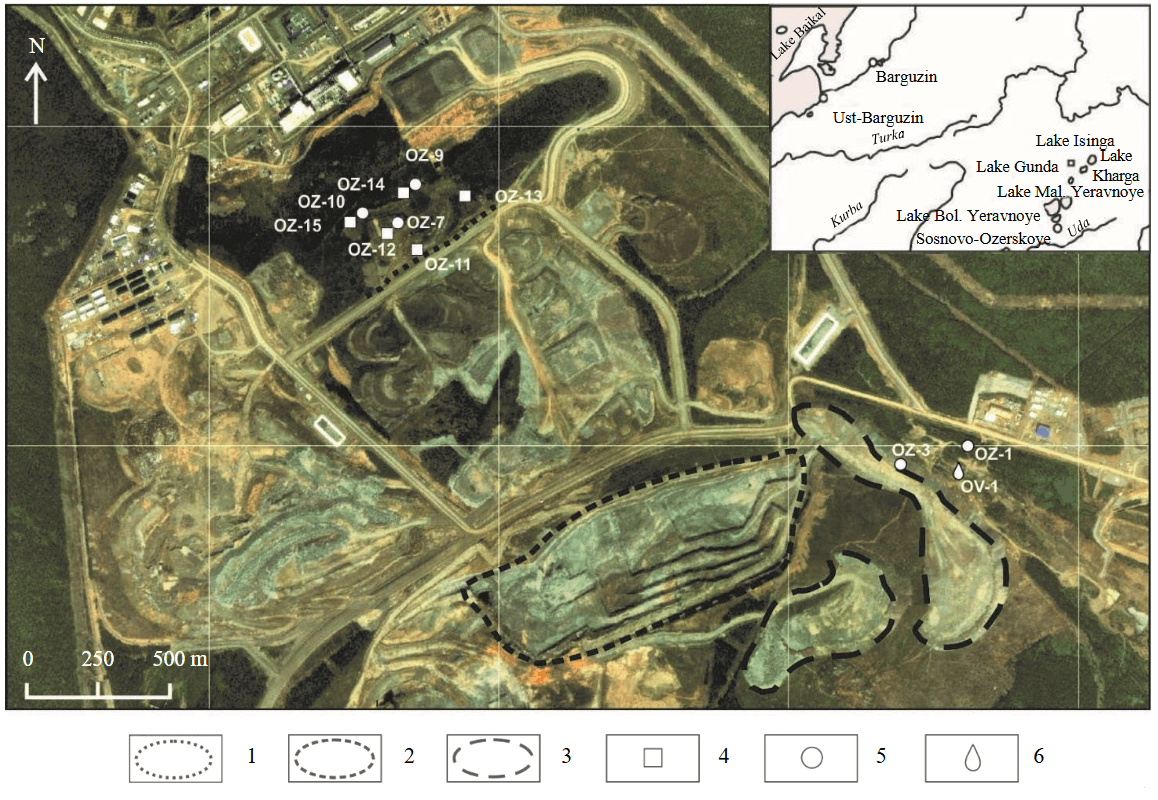
Fig.1. Overview map and satellite image of the Ozernoy Mining and Processing Plant (MPP) site, showing condensate water sampling and precipitation collection sites (Google Earth, image 2023)
1 – oxidized ore storage; 2 – quarry; 3 – overburden waste storage; 4 – precipitation sample collection sites; 5 – condensation water sampling sites; 6 – temporary stream sampling site
To determine the regional background levels of trace elements in water bodies in the area surrounding the MPP, water sampling was conducted on the Gunduy‑Kholoy stream, which flows down from the Zusy Ridge near the deposit and empties into Lake Gunda. The water sample was collected in its estuarine part (Fig.2). To determine the concentration of trace elements in condensation moisture in an area unaffected by mining operations, two condensate samples were analysed in the Dzhida River valley.
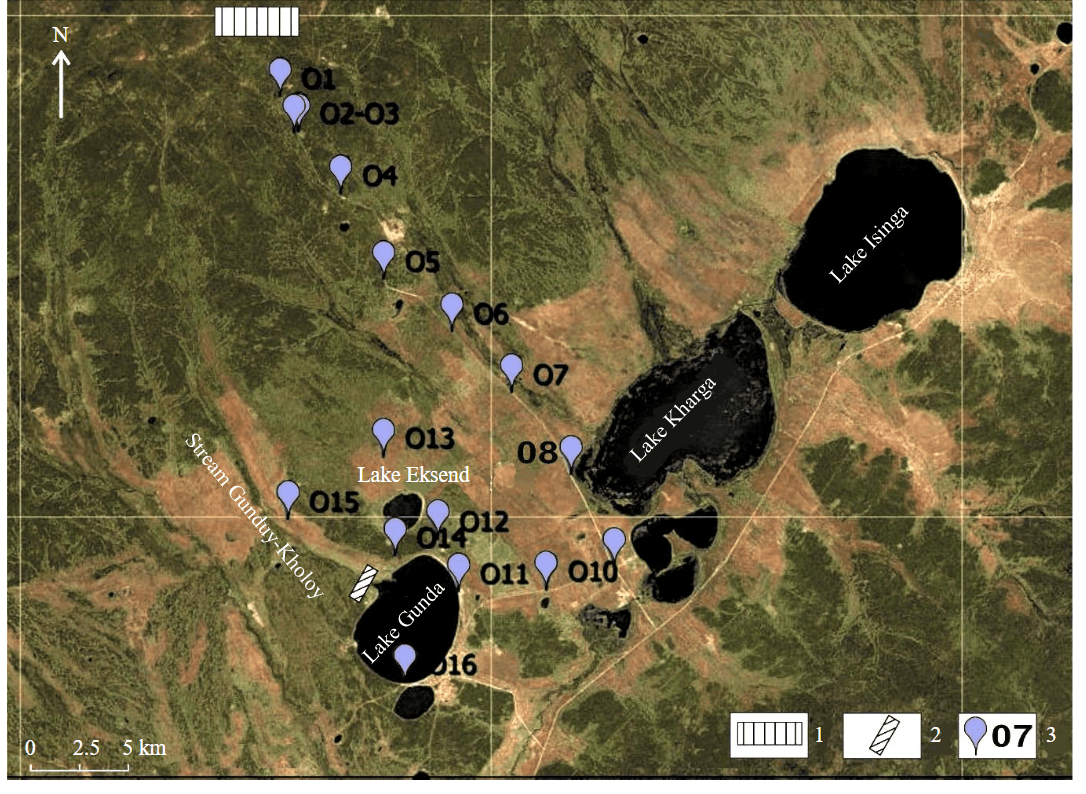
Fig.2. Topographic map of the study area with snow sampling points
1 – MPP infrastructure facilities; 2 – stream sampling baseline; 3 – snow sampling locations
Snow cover was sampled outside the enterprise’s license area. Considering the wind rose, profiles were laid out in the southeast direction, towards the Yeravninskaya depression. A total of 16 snow samples were collected. The methodology for snow sampling, sample preparation and analysis is described in detail in [36]. Snow samples were collected in plastic bags. The snow was melted at room temperature; to separate suspended substances, the water was filtered through a membrane filter and prepared for analysis of macro‑ and trace‑element composition.
Trace‑element composition analysis was performed by inductively coupled plasma mass spectrometry (ICP‑MS) using Agilent 7500ce quadrupole mass spectrometer at the Limnological Institute, Siberian Branch of the Russian Academy of Sciences, according to the procedure described in [37]. For mass spectrometer calibration, multi‑element standard solutions ICP‑MS‑68A‑A and ICP‑MS‑68A‑B (HIGH‑PURITY STANDARDS, Charleston, USA) were used, as well as cation (Fe, Hg) and anion (P) solutions prepared by mixing single‑element ICP‑MS standard solutions from Inorganic Ventures (USA): Fe (MSFE‑100PPM), Hg (MSHGN‑10PPM), P (MSP‑100PPM). Metals in the standard solutions were present in a nitric acid medium, anions – in the form of orthophosphoric acid. The analysis methodology allows determining 72 chemical elements in water samples simultaneously, including alkali, alkaline earth, rare, rare‑earth, noble, and radioactive elements.
Physical and geographical characteristics of the study area, geological structure and development technology of the Ozernoye deposit
The Ozernoye deposit is located in Western Transbaikalia, on the Vitim Plateau, at the boundary of the taiga and vast flat depressions occupied by lakes Yeravninskiye. Absolute elevations at the deposit range from 1100 to 1335 m; relative elevations amount to 250-300 m. The hydrological network is poorly developed. The Vitim River with its right tributary, the Zaza River, flows northeast of the deposit. To the southeast lie lakes Bolshoye Yeravnoye, Maloye Yeravnoye, Sosnovoye, Gunda, Kharga, Isinga, and other small lakes.
The climate is sharply continental, with a dry, long winter and a short, hot summer. In winter, weather is determined by the Siberian anticyclone, which brings predominantly cloudless skies, light winds, and low precipitation. During the warm season, cyclonic activity increases, leading to noticeable humidification. According to data from the Ust‑Zaza weather station, the annual precipitation totals range from 170 to 387 mm. Up to 90 % of the annual precipitation falls during the warm period (May-September). A stable snow cover forms by early November, reaching a maximum depth of 29 cm; it begins to melt in March-April. Permafrost has continuous distribution. Its thickness is 100-150 m in the watershed areas; 120-150 m on the north‑facing slopes; 15-120 m in the Yeravninskaya and Zazinskaya depressions. Through‑going taliks occur beneath large lakes, and non‑through‑going taliks form on slopes, in river channels, and in depressions where tectonic disturbances are present. According to borehole temperature logging data at the Ozernoye deposit, permafrost temperatures range from –0.5 to –2.5 °C.
The Ozernoye polymetallic deposit was discovered in 1961. Ore occurs in volcanogenic and volcanogenic‑sedimentary rocks: acidic and intermediate tuffs, calcareous and carbonaceous tuffites, limestone breccias with tuffaceous cement, limestones. The main ore minerals are pyrite and sphalerite; galena is less widespread. Secondary minerals include magnetite, hematite, arsenopyrite, chalcopyrite, fahlores, silver minerals. Trace elements present in the ores include arsenic, antimony, germanium, and thallium. Fine intergrowth of sulphides and small grain size (0.01-0.05 mm) are characteristic. The ore composition is lead‑zinc with almost no copper; the Pb : Zn : Cu ratio is 1 : 6 : 0.05. Among non‑ore minerals, the following predominate: siderite, calcite, dolomite, barite, quartz, sericite, and chlorite. Most ores are fine‑grained and cryptocrystalline.
Above lies an oxidation zone 5-50 m thick. Oxidized ores are dominated by iron hydroxides. Lead and zinc in oxidized ores occur as plumbojarosite, smithsonite, cerussite, anglesite, and pyromorphite. Lead content in oxidized ores ranges from 0.3 to 20 %, zinc content – from 0.3 to 1.8 %.
The total annual quarry output of ore is 6 Mt. The deposit development project is designed for 13 years. The total volume of overburden rock is 167.7 million m3. Extraction involves transporting overburden to external dumps, which are stockpiled to the south of the quarry. Part of the overburden, especially during the initial operation period, is used for road construction and repair, building and facility construction, constructing embankment dams for the tailings storage facility.
The process circuit involves using selective‑collective flotation with ore grinding to a particle size of 0.044 mm. Annually, 4.5 Mt of waste will be stockpiled: 3 Mt of dump rocks and 1.5 Mt of pyrite concentrate. Wastewater from industrial facilities, containing petroleum products and suspended solids, is treated at local treatment facilities prior to discharge. To reduce the volume of surface runoff, all runoff from uncontaminated areas is intercepted by uphill ditches. Rainwater and meltwater from the industrial site area are directed to treatment facilities and are used as much as possible in processing procedure. At the time of the survey, the dressing plant had not yet been commissioned at the enterprise; only overburden and oxidized ores were removed from the quarry.
Description of the research target and the results obtained
The overburden rock dumps are stockpiled at two sites located east and southeast of the quarry (see Fig.1). The surveyed overburden rocks, stockpiled east of the quarry, form a ridge of large‑block material 4-5 m high. The dump’s width varies from 125 to 250 m, and its length reaches 1000 m. At the foot of the dump lie water‑saturated loose rocks. Permafrost is at a depth of 20-40 cm. On the eastern side of the dump, a temporary watercourse flows, formed from atmospheric precipitation and moisture condensed within the dump body.
To collect condensate, five condensers were installed along the eastern edge of the dump. Condensate was successfully collected only in two units, where the aeration zone thickness exceeded 50 cm. Additionally, the temporary watercourse was sampled. Near the road, it formed a puddle measuring 10×20 m.
A stockpile of oxidized ores is 1 km northwest of the quarry. It has a rectangular shape: width 300 m, length 500 m, thickness of stockpiled oxidized ores 3-4 m. The stockpile rises 100 m above the surrounding area. A residential settlement is 500 m west of the stockpile, and a dressing plant is 300 m northwest of it. The stockpiled oxidized ores are not isolated from the impact of weathering agents.
To assess the impact of the oxidized ore stockpile on ground‑level atmospheric pollution with aerosols containing toxic chemical elements, five condensers and five atmospheric precipitation collectors were installed. The layout circuit is shown in Fig.1. Due to wind gusts at night, two condensers became unsealed. As a result, condensate samples could only be collected at three locations.
The volume of condensation water was 30-50 ml per 1 m2; this amount depends on the porosity of the wastes. The total mineralization of condensation waters reaches 110-130 mg/dm3. The total mineralization of atmospheric precipitation varies from 2 to 35 mg/dm3. The total mineralization of water in the temporary watercourse reaches 510 mg/dm3. The trace‑element composition of the collected water samples is presented in the table.
High concentrations of mercury, lead, zinc, and copper were detected in condensation waters compared to surface waters. These elements originate from pore moisture, where they accumulate due to the oxidative decomposition of sphalerite, galena, chalcopyrite, and pyrite. High levels of manganese, iron, aluminium, and phosphorus found in the condensate are likely associated with the decomposition of rock‑forming minerals. A correlation is observed between the chemical compositions of pore waters and aerosols [38]. When highly mineralized pore waters evaporate, a vapour layer forms above the surface. Since vapour particles are not single water molecules but associations of molecules, they are capable of carrying substances dissolved in pore water. The qualitative and quantitative composition of the aerosol depends on the chemical composition of the pore waters. Differences in the amount of pollutants are observed above the oxidized ore stockpile and the overburden rock dumps.
Trace element composition of atmospheric precipitation, condensation water collected from overburden dumps, and oxidized ores compared to the background area and concentration in surface watercourses, μg/dm3
|
Element |
MPCfish*,mg/dm3 |
Gunduy-Kholoy stream OV-2 |
Temporary watercourse, OV-1 |
Atmospheric precipitation |
Condensation water |
||||||
|
Outside the MPP |
Overburden |
Oxidized ore stockpile |
|||||||||
|
Z-1 |
Z-2 |
OZ-1 |
OZ-3 |
OZ-7 |
OZ- 9 |
OZ-10 |
|||||
|
Be |
0.0003 |
0.004 |
<0.001 |
0.0023-0.005**/0.003 |
0.0024 |
0.0019 |
0.004 |
0.0026 |
0.009 |
0.0027 |
0.0019 |
|
B |
0.1 |
8.5 |
5.1 |
2.1-2.7/ |
2.7 |
1.5 |
9.2 |
84 |
26 |
4.7 |
2 |
|
Al |
0.04 |
15.1 |
37 |
11.3-28/ |
6.5 |
6.9 |
35 |
61 |
107 |
33 |
16 |
|
P |
0.05 |
126 |
62 |
36-57/ |
36 |
7.6 |
77 |
104 |
250 |
41 |
40 |
|
Ti |
0.06 |
0.52 |
1.4 |
0.33-0.64/ |
0.13 |
0.12 |
0.47 |
1.05 |
7.3 |
0.81 |
1.05 |
|
V |
0.001 |
0.35 |
0.24 |
0.086-0.179/ |
0.03 |
0.02 |
0.125 |
0.2 |
0.63 |
0.11 |
0.073 |
|
Cr |
0.07 |
1.06 |
0.9 |
0.92-1.2/ |
0.5 |
0.4 |
1.5 |
1.97 |
5.9 |
1.26 |
3.2 |
|
Mn |
0.01 |
380 |
79 |
24-910/ |
11 |
14 |
58 |
129 |
152 |
560 |
99 |
|
Fe |
0.1 |
530 |
81 |
35-79/ |
1 |
1 |
52 |
131 |
230 |
71 |
55 |
|
Co |
0.01 |
0.61 |
0.46 |
0.16-1.9/ |
0.05 |
0.03 |
0.24 |
0.37 |
1.62 |
0.99 |
1.25 |
|
Ni |
0.01 |
1.83 |
1.15 |
0.66-0.96/ |
0.73 |
0.31 |
3.1 |
3.7 |
24 |
2.6 |
1.78 |
|
Cu |
0.001 |
0.97 |
5.6 |
0.56-1.24/ |
1.9 |
0.48 |
10.1 |
13.5 |
59 |
6.4 |
1.89 |
|
Zn |
0.01 |
6 |
12.4 |
8.3-300/ |
10.8 |
14.9 |
39 |
21 |
159 |
111 |
52 |
|
Br |
1.35 |
36 |
30 |
5.2-6.4/ |
2.5 |
1.8 |
7.4 |
5.8 |
34 |
11.8 |
7.5 |
|
Rb |
0.1 |
0.5 |
1.47 |
0.22-0.68/ |
1.04 |
0.12 |
0.92 |
1.54 |
7.3 |
1.31 |
2.1 |
|
Ag |
|
0.015 |
0.03 |
0.054-0.124/ |
0.01 |
0.05 |
0.048 |
0.046 |
0.095 |
0.086 |
0.23 |
|
Cd |
0.005 |
0.028 |
0.17 |
0.1-2.5/ |
0.12 |
0.04 |
0.85 |
0.4 |
0.86 |
2 |
2.1 |
|
Sn |
0.112 |
0.03 |
0.042 |
0.042-0.086/ |
0.14 |
0.06 |
0.92 |
0.15 |
3 |
0.118 |
0.061 |
|
Cs |
1.0 |
0.014 |
0.008 |
0.012-0.41/ |
0.009 |
0.008 |
0.025 |
0.022 |
0.036 |
0.05 |
0.145 |
|
Ba |
0.74 |
450 |
66 |
13.8-39/ |
7.6 |
3.6 |
127 |
145 |
70 |
68 |
92 |
|
W |
0.0008 |
0.16 |
0.08 |
0.074-0.093/ |
0.03 |
0.03 |
0.131 |
0.15 |
0.31 |
0.083 |
0.083 |
|
Au |
|
0.0014 |
0.005 |
0.0008-0.0016/ |
0.0009 |
0.0009 |
0.0037 |
0.002 |
0.012 |
0.0026 |
0.002 |
|
Hg |
0.00001 |
0.12 |
0.12 |
0.16-0.35/ |
0.11 |
0.1 |
0.19 |
0.09 |
0.36 |
0.44 |
12.9 |
|
Tl |
|
0.0021 |
0.13 |
0.101-1.9/ |
0.038 |
0.017 |
0.051 |
0.141 |
0.2 |
1.8 |
2.7 |
|
Pb |
0.006 |
0.97 |
2.8 |
3.9-68/ |
2.3 |
10.3 |
17.9 |
7.3 |
67 |
67 |
90 |
*Order of the Ministry of Agriculture of Russia dated 13.12.2016 N 552 “On approval of water quality standards for water bodies of fishery importance, including standards for maximum permissible concentrations of harmful substances in the waters of water bodies of fishery importance”(as amended on 13.06.2024 N 320).
**The numerator contains the minimum and maximum values; the denominator contains the average values.
Analysis of atmospheric precipitation revealed high concentrations of lead, zinc, manganese, and mercury. Mercury content (classified as hazard class 1) in atmospheric waters exceeds the maximum permissible concentrations for fishery waters by tens of times. The concentration of the most toxic chemical elements in atmospheric waters (aerosols and rain) is much higher than in condensate collected in the background area, waters of the temporary watercourse within the MPP area, and water from the Gunduy‑Kholoy stream. Atmospheric precipitation becomes contaminated through interaction of rain droplets with a halo of liquid aerosol that constantly exists above the oxidized ore deposit. Therefore, atmospheric precipitation has the same chemical composition as the aerosol halo above the studied surface; the only difference lies in the amount of pollutants.
Based on the data presented, we can conclude that chemical elements with concentrations significantly higher than those in the background area enter the ground‑level atmosphere from the mass of overburden rock dumps and the oxidized ore stockpile. Their release into the atmosphere is associated with mining operations. Some of these elements are toxic and pose a health risk to personnel working at waste storage facilities.
It is possible to roughly estimate the amount of the metals in question entering the ground‑level atmosphere from waste storage facilities. Let us consider the impact of the oxidized ore stockpile. Its area is 150,000 m2. On average, 40 ml of aerosols evaporate from each square metre overnight. Let us estimate their average concentrations and the amount evaporating from a 1 m surface, then from the entire stockpile surface. The amounts are as follows: 1620 mg of manganese, 645 mg of zinc, 450 mg of lead, 132 mg of copper, 24 mg of mercury. These elements are dispersed by air currents over the surrounding area and enter the soil, vegetation, and surface waters. They are in a mobile state in aerosols and can actively interact with biota.
The chemical composition of the snow cover in the area affected by emissions from the Ozernoye MPP was studied. Snow sampling was carried out along profiles laid out in a southeast direction from the MPP towards the Yeravninskaya depression, where lakes Kharga, Gunda, and Eksend are located (Fig.2).
All snow samples were collected outside the MPP’s license area. Meltwater has a slightly acidic reaction (pH 5.74-6.43), and total mineralization ranges from 7 to 94 mg/dm3. Trace‑element content in the snow cover near the Ozernoye MPP, µg/dm3: Zn – (4.7-109.0)/17.7; Cu – (0.7-3.5)/1.8; Pb – (0.19-8.0)/1.5; Mn – (2.2-220.0)/64.3; Fe – (42.0-124.0)/69.4; Al – (9.0-59.0)/24.3; P – (11.8-88)/28.1; V – (0.127-1.04)/0.317; Hg – (0.03-0.29)/0.102; Cd – (0.03-0.81)/0.14. The numerator shows minimum and maximum contents, the denominator – average values. Manganese, zinc, copper, and mercury were detected at abnormally high concentrations exceeding the MPC for fishery waters. Mercury content in snow deposited in this area exceeds the MPC for fishery waters by 3-29 times. The highest concentration was determined in sample O16 (exceeding the MPC by 21 times). Concentrations of other elements (Pb, Cd, Fe) in some snow samples also exceed the MPC.
Thus, high contents of the same chemical elements found in condensation waters were detected in the snow cover. There is no doubt that their input into the snow cover is related to the mining enterprise’s operations. Due to atmospheric transport of toxic substances in aerosol form, areas beyond the license area become contaminated. When the snow cover melts, unique natural formations – lakes Yeravninskiye, which are of great recreational and fishery importance for the region – will be exposed to negative impacts.
Conclusion
During the development of the Ozernoye polymetallic deposit, air pollution with liquid aerosols containing highly toxic chemical elements occurs. Heavy metals in the air can be transported over long distances and have a negative impact on water bodies of high fishery and recreational value. To eliminate the negative environmental impact, the enterprise must seal the oxidized ore stockpile to minimize emissions, implement effective monitoring of the environmental state of the ground‑level atmosphere, avoid long‑term storage of wastes without reclamation measures, provide personal protective equipment for personnel working in areas with aerosol atmospheric pollution.
References
- Uugwanga M.N., Kgabi N.A. Assessment of metals pollution in sediments and tailings of Klein Aub and Oamites mine sites, Namibia. Environmental Advances. 2020. Vol. 2. N 100006. DOI: 10.1016/j.envadv.2020.100006
- Zagorodnov S.Yu., May I.V., Kokoulina A.A. Fine-disperse particles (PM2.5 and PM10) in atmospheric air of a large industrial region: issues related to monitoring and standardization of suspended particles in industrial emissions. Gigiena i sanitariya. 2019. Vol. 98. N 2, p. 142-147 (in Russian). DOI: 10.18821/0016-9900-2019-98-2-142-147
- Bortnikova S.B., Yurkevich N.V., Edelev A.V. et al. Hydrochemical and gaseous anomalies on sulfide tailings (Salair, Kemerovo Region). Bulletin of the Tomsk Polytechnic University. Geo Аssets Engineering. 2021. Vol. 332. N 2, p. 26-35 (in Russian). DOI: 10.18799/24131830/2021/2/3040
- Rybnikova L.S., Rybnikov P.A., Navolokina V.Yu. Chemical elements migration in ground waters of mining territory. Bulletin of the Tomsk Polytechnic University. Geo Assets Engineering. 2024. Vol. 335. N 9, p. 137-147 (in Russian). DOI: 10.18799/24131830/2024/9/4465
- Kossoff D., Dubbin W.E., Alfredsson M. et al. Mine tailings dams: Characteristics, failure, environmental impacts, and remediation. Applied Geochemistry. 2014. Vol. 51, p. 229-245. DOI: 10.1016/j.apgeochem.2014.09.010
- Queiroz H.M., Ying S.C., Abernathy M. et al. Manganese: The overlooked contaminant in the world largest mine tailings dam collapse. Environment International. 2021. Vol. 146. N 106284. DOI: 10.1016/j.envint.2020.106284
- Abramov B.N. The concentrations of heavy metals in the Akatuyevskoye polymetallic deposit technogenic landscapes (Eastern Trans Baikal). Proceedings of Voronezh State University. Series: Geography. Geoecology. 2018. N 4, p. 67-71 (in Russian). DOI: 10.17308/geo.2018.4/2269
- Jianwei Dai, Canxing Sun, Zhuo Yao et al. Exposure to concentrated ambient fine particulate matter disrupts vascular endothelial cell barrier function via the IL-6/HIF-1α signaling pathway. FEBS Open Bio. 2016. Vol. 6. Iss. 7, p. 720-728. DOI: 10.1002/2211-5463.12077
- Makarova M.A., Mamedov V.I., Alekhin Yu.V., Shipilova E.S. The Unique Role of Pore Water in Lateritic Bauxite Formation, Republic of Guinea. Doklady Earth Sciences. 2019. Vol. 489. Part 1, p. 1297-1300. DOI: 10.1134/S1028334X19110059
- Gitari M.W., Akinyemi S.A., Ramugondo L. et al. Geochemical fractionation of metals and metalloids in tailings and appraisal of environmental pollution in the abandoned Musina Copper Mine, South Africa. Environmental Geochemistry and Health. 2018. Vol. 40. Iss. 6, p. 2421-2439. DOI: 10.1007/s10653-018-0109-9
- Shvartsev S.L. Evolution in Nonliving Matter: Nature, Mechanisms, Complication, and Self-Organization. Herald of the Russian Academy of Sciences. 2017. Vol. 87. N 6, p. 518-526. DOI: 10.1134/S1019331617050069
- Chechel L.P. Ecological and hydrochemical consequences of mining tungsten and molybdenum deposits of the Eastern Transbaikalia. Bulletin of the Tomsk Polytechnic University. Geo Аssets Engineering. 2017. Vol. 328. N 6, p. 52-63 (in Russian).
- Plyusnin А.M., Dabaeva V.V., Zhambalova D.I. et al. Rare Earth Elements in Surface and Groundwaters in the Area of a Tungsten-Mining Enterprise in Transbaikalia, Russia. Geochemistry International. 2020. Vol. 58. N 7, p. 850-865. DOI: 10.1134/S0016702920060105
- Opara C.B., Blannin R., Ebert D. et al. Bioleaching of metal(loid)s from sulfidic mine tailings and waste rock from the Neves Corvo mine, Portugal, by an acidophilic consortium. Minerals Engineering. 2022. Vol. 188. N 107831. DOI: 10.1016/j.mineng.2022.107831
- Starostina S.I., Yurkevich N.V., Shavekina A.Sh., Gaskova O.L. Metal and arsenic speciations in mining wastes of flotation enrichment of sulphide platinum-copper-nickel ores. Geology and mineral resources of Siberia. 2025. N 1 (61), p. 64-74 (in Russian). DOI: 10.20403/2078-0575-2025-1-64-74
- Zdravković A., Cvetković V., Šarić K. et al. Waste rocks and medieval slag as sources of environmental pollution in the area of the Pb-Zn Mine Rudnik (Serbia). Journal of Geochemical Exploration. 2020. Vol. 218. N 106629. DOI: 10.1016/j.gexplo.2020.106629
- Zamana L.V., Abramova V.A., Khvostova T.E., Chechel L.P. Nitrogen compounds in water in technogenesis zones of ore deposits in the Eastern Transbaikal area. Gornyi zhurnal. 2020. N 3, p. 79-83 (in Russian). DOI: 10.17580/gzh.2020.03.15
- Fuentes-López J.M., Olías M., León R. et al. Stream-pit lake interactions in an abandoned mining area affected by acid drainage (Iberian Pyrite Belt). Science of the Total Environment. 2022. Vol. 833. N 155224. DOI: 10.1016/j.scitotenv.2022.155224
- Minnaar A. Water Pollution and Contamination from Gold Mines: Acid Mine Drainage in Gauteng Province, South Africa. Water, Governance, and Crime Issues. Springer, 2020, p. 193-219. DOI: 10.1007/978-3-030-44798-4_12
- Yurgenson G.A., Filenko R.A. Modern mineral formation in the geotechnogenic landscape of the Sherlovogorsky ore district. Geosphere Research. 2018. N 4, p. 32-43 (in Russian). DOI: 10.17223/25421379/9/4
- Blois L., Lay-Ekuakille A. Environmental impacts from atmospheric emission of heavy metals: A case study of a cement plant. Measurement: Sensors. 2021. Vol. 18. N 100313. DOI: 10.1016/j.measen.2021.100313
- Qiang Wan, Xiaobing Cui, Jiman Shao et al. Beijing ambient particle exposure accelerates atherosclerosis in ApoE knockout mice by upregulating visfatin expression. Cell Stress and Chaperones. 2014. Vol. 19. Iss. 5, p. 715-724. DOI: 10.1007/s12192-014-0499-2
- Kalaeva S.Z., Muratova K.M., Chistiykov Y.V., Chebotarev P.V. Influencing fine-dispersed dust upon biosphere and human. News of the Tula state university. Sciences of Earth. 2016. Iss. 3, p. 40-63 (in Russian).
- Bortnikova S.B., Yurkevich N.V., Abrosimova N.A. et al. Assessment of emissions of trace elements and sulfur gases from sulfide tailings. Journal of Geochemical Exploration. 2018. Vol. 186, p. 256-269. DOI: 10.1016/j.gexplo.2017.12.008
- Opekunov A.Yu., Opekunova M.G., Kukushkin S.Yu. et al. Mineralogical–Geochemical Characteristics of the Snow Cover in Areas with Mining and Ore-Processing Facilities. Geochemistry International. 2021. Vol. 59. N 7, p. 711-724. DOI: 10.1134/S0016702921060070
- Glinyanova I.Yu. Monitoring of aerosols in the atmospheric air of settlements. Engineering Journal of Don. 2022. N 2, p. 371-380 (in Russian).
- Suyundukov Ya.T., Semenova I.N., Khasanova R.F., Ilbulova G.R. The influence of environmental factors on the morbidity of the population of the geochemical province. Geopolitics and Ecogeodynamics of regions. 2023. Vol. 9 (19). Iss. 2, p. 364-373 (in Russian).
- Yong Du, Lv Chen, Ping Ding et al. Different exposure profile of heavy metal and health risk between residents near a Pb-Zn mine and a Mn mine in Huayuan county, South China. Chemosphere. 2019. Vol. 216, p. 352-364. DOI: 10.1016/j.chemosphere.2018.10.142
- Ngole-Jeme V.M., Fantke P. Ecological and human health risks associated with abandoned gold mine tailings contaminated soil. PloS One. 2017. Vol. 12. N 2. e0172517. DOI: 10.1371/journal.pone.0172517
- Zychowski K.E., Wheeler A., Sanchez B. et al. Toxic Effects of Particulate Matter Derived from Dust Samples Near the Dzhidinski Ore Processing Mill, Eastern Siberia, Russia. Cardiovascular Toxicology. 2019. Vol. 19. Iss. 5, p. 401-411. DOI: 10.1007/s12012-019-09507-y
- González D., Infante A., López L. et al. Airborne fine particulate matter exposure induces transcriptomic alterations resembling asthmatic signatures: insights from integrated omics analysis. Environmental Epigenetics. 2025. Vol. 11. Iss. 1. N dvae026. DOI: 10.1093/eep/dvae026
- Dumıtru M., Cărăbış D., Pârvan L., Sârbu C. Environmental Rehabilitation of Mining Dumps. Agriculture and Agricultural Science Procedia. 2016. Vol. 10, p. 3-9. DOI: 10.1016/j.aaspro.2016.09.002
- Bortnikova S.B., Gaskova O.L., Tomilenko A.A. et al. Composition of gases in the interporous space of technogenic bodies. Russian Geology and Geophysic. 2024. Vol. 65. N 10, p. 1177-1187. DOI: 10.2113/RGG20244709
- Abramova V.A., Ptitsyn A.B. Cryogeochemical processes in the zones of oxidation of ore deposits (analytical review). Part 1. General physicochemical regularities in weathering in the cryolithic zone. Geology and mineral resources of Siberia. 2017. N 2 (30), p. 69-78 (in Russian). DOI: 10.20403/2078-0575-2017-2-69-78
- Fundamentals of Hydrogeology. Hydrogeochemistry. Ed by S.L.Shvartsev. Novosibirsk: Nauka, 1982, p. 284 (in Russian).
- Ukraintsev A.V., Plyusnin A.M., Zaikovskii V.I. Morphology and chemical composition of dispersed particles in the snow cover of burnt forest areas in Western Transbaikalia (Russia). Applied Geochemistry. 2020. Vol. 122. N 104723. DOI: 10.20403/2078-0575-2017-2-69-78
- Oganesyants L.A., Sevostianova E.M., Kuzmina E.I. et al. Isotopic and Chemical Composition of the Deep Water of Lake Baikal. Food Processing: Techniques and Technology. 2021. Vol. 51. N 4, p. 723-732 (in Russian). DOI: 10.21603/2074-9414-2021-4-723-732
- Plyusnin A.M., Voronina Yu.S., Ukraintsev A.V. et al. Atmospheric Pollution from a Storage of Tungsten–Molybdenum Ore Mining and Processing Wastes. Geochemistry International. 2023. Vol. 61. N 12, p. 1293-1307. DOI: 10.1134/S0016702923110095