

Investigation of rock burst hazard formation features in tectonic discontinuity zones of the Khibiny deposits
- 1 — Ph.D. Leading Researcher Empress Catherine ΙΙ Saint Petersburg Mining University ▪ Orcid
- 2 — Ph.D., Dr.Sci. Director of Research Center Empress Catherine ΙΙ Saint Petersburg Mining University ▪ Orcid
Abstract
The hazard of rock bursts at the Khibiny deposits is largely due to their block structure and the natural gravitational-tectonic stress field in the rock mass. A detailed analysis of documented cases of rock bursts in the fields of the Kola Peninsula allowed to develop a classification of geodynamic events by the mechanism of their occurrence. During the analysis, it was found that in the period 1980-2024, 40 % of all rock bursts were associated with geological disturbances with high strength of the aggregate material. Such geodynamic events occur as a result of activation of a combined mechanism. The cause of the geodynamic event in this case is a combination of structural disturbances of the rock mass with a high level of tectonic stresses. An important criterion of rock burst hazard in the area of geological disturbances in highly stressed rock masses is their relative rigidity, and consequently, the degree of fracturing in relation to the natural conditions of the rock mass. The mechanism of this class of rock bursts can be described within the framework of the theory of rigid-platen theory. Based on the research results, the need to pay serious attention to the development of special measures to prevent or minimize the risk of geodynamic events when approaching tectonic disturbances with high strength of the aggregate material of the stoping and development workings is justified.
The work was financially supported by a grant from the Russian Science Foundation (project N 23-17-00144).
Introduction
Geodynamic events in the fields of domestic and foreign mining enterprises have a very negative impact on production processes, which are currently increasingly leaning towards cyclic flow technologies.
A geodynamic event is a sudden and intense destruction of a rock mass, accompanied by the release of energy that occurs as a result of its accumulation in the rock. Geodynamic events are often associated with tectonic processes, seismic activity of the rock mass, as well as the peculiarities of changes in the stress state of the rock mass during intensive stoping operations. The mechanism of occurrence of a geodynamic event is a system of causally interacting parts and processes that cause this event (phenomenon).
Thus, tremors, microseismic events, rock bursts, rock-tectonic bursts and man-made earthquakes are considered in the article as forms of manifestation of geodynamic events. In Russian regulatory practice, the difference between these formulations lies more in a legal rather than a technical plane.
The problem of rock bursts in mines has been known in world practice since the end of the 19th century, when in 1898 the first such case was documented in India at the Urgum mine at a depth of 320 m [1]. Since then, the situation has not improved, and every year the number of these negative events increases in the main mining regions of the world [2].
The first studies of rock bursts in the coal deposits of our country began only in the second half of the 20th century. In 1992-1994, an international group of specialists (the Working Group on Coal of the United Nations Economic Commission for Europe) developed a unified classification of dynamic phenomena based on the energy theory of rock bursts [3]. According to the accepted classification, four classes of events are distinguished: rock bursts, gas emissions, coal (rock) and gas emissions, and mining and tectonic phenomena. By this time, I.M.Petukhov had proposed and substantiated two main mechanisms of bursts, which were fully consistent with the developed classification [4]. The first category includes direct rock bursts, which can occur when the rate of deformation caused by an increase in specific pressure exceeds the possible rate of plastic (or irreversible) deformation of a part of the rock mass in a limiting state. In substantiating the second mechanism, the term rock-tectonic burst was proposed. In this case, it was assumed that the destruction occurs as a result of shear deformations of one part of the rock mass relative to another during the development and interaction of a large number of shear cracks under the influence of shear tectonic stresses, and its energy balance is supplemented by the energy of seismic waves.
In this form, the established patterns and classifications were essentially transferred unchanged into modern regulatory documentation. Currently, the external signs of rock burst hazard include spalling, scaling of rocks and ores, as well as characteristic pulses in the acoustic frequency range. Experts dealing with the problem of rock bursts note that these statements do not meet modern concepts of rock-tectonic bursts and their mechanism do not take into account the specifics of ore deposits and their structural features [5].
The analysis of the energy and coordinate reference of hypocenters of large seismic events in the fields of the Khibiny rock mass, maps of rock bursts, as well as the causes of their occurrence posed a similar question to the authors of the study. In at least 40 % of cases, one of the main causes of a rock burst was the presence of a dike or other tectonic disturbance. In some cases, as a result of a rock burst, movements were recorded in the area of similar post-ore geological structures. Thus, the obtained results could not be described within the framework of the existing unified classification of dynamic phenomena.
The purpose of this study is to analyze the existing classifications of rock bursts and determine the directions of their refinement in order to more fully take into account the mining and geological features of the deposits. For the conditions of the Khibiny apatite-nepheline deposits, geodynamic events in the zone of influence of tectonic disturbances, including hidden ones formed by a durable aggregate material (dikes), play an important role in the formation of the rock burst hazard of the rock mass.
Methods
The deposits of the Khibiny rock mass, the largest nepheline syenite rock mass in the world, with an area of about 1,327 km2, are considered as an object of the research. In the literature, the Khibiny rock mass is classified as a central type of rock mass, which is characterized by an annular arrangement of its constituent rocks.
Soviet and Russian scientists have been studying the structural and tectonic features of the Khibiny deposits of apatite-nepheline ores since the second half of the 20th century. A significant contribution to this field was made by A.V.Galakhov, F.M.Onokhin, V.N.Titov, V.M.Tryapitsyn, A.A.Kozyrev, and other specialists. By now, the main signs of the plicative and disjunctive tectonics of the deposits have been studied in detail. An analysis of the works devoted to the fault-block structure of the Khibiny allows to assert that post-ore tectonics, the influence of which on the geodynamic hazard of the rock mass is devoted to the study, is represented by veins of the dike complex: lamprophyres – monchikites and camptones account for about 40 % of the total number of dikes; basic and ultrabasic igneous rocks – olivinites, picrites, etc.; alkaline gabbroids are teralites, shonkinites, etc. In addition, there are zones of hypergenic oxidation (spreusteinization) in the deposits, associated with major disjunctive disturbances.
Most often, dikes form low-power stratiform bodies with a length of several hundred meters. They are formed in tectonic faults or at the contact of intrusions of various geological ages by filling existing steeply falling cracks and have extremely high strength and deformation properties. According to the test data in the laboratory of Saint Petersburg Mining University, the uniaxial compression strength limits of monchikite dikes were obtained in the range from 220 to 280 MPa. During triaxial tests with different lateral pressure values (from 10 to 40 MPa), the monchikite dike strength was in the range of 360-532 MPa. The obtained results indicate that the strength of the rocks of the dike complex exceeds the same for the host rocks by 2-3 times.
In addition to these geological and structural features, the accepted research object is characterized by an extremely heterogeneous gravitational-tectonic stress field with a significant predominance of the tectonic component, which exceeds the gravitational one up to 10 times. The presence of recorded cases of rock bursts, as well as host rocks and ores prone to brittle fracture, makes it possible to classify the deposits of the Khibiny rock mass as dangerous for rock bursts.
To determine the causes of geodynamic events, the authors used the analysis of field observations of intense geodynamic events, which manifest themselves in the form of rock bursts and rock-tectonic bursts, as the main research method.
Documented cases of rock bursts at the Khibiny deposits in the period from 1980 to 2024 were accepted as an experimental basis for proving the assumptions and criteria put forward. The collected materials are mainly represented by rock burst maps, which include relevant mining, technical, and geological documentation, and are to some extent unique, since they cover a significant period of development of these deposits. Of particular interest is the information about the depth of the recorded event, which has increased significantly over the past 40 years, which makes it possible to evaluate the dynamics under various geomechanical and geological conditions [6-8]. It is known that the analysis of the factors and causes of a geodynamic event is often subjective and largely depends on the qualifications of specialists from the rock burst forecasting and prevention service, geologists, surveyors, as well as on eyewitnesses (if any) of the observed events [9-11].
All documented cases of rock bursts during the specified period were analyzed based on several main factors: mining and geological conditions in the area of the rock burst; depth from the surface in the area of the estimated hypocenter of the event; information about the stressed state of the rock mass; characteristic violations of the supports and workings; recorded energy of the seismic event (if any); volume of rock release; information about preventive measures.
The expert opinion is accepted as a starting point, which is directly reflected in the rock burst card. One of the most important factors is the geological characteristics in the area of the documented geodynamic event. During the analysis, the main focus was shifted to hidden tectonic disturbances with high strength of the aggregate material [2, 12].
An important role in the analysis was played by an extensive database of recorded seismic events, which included the main parameters: calculated coordinates of the hypocenter; released energy; moment; time of the event. The seismic events that triggered rock or rock-tectonic bursts in the period from 2010 to 2024 were combined with the current lithological and structural model of the deposits under study. To compare the coordinates of the hypocenters of seismic events and their association with tectonic disturbances and rocks of the dike complex, an additional verification of the conclusions about the cause of the rock burst was performed [2].
Thus, based on all the factors available to the authors, an appropriate class was assigned to each specific case of a documented rock burst (Table 1).
Results
As a result of the analysis of documented rock bursts in the rock bursts hazardous deposits of the Kola Peninsula, it was found that at least 40 % occur as a result of a combined mechanism. The reason for the rock burst in this case is a combination of high-strength dikes in the host rock mass with a high level of tectonic stress.
Table 1 presents a variant of the classification of rock bursts for the rock bursts hazardous Khibiny deposits, taking into account the identification of new rock burst hazard factors. The classification takes into account the class of rock bursts, which is based on the combined mechanism of their occurrence in the area of influence of the dike complex. This approach allows for a better explanation of the causes of rock burst and a more reasonable application of early warning measures.
Table 1
Classification of rock burst by the mechanism of occurrence
|
Main causes and processes |
The mechanism of occurrence |
||
|
Class 1 |
Class 2 |
Class 3 |
|
|
Rock burst |
Rock-tectonic burst |
Rock burst in the area of disjunctive disturbance |
|
|
Location of the hypocenter of the event |
In the area of the geodynamic event occurrence |
At a distance from the fixed point of destruction |
In the disjunctive area or directly in the dike |
|
The stressed state of the rock mass |
|
|
|
|
Physical and mechanical properties of the sample/rock mass |
ER / MR < 1 |
Absence of open cracks, crushing zones and other disturbances near the displacer |
Ed F / Em F < 1 |
|
Mining and geological conditions |
Rock mass prone to brittle fracture |
Tectonic disturbance of the disjunctive type in a rock mass |
A high-strength dike or in combination with tectonized contacts. Intrusive intersections, mostly at sharp angles |
|
Manifestations of a dangerous geomechanical condition of the rock mass |
Characteristic rock cracking, air bursting, rock mass outburst |
A shift with a displacement along the attenuation surface of at least grade III-IV is often accompanied by catastrophic consequences, including the destruction of a mine working, a stoping block, or the loss of an entire horizon |
Rock outburst in the area of dikes of various genesis, including hidden ones |
Notes: σ1, σ3 – maximum and minimum main stresses; σci – rock strength in the sample when tested under uniaxial compression conditions; mb, s, a – empirical parameters of the Hook – Brown strength criterion; σс – the ultimate strength of rock for uniaxial compression (in the sample); σθ – tangential stress; σh – horizontal component of stresses in the rock mass; σv – vertical component of stresses in the rock mass; ЕR – elasticity modulus of the rock sample; МR – rock sample decay modulus; Еd – deformation modulus of the dike; Еm – deformation modulus of the host rocks; F – the contact area of the dike and the host rocks in the bearing pressure zone.
The problem of forecasting and preventing rock bursts is directly related to the disclosure of the mechanism of rock destruction. To date, there is no unified theory of the mechanism of rock destruction, since this process is an extremely complex natural phenomenon and depends on many natural and man-made factors [13]. Specialists are currently relying on several basic concepts (theories) that in one way or another make it possible to explain this phenomenon, and, accordingly, to develop a set of effective measures to reduce the risk of rock bursts. The most common are energy theory, strength theory, theory of rigid-platen theory, mathematical theory of stability (instability), theory of rock tendency to rock bursts [14].
To substantiate the results of this study, a brief description of two theories of the occurrence of rock bursts is given – energy and the theory of rigid-platen theory. Proponents of the energy theory were I.M.Petukhov and other leading scientists [15]. According to I.M.Petukhov, in the process of a dynamic phenomenon, the energy of the constituent elements of the system is redistributed. This transition obeys the law of conservation of energy. The conditions for the transition from potential energy to kinetic energy in dynamic phenomena are determined by the energy balance of the mining-rock mass range system.
The energy balance in a simplified form can be represented by the following expression [16]:
where W – the reserve of total energy involved in a rock burst, J; Wy – potential energy accumulated in the destructible material, J; Wp – potential energy accumulated in the host rocks, J.
Based on the energy balance, a dynamic event in the system occurs when the equilibrium state changes as a result of a number of factors, i.e. the amount of energy released exceeds the amount of energy that the system is able to absorb.
The first explanations of the dynamic manifestations of rock pressure as a result of the influence of elastic deformations of the host rocks followed from the theory of rigid-platen theory. In the 60s of the twentieth century, Cook and Hojem obtained a complete diagram of rock deformation using rigid-platen theory. The basic idea is that during the sample loading, its destruction occurs in a dynamic form, provided that the stiffness of the loading device is less than the stiffness of the sample in the extreme region of the deformation diagram (Fig.1) [17]:
where ε1 – deformations corresponding to the ultimate strength of the sample on the curve in the stress-strain axes; f'(ε1) – tangent of the slope angle to the stress-strain curve.
In our country, A.G.Protosenya, A.N.Stavrogin, B.G.Tarasov, and others studied the behavior of samples in the transcendental region (using rigid-platen theory) [18-20].
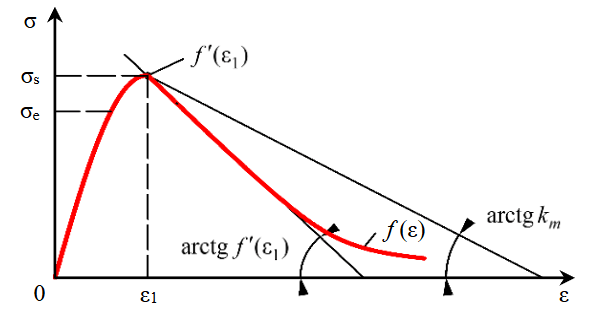
Fig.1. Stress-strain diagram for a rock sample and a loading device during dynamic (uncontrolled) destruction; σe – the elastic limit of the rock mass, Pa; σs – the ultimate strength of the rock mass, Pa; ε1 – deformations corresponding to the ultimate strength of the rock mass; f (ε) – a complete diagram of the deformation of the rock mass; km – non-dimensional normalized parameter
The authors of this paper propose to explain the mechanism of rock bursts in the area of dike occurrence or in combination with tectonic disturbances of the disjunctive type from the standpoint of the theory of rigid-platen theory [21]. Geological and structural disturbances are considered in this case from the point of view of their possibility to accumulate potential energy as a result of stoping operations or stress redistribution in the rock mass, as well as taking into account their strength and deformation properties. This is the mechanism of occurrence of a Class 3 rock burst (Table 1) in the area of tectonic disturbance, including hidden, it has the following characteristic stages:
- The 1st stage is elastic. Under the conditions of the formed field of gravitational-tectonic stresses in the dike area, elastic deformation energy accumulates, a slight change in the physical-mechanical properties of rocks, pores and microcracks close, and an increase in the velocity of ultrasonic waves can be observed.
- The 2nd stage is inelastic deformation. When the elastic limit of the host rocks is reached (in contact with the dike), an area of irreversible deformations occurs, which continues to the ultimate strength and is often directly related to a significant change in the stress-strain state of the rock mass.
- The 3rd stage is extreme deformation in the dynamic mode, which occurs after reaching the ultimate strength of the host rocks (in contact with the dike) and continues to the ultimate residual strength. A characteristic feature of the stage is the ongoing deformation process with a gradually decreasing load, the total area of the shear surfaces begins to increase, providing less and less resistance to the load. It is in this area that dynamic (uncontrolled) destruction occurs, provided that a sufficient amount of energy is stored inside the rock mass-disjunctive system. Due to inertia, there is a shock effect of the dike and the host rocks on the one hand on the host rock mass on the other, which leads to a Class 3 rock burst. There are seismic fluctuations caused by the displacement of rocks.
The process of rock deformation in the area of strong dikes at the 3rd stage is also the cause of air bursting, intense rock spalling and other dangerous dynamic forms of rock pressure.
A diagram of the described mechanism of a Class 3 rock burst in the area of a tectonic disturbance for the perfect conditions is shown in Fig.2.
Under geomechanical conditions of volumetric stress, the array of host rocks in the disjunctive region reaches an ultimate strength limit σs. Then the process will continue until the residual strength limit σ0 reached. To maintain this process, energy is required, which is determined by the magnitude of irreversible deformations in the beyond region [19, 22]. The energy stored in the rock mass will decrease by the value dσ:
Using a phenomenological approach, let us imagine that the dike will be sufficiently fractured, i.e. its stiffness Ed F will be less than the stiffness of the host rocks of the disjunctive region. The area F is determined by the size of the contact area between the dike and the host rocks within the abutment pressure zone induced by excavation advance. In this case, the additional energy released – the sum of the components of the kinetic energy of the flying particles, the oscillatory movements of the system and thermal energy, will lead to the destruction of the rock mass in a dynamic form. The value of this energy can be determined by the formula [19, 22]:
Otherwise, if the stiffness of the dike or other strong inclusion is greater than the stiffness of the rocks EdF > EmF, the released energy will not be enough to cause a geodynamic event and the fracture process will be controlled (safe) immediately before the rock mass reaches residual strength:
Thus, one of the main criteria for rock burst hazard in highly stressed rock masses in the area of disjunctive disturbances will be the ratio of the deformation modules of dikes and host rocks in the disjunctive area of the rock mass. Quantitative values and the scope of the specified rock burst hazard criterion, based on the proposed idea, have yet to be obtained, including by numerical modeling and physical modeling on equivalent materials. Analysis of the database of rock bursts allowed the authors to classify them by the mechanism of occurrence in accordance with Table 1. The results of the analysis are shown in Fig.3.
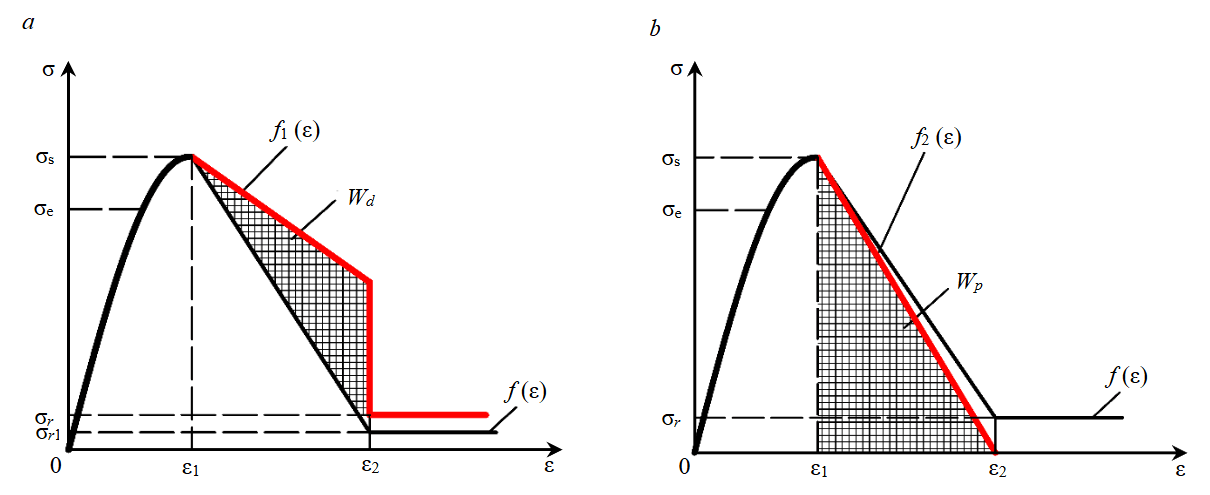
Fig.2. The mechanism of occurrence of a Class 3 rock burst: а – dangerous geomechanical state of the massif in the disjunctive region; b – non-dangerous geomechanical state of the massif in the disjunctive region; f (ε) – deformation curve of the host rocks; f1(ε), f2(ε) – deformation curves of the dike; Wd, Wp – elastic energy stored in the dike for cases of dangerous and non-dangerous geomechanical conditions of the rock mass, J; σr, σr1 – limits of residual strength of the host rocks and dikes, Pa; ε1, ε2 – deformations corresponding to the ultimate strength and residual strength of the rock mass
Since the noughties of the 21st century, there has been a stabilization of the number of rock bursts in the studied deposits with a certain tendency to their gradual decrease, which indicates a high intensity of preventive measures and sufficient competence of specialists dealing with the problem of rock bursts. It should be noted that all events are recorded with a constant increase in the depth of stoping operations in difficult mining and geological conditions [23, 24].
Of all the documented events, the authors attributed about 40 % to Class 3. Similar results were obtained by A.A.Kozyrev when assessing the factors of occurrence of geodynamic phenomena in the deposits of the Apatite arc [25]. In the period 1980-1990, 50 % of such events were registered. This means that the mechanism of each second event is combined, i.e. it is associated with the action of high tectonic stresses in the rock mass, as well as the presence of a geological disturbance filled with a durable aggregate material. At the same time, the percentage of Class 3 events changes over time quite naturally. In the period 2010-2024, the authors assigned 40 % of all recorded seismic events during this period to the third class.
Hypocenters of seismic events, rock bursts, or rock-tectonic bursts over the past 14 years, combined with the lithological and structural model of the deposit under consideration, are shown in Fig.4.
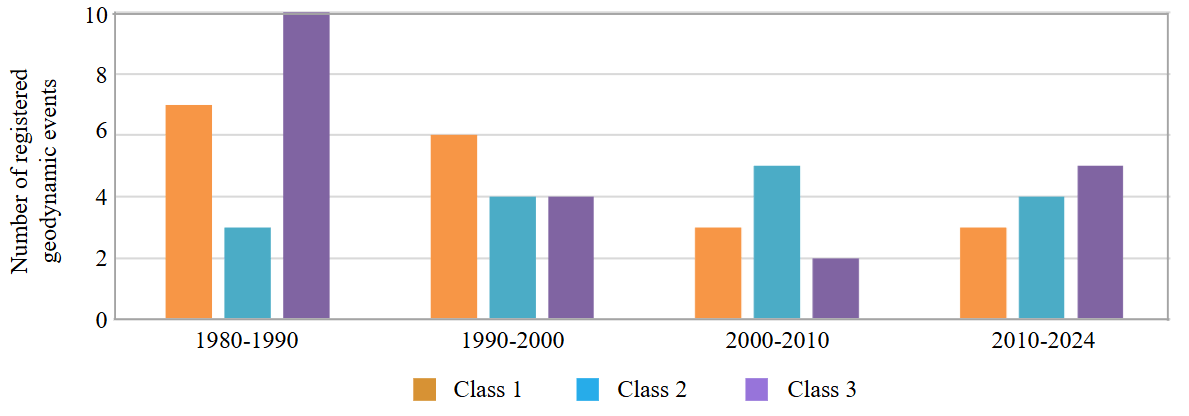
Fig.3. Classification of rock bursts by the mechanism of their occurrence
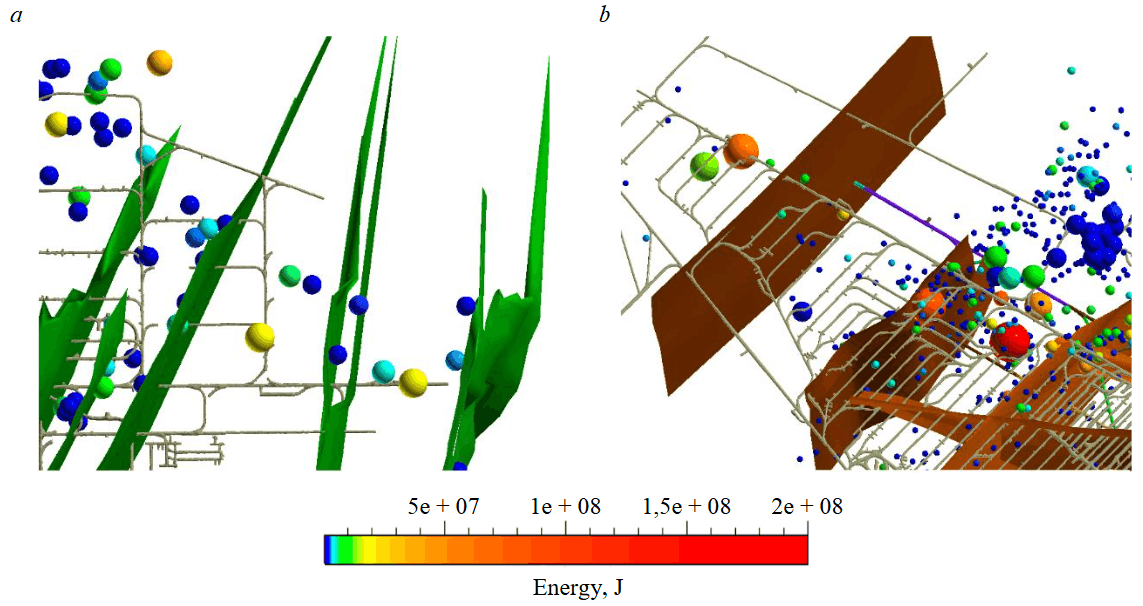
Fig.4. Localization of hypocenters and energy of seismic events (rock bursts): a – in the area of occurrence of tectonic disturbances; b – in the area of occurrence of strong dikes
It can be seen from the analysis of Fig.4 that all rock bursts with seismic event energy from 1.7×10⁶ to 1.6×10⁸ J were recorded in the area of occurrence of big tectonic disturbances or in the area of their conjugation. At the same time, about 40 % of rock bursts were recorded in the area of two strong dikes (Fig.4, b), which actually confirms the earlier conclusions that they belong to Class 3 in terms of the mechanism of occurrence. As a result of the analysis, it was found that hypocenters of seismic events can often be located at a distance from the contour of the stoping and development workings. In this case, it is also necessary to separate the mechanism of the source of the geodynamic event and the consequences that were recorded in the workings and chambers based on the results of visual and measuring control [26].
Discussion
Many scientists have been studying the mechanism and generation of earthquakes (rock bursts are a special case of an earthquake). In [27], with reference to Professor Yu.L.Rebetsky, it was concluded that the well-known ideas about the earthquake preparation process have shifted from the mechanics of strength of structural materials and do not take into account the structural features of seismogenic areas of the Earth's crust – fault zones. At the same time, according to Richter [27], the occurrence of earthquakes is associated with the existence of localized zones of reduced strength, which are characterized by low levels of deviant stresses.
Durrheim was one of the first to draw attention to regional structures such as disjunctives and dikes [28]. He conducted a comprehensive analysis of the mechanisms and fundamental causes of 21 rock bursts in the deep gold mines of South Africa and concluded that the location of mines, as well as the presence of these structural and tectonic features of the rock mass, is a common cause of these phenomena.
According to the conclusions of [26], Class 2 mining impacts, i.e. the occurrence of primary and reactive shifts due to existing tectonic disturbances, can occur only during large-scale mining operations.
The study carried out by the authors of the work differs favorably in that the results of early work [29, 30] do not take into account hidden dikes that may lie in a sub-parallel or orthogonal direction from the edge of the rock mass. The physical-mechanical properties of these disturbances, as well as the conjunctive area of the rock mass, make it possible to classify them as potentially dangerous or dangerous based on certain geological and geomechanical factors. These include strength and deformation characteristics, genesis, susceptibility to crumpling or slanting, etc. The causes of a Class 3 rock burst are organically integrated into the well-known theory of rigid-platen theory, which has many supporters among specialists, although it is not without some drawbacks. In particular, the main issue facing researchers is the high complexity of determining the deformation properties directly in the rock mass.
Of course, along with the unified classification of dynamic phenomena developed with the participation of I.M.Petukhov, there are a number of others that have also found their application in mining. Here are the most famous of them, which will greatly help in discussing the results of the study and their place within the framework of existing theories. The most well-known classification of rock bursts to date, based on the manifestations of seismicity and the associated mechanism of destruction of the rock mass, was proposed in 1994 by Ortlepp and Stacey [26]. According to their concept, the manifestation of seismicity can be expressed in the form of air bursting, spalling (for layered and transversely anisotropic rocks), rock outburst, rock destruction as a result of shear, as well as displacement (Table 2).
Table 2
Classification of rock bursts by signs of seismicity [26]
|
Seismicity manifestations (fracture mechanism) |
Hypothesized source mechanism |
Initial seismic arrival |
Magnitude on the Richter scale |
|
Air bursting of rock mass |
Surface spalling |
It is usually not fixed, it can be implosive |
–0.2-0 |
|
Detachment (in layered and transversely isotropic rocks) |
Detachment of pre-existing large slabs (or beds) oriented parallel to the excavation face |
Implosive |
0-1.5 |
|
Face rockfall |
Intensive release of rock from the excavation face |
Implosive |
1.0-2.5 |
|
Shear failure of rock |
Intensive shear fracturing through intact rock mass |
Double conjugate shear |
2.0-3.5 |
|
Displacement shear (slip) |
Sudden reactivation of movement along a pre- existing fault or dike contact |
Double conjugate shear |
2.5-5.0 |
It is essential to clearly distinguish between the source mechanism of a geodynamic event and the resulting damage (failure mechanism) observed on the excavation surface. These two mechanisms can often be distinct and are recorded at a certain distance from one another [26].
Around the same time, Hedley [29] classified all geodynamic events into three categories (based on the example of Ontario province mines): 1) natural geodynamic events. The author particularly emphasizes that in situ stresses in the rock mass are sufficient to cause failure in the excavation periphery during active mining and development work; 2) induced geodynamic events. Such events occur during stoping operations and mine pressure management using pillars. The cause in this case is explained by high stress concentrations in the remaining structures under conditions of zero lateral stress tensor components (σ2 = σ3 = 0); 3) geodynamic events resulting from sudden slip along a weakened contact plane between lithological units or other discontinuities. This mechanism is analogous to the earthquake source mechanism studied in seismology.
As can be seen, the first two points of Hedley’s classification [29] largely align with the concepts of I.M.Petukhov, although they were derived under completely different mining-geological and geomechanical conditions of ore deposits. The classification of rock bursts has also been addressed with considerable success by other renowned specialists. For instance, Hoek [30] distinguished two types of geodynamic events: rupture and shear, each based on their corresponding inherent mechanisms. In our view, the most effective classification of geodynamic events is presented by Tang [31]. In his developed classification, three primary mechanisms for the genesis of a geodynamic event are taken as the basis. The first mechanism is directly related to the existence of an excavation, stope, or pillar and occurs when a certain stress threshold is exceeded in the excavation periphery or its vicinity. Consequently, this first mechanism logically unites an entire class of events under a common denominator. The second mechanism is directly linked to the structural features of the rock mass, meaning the occurrence of a geodynamic event is conditioned by the presence of tectonic discontinuities of various genesis. In this case, the source of the event is slip along pre-existing planes of weakness or other shear activity within the mass. The third mechanism for a geodynamic event [31] is a combination of the first two mechanisms.
Thus, the additions proposed by the authors of this work to the classification of geodynamic events do not go beyond the existing concepts in the world [31-33] and at the same time allow other authors to carry out their own research within the framework of the proposed approach [34]. This choice seems even more obvious today, when researchers around the world identify a large number of features of the occurrence of geodynamic phenomena, individual mechanisms inherent in specific geological and geomechanical conditions of development [35, 36].
Conclusion
Based on the research results, the main factors and causes of rock bursts in the highly stressed rock masses of the Khibiny apatite-nepheline deposits have been identified. In 40 % of all geodynamic events recorded here, the reason was the presence of high-strength dikes in a mass of host rocks with a high level of tectonic stress. At the same time, it was found that some well-known classifications of rock bursts do not fully take into account the existing features of the manifestation of rock burst hazard.
The mechanism of rock burst hazard formation under the conditions of the Khibiny deposits can be explained from the perspective of the existing rigid-platen theory. Based on this, one of the important criteria for rockburst hazard in the vicinity of dikes is their stiffness relative to the host rocks within the co-disjunctive zone in the post-peak region of the complete stress-strain curve. It is assumed that dikes with minor discontinuities are significantly more prone to rock bursts than massive and undisturbed ones. The most hazardous situation is predicted when driving excavations in a direction subparallel to a concealed discontinuity, especially toward a diminishing pillar between the excavation wall and the dike complex or fault.
For the conditions of the Khibiny deposits, it is advisable to incorporate the identified specific features of rock burst hazard manifestation into rock burst classifications. This will enable a more scientifically grounded application of early warning measures and a reduction in geodynamic risk.
References
- Eremenko V.A. Natural and man-made factors of the occurrence of rock bursts during the development of iron ore deposits in Western Siberia. Mining Informational and Analytical Bulletin. 2012. N 11, p. 50-59.
- Villalobos F.A., Villalobos S.A., Aguilera L.E. Evaluation of rockburst energy capacity for the design of rock support systems for different tunnel geometries at El Teniente copper mine. Journal of the Southern African Institute of Mining and Metallurgy. 2022. Vol. 122. N 9, p. 505-515. DOI: 10.17159/2411-9717/1249/2022
- Forecasting and prevention of rock bursts at mines / Ed. by I.M.Petukhov, A.M.Ilin, K.N.Trubetskoiy. Moscow: Izd-vo Akademii gornykh nauk, 1997, p. 376.
- Lovchikov A.V. Change in presentations on mechanism of rock and tectonic bursts at ore mines at present time. Journal of Mining Institute. 2010. Vol. 188, p. 63-65.
- Lovchikov A.V. A New Concept of the Mechanism of Rock-Tectonic Bursts and Other Dynamic Phenomena in Conditions of Ore Deposits. Mining Science and Technology. 2020. Vol. 5. N 1, p. 30-38. DOI: 10.17073/2500-0632-2020-1-30-38
- Marinin M.A., Karasev M.A., Pospekhov G.B. et al. Engineering and geological parameters for heap leaching of gold from low-grade sandy clay ores: a feasibility study. Mining Informational and Analytical Bulletin. 2023. N 9, p. 22-37. DOI: 10.25018/0236_1493_2023_9_0_22
- Morozov K.V., Demekhin D.N., Bakhtin E.V. Multicomponent strain gauges for assessing the stress-strain state of a rock mass. Mining Informational and Analytical Bulletin. 2022. N 6-2, p. 80-97 (in Russian). DOI: 10.25018/0236_1493_2022_62_0_80
- Nguyen T.T., Karasev M.A. Optimization of geometry design of quasi-rectangular section tunnel by the force criterion. Mining Informational and Analytical Bulletin. 2021. N 6, p. 59-71 (in Russian). DOI: 10.25018/0236_1493_2021_6_0_59
- Glinskii V.V., Trushko V.L. Design of seismic-resistant linings for rock burst conditions. Advances in Raw Material Industries for Sustainable Development Goals. London: CRC Press, 2021, p. 99-104. DOI: 10.1201/9781003164395
- Ilyinov M.D., Petrov D.N., Karmanskiy D.A., Selikhov A.A. Physical simulation aspects of structural changes in rock samples under thermobaric conditions at great depths. Mining Science and Technology. 2023. Vol. 8. N 4, p. 290-302. DOI: 10.17073/2500-0632-2023-09-150
- Verbilo P.E., Vilner M.A. Study of the jointed rock mass uniaxial compression strength anisotropy and scale effect. Mining Informational and Analytical Bulletin. 2022. N 6-2, p. 47-59 (in Russian). DOI: 10.25018/0236_1493_2022_62_0_47
- Karasev M.A., Protosenya A.G., Katerov A.M., Petrushin V.V. Analysis of shaft lining stress state in anhydrite-rock salt transition zone. Rudarsko-geološko-naftni zbornik. 2022. Vol. 37. N 1, p. 151-162. DOI: 10.17794/rgn.2022.1.13
- Jian Zhou, Xibing Li, Mitri H.S. Evaluation method of rockburst: State-of-the-art literature review. Tunnelling and Underground Space Technology. 2018. Vol. 81, p. 632-659. DOI: 10.1016/j.tust.2018.08.029
- Zhou Jian, Li Xibing, Shi Xiuzhi. Long-term prediction model of rockburst in underground openings using heuristic algorithms and support vector machines. Safety Science. 2012. Vol. 50. Iss. 4, p. 629-644. DOI: 10.1016/j.ssci.2011.08.065
- Askaripour M., Saeidi A., Rouleau A., Mercier-Langevin P. Rockburst in underground excavations: A review of mechanism, classification, and prediction methods. Underground Space. 2022. Vol. 7. Iss. 4, p. 577-607. DOI: 10.1016/j.undsp.2021.11.008
- Petukhov I.M., Linkov A.M. Mechanics of rock bursts and outbursts. Moscow: Nedra, 1983, p. 280.
- Manchao He, Tai Cheng, Yafei Qiao, Hongru Li. A review of rockburst: Experiments, theories, and simulations. Journal of Rock Mechanics and Geotechnical Engineering. 2023. Vol. 15. Iss. 5, p. 1312-1353. DOI: 10.1016/j.jrmge.2022.07.014
- Iovlev G.A., Protosenya A.G., Petrov N.E. Determination of Parameters of Soil Constitutive Models Based on Field Test Data. Soil Mechanics and Foundation Engineering. 2024. Vol. 60. N 6, p. 528-534. DOI: 10.1007/s11204-024-09925-3
- Tarasov B.G. Post-limit properties and correlation with spontaneous fracture dynamics in rocks. Gornyi zhurnal. 2021. N 1, p. 13-19 (in Russian). DOI: 10.17580/gzh.2021.01.03
- Stavrogin A.N., Protosenya A.G. Mechanics of deformation and destruction of rocks. Moscow: Nedra, 1992, p. 224.
- Jian Zhou, Yulin Zhang, Chuanqi Li et al. Rockburst prediction and prevention in underground space excavation. Underground Space. 2024. Vol. 14, p. 70-98. DOI: 10.1016/j.undsp.2023.05.009
- Tarasov B.G. Paradoxes of strength and brittleness of rocks at seismic depths. Gornyi zhurnal. 2020. N 1, p. 11-17 (in Russian). DOI: 10.17580/gzh.2020.01.02
- Kazanin O.I., Sidorenko A.A., Evsiukova A.A., Liu Zilu. Justification of the longwall panel entries support technology when mining gently inclined coal seams at large depths. Mining Informational and Analytical Bulletin. 2023. N 9-1, p. 5-21 (in Russian). DOI: 10.25018/0236_1493_2023_91_0_5
- Abrashitov A.Yu., Shabarov A.N., Korchak P.A., Kuranov A.D. Dealing with geodynamic safety challenges in cooperation with a mining company: A case-study. Gornyi zhurnal. 2023. N 5, p. 40-48 (in Russian). DOI: 10.17580/gzh.2023.05.06
- Kozyrev A.A., Semenova I.E., Zhukova S.A., Zhuravleva O.G. Factors of seismic behavior change and localization of hazardous zones under a large-scale mining-induced impact. Russian Mining Industry. 2022. N 6, p. 95-102 (in Russian). DOI: 10.30686/1609-9192-2022-6-95-102
- Ortlepp W.D., Stacey T.R. Rockburst mechanisms in tunnels and shafts. Tunnelling and Underground Space Technology. 1994. Vol. 9. Iss. 1, p. 59-65. DOI: 10.1016/0886-7798(94)90010-8
- Panteleev I.A., Naimark O.B. Modern trends in mechanics of tectonic earthquakes. Perm Federal Research Centre UB RAS. 2014. N 3, p. 44-62 (in Russian).
- Durrheim R.J., Roberts M.K.C., Haile A.T. et al. Factors influencing the severity of rockburst damage in South African gold mines. Journal of the Southern African Institute of Mining and Metallurgy. 1998. Vol. 98. Iss. 2, p. 53-57. DOI: 10520/AJA0038223X_2507
- Hedley D.G.F. Rockburst handbook for Ontario hardrock mines. Canada Centre for Mineral and Energy Technology, 1992. CANMET Special Report 92-1E, p. 312. DOI: 10.4095/305107
- Hoek E., Brown E.T. The Hoek–Brown failure criterion and GSI – 2018 edition. Journal of Rock Mechanics and Geotechnical Engineering. 2019. Vol. 11. Iss. 3, p. 445-463. DOI: 10.1016/j.jrmge.2018.08.001
- Baoyao Tang. Rockburst Control Using Destress Blasting: A Thesis Submitted to the Faculty of Graduate Studies and Research in Partial Fulfilment of the Requirements for the Degree of Doctor of Philosophy. Montreal: McGill University, 2000, p. 248. URL: https://escholarship.mcgill.ca/concern/theses/xd07gv32k (accessed 20.02.2025).
- Xingdong Zhao, Shujing Zhang, Qiankun Zhu et al. Dynamic and static analysis of a kind of novel J energy-releasing bolts. Geomatics, Natural Hazards and Risk. 2020. Vol. 11. Iss. 1, p. 2486-2508. DOI: 10.1080/19475705.2020.1833991
- Yang Fanjie, Zhou Hui, Xiao Haibin et al. Numerical simulation method for the process of rockburst. Engineering Geology. 2022. Vol. 306. N 106760. DOI: 10.1016/j.enggeo.2022.106760
- Loktyukova O.Yu., Kravchuk A.V. Tectonic fault prediction procedure based on reinterpretation of geological exploration data. Mining Informational and Analytical Bulletin. 2025. N 2, p. 114-129 (in Russian). DOI: 10.25018/0236_1493_2025_2_0_114
- Litvinenko V., Trushko V. Modelling of geomechanical processes of interaction of the ice cover with subglacial Lake Vostok in Antarctica. Antarctic Science. 2025. Vol. 37. Iss. 1, p. 39-48. DOI: 10.1017/S0954102024000506
- Sidorenko A.A., Dmitriev P.N., Alekseev V.Yu., Sidorenko S.A. Improvement of technological schemes of mining of coal seams prone to spontaneous combustion and rock bumps. Journal of Mining Institute. 2023. Vol. 264, p. 949-961.