

Stress-strain state modeling of a mine working face near gas-dynamic hazard zones
- 1 — Ph.D., Dr.Sci. Head of Department Empress Catherine ΙΙ Saint Petersburg Mining University ▪ Orcid
- 2 — Postgraduate Student Empress Catherine ΙΙ Saint Petersburg Mining University ▪ Orcid
Abstract
The driving of mine workings in strong dolomites at the “Internatsionalny” mine using the drill-and-blast method is complicated by gas-dynamic phenomena, which manifest as rock and gas outbursts. The presence of fracture zones and significant rock pressure in rock strata at depths exceeding 1000 m has predetermined the occurrence of secondary rock failure from the face of opening workings. The paper presents the results of modeling the stress-strain state of the mine working face in areas hazardous for gas-dynamic phenomena, typical for the geomechanical conditions of the “Internatsionalnaya” kimberlite pipe deposit. The stress-strain state modeling was performed using the finite element method in the domestic software package CAE Fidesys. Eighteen geomechanical scenarios were considered for the position of the mine working face at distances of 2, 4, and 6 m from intensive fracturing zones with thicknesses of 2, 4, and 6 m, both with and without gas present. All computational models were constructed in a three-dimensional formulation at a depth of 1500 m, with vertical stresses equal to 40 MPa, which corresponds to Professor A.N.Dinnik’s theory. Horizontal stresses were applied to the side faces of the computational models via forced displacements under the condition of equicomponent compression, corresponding to a lateral earth pressure coefficient 1. The parameters of an equicomponent or near-equicomponent stress field at the deep horizons of the “Internatsionalnaya” kimberlite pipe are confirmed both by instrumental measurements and by global experience in mining operations at depths exceeding 1000 m. The research results indicate that a safe gas-dynamic state of the rock mass can be achieved by creating a non-reducible advance zone, the width of which is recommended to be determined based on the physical-mechanical and structural characteristics of the mine working drive section.
None
Introduction
The current trend towards increasingly complex mining and geological conditions leads to higher geomechanical risks and the occurrence of large-scale catastrophic events at mining facilities, as noted in reports by technical supervision representatives, researchers from industry institutes, and specialists from mining enterprises [1-3]. At the same time, the demand for raw materials continues to grow, as does the development of high-performance extraction technologies. Given this trend, the issue of ensuring industrial safety during the development of solid mineral deposits remains open.
Mining companies emphasize the need1 for innovative research and development [4, 5], particularly in geomechanics, capable of addressing the negative responses of the rock mass to mining operations and preventing unpredictable rock failure processes [6-8]. Industry specialists also highlight the positive results of implementing digital solutions at deposits with complex mining and geological conditions [9-11]. Experience with modern instrumentation systems demonstrates positive outcomes in predicting initial data on the physical and mechanical properties of the rock mass [12-14].
The driving of mine workings using the drill-and-blast method in strong dolomites at the “Internatsionalny” underground mine is complicated by secondary gas-dynamic phenomena, which manifest as rock and gas outbursts [15-17]. The presence of free gas in fracture zones of the host rocks and significant rock pressure in rock strata at depths exceeding 1000 m has predetermined the occurrence of secondary spontaneous rock failure from the face of opening workings [18-20].
Similarly, the driving of workings by the drill-and-blast method in sandstones during the opening of coal reserves in the Donbass mines has been complicated by gas-dynamic phenomena starting at depths of 750 m. E.I.Efremov, V.N.Kharitonov, and I.A.Semenyuk noted that rock stress, caused by the pressure of the overlying strata, tectonic disturbances, and gas pressure, is the main factor of outburst hazard. Based on the premise that outbursts are caused by high rock stresses and their physical and mechanical properties, the main prevention strategies have focused on reducing the active anthropogenic stresses in the rock mass.
Rock mass unloading in coal mines and ore mines is carried out through pre-mining [21-23], the creation of relief slots [24-26], advanced torpedoing [27-29], and rock moistening with surfactants [30, 31].
Based on mining operations in outburst-prone sandstones in the Donbass and experimental work in outburst-prone dolomites at the “Internatsionalny” mine, a general conclusion is drawn about the low effectiveness of antioutburst measures such as hydro-moistening, drilling relief boreholes, and the use of continuous miner driving methods in conditions of strong rock masses.
Advanced torpedoing is noted by L.L.Kaufman and B.A.Lysikov as the most effective method for controlling the state of an outburst-hazardous rock mass, the parameters of which must be promptly determined based on the current mining and geological situation. The issue of predicting gas-dynamic phenomena (GDP) in rock masses remains highly relevant today. Despite many years of global experience in combating GDP, mining scientists have not yet developed a reliable and internationally recognized method for predicting GDP. The geological uniqueness of each deposit – the ductile failure mode of outburst-prone potassium salts, the elastic failure mode of outburst-prone sandstones and dolomites – requires an individual approach to developing predictive measures.
The most popular methods for predicting GDP, tested during mining operations in outburst-prone shales and sandstones in mines in the GDR, Poland, Czechoslovakia, and the Donbass, are based on drilling blastholes and boreholes to measure gas pressure, gas quantity, gas emission rate, drill cuttings quantity, core discing, and the time required to drill one meter of a blasthole. Geophysical prediction methods for GDP are also used, involving measurements of acoustic emission, and laboratory measurements of gas desorption rates from rock cuttings.
At the “Internatsionalny” mine, local and current GDP prediction methods are currently applied based on lithological data (local prediction) and gas emission intensity (current prediction). In addition to the enterprise-approved GDP prediction methods, geophysical methods for current prediction of rock mass stress are also being tested, using natural electromagnetic emission (Angel-M device) and acoustic emission (Prognoz-L device) data.
Since gas-dynamic phenomena continue to occur even under preventive measures, the assessment of the stress-strain state of the mine working face when approaching GDP-hazardous zones and determining the required width of the non-reducible advance zone remains a critical issue.
Methodology for regulating the geomechanical state of the mine working’s edge
Intense fracturing at depths exceeding 1000 m is accompanied by the presence of free gas under pressure ranging from the first few units to 10 MPa. The thickness of the intense fracturing zone is determined at the stage of drilling boreholes for local geological prediction and reaches 2-6 m (Fig.1). When approaching zones of intense fracturing, various geomechanical situations are formed, which must be taken into account numerically.
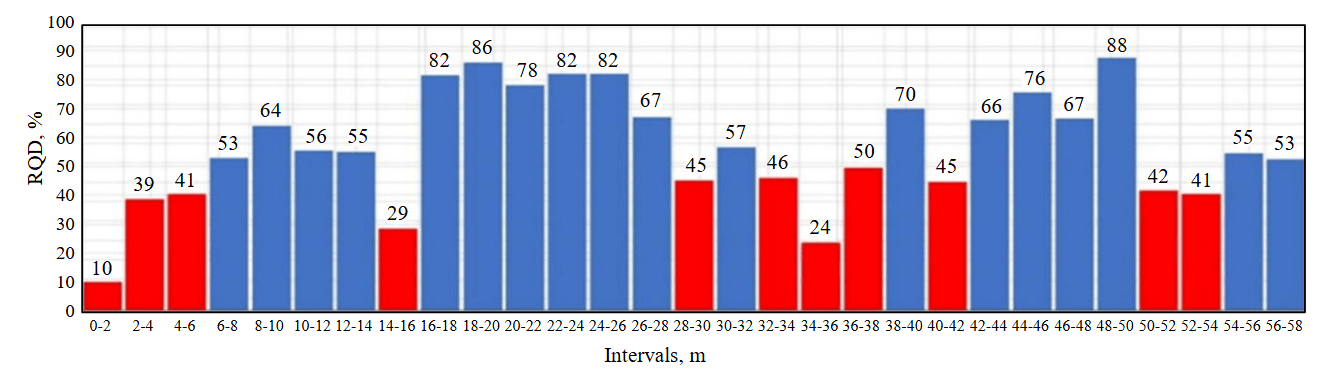
Fig.1. Core fracturing RQD from the local prediction borehole
As the main measure to ensure the safe state of outburst-hazardous rocks at the mine, advanced borehole torpedoing is applied, creating a protective non-reducible advance zone with a standard width of 1 m (Fig.2).
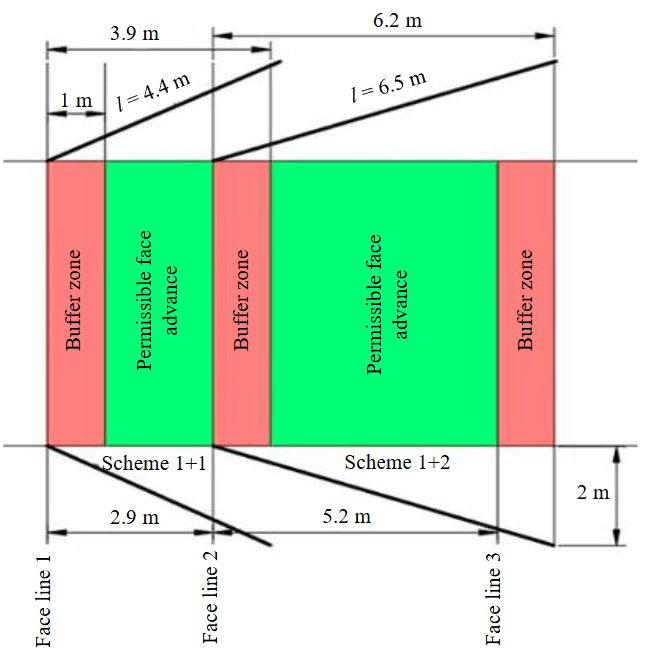
Fig.2. Principle scheme of advanced borehole torpedoing
Eighteen geomechanical scenarios are considered for the position of the mine working face at distances of 2, 4, and 6 m from intense fracturing zones with thicknesses of 2, 4, and 6 m, both with and without gas present.
All computational models are analyzed in a three-dimensional formulation at a depth of 1500 m, with vertical stresses equal to 40 MPa, which corresponds to Professor A.N.Dinnik’s theory. According to this theory, vertical compressive stresses correspond to the pressure of the overlying rock strata. Horizontal stresses, in turn, are applied to the side faces of the computational models via forced displacements under the condition of equicomponent compression, corresponding to a lateral earth pressure coefficient 1. The parameters of an equicomponent or near-equicomponent stress field at the deep horizons of the “Internatsionalnaya” kimberlite pipe are confirmed by both instrumental measurements conducted by researchers from the Institute of Mining, Siberian Branch of the RAS [32], and global experience in mining operations at depths exceeding 1000 m [33-35].
Within the computational domain, the equilibrium equation, the Cauchy equation, and Hooke’s law are solved:
where σij – components of the stress tensor; pFi = γgδij – body forces; γ – rock density; g – acceleration due to gravity; δij – Kronecker delta; εij – components of the strain tensor; ui – components of the displacement vector; θ = εx + εy + εz – volumetric strain; G and λ – Lamé parameters,
The following physical and mechanical properties of rocks are input into the computational models: undisturbed dolomite (material of the surrounding rock mass) – elastic modulus 50,000 MPa, Poisson’s ratio 0.25, density 2700 kg/m3; dolomite in the intense fracturing zone – elastic modulus 10,000 MPa, Poisson’s ratio 0.35, density 2600 kg/m3. The reduction of rock mass elastic modulus in the fracturing zone is estimated using the following formula:
where Е0 – elastic modulus of the rock in its intact state (in a sample), MPa; IT – fracturing intensity, units/m.
To account for gas pressure, with a maximum value of 10 MPa, the initial stress state in the three normal components of the stress tensor is set to 50 MPa in the intense fracturing zones.
The size of the computational domain satisfies Saint-Venant’s principle, ensuring that the model boundaries are located at a distance that does not affect the calculation results in the region of the object under study. According to this principle, at distances exceeding the characteristic size of the load application area, the distribution of stresses and strains is practically independent of the specific method of load application. Similarly, the size of the finite element mesh is determined; further refinement of the mesh does not result in changes to the calculation results.
Results of stress-strain state modeling
The stress-strain state modeling was performed using the finite element method in the CAE Fidesys software, which has been widely validated for solving various problems in mining geomechanics [36-38]. Figure 3 shows a longitudinal section of the mine working with diagrams of maximum compressive stresses, illustrating the adequacy of the specified boundary conditions.
At a distance of 1 m from the mine working face, without defining intense fracturing zones, the maximum compressive stress, averaged over three points, is approximately 51 MPa. Further calculations to assess the influence of intense fracturing zones on the stress-strain state of the face were carried out using the same three points.
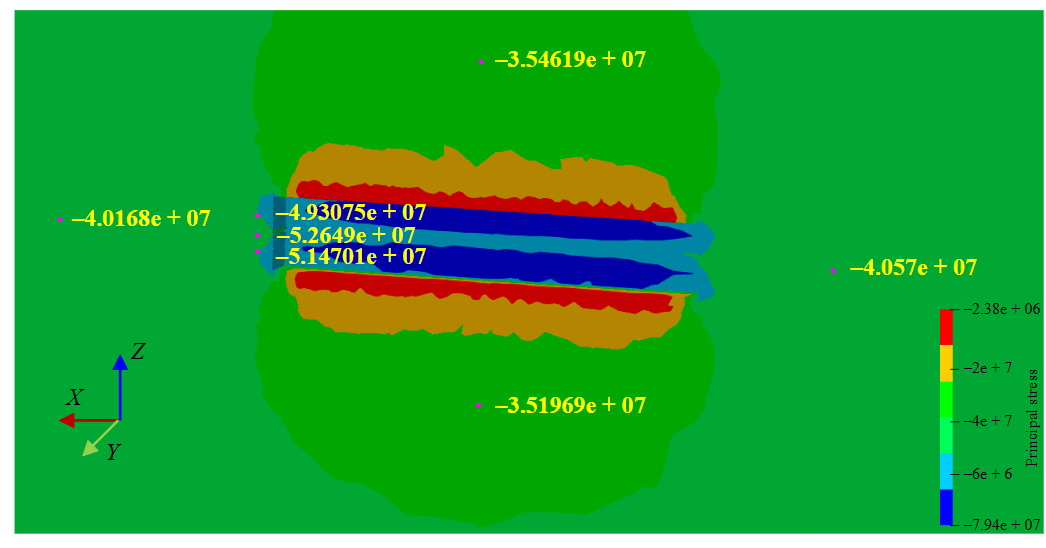
Fig.3. Longitudinal section of the mine working with diagrams of maximum compressive stresses
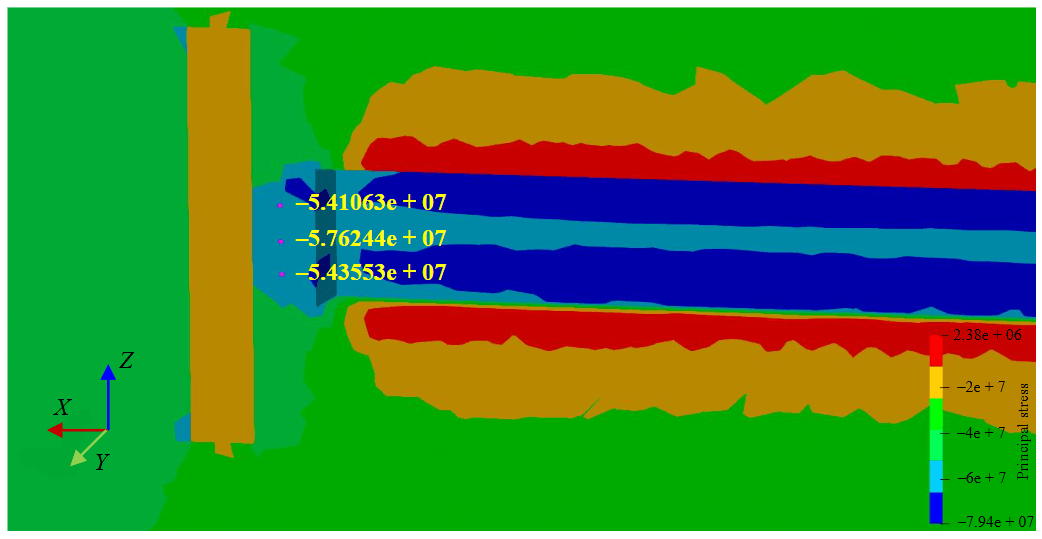
Fig.4. Longitudinal section of the mine working with diagrams of maximum compressive stresses at a distance of 2 m from the face to an intense fracturing zone 2 m thick without gas (averaged value 55 MPa)
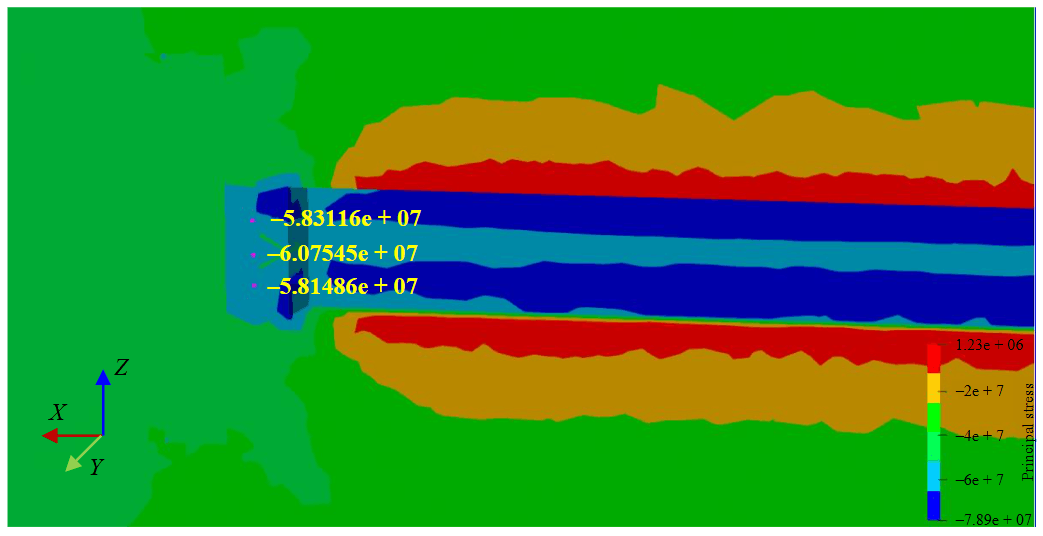
Fig.5. Longitudinal section of the mine working with diagrams of maximum compressive stresses at a distance of 2 m from the face to an intense fracturing zone 2 m thick with gas (averaged value 59 MPa)
Figures 4 and 5 show two of the 18 considered models of intense fracturing zones, accounting for gas pressure and excluding gas. The Table presents the calculation results for all considered geomechanical scenarios.
Based on the results, the following patterns can be identified:
- the concentration of compressive stresses in the near-face zone increases regardless of the presence of gas in the fractures;
- fracturing zones with gas have a greater influence compared to fracturing zones without gas when located at a distance of 2 m from the mine working face;
- at distances of 4 and 6 m from the face to the intense fracturing zones, a greater load on the near-face zone occurs in the absence of gas in the fractures.
Application area of the results
The results of numerical modeling should be used to justify the safe value of the non-reducible advance zone width during borehole torpedoing operations.
Results of the calculations for the considered models
|
Distance to the face, m |
Maximum compressive stresses, MPa (without gas in the fractures) |
Maximum compressive stresses, MPa (with gas in the fractures) |
|
Zone of intense fracturing with a thickness of 2 m |
||
|
2 |
55 |
59 |
|
4 |
53 |
54 |
|
6 |
52 |
52 |
|
Zone of intense fracturing with a thickness of 4 m |
||
|
2 |
58 |
63 |
|
4 |
56 |
54 |
|
6 |
54 |
52 |
|
Zone of intense fracturing with a thickness of 6 m |
||
|
2 |
58 |
63 |
|
4 |
57 |
54 |
|
6 |
55 |
51 |
It is known that the studied dolomite rocks are brittle and prone to dynamic failure. Therefore, in accordance with current safety regulations, the formation of compressive stress zones exceeding 80 % of the uniaxial compressive strength of the rock is not permitted.
According to the results of laboratory tests conducted from 2022 to 2024 at the laboratories of the Saint Petersburg Mining University, the Gipronickel Institute, and VNIMI, the averaged uniaxial compressive strengths of brittle-failing dolomite rocks from the “Internatsionalny” mine range from 70 to 90 MPa. Thus, based on the ratio of maximum compressive stresses to uniaxial compressive strength, a ranking of safe and hazardous distances from the mine working face to intense fracturing zones has been performed, depending on rock strength (Fig.6).
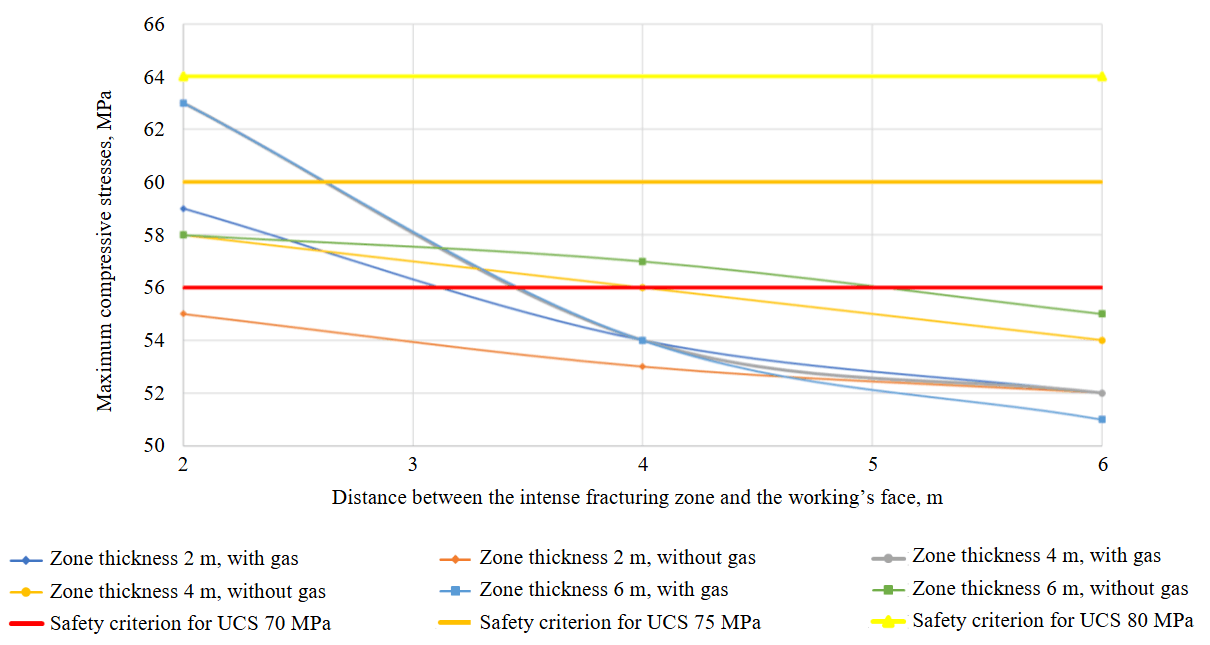
Fig.6. Graph of stress-strain state changes in the face area of the mine working under various geomechanical conditions
The graph presented in Fig.6 allows us to conclude that when a rock mass section is composed of rocks with a strength of about 70 MPa, the non-reducible advance zone must be formed with a width of 4 to 6 m, depending on the thickness of the intensely fractured zone. For rocks with uniaxial compressive strength equal to 75 MPa, the required width of the non-reducible advance zone is 4 m. When the rock mass section is composed of rocks with strength of 80 MPa or higher, it is permissible to form a non-reducible advance zone with a standard width of 1 m.
Conclusion
The results of the conducted research have shown that one of the key factors influencing the occurrence of gas-outburst hazardous situations in mine working drive areas is predominantly the high stress state of the rock mass face area. The gas-dynamic state of this area is controlled by creating a non-reducible advance zone. It is recommended to determine the width of this zone depending on the physical-mechanical, structural, and lithogenetic characteristics of the rocks intersected during mine working drive.
It is proposed to determine the width of the non-reducible advance zone based on graphs of stress state changes in the face area of the mine working, which are based on numerical calculation results. The presented approach to controlling the gas-dynamic state of rocks during mine working drive at deep levels of the “Internatsionalnaya” kimberlite pipe takes into account the diversity of geomechanical conditions. This can be used in the future to update the current set of measures at the enterprise for forecasting and preventing rock and gas outbursts.
1. Tracking the trends 2026. 10 Key Factors Shaping the Future of the Mining Sector, p. 89. URL
References
- Oksman V.S., Trubetskoi N.K., Grazhdankin A.I. Analysis of fatal injuries in the mining and non-metallic industry of Russia. Occupational Safety in Industry. 2021. N 3, p. 28-35 (in Russian). DOI: 10.24000/0409-2961-2021-3-28-35
- Baryakh A.A., Andreiko S.S., Fedoseev A.K. Gas-dynamic roof fall during the potash deposits development. Journal of Mining Institute. 2020. Vol. 246, p. 601-609. DOI: 10.31897/PMI.2020.6.1
- Sidorov D.V., Ponomarenko T.V., Kosukhin N.I. Geodynamic safety management toward sustainable development of Severouralsk Bauxite Mine. Gornyi zhurnal. 2021. N 1, p. 81-85 (in Russian). DOI: 10.17580/gzh.2021.01.14
- Lukichev S.V. Digital past, present, and future of mining industry. Russian Mining Industry. 2021. N 4, p. 73-79 (in Russian). DOI: 10.30686/1609-9192-2021-4-73-79
- Serebryakov E.V., Gladkov A.S. Geological and structural characteristics of deep-level rock mass of the Udachnaya pipe deposit. Journal of Mining Institute. 2021. Vol. 250, p. 512-525. DOI: 10.31897/PMI.2021.4.4
- Golovchenko Yu.Yu., Lepekhin I.S., Rumyantsev A.E. et al. Development of numerical geomechanical models with different levels of detail using the example of the Angidrit underground mine of the Kayerkansky ore mine. Russian Mining Industry. 2023. N 4, p. 79-88 (in Russian). DOI: 10.30686/1609-9192-2023-4-79-88
- Ilyasov B.T., Kulsaitov R.V., Neugomonov S.S., Soluyanov N.O. Stability estimation in underground opening with support system using finite–discrete element method-based modeling. Gornyi zhurnal. 2023. N 1, p. 118-123 (in Russian). DOI: 10.17580/gzh.2023.01.20
- Bagautdinov I.I., Belyakov N.A., Sevryukov V.V., Rasskazov M.I. Hardening soil model in prediction of plastic deformation zone in soft rock mass of Yakovlevo iron ore deposit. Gornyi zhurnal. 2022. N 12, p. 16-21 (in Russian). DOI: 10.17580/gzh.2022.12.03
- Trushko V.L., Baeva E.K., Blinov A.A. Experimental Investigation on the Mechanical Properties of the Frozen Rocks at the Yamal Peninsula, Russian Arctic. Eng. 2025. Vol. 6. Iss. 4. N 76. DOI: 10.3390/eng6040076
- Kovalski E.R., Kongar-Syuryun Ch.B., Petrov D.N. Challenges and prospects for several-stage stoping in potash minining. Sustainable Development of Mountain Territories. 2023. Vol. 15. N 2, p. 349-364 (in Russian). DOI: 10.21177/1998-4502-2023-15-2-349-364
- Trofimov A.V., Kirkin A.P., Rumyantsev A.E., Kolganov A.V. The use of deep borehole imaging data in reconstruction of active stress mode at a polymetallic deposit of intrusive genesis. Gornyi zhurnal. 2024. N 1, p. 68-74 (in Russian). DOI: 10.17580/gzh.2024.01.11
- Semenova I.E., Konstantinov K.N., Kulkova M.S. Estimation of stress–strain behavior in surrounding rock mass around deep underground openings using a set of instrumental and numerical methods. Gornyi zhurnal. 2024. N 1, p. 22-28 (in Russian). DOI: 10.17580/gzh.2024.01.04
- Marysyuk V.P., Trofimov A.V., Kirkin A.P., Shutov A.A. Stress–strain determination in Oktyabrsky Mine SS-1 skip shaft area by overcoring. Gornyi zhurnal. 2024. N 3, p. 34-40 (in Russian). DOI: 10.17580/gzh.2024.03.04
- Afanasev P.I., Belov A.A. Assessment of the seismic-blast effects on the marginal rock mass due to the amplitude-frequency characteristics of the blast. Russian Mining Industry. 2025. N 3, p. 138-145 (in Russian). DOI: 10.30686/1609-9192-2025-3-138-145
- Andreiko S.S. Gas-dynamic phenomena during the driving of development workings in host rocks at the “Internatsionalny” mine of ALROSA. Strategiya i protsessy osvoeniya georesursov: sbornik nauchnykh trudov. Perm: Gornyi institut UrO RAN, 2016. Iss. 14, p. 304-307.
- Zykov V.S., Ivanov V.V., Pul E.K., Vyunikov A.A. Evaluation of gas dynamic and filtering characteristics of the internet rocks of the Internatsionalny miner of ALROSA PFSC. Bulletin of the Scientific Center of VostNII on Industrial and Environmental Safety. 2021. Iss. 3, p. 26-33. DOI: 10.25558/VOSTNII.2021.76.95.003
- Moroz N.E., Gendler S.G., Vyunikov A.A. Gas-dynamic phenomena in tunnel driving thought the host rocks of the “International” kimberlite pipe. Russian Mining Industry. 2023. N S1, p. 96-102 (in Russian). DOI: 10.30686/1609-9192-2023-S1-96-102
- Vyunnikov A.A., Khoyutanova N.V., Romanevich K.V. et al. Seismic monitoring and assessment of geodynamic processes during mining operations in conditions of the International underground mine. Russian Mining Industry. 2024. N 3S, p. 26-31 (in Russian). DOI: 10.30686/1609-9192-2024-3S-26-31
- Vyunikov A.A., Vorozhtsov S.G., Pul E.K., Koveshnikov P.Yu. Prevention of rock and gas outbursts in super deep-level mining in Internatsionalny Mine. Gornyi zhurnal. 2023. N 1, p. 133-138 (in Russian). DOI: 10.17580/gzh.2023.01.22
- Pul E.K., Zakharov N.E., Losovskaya Yu.V., Ivanov P.S. Development and pilot testing of activities aimed to prevent adverse consequences of gasdynamic phenomena at the Internatsionalnaya pipe. Gornyi zhurnal. 2020. N 1, p. 104-108 (in Russian). DOI: 10.17580/gzh.2020.01.21
- Petukhov I.M. Rock bursts in coal mines. Moscow: Nedra, 1972, p. 229.
- Zubov V.P., Li Yunpeng. Slicing mining of thick gently dipping coal in China: Problems and improvement. Mining Informational and Analytical Bulletin. 2023. N 7, p. 37-51 (in Russian). DOI: 10.25018/0236_1493_2023_7_0_37
- Zaburdyaev V.S. Technological solutions for reducing methane hazard in coal mines. Moscow; Vologda: Infra-Inzheneriya, 2023, p. 208.
- Maleev N.V., Mchatvari T.Y., Erenburg V.I. A way to prevent sudden outbursts sandstone and gas for efficient and safe mine working carring. Ekologicheskaya, promyshlennaya i energeticheskaya bezopasnost – 2021: Sbornik statei po materialam mezhdunarodnoi nauchno-prakticheskoi konferentsii, 20-23 September 2021, Sevastopol, Russia. Sevastopol: Sevastopol State University, 2021, p. 423-427 (in Russian).
- Gerasimenko V.E. Prevention of gas-dynamic effects during development of workings. Sposoby i sredstva sozdaniya bezopasnykh i zdorovykh uslovii truda v ugolnykh shakhtakh. 2018. N 3 (42), p. 77-84 (in Russian).
- Lovchikov A.V., Zemtsovskiy A.V. Rockburst prevention in deep ore pillars by forming relieve slots (for the Lovozero raremetal deposit). Vestnik of MSTU. 2019. Vol. 22. N 1, p. 158-166 (in Russian). DOI: 10.21443/1560-9278-2019-22-1-158-166
- Andreiko S.S. Prevention of rock and gas outbursts during driving development workings in dolomite rocks at great depths. Gornoe ekho. 2020. N 2 (79). p. 83-91. DOI: 10.7242/echo.2020.2.17
- Moroz N.E., Gendler S.G., Romanevich K.V. Assessment of the hazards caused by gas dynamic phenomena based on analyzing in-situ and laboratory studies of elastic wave propagation velocities in the host rocks of the Internatsionalnaya kimberlite pipe. Russian Mining Industry. 2025. N 2, p. 65-72 (in Russian). DOI: 10.30686/1609-9192-2025-2-65-72
- Nesterov E.A. Results of pilot‑industrial tests for driving development workings in outburst‑prone dolomite rocks. Gornoe ekho. 2020. N 2 (79), p. 114-118. DOI: 10.7242/echo.2020.2.22
- Latyshev O.G., Kazak O.O., Synbulatov V.V. Investigating the rheological characteristics of rocks in the conditions of rock massif saturation with surfactants. News of the Higher Institutions. Mining Journal. 2019. N 3, p. 39-47 (in Russian). DOI: 10.21440/0536-1028-2019-3-39-47
- Latyshev O.G., Kazak O.O. The use of surface-active substances in the process of drilling rocks. Vector of Geosciences. 2018. Vol. 1. N 2, p. 29-37 (in Russian).
- Iudin M.M. Natural stress conditions in kimberlitic deposits’ rock mass. Vestnik of the Yakut State University. 2009. Vol. 6. N 2, p. 25-31 (in Russian).
- Zhang Ning, Lan Hengxing, Li Langping et al. Characteristics and implications of in-situ stresses in Southeastern Tibetan Plateau. Journal of Engineering Geology. 2022. Vol. 30. Iss. 3, p. 696-707. DOI: 10.13544/j.cnki.jeg.2022-0112
- Peng Li, Qi-feng Guo, Mei-feng Cai, Sheng-jun Miao. Present-day state of tectonic stress and tectonization in coastal gold mine area near Laizhou Gulf, North China. Transactions of Nonferrous Metals Society of China. 2023. Vol. 33. Iss. 3, p. 865-888. DOI: 10.1016/S1003-6326(23)66152-7
- Peng Li, Yan Liu, Meifeng Cai et al. Contemporary stress state in the Zhao–Ping metallogenic belt, eastern China, and its correlation to regional geological tectonics. International Journal of Coal Science & Technology. 2025. Vol. 12. N 29. DOI: 10.1007/s40789-025-00769-2
- Belyakov N.A., Emelyanov I.A. Inclusion of rock mass fracturing in determination of in situ stress state by overcoring using multi-component displacement sensor. Mining Informational and Analytical Bulletin. 2024. N 12-1, p. 145-164 (in Russian). DOI: 10.25018/0236_1493_2024_121_0_145
- Golovchenko Yu.Yu., Rumyantsev A.E., Lalin V.V., Sonnov M.A. Modeling of tectonic faults using finite stiffness links with integration in CAE Fidesys. Russian Mining Industry. 2025. N 4, p. 78-84 (in Russian). DOI: 10.30686/1609-9192-2025-4-78-84
- Sonnov M.A., Rumyantsev. A.E., Trofimov A.V., Vilchinsky V.B. Numerical Modeling of Stress-and-Strain Behaviour of Deposit Deformed by Mining Operations Using Step-By-Step Calculation Function in the CAE Fidesys Software System. Russian Mining Industry. 2020. N 2, p. 110-114 (in Russian). DOI: 10.30686/1609-9192-2020-2-110-114