

Biogeochemical characterization and assessment of geoecological risks in the Daldyn kimberlite field
- 1 — Ph.D. Senior Researcher Diamond and Precious Metal Geology Institute SB RAS ▪ Orcid ▪ Elibrary ▪ Scopus ▪ ResearcherID
- 2 — Ph.D. Leading Researcher Diamond and Precious Metal Geology Institute SB RAS ▪ Orcid ▪ Elibrary ▪ Scopus ▪ ResearcherID
Abstract
The study was conducted on the territory of the Daldyn kimberlite field, within the industrial site of the Udachny Mining and Processing Plant (Yakutia, Russia). The objects of the study were permafrost soils and two types of shrubs – Betula middendorffii T. (Middendorff birch) and Duschekia fruticosa R. (shrubby alder). Soil and plant samples were analyzed using atomic absorption spectrometry for the presence of potentially toxic elements (Pb, Ni, Mn, Cd, Co, Cr, Zn, Cu and As). Bioaccumulation coefficient and potential environmental risk factor were calculated for each element. In the studied plants, the elements of interest were arranged in descending order of content: Mn > Zn > > Cr > Ni > Cu > Pb > As > > Co > Cd, according to the degree of bioaccumulation Betula middendorffii T. characterized by a number of Cr > Zn > Ni > Mn > Pb > Cu > Cd > Co, and Duschekia fruticosa R. – Cr > Zn > Ni > Pb > Cu > Mn > Cd > Co. The research revealed that Betula middendorffiii T. and Duschekia fruticosa R. are resistant to high concentrations of elements, coherent kimberlites – Cr, Ni, Co and dolerites – Cu, Mn and Zn. The consequence of the occurrence of kimberlite magmatism in soils and plants are concentrations of Ni, Cr and Mn that are excessive for plants, which are identified as potential environmental risk factors. Most of the territory of the Daldyn kimberlite field is characterized by low and moderate environmental risk. Impact zones of kimberlite pipe quarries and waste rock dumps are characterized by significant and high potential environmental risk.
The article was prepared as part of the implementation of the State assignment project of the Ministry of Education of the Russian Federation FUFG-2024-0007 “Mantle magmatism, evolution of the lithosphere and ore content of the eastern part of the Siberian Platform, geo-ecology of subsoil use”.
Introduction
It has been proven that the mining industry, of all anthropogenic activities, makes a significant contribution to environmental pollution [1, 2]. Especially if the mining is carried out using open-pit mining, as a result, ore-forming elements are dispersed, forming polyelement technogenic anomalies and increasing the concentrations of trace elements, including potentially toxic ones, in all components of the biosphere [3]. Pollutants, during mineral processing, in the form of solid dust particles come mainly from industrial waste disposal sites, including settling ponds, tailings ponds, waste rock dumps, sludge dumps, etc. [4]. As a result, dust dispersion contributes to the release of pollutants into the environment, primarily polluting the soil [5, 6], that leads to their absorption and accumulation by plants [7, 8], has a toxic effect, causing degradation of plant communities in contaminated soils. Plants growing in contaminated soils are more likely to accumulate potentially toxic elements than plants growing in uncontaminated soil [9, 10].
The accumulation of trace elements from soil to plants is of particular interest for assessing the ecotoxicity of soils [8], because plants can remove, decompose, or detoxify pollutants [11], thereby cleaning the contaminated soil. Therefore, the study of the bioavailability of microelements is important for understanding the constant man-made load in these areas.
Currently, there are virtually no studies on the bioaccumulation of trace elements in plants growing in northern diamond mining areas. Biogeochemical studies in the north-east of the Siberian Platform are rare [12], there are no similar studies in other regions where diamond mining occurs. The work objective is to determine the concentrations of potentially toxic elements (PTE) in higher plants of the most common species in the shrub layer based on a representative volume of data. The industrial site of the Udachny Mining and Processing Plant (MPP) was chosen as the research area, which was founded in 1982 and is located on the territory of the Daldyn kimberlite field of the Yakutian diamondiferous province. The study provides an idea of the resistance of northern taiga plants to different concentrations of trace elements in the soils of background and impact zones.
Object and methods of research
The Daldyn kimberlite field is located in the northeast of the Daldyn-Alakit diamond-bearing region (DADBR) of the Yakutian diamondiferous province of the Siberian Platform (Fig.1) and includes about 60 chimney deposits and 7 dikes [13]. Territorially, DADBR is located in the basins of the upper reaches of the Markha and Alakit rivers, structurally – on the southwestern slope of the Anabar anteclise, which was superimposed by the northeastern wing of the Tunguska Upper Paleozoic syneclise. The northeastern part of the territory is dominated by carbonate rocks (limestones, dolomites, claystones and marls) of the Lower Ordovician and Upper Cambrian (O1il-Є3). In the southwest (in the basin of the upper reaches of the Alakit and Markha rivers), variegated clay-carbonate deposits of the Middle Ordovician Krivolutskian stage (O2 an+am) and limestones of the Llandoverian stage of the Lower Silurian (S1 ug+tn) have been mapped. This territory is characterized by a wide distribution of Upper Paleozoic terrigenous formations (clay shales, siltstones, and sandstones) of the Middle and Upper Carboniferous, as well as sedimentary rocks of the Lower and Upper Permian. Numerous transgressive and sheet intrusions of dolerites up to 150 m thick and more in many areas intrude Paleozoic sedimentary strata [14].
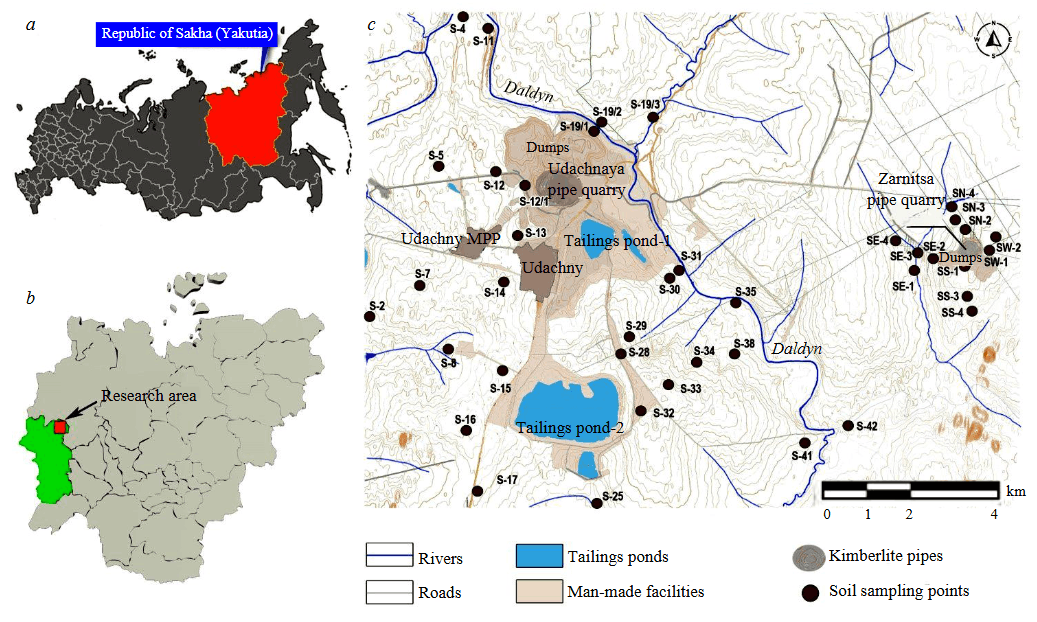
Fig.1. Map of the location of the study area with soil sampling points marked: a – Yakutia on the map of Russia; b – study area on the territory of Yakutia; c – soil sampling plan for the Udachny MPP industrial site
The leaders in the Daldyn kimberlite field are the Udachnaya pipe, which has been successfully exploited for several decades, as well as the Zarnitsa, first pipe discovered on the Siberian Platform [13], which are the main areas of research.
The feature of the territory is its location in the zone of continuous distribution of permafrost frozen rocks (PFR). The close occurrence of PFR plays a significant role in the accumulation of trace elements, forming a suprapermafrost geochemical barrier in the soil profile [15]. The total thickness of the permafrost layer ranges from 250-400 to 1500 m at negative temperatures between –2 and –16 °С [16]. The relief of the trap plateau is gently hilly with absolute marks of 400-500 m and relative elevations above the nearest watercourses of 100-250 m [17]. The climate is sharply continental, with an average annual temperature of 12 °C, the amplitude of the minimum and maximum of the average data for months ranges between –41.6 and 14.8 °С [18]. The difference in average temperatures between the cold and warm seasons is very large, between 34 and –64 °С. Average annual precipitation is 200-250 mm, 75-80 % of which falls during the warm season (from April to October). Snow cover lasts for 220-250 days a year, its height is not great [19]. The vegetation cover of the territory is located in the subzone of sparse northern taiga larch forests. Larch forests dominate, occupying 80 % of the area [20]. The soils are part of the East Siberian permafrost-north taiga region of the boreal (moderately cold) belt of Russia [12].
Research objects – Oxyaquic Turbic Cryosol(Eutric, Loamic) and leaves of two plant species – Betula middendorffii T. (Middendorff birch) and Duschekia fruticosa R. (shrubby alder), representing the most common types of shrubs in the northern taiga.
In the initial stages of searching for primary diamond deposits in Western Yakutia, geobotanical studies have revealed that larch sparse forests with alder are distributed fragmentarily in spots and are confined to the outcrops of kimberlite pipes, partly to their deluvial trains. The same studies have shown that the type of forest stand changes much less than the synusial structure of the ground cover – moss-lichen and subshrub layers. It follows that in conditions of sparse forests the indicator role of the subshrub layer is much higher. Therefore, it is more effective to carry out bioindication of the state of the soil-vegetation system using the biogeochemical response using the example of the leaves of shrubby plants, acting as indicators not only of plicative structures, but also of changes in the general ecological and geochemical state of the substrate [12].
Considering the source of trace element emissions in the study area, plant samples were collected in the vicinity of the industrial zone of the Udachny Mining and Processing Plant (near the quarries of the kimberlite pipes Udachnaya and Zarnitsa, waste rock dumps, tailings ponds, processing plant and other man-made facilities) taking into account the prevailing easterly and south-easterly winds in the summer-autumn period.
It is well known that plant leaves are one of the informative indicators of the state of the environment [21]. The leaf blade is a powerful air pump for plants, it promotes the absorption and accumulation of pollutants coming from industrial emissions [22]. Leaf sampling of dominant shrub species of approximately one middle-aged generative ontogenesis was carried out using the average sample method at a height of 1.0-1.1 m from the soil surface from the outside of the crown around the circumference. Leaves were taken for analysis without petioles. During collection, samples were carefully processed to remove dust and packed in numbered bags made of thick paper. During transportation, samples were stored in well-ventilated containers.
At the same observation points, soil samples were taken from a depth of 0-20 cm, with a description of the main morphological characteristics. Sampling was carried out in accordance with State standard 17.4.3.01-2017 and State standard 17.4.4.02-2017. All observation points are recorded using a global positioning system device (GPS). Plant and soil samples were carefully collected and delivered to the laboratory. The obtained samples were dried, ground into powder using an electric mill and sent for analysis.
Plant and soil samples were prepared for chemical analysis according to generally accepted methods (ISO 11464-2015). Microelements in plants and soils were determined using MGA-1000 atomic absorption spectrometer from Lumex Instruments (Saint Petersburg, Russia) after acid decomposition and extraction 1N HNO3 (the ratio of soil to extractant is 1:10) in accordance with the methodology М 03-07-2014. Extraction agent 1N HNO3 determines the most mobile acid-soluble forms of elements, more firmly bound to the soil, in contrast to H2O and 1N HCl [23-25]. The maximum content of potentially available metals in plants (potentially available fraction) are elements extracted by 1N HNO3 [26].
SPSL-1 and SCS-1 standard soil standards, rocks of the gabbro, carbonate and granite types; standard samples of LB1 (SSS 8923-2007) birch leaf, developed at the A.P.Vinogradov Institute of Geochemistry SB RAS (Irkutsk) were used in the analysis. Each analysis was carried out in duplicate with a limiting relative error of d = 15-30 % with a confidence level p = 0.95.
Soil samples were analyzed for pH, organic matter content and particle size distribution. The pH of the 1:5 soil/water suspension was measured using a glass electrode according to ISO 10390:2005, State standard 26483-85. The total organic matter content was determined by sulfochromic oxidation according to ISO 14235:1998, State standard 26213-2021. The granulometric composition of the soil was determined by sedimentation analysis using a pipette [23].
To assess the toxicological impact of trace elements on the ecosystem, two indicators were calculated – index of potential ecological risk RI [27] and bioaccumulation factor BAF [28] for two types of plants.
The index of potential environmental risk reflects the danger of one or more elements. The approach is widely used to study soil contamination with trace elements in various mining areas and to illustrate the potential environmental risks associated with general pollution [29]. Calculation equations:
where – potential environmental risk factor of the element i; Pi – measured element content i, mg/kg; – toxicity response coefficient of the element i, values for Pb, Ni, Mn, Cd, Co, Cr, Zn, and As are set to 5, 5, 1, 30, 5, 2, 1 and 10 respectively [27, 30, 31].
RI has four risk categories: low (RI < 150); moderate (150 ≤ RI < 300); significant (300 ≤ RI < 600) and very high (RI > 600) [32].
The bioaccumulation factor BAF reflects the ability of a plant species to accumulate trace elements from the environment in its tissues, is calculated using the formula [33]:
where Cp and Cs – concentrations of elements in plant and soil samples, mg/kg.
At BAF > 1, phytoaccumulation occurs, and at BAF ≤ 1, it is absent, i.e. the content of the element in the plant is less than in the soil [34]. BAF is not a constant, even in the same biological species, this value can change by 100-1000 times throughout its life [35]. In addition, by analogy with the coefficient of biological accumulation and capture, proposed by B.B.Polynov (1948) and later developed by A.I.Perelman (1989), additional ranking has been introduced: BAF = 0-1 – weak element capture group, no accumulation; BAF = 1-10 – weak accumulation and moderate capture; BAF = 10-100 – active accumulation; BAF ≥ 100 – significant (high) accumulation.
Statistical analysis of the results was carried out using Statistica 13.0 program and included the determination of the mean and geometric mean values, minimum, maximum, coefficient of variation, standard deviation. To comply with the principles of analysis of variance (additive, homogeneity of variance and normality of distribution), before analysis, the data were subjected to a centered logarithmic transformation (clr-transformation), which takes into account the distortions inherent in compositional data [36], using CoDaPack 2.0 program.
The construction of diagrams and schematic maps of the spatial distribution of microelements was carried out using OriginPro 2024 software application, developed by OriginLab Corporation.
Results and discussion
Physical-chemical properties of soils
In the soil cover of the Daldyn kimberlite field, cryogenic soils (according to the WRB classification – Cryosols) occupy 40.7 %. Permafrost alluvial soils (Fluvisols) are an intrazonal type and are located on 19.4 % of the territory [12]. Subordinate types are cryogenic sod-carbonate underdeveloped (Rendzic Leptosols) and permafrost sod-gley (Umbric Gleysols) soils. For zonal loamy soils of watersheds, the average temperature for three summer months (June-August) at a depth of 20 cm varies between 0.1 and 3.6-3.9 °С [37]. The lower horizons of C or CRM soils are usually frozen even during the summer months. The hygroscopic moisture content ranges between 0.98 and 3.15 % depending on the depth of the horizons and the content of coarse humus organic. The pH values in the studied soils range from acidic to alkaline – 4.3-8.7 (Table 1). Moreover, most of the soil samples are characterized by alkaline pH, their share is 70 %. About 15 % of soil samples have a neutral pH. The organic content is quite high, which is typical for soils in northern regions and is associated with poor decomposition of organic.
Table 1
Physical-chemical properties of the studied soils
|
Parameters |
Mean |
Geometric mean |
Minimum |
Maximum |
СV |
Std.Dev. |
|
|
рН |
7.62 |
7.56 |
4.32 |
9.3 |
0.72 |
0.85 |
|
|
Humus, % |
9.88 |
7.01 |
1.10 |
47.0 |
72.52 |
8.52 |
|
|
Сorg, % |
5.73 |
4.07 |
0.64 |
27.26 |
24.4 |
4.94 |
|
|
Granulometric composition, mm |
|
|
|
|
|
|
|
|
1-0.25 |
1.04 |
0.44 |
0.05 |
2.81 |
1.47 |
1.21 |
|
|
0.25-0.05 |
7.65 |
6.66 |
3.00 |
12.19 |
18.06 |
4.25 |
|
|
0.05-0.01 |
23.45 |
22.57 |
15.61 |
30.86 |
47.76 |
6.91 |
|
|
0.01-0.005 |
10.34 |
10.31 |
9.55 |
11.55 |
0.68 |
0.83 |
|
|
0.005-0.001 |
15.83 |
15.28 |
11.67 |
23.66 |
24.01 |
4.90 |
|
|
< 0.001 |
25.21 |
24.12 |
12.7 |
29.74 |
49.9 |
7.06 |
|
|
< 0.01 |
51.38 |
51.24 |
46.55 |
57.71 |
18.09 |
4.25 |
|
|
> 0.01 |
32.14 |
31.43 |
22.14 |
42.59 |
55.8 |
7.47 |
|
Note. CV – coefficient of variation; Std.Dev. – standard deviation.
Soils are generally characterized by a heavy grain size distribution with a predominance of finely dispersed fractions. Clay fractions have the highest sorption capacity and can accumulate the most of trace elements [38].
Concentrations of trace elements in soils and plants
The concentrations of PTE determined in soils and plant leaves are presented in Table 2. Average concentrations of trace elements (mg/kg) in soils decrease in order: Mn > Ni > Zn > Cu > Co > Pb > Cr > As > Cd. The contents of Ni, Cr, Co, As, Mn in them exceeded background values by 4.93; 2.09; 1.72; 1.69 and 1.65 times, respectively. The coefficient of variation reflects the average variation in the concentrations of heavy metals, at the same time, CV > 35 % reflects a high level of fluctuations, 15 % < CV < 35 % – a moderate level of variation, and CV ≤ 15 % – a low level of variability [39, 40]. In this study, CV of five elements (Mn, Ni, Zn, Co, and Cu) were greater than 35 %, which indicates high fluctuations in values. Cr is characterized by medium variation, while Pb, Cd and As are characterized by low variation.
The distributions of average concentrations of trace elements in the two plant species are almost identical and are arranged in descending order as follows: Mn > Zn > Cr > Ni > Cu > Pb > As > > Co > Cd, with the exception of Zn, which was below the detection limit in the leaves of Duschekia fruticosa R.
In leaves of Betula middendorffii T. concentrations of Ni, Mn, Cd, Cr and Zn exceeded the values in leaves Duschekia fruticosa R. by 1.19; 4.59; 1.43; 2.67, and 1.02 times, respectively. Variation coefficients were high for Mn in both leaf types and for Zn in leaves of Betula middendorffii T.
Assessment of potential environmental risk
Based on the data obtained, an index of potential environmental risk Er was calculated [27, 41], which varied for each element over a very wide range (Fig.2, a): Zn – 0.05-36.5; Cr – 0.22-42.9; As – 0.25-8.4; Cd – 0.78-33.6; Pb – 1.65-33.0; Co – 2.7-173.3; Ni – 5.0-819.0; Mn – 34.8-1856.0. Average values Er for the elements under study are arranged in order Mn > Ni > Co > Zn > Pb > Cd > Cr > As.
Table 2
Descriptive statistics of trace element content in soils and plant leaves of the study area, mg/kg
|
Samples |
Parameters |
Pb |
Ni |
Мn |
Сd |
Со |
Сr |
Zn |
Сu |
As |
|
|
Soils |
Mean |
2.21 |
15.39 |
311.63 |
0.14 |
4.53 |
1.94 |
12.10 |
8.21 |
0.22 |
|
|
Geometric mean |
1.80 |
3.43 |
199.9 |
0.106 |
2.73 |
0.967 |
9.36 |
6.14 |
0.12 |
||
|
Minimum |
0.33 |
1.00 |
34.76 |
0.03 |
0.53 |
0.11 |
0.05 |
0.82 |
0.03 |
||
|
Maximum |
6.60 |
163.8 |
1856 |
1.12 |
34.65 |
21.45 |
36.46 |
28.44 |
0.84 |
||
|
Std.Dev. |
1.41 |
40.97 |
415.5 |
0.18 |
6.92 |
4.08 |
6.99 |
6.40 |
0.21 |
||
|
CV |
< 15 |
> 35 |
> 35 |
< 15 |
> 35 |
15-35 |
> 35 |
> 35 |
< 15 |
||
|
|
Background value* |
1.79 |
3.12 |
189 |
0.11 |
2.64 |
0.93 |
9.47 |
5.81 |
0.13 |
|
|
Betula middendorffii T. |
Mean |
3.03 |
8.08 |
144.8 |
0.04 |
0.39 |
12.30 |
42.94 |
4.73 |
b/d |
|
|
Geometric mean |
2.85 |
7.70 |
55.64 |
0.03 |
0.27 |
12.19 |
37.48 |
4.59 |
b/d |
||
|
Minimum |
1.51 |
4.00 |
14.67 |
0.03 |
0.13 |
9.92 |
25.00 |
2.92 |
b/d |
||
|
Maximum |
7.33 |
15.9 |
2237 |
0.26 |
2.71 |
15.62 |
97.54 |
8.83 |
b/d |
||
|
Std.Dev. |
1.15 |
2.61 |
408.5 |
0.04 |
0.46 |
1.67 |
24.18 |
1.27 |
– |
||
|
|
CV |
< 15 |
< 15 |
> 35 |
< 15 |
< 15 |
< 15 |
> 35 |
< 15 |
– |
|
|
Duschekia fruticosa R. |
Mean |
3.09 |
6.81 |
31.5 |
0.03 |
0.15 |
12.08 |
b/d |
5.16 |
b/d |
|
|
Geometric mean |
2.98 |
6.63 |
25.71 |
0.03 |
0.14 |
11.98 |
b/d |
5.08 |
b/d |
||
|
Minimum |
2.14 |
3.45 |
9.65 |
0.03 |
0.13 |
9.60 |
b/d |
4.13 |
b/d |
||
|
Maximum |
4.58 |
9.02 |
98.9 |
0.05 |
0.44 |
14.49 |
b/d |
7.04 |
b/d |
||
|
Std.Dev. |
0.86 |
1.47 |
24.2 |
0.01 |
0.08 |
1.59 |
b/d |
0.97 |
– |
||
|
|
CV |
< 15 |
< 15 |
> 35 |
< 15 |
< 15 |
< 15 |
– |
< 15 |
– |
|
|
|
Background value** |
2.88 |
7.39 |
44.82 |
0.03 |
0.22 |
12.13 |
33.46 |
4.72 |
b/d |
|
Note. * – background concentration values for soils according to [42]; ** – for vegetation [12]; b/d – below detection limit; СV – coefficient of variation, % (< 15 – low, 15-35 – moderate, > 35 – high level of variation).
Results of the comprehensive assessment of RI elements range between 92.0 and 2840.9 with an average value of 485.8. Specifically, 19.51 % were considered to be at high environmental risk, while the shares of significant, moderate and low environmental risk were 21.95, 53.66, and 4.88 %, respectively. This indicates that most of the study area is at or above moderate ecological risk level, and Mn and Ni are its main factors (Fig.2, b).
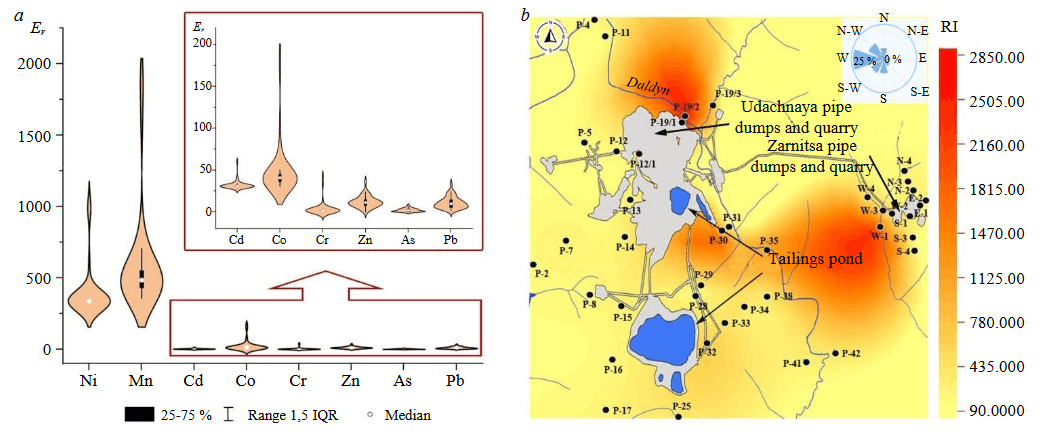
Fig.2. Box diagram of potential environmental risk factor Er (а); assessment of soil contamination based on potential environmental risk RI (b)
The highest environmental risks in terms of RI value were recorded in the impact zone of waste rock dumps at a distance of 50 to 100 m towards watercourses – P-19/2 in the impact zone of the Udachnaya pipe quarry dumps with deflection towards the Daldyn River and S-2, dumps of the Zarnitsa pipe quarry with a slope towards the Dyakha Stream. The defined “train” is the result of both mechanical movement along the slope towards the watercourses, and wind deflection in the western and northwestern directions, according to the wind rose, from the dumps and sides of the quarries of the Udachnaya and Zarnitsa pipes.
Bioaccumulation factor
The northern taiga forests in the Daldyn river basin consist of virtually only one tree species Larix gmelinii. In this case, the undergrowth in larch thin forest or pure brushwood are formed by Betula middendorffii T., Duschekia fruticosa R. and various types of willows. Forest stand density is 0.3 or higher, therefore, the role of the shrub layer in northern taiga landscapes is very important. The most common shrubs Betula middendorffii T. and Duschekia fruticosa R. in the area were selected as BAF indication objects. To understand the process of bioconcentration in the soil-plant system, BAF is calculated for each survey site (Table 3). The average BAF values were arranged in the following order for birch: Cr > Zn > Ni > Mn > Pb > Cu > Cd > Co; for alder – Cr > Zn > Ni > Pb > Cu > Mn > Cd > Co. The only difference is the lower Mn content in alder leaves. Regardless of the type of plant, Cr has the highest phytoabsorption potential, followed by Zn and Ni. The proportion of absorbed elements with BAF ˃ 1 in the studied plant species was: Zn (97 %) ˃ Cr (94 %) ˃ Ni (86 %) ˃ Pb (75 %) ˃ Cu (39 %) ˃ Mn (8 %) in Betula middendorffii T. leaves; Zn (100 %) ˃ Cr (100 %) ˃ Ni (93 %) ˃ Pb (64 %) ˃ Cu (43 %) in Duschekia fruticosa R. leaves.
The absence of accumulation of Cd and Co in birch leaves was noted; Cd, Co and Mn in alder leaves. The highest phytoabsorption in birch leaves was noted at points P-11 for Pb, Mn, Cr and Cu; P-32 for Ni; Р-15 for Zn. In alder leaves, maximum phytoabsorption was found at the studied points P-17 for Pb, P-29 for Ni, P-12 for Cr, P-16 for Zn, S-4 for Cu. It has been established that the most of trace elements is accumulated by plants at the observation point Р-11, located on a depleted pit for the extraction of construction materials for road filling, where Technosol is formed on basic rocks on the surface.
Table 3
BAF in the leaves of plants in the study area
|
Vegetation type |
Parameters |
Pb |
Ni |
Мn |
Сd |
Со |
Сr |
Zn |
Сu |
As |
|
Betula middendorffii T. (n = 36) |
Mean |
2.07 |
3.26 |
2.32 |
0.36 |
0.16 |
18.85 |
10.15 |
1.02 |
– |
|
Geometric mean |
1.62 |
2.25 |
0.27 |
0.29 |
0.09 |
12.30 |
3.77 |
0.76 |
– |
|
|
Minimum |
0.39 |
0.07 |
0.02 |
0.06 |
0.01 |
0.52 |
0.99 |
0.18 |
– |
|
|
Maximum |
9.64 |
8.40 |
64.36 |
1.07 |
0.78 |
135.6 |
210.0 |
4.27 |
– |
|
|
Std.Dev. |
1.76 |
1.91 |
10.75 |
0.25 |
0.19 |
22.89 |
34.60 |
0.84 |
– |
|
|
Duschekia fruticosa R.(n = 14) |
Mean |
1.86 |
3.24 |
0.26 |
0.25 |
0.08 |
15.97 |
3.43 |
1.21 |
– |
|
Geometric mean |
1.58 |
2.68 |
0.18 |
0.23 |
0.07 |
15.01 |
2.71 |
0.95 |
– |
|
|
Minimum |
0.65 |
0.55 |
0.02 |
0.06 |
0.03 |
8.05 |
1.05 |
0.24 |
– |
|
|
Maximum |
3.23 |
8.59 |
0.97 |
0.41 |
0.24 |
26.66 |
10.55 |
2.90 |
– |
|
|
Std.Dev. |
0.98 |
2.05 |
0.24 |
0.08 |
0.06 |
5.92 |
2.83 |
0.81 |
– |
Occurrences of kimberlite magmatism in the study area are reflected in the geochemical field against the backdrop of regional ancient and modern landscapes in the form of specific primary and secondary biogeochemical halos of a wide range of elements, representing a kind of natural geochemical anomaly.
Key indicator elements – Cr, Ni, Co, Zr, Li, Cu, Ba, Nb, Ti, Sr, Ga, Sc, V and Mn [42-44]. For diamond-bearing varieties of kimberlites, Cr and Ni are typomorphic. Accordingly, the accumulation of these elements in soils and vegetation in the territory of kimberlite fields is quite natural, and also explains geochemical inheritance Cr, Ni, Mn and Cu for both Betula middendorffii T. and Duschekia fruticosa R.
Analysis of the spatial distribution of BAF for two shrub species showed different results. In the northern taiga landscapes Betula middendorffii T. is widespread throughout terrigenous-carbonate formations; horizons of spotted, banded, and calcitated dolomites; dolerites; tuffs; tuff breccias and tuffaceous formations. Early studies [12] have shown, that Betula middendorffii T. is capable of accumulating a larger number of trace elements and has a greater potential for phytoextraction. The highest BAF values are found in areas within the impact zone of mining facilities – quarries and waste rock dumps of the Udachnaya and Zarnitsa kimberlite pipes, as well as enrichment – tailings ponds, underground injection sites for highly mineralized brines (Fig.3). Betula middendorffii T. is characterized by high resistance to microelement content in soils, while keeping homeostasis of ontogenesis.
Overall, the spatial analysis of BAF confirmed the findings regarding the absence of bioaccumulation of Cd, Co and Mn in birch leaves both in the areas of formation of ore-bearing rocks and on the periphery of the Udachnaya and Zarnitsa kimberlite pipes. In addition, the BAF values for these elements do not increase during technogenic transformation, despite the increase in the concentration of Cd, Co and Mn in technosols. Phytoaccumulation of Cr, As and Zn can be explained by the increase in the concentration of these elements within the boundaries of the man-made anomaly in the soils of the industrial site of the mining and processing plant.
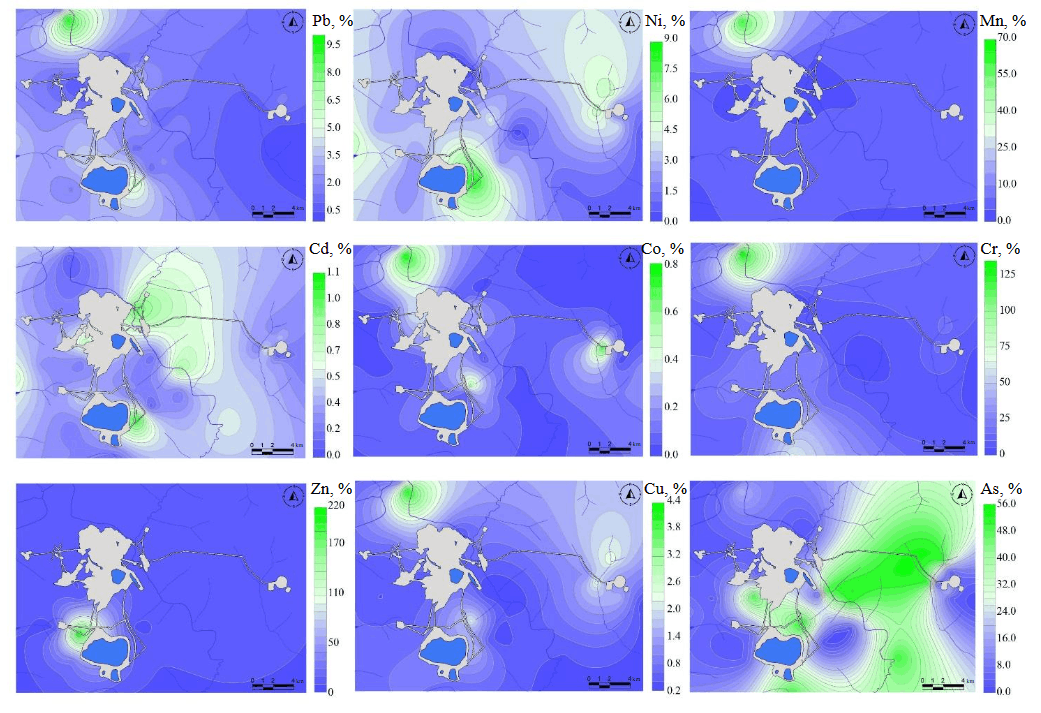
Fig.3. Bioaccumulation factor in Betula middendorffii T. leaves
Trace elements are known to influence many aspects of cellular metabolism. Cationic forms of microelements can bind with carboxyl, hydroxyl, phosphate and amino groups, causing changes in those elements that comprise these groups, whether they are nucleotides, proteins, coenzymes, phospholipids. As a result of the suppression of enzyme systems, the processes of respiration and protein synthesis, and the functions of the cytoplasmic membrane are disrupted [45, 46]. Metals that reach the leaves accumulate in the vacuoles of the epidermis [47, 48] and its derivatives – trichomes and glands [49], which serve to remove metals from the plant body.
The developed mechanism may be useful for explaining the principles of better adaptation of plants to biotic and abiotic challenges. Very contrasting plant responses, manifested at the transcriptional and translational levels, depend on the concentration of elements in the soil and are consistent with the concept of hormesis, an adaptive mechanism, which ensures plant resistance to environmental challenges, including high concentrations of elements in soils, caused by telescoping of the kimberlite anomaly occurrence. Manifestations of adaptive mechanisms include birch's tolerance to high concentrations of chromium, arsenic, and zinc.
Larch forests with Duschekia fruticosa R. are formed in patches in the upper part of the slopes, they are confined to kimberlite outcrops and partially to their deluvial trains. Kimberlite bodies intrude the dolomite horizon, and at outcrop points, more favorable conditions for moisture and drainage are created than on the enclosing carbonate deposits. Larch forests with Duschekia fruticosa R., confined to kimberlite bodies, stand out sharply against the background of larch lichen sparse forests, related to carbonate rocks [50]. In soils this is reflected in the elemental composition with a predominance of associations coherent with kimberlites. The Udachnaya pipe quarry has been developed since 1982, and the Zarnitsa pipe since 1998, and the main forest areas with Duschekia fruticosa R. are already buried under man-made landscapes. Fragmentary preserved areas border the periphery of the kimberlite field (Fig.4). BAF values vary greatly with maxima, confined to impact zones of anthropogenic impact.
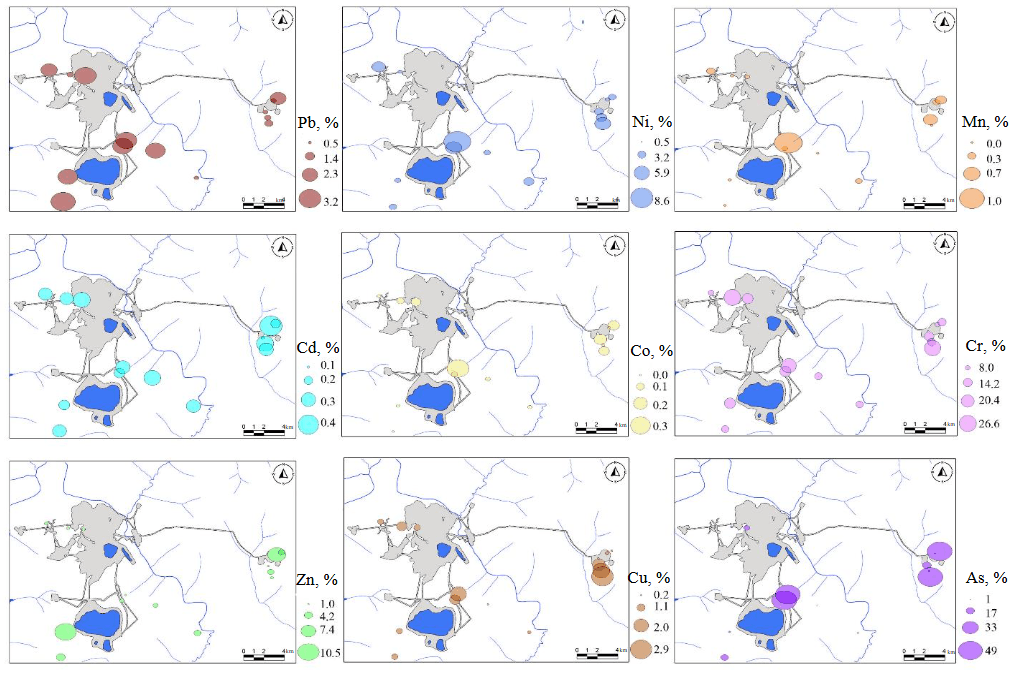
Fig.4. Bioaccumulation factor in Duschekia fruticosa R. leaves
Unlike Betula middendorffìi T., the leaves of Duschekia fruticosa R. do not show phytoabsorption of Mn, Cd and Co, despite high concentrations in soils. High BAF values are characteristic of areas near quarries and tailings dumps with high phytoabsorption of elements coherent to kimberlites Cr and Ni.
Active accumulation of elements, in particular Ni, Cr and Cu, is associated with the high content of low molecular weight acids such as malic and malonic, in plants growing in soils formed on acidic or ultrabasic rocks [51]. Kimberlites and dolerites of the Daldyn kimberlite field are precisely igneous ultra-basic rocks of the extrusive facies. The soils in these areas are characterized by acidic or slightly acidic pH. Therefore, the maximum accumulation of Ni, Cr and Cu in the leaves of Duschekia fruticosa R. is quite natural.
Unstable plant species have a limited ability to remove metal ions into the tonoplast and therefore accumulate trace elements in the form of low-mobile compounds directly in the cytoplasm [52]. In deciduous shrubs, a significant portion of the elements accumulates in the chloroplast, thereby ensuring the stability of ontogenesis in conditions of high concentrations of trace elements in soils and rocks, what is observed in the example of Duschekia fruticosa R. AndBetula middendorffi T. is tolerant to variations in soils and rocks, therefore it is widespread throughout the northern taiga landscapes, but exhibits the most pronounced response to the effects of excess concentrations of trace elements under anthropogenic influence. The analysis of BAF values at each observation point generally confirms the identified patterns (Fig.5).
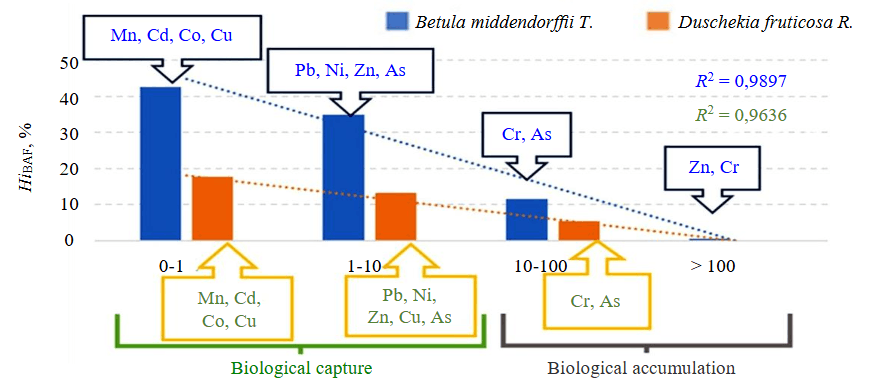
Fig.5. Level of biological capture and accumulation of microelements in the soil – plant system at the Udachny MPP industrial site
Thus, in the leaves of Betula middendorffii T. and Duschekia fruticosa R., Mn, Cd, Co and partially Cu are characterized by the absence of accumulation and weak biological capture. At the level of weak accumulation, the studied species differ in variations of Ni and Cu accumulation. Vigorous accumulation occurs in 5.4 and 11.6 % of cases for chromium and arsenic in leaves Duschekia fruticosa R. and Betula middendorffii T., respectively. In addition, at two points located near the tailings ponds, strong accumulation of Zn and Cr in leaves Betula middendorffii T. was recorded.
Summarizing the conducted research, it is necessary to note that the geochemical situation in the soil-plant system that has developed in the territory is a consequence of natural and man-made conditions, distinguishing features of the rocks of the Daldyn kimberlite field and the consequences of the stages of development of diamond-bearing deposits.
Conclusion
Creation of a modern biogeochemical picture of any territory where mineral deposits are being developed, is determined by the features of rocks and the related landscape-geochemical environment, but in many ways the situation changes depending on the nature, level and stages of commercial development. Two large primary diamond deposits have been commercially developed and are being mined in the Daldyn kimberlite field in Western Yakutia – Udachnaya and Zarnitsa kimberlite pipes. A modern mining enterprise with an extensive infrastructure covering all stages of deposit development has been created. The transformation of landscapes has created vast areas of man-made transformed territories with their own geochemical specifics. The assessment of potential environmental risk revealed that approximately 58 % of the study area is at low (4.8 %) and moderate (53.6 %) risk of soil pollution. The category of moderate soil pollution includes areas where natural geochemical anomalies are formed in soils, caused by the intrusion of traps and kimberlites. Areas with significant (21.9 %) and high (19.5 %) potential environmental risk are located in impact zones of quarries and waste rock dumps. High concentrations of Mn and Ni, as well as the diversity of their contents in soils, are the main factors of environmental risk.
The indicator function of the shrub layer is clearly demonstrated when analyzing the geological structure and relief of the territory. The constructed spatial bioindication schemes display the resistance of the ontogenesis of Betula middendorffii T. and Duschekia fruticosa R. to high variations in the content of trace elements in soils, resulting from natural and man-made anomalies, as a result of the combined impact of the geological environment and man-made factors.
Analysis of the bioaccumulation coefficient in the soil-plant system on the territory of the mining and processing plant revealed that Betula middendorffii T. and Duschekia fruticosa R. shrubs exhibit resistance to high concentrations of elements Cr, Ni, Co, Cu, Mn, Zn which coherent to kimberlites and dolerites, providing detoxification of metal ions and resistance to stress. The conducted studies allow us to recommend the use of Betula middendorffii T. leaves for geoecological monitoring of changing situations in commercial development areas in northern taiga landscapes. The content of microelements in the leaves Duschekia fruticosa R. can be used as bioindication objects in geological and geochemical exploration work.
Information on the physiological and biochemical responses of organisms, including higher vascular plants, are very contradictory and insufficient, and there are very few studies of plant physiology and their development in areas of formation of biogeochemical provinces related to the occurrence of magmatism of rocks and tectonic deformations, and they are concentrated primarily in agricultural areas. However, such studies are important for understanding the processes of detoxification of metal ions from the plant body, bioaccumulation of potentially toxic elements, аnd also for the practical implementation of phytoremediation technology in real conditions.
References
- Martínez-Carlos J., Martínez-Martínez S., Faz A. et al. Are the soils and vegetation of a forest close to tailings ponds affected by metals and arsenic? Environmental Geochemistry and Health. 2021. Vol. 44. Iss. 1, p. 15-28. DOI: 10.1007/s10653-021-01035-5
- Roca-Perez L., Boluda R., Rodríguez-Martín J.A. et al. Potentially harmful elements pollute soil and vegetation around the Atrevida mine (Tarragona, NE Spain). Environmental Geochemistry and Health. 2023. Vol. 45. Iss. 12, p. 9215-9230. DOI: 10.1007/s10653-023-01591-y
- Radosteva E.R., Kulagin A.Yu. Bioaccumulation of metals in bodies of wood plants in the conditions of polymetallic dumps Uchaly mountain-concentrating industrial complex (Republic of Bashkortostan). Izvestia of Samara Scientific Center of the Russian Academy of Sciences. 2011. Vol. 13. N 5 (2), p. 200-202 (in Russian).
- Ning Li, Yan Li, Genmei Wang et al. The sources risk assessment combined with APCS/MLR model for potentially toxic elements in farmland of a first-tier city, China. Environmental Science and Pollution Research. 2022. Vol. 29. Iss. 33, p. 50717-50726. DOI: 10.1007/s11356-022-19325-5
- Lotfi S., Chakit M., Belghyti D. Groundwater Quality and Pollution Index for Heavy Metals in Saïs Plain, Morocco. Journal of Health & Pollution. 2020. Vol. 10. Iss. 26. N 200603. DOI: 10.5696/2156-9614-10.26.200603
- Mulenga C., Phiri D., Ortega-Rodriguez D.R., Meincken M. Bioaccumulation of potentially toxic elements by indigenous and exotic trees growing around a copper leaching plant in Mufulira, Zambia. Environmental Systems Research. 2023. Vol. 12. N 26. DOI: 10.1186/s40068-023-00310-x
- Sabir M., Baltrėnaitė-Gedienė E., Ditta A. et al. Bioaccumulation of Heavy Metals in a Soil–Plant System from an Open Dumpsite and the Associated Health Risks through Multiple Routes. Sustainability. 2022. Vol. 14. Iss. 20. N 13223. DOI: 10.3390/su142013223
- Petukhov A.S., Kremleva T.A., Petukhova G.A. Bioaccumulation of heavy metals by cultivated oat from industrially polluted soils of the Tyumen town. Agrochemical Herald. 2021. N 1, p. 73-80 (in Russian). DOI: 10.24412/1029-2551-2021-1-0130
- Proshad R., Kormoker T., Islam Md.S., Chandra K. Potential health risk of heavy metals via consumption of rice and vegetables grown in the industrial areas of Bangladesh. Human and Ecological Risk Assessment: an International Journal. 2020. Vol. 26. Iss. 4, p. 921-943. DOI: 10.1080/10807039.2018.1546114
- Hanyan Zhang, Xingzhong Yuan, Ting Xiong et al. Bioremediation of co-contaminated soil with heavy metals and pesticides: Influence factors, mechanisms and evaluation methods. Chemical Engineering Journal. 2020. Vol. 398. N 125657. DOI: 10.1016/j.cej.2020.125657
- Ryzhenko N., El Amrani A., Giltrap M. et al. Bioaccumulation of As, Cd, Cr, Cu, Pb, Zn in Ambrosia artemisiifolia L. in the polluted area by enterprise for the production and processing of batteries. Annals of Civil and Environmental Engineering. 2022. Vol. 6, p. 26-30. DOI: 10.29328/journal.acee.1001036
- Gololobova A., Legostaeva Y. An Assessment of the Impact of the Mining Industry on Soil and Plant Contamination by Potentially Toxic Elements in Boreal Forests. Forests. 2023. Vol. 14. Iss. 8. N 1641. DOI: 10.3390/f14081641
- Zinchuk N.N., Koptil V.I. About specific features of diamonds from kimberlites and ancient sedimentary thick layers (on the example of Central-Siberian sub-province). Proceedings of Voronezh State University. Series: Geology. 2018. N 4, p. 28-38 (in Russian). DOI: 10.17308/geology.2018.4/1645
- Zinchuk N.N., Barduchunov L.D. Сomporative features of diamonds from kimberlite deposits in the northern part of the Siberian platform. Vestnik of North-Eastern Federal University. Series of Earth Sciences. 2024. N 1 (33), p. 11-30 (in Russian). DOI: 10.25587/2587-8751-2024-1-11-30
- Legostaeva Ya., Kozlova I., Popov V., Noev D. Geoecological situation in the area of the Aikhal Mining and Processing Plant Geologiya i mineralno-syrevye resursy Severo-Vostoka Rossii: Materialy X Vserossiiskoi nauchno-prakticheskoi konferentsii s mezhdunarodnym uchastiem, 8-10 aprelya 2020, Yakutsk, Rossiya. Yakutsk: Izdatelskii dom Severo-Vostochnogo federal'nogo universiteta imeni M.K.Ammosova, 2020, p. 482-485 (in Russian).
- Yannikov A.M. Hydrogeology of the Daldyn kimberlite field: Republic of Sakha (Yakutia). Mirny: ALROSA, 2023, p. 305 (in Russian).
- Atroshchenko F.G., Filin R.A. Hydrogeological problems in the diamond deposits of Yakutia. Journal of Mining Institute. 2003. Vol. 153, p. 123-125 (in Russian).
- Alekseev S.V., Alekseeva L.P., Gladkov A.S. et al. Brines in deep horizons of the Udachnaya kimberlite pipe. Geodynamics & Tectonophysics. 2018. Vol. 9. N 4, p. 1235-1253 (in Russian). DOI: 10.5800/GT-2018-9-4-0393
- Legostaeva Ya.B., Popov V.F., Ksenofontova M.I. Hydrogeological conditions and geoecological situation in the territory of underground technogenic storage facilities for drainage brines utilization. Otechestvennaya Geologiya. 2018. N 5, p. 93-102 (in Russian). DOI: 10.24411/0869-7175-2018-10021
- Mironova S.I. Plant successions in natural and man-made landscapes of Western Yakutia and their optimization. Moscow: Izdatelskii dom Akademiya Estestvoznaniya, 2016, p. 140 (in Russian).
- Petrunina N.S., Ermakov V.V. Modern aspects of geochemical ecology of plants. Problemy biogeokhimii i geokhimicheskoi ekologii. 2006. Vol. 1. N 1, p. 147-155 (in Russian).
- Neverova O.A., Kolmogorova E.Yu. Arboreal plants and the urban environment. Ehkologicheskie i biotekhnologicheskie aspekty. Novosibirsk: Nauka, 2003, p. 222 (in Russian).
- Ilin V.B. Heavy metals in the soil-plant system. Novosibirsk: Nauka. Sibirskoe otdelenie, 1991, p. 151 (in Russian).
- Ladonin D.V. Heavy metal compounds in soils – problems and methods of study. Pochvovedenie. 2002. N 6, p. 682-692 (in Russian).
- Syso A.I. Mechanisms of distribution of chemical elements in parent rocks and soils of Western Siberia. Novosibirsk: Izd-vo SO RAN, 2007, p. 274 (in Russian).
- Šmejkalová M., Mikanová O., Borůvka L. Effects of heavy metal concentrations on biological activity of soil micro-organisms. Plant, Soil and Environment. 2003. Vol. 49. Iss. 7, p. 321-326. DOI: 10.17221/4131-PSE
- Hakanson L. An ecological risk index for aquatic pollution control. A sedimentological approach. Water Research. 2020. Vol. 14. Iss. 8, p. 975-1001. DOI: 10.1016/0043-1354(80)90143-8
- Sajad M.A., Khan M.S., Bahadur S. et al. Nickel Phytoremediation Potential of Some Plant Species of the Lower Dir, Khyber Pakhtunkhwa, Pakistan. Limnological Review. 2020. Vol. 20. Iss. 1, p. 13-22. DOI: 10.2478/limre-2020-0002
- Fuling Zhang, Guangchao Cao, Shengkui Cao et al. Characteristics and Potential Ecological Risks of Heavy Metal Content in the Soil of a Plateau Alpine Mining Area in the Qilian Mountains. Land. 2023. Vol. 12. Iss. 9. N 1727. DOI: 10.3390/land12091727
- Shicheng Xie, Tian Lan, An Xing et al. Spatial distribution and ecological risk of heavy metals and their source apportionment in soils from a typical mining area, Inner Mongolia, China. Journal of Arid Land. 2023. Vol. 15. Iss. 10, p. 1196-1215. DOI: 10.1007/s40333-023-0109-1
- Zhaotong Fang, Chunyu Hua, Jingyu He et al. Pollution assessment and source apportionment of heavy metal(loid)s in soil of Huangshui River basin, Qinghai Province, China. Stochastic Environmental Research and Risk Assessment. 2023. Vol. 37. Iss. 12, p. 4843-4855. DOI: 10.1007/s00477-023-02544-8
- Kilavi P.K., Kaniu M.I., Patel J.P., Usman I.T. Assessment of Heavy Metal Pollution in Soil and Associated Risks in the Environs Adjacent to a Heavy Mineral Sand Mine on the South Coast of Kenya. Water, Air, & Soil Pollution. 2023. Vol. 234. Iss. 12. N 748. DOI: 10.1007/s11270-023-06751-5
- Naz R., Khan M.S., Hafeez A. et al. Assessment of phytoremediation potential of native plant species naturally growing in a heavy metal-polluted industrial soils. Brazilian Journal of Biology. 2024. Vol. 84. DOI: 10.1590/1519-6984.264473
- Khotimah N.N., Rozirwan, Putri W.A.E. et al. Bioaccumulation and Ecological Risk Assessment of Heavy Metal Contamination (Lead and Copper) Build Up in the Roots of Avicennia alba and Excoecaria agallocha. Journal of Ecological Engineering. 2024. Vol. 25. Iss. 5, p. 101-113. DOI: 10.12911/22998993/185716
- Ramírez A., García G., Werner O. et al. Implications of the Phytoremediation of Heavy Metal Contamination of Soils and Wild Plants in the Industrial Area of Haina, Dominican Republic. Sustainability. 2021. Vol. 13. Iss. 3. N 1403. DOI: 10.3390/su13031403
- Pawlowsky-Glahn V., Buccianti A. Compositional Data Analysis: Theory and Applications. Wiley, 2011, p. 400.
- Fedorov-Davydov D.G., Davydov S.P., Davydova A.I. et al. The thermal state of soils in northern Yakutia. Earth’s Cryopshere. 2018. Vol. 22. N 3, p. 47-58. DOI: 10.21782/EC2541-9994-2018-3(47-58)
- Dyagileva A.G. Resistance to chemical pollution of cryosols of Western Yakutia: Avtoref. dis. ... kand. biol. nauk. Yakutsk: Nauchno-issledovatelskii institut prikladnoi ekologii Severa Severo-Vostochnogo federalnogo universiteta im. M.K.Ammosova, 2015, p. 22 (in Russian).
- Mingshi Wang, Qiao Han, Chenlu Gui et al. Differences in the risk assessment of soil heavy metals between newly built and original parks in Jiaozuo, Henan Province, China. Science of The Total Environment. 2020. Vol. 676, p. 1-10. DOI: 10.1016/j.scitotenv.2019.03.396
- Abliz A., Qingdong Shi, Abulizi A. Contamination Status and Health Risk Assessment of Soil Heavy Metals in the Northern Slope of Eastern Tianshan Mountains Industrial Belt in Xinjiang, Northwest China. Forests. 2022. Vol. 13. Iss. 11. N 1914. DOI: 10.3390/f13111914
- Bortey-Sam N., Nakayama S.M.M., Akoto O. et al. Ecological Risk of Heavy Metals and a Metalloid in Agricultural Soils in Tarkwa, Ghana // International Journal of Environmental Research and Public Health. 2015. Vol. 12. Iss. 9, p. 11448-11465. DOI: 10.3390/ijerph120911448
- Legostaeva Y.B., Gololobova A.G. Features of distribution of trace elements in soils of background and impact zones in diamond mining areas in the northwest of the Siberian platform. Bulletin of the Tomsk Polytechnic University. Geo Аssets Engineering. 2021. Vol. 332. N 9, p. 142-153 (in Russian). DOI: 10.18799/24131830/2021/9/3364
- Yagnyshev B.S., Yagnysheva T.A., Zinchuk M.H., Legostaeva Ya.B. Ecology of Western Yakutia (geochemistry of geoecosystems: status and problems). Yakutsk: Izd-vo Yakutskogo nauchnogo tsentra SO RAN, 2005, p. 430 (in Russian).
- Zinchuk N.N. Geochemical features of non-coeval formations in diamond-promising territories. Otechestvennaya Geologiya. 2023. Vol. 1, p. 46-69 (in Russian). DOI: 10.47765/0869-7175-2023-10004
- Ehrlich H. Microbial life in extreme environments. Moscow: Mir, 1981, p. 440-469 (in Russian).
- Ehlbekyan K.S. Ecological and experimental characterization of heavy metal toxicity and assessment of possible antitoxic mechanism: Avtoref. dis. ... d-ra biol. nauk. Stavropol: Stavropolskaya gosudarstvennaya meditsinskaya akademiya Federalnogo agenstva po zdravookhraneniyu i spetsialnomu razvitiyu, 2008, p. 35 (in Russian).
- Ortiz D.F., Kreppler L., Speiser D.M. Heavy metal tolerance in the fission yeast requires an ATP‐binding cassette‐type vacuolar membrane transporter. The EMBO Journal. 1992. Vol. 11. Iss. 10, p. 3491-3499. DOI: 10.1002/j.1460-2075.1992.tb05431.x
- Vatamaniuk O.K., Mari S., Yu-Ping Lu, Rea P.A. Mechanism of Heavy Metal Ion Activation of Phytochelatin (PC) Synthase: blocked thiols are sufficient for pc synthase-catalyzed transpeptidation of glutathione and related thiol peptides. The Journal of Biological Chemistry. 2000. Vol. 275. N 40, p. 31451-31459. DOI: 10.1074/jbc.M002997200
- Choi Y.-E., Harada E., Wada M. et al. Detoxification of cadmium in tobacco plants: formation and active excretion of crystals containing cadmium and calcium through trichomes. Planta. 2001. Vol. 213. Iss. 1, p. 45-50. DOI: 10.1007/s004250000487
- Lukicheva A.N. The use of large-scale geobotanical maps in the geological mapping (illustrated by an analysis of the north-eastern part of the Siberian platform). Geobotanical mapping. 1965, p. 32-39 (in Russian).
- Ermakov V.V., Tyutikov S.F., Safonov V.A. Biogeochemical indication of microelementhoses. Moscow: Russian Academy of Sciences, 2018, p. 386 (in Russian).
- Atabaeva S.D. Some mechanisms of heavy metal detoxification in plants. Biotekhnologiya. Teoriya i praktika. 2006. N 2, p. 32-43 (in Russian).