


Development of a composition and evaluation of the effectiveness of a bio-based product for cleaning oil-contaminated soils
- 1 — Ph.D. Associate Professor Empress Catherine ΙΙ Saint Petersburg Mining University ▪ Orcid
- 2 — Environmental Engineer Lengiprorechtrans JSC ▪ Orcid
- 3 — Researcher Empress Catherine ΙΙ Saint Petersburg Mining University ▪ Orcid
Abstract
Soil pollution by oil and petroleum products is a serious environmental problem, especially relevant for industrialized regions. Microbiological remediation based on the use of oil-oxidizing microorganisms is a promising method of restoring polluted soils. The aims of the study are to develop a composition and assess the effectiveness of a specialized bio-based product adapted to the climatic conditions of northwest Russia. Bacterial strains capable of utilizing petroleum products as the only carbon source have been selected and cultivated. Based on laboratory tests, a consortium of microorganisms was selected, including strains of Acinetobacter sp. (VKM B-3202), Rhodococcus erythropolis (VKM Ac-858 T) and Pseudomonas alcaligenes (VKM B-1295), and their growth activity was evaluated. Three biologics compositions have been developed, differing in the proportions of bacterial suspensions by volume, and the technology of their application to oil-contaminated soils has been determined. The effectiveness of cleaning soils contaminated with oil and petroleum products (gasoline, diesel fuel, oil products from a spill at the Tammisuo railway station (Vyborg) at temperatures of 10-20 °C, typical for the climate of the region, was studied in laboratory conditions. At a temperature regime of 20±1 °C and natural soil moisture, after 60 days of the experiment, the maximum concentration reduction rates reached 75.59 % for crude oil, 71.97 % for oil products from the spill, 90.53 % for diesel fuel, 75.81 % for gasoline. At a temperature of 10±1 °C – 40.62 % for crude oil, 49.58 % for oil products from the spill, 69.06 % for diesel fuel, 68.10 % for gasoline. The results of the study confirm the effectiveness of the developed bio-based product for oil-contaminated soil purification in the climatic conditions of northwestern Russia.
This work was carried out within the framework of the state contract of the Ministry of Science and Higher Education of the Russian Federation (FSRW-2024-0005).
Introduction
The oil industry is the leading industry in Russia, while significant production volumes are associated with a large proportion of waste generated as a result of the activities of oil companies [1, 2]. Petroleum products enter the environment for various reasons – accidents on pipelines, spills from shipping vessels, violations of drilling techniques, etc. [3, 4]. Soils, water, vegetation, and atmospheric air are susceptible to pollution due to the volatility of petroleum product components [5].
Russia has recorded 14 accidents at freshwater facilities, 12 of which occurred as a result of spills from ships and from a fuel oil pipeline in 2023. In December 2024, the largest accident occurred in the Kerch Strait of the Black Sea, as a result of which, according to various estimates, from 3700 to 5000 t of oil entered the marine environment. Soil resources are equally susceptible to oil product contamination. According to Rosprirodnadzor, the area of disturbed land due to leaks during the transit of oil, gas, and refined petroleum products in 2023 amounted to 122 hectares. According to the data of oil and gas producing companies, in comparison with 2022, the area of all disturbed lands increased by 4.6 %.
The negative impact on the soil cover from the ingress of petroleum products is associated with a reduction in biodiversity, death of animals and plants, the entry of toxic chemicals into the soil and atmospheric air [6], fertility degradation [7], and other dangerous consequences for the environment [8]. For the Northwestern Federal District, the problem of soil pollution with petroleum products is relevant due to the large length of pipeline, shipping and automobile transport in the region, as well as the presence of the largest oil loading terminals [9].
Various methods of restoring disturbed lands have been developed to eliminate the consequences of oil and petroleum products entering the soil: mechanical, physico-chemical, biological, thermal, electrical, etc. [10]. Microbiological remediation, based on the ability of microorganisms to absorb pollutants, is considered the most promising method in terms of the degree of purification and economic costs [11, 12]. Microorganisms with a petro-destructive ability include bacteria (Pseudomonas, Flavobacterium, Acinetobacter and others) [13, 14], fungi (Alternaria, Aspergillus, Candida and others) [15, 16] and microalgae (Chlorella vulgaris) [17]. Microorganisms are mainly used to remove oil pollution from soils and some types of wastewater. The method is carried out both directly at the site of contamination (in situ) [18], and with excavation of soil for placement in bioreactors (ex sitи) [19], in some cases these methods are combined [20].
To introduce microorganisms into a polluted environment, biologics are used from three components necessary for their functioning:
- strains of microorganisms adapted to specific environmental conditions and contributing to the degradation of hydrocarbons (main component);
- sorbent carrier of both natural (peat, zeolite) and synthetic (polymers) origin [21, 22];
- a complex of nutrients (nitrogen, phosphorus, potassium, sulfur) that creates a favorable environment for the development of microorganisms [23, 24].
Natural sorbents, in addition to their main function, contribute to the improvement of the physico-mechanical and physico-chemical properties of soils [25, 26]. A number of biologics have been developed that differ in composition and properties [27-29], but their use is limited by the climatic conditions of the environment [30]. The Leningrad Region is characterized by moderate temperatures in summer, on average not exceeding 20 °C, which is not suitable for the development of most types of microorganisms [31]. In this regard, a significant part of the patented biological products cannot be used in the Northwestern Federal District, and most of the developments adapted for this region have not been put into practice [32].
The aims of the study are to develop a composition and assess the effectiveness of a specialized bio-based product adapted to the climatic conditions of northwest Russia.
Objectives of the work: scientific review on the research topic, selection and cultivation of psychrophilic bacterial strains, assessment of the growth activity of strains in the presence of petroleum products as the only carbon source, development of options for the composition of bio-based products and technology for applying biological products to oil-contaminated soils, evaluation of the effectiveness of purification of oil-contaminated soils with the proposed formulations in laboratory conditions.
Methods
For the study, a site was selected in the area of the Tammisuo railway station (Vyborg, Leningrad Region), where a massive spill of petroleum products occurred as a result of a leak in transport tanks located underground. The characteristic features of the territory are podzolic alluvial low-humus soils and vegetation cover, represented by shrubby plants, weedy herbaceous vegetation and mossy. During the reconnaissance survey of the spill site and adjacent territories, signs of a negative impact on the components of the natural environment were recorded – the suppression of herbaceous plant communities, the death of representatives of the animal world, and the blackening of shrub leaves.
Oil-contaminated soil was sampled using the envelope method at five test sites near the spill (Fig.1). From each site, samples were taken from two layers, from depths of 0-0.05 and 0.05-0.2 m, after which they were combined into one common sample for subsequent analysis. The choice of trial sites is determined by the uniformity of vegetation cover and different levels of pollution (Fig.2). The thickness of the oil-contaminated soil layer varied from 5-20 cm. Also for modeling pollution in laboratory conditions from the spill site according to GOST 2517-2012 “Oil and petroleum products. Sampling methods” the samples of pure petroleum product (without impurities of water and soil) and pure soil (without contamination with petroleum products) were taken.
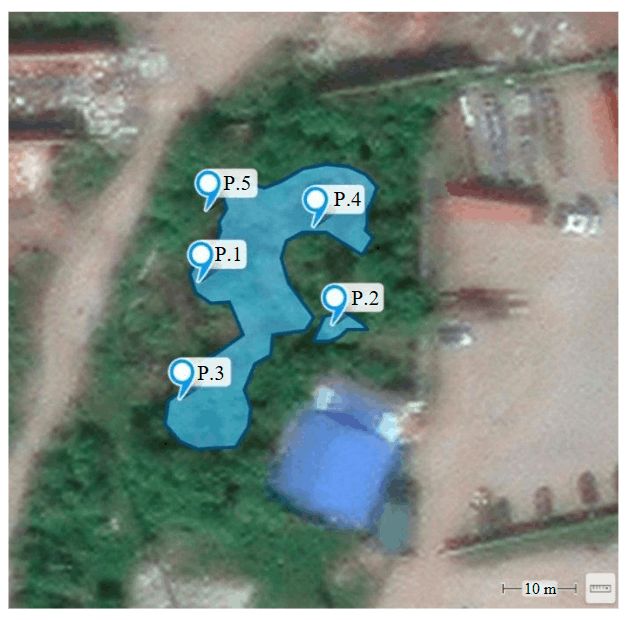
Fig.1. Map-scheme of soil sampling. Blue contour – localization of the spill; P.1- P.5 – Sampling sites
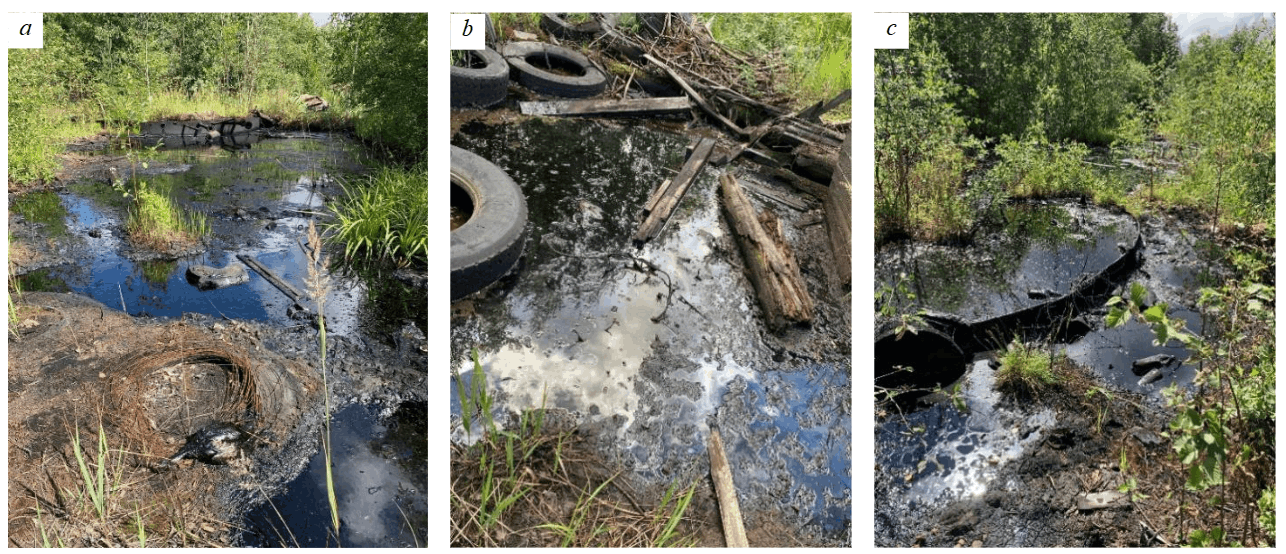
Fig.2. Sampling sites: a – N 1; b – N 3; c – N 4
Further sample preparation and experimental studies were carried out in the laboratory of the Scientific Research Center “Ecosystem” of the Mining University, where the selected samples were transported in a marked hermetically sealed container made of dark glass. To prepare the soil for analysis, inclusions were removed from the samples, the samples were crushed in a mortar, dried to an air-dry state and sifted through a sieve with a hole diameter of 1 mm. The samples were stored at a temperature of 4±2 °С. The preparation of water extracts for pH determination was carried out by adding 150 cm3 of distilled water to pre-dried and crushed soil samples weighing 30 g. For X-ray fluorescence analysis (XFA), the working samples obtained by quartering the initial sample were ground to a powder state.
The concentration of petroleum products was determined by fluorimetric analysis using a Fluorat-02-3M liquid analyzer for soil samples from the spill at the beginning of the study and subsequently to evaluate the effectiveness of the developed biological product [33]. Before the study, the purity of hexane was checked, calibration solutions were prepared, and the analyzer was calibrated. After extraction of petroleum products from the soil, the fluorescence intensity of the purified extract was measured on the specified liquid analyzer. The concentration of petroleum products in the sample was determined by the ratio of the mass concentration of petroleum products in the hexane solution of Сm, the final volume of the hexane solution and the dilution coefficient of the extract K to the mass of the soil sample m. The result Х is shown in Table 1.
Table 1
Concentration of petroleum products in the soil according to the results of fluorimetric analysis
|
Sample |
m, g |
K |
Сm |
Х, mg/kg |
|
1 |
0.206 |
5 |
5.24 |
3180±800 |
|
2 |
0.201 |
40 |
5.96 |
>25,000 (29,652)* |
|
3 |
0.202 |
5 |
5.72 |
3540±885 |
|
4 |
0.200 |
1 |
3.94 |
492±120 |
|
5 |
0.223 |
1 |
1.43 |
160±64 |
* The value obtained exceeds the measurement limit.
Based on the results of determining the pH of aqueous extracts from soils with a pH meter pH-150MI, it was decided to exclude the influence of the acidity of soil samples on the oil-oxidizing activity of bacteria and the indicators of soil purification efficiency obtained during further research due to minor differences in the pH values obtained.
To determine the content of heavy metals in samples that can affect the activity of oil-oxidizing microorganisms, a chemical analysis of soil composition was performed using X-ray fluorescence analysis using a portable X-ray fluorescence spectrometer NITON XLt. The elemental composition of sample N 2, obtained from the results of the RFA, is presented in Table 2. According to the results of a semi-quantitative analysis, exceedances of the maximum permissible concentration established by SanPiN 1.2.3685-21 for zirconium, zinc, chromium, and vanadium were revealed.
Table 2
The elemental composition of sample N 2 according to the results of the RFA
|
Element |
Concentration, mg/kg |
PCL, mg/kg* |
Hazard class |
|
Mo |
32.1±3.2 |
50 |
3 |
|
Zr |
37.2±4.3 |
6 |
3 |
|
Sr |
12.6±2.0 |
200 |
2 |
|
Zn |
102.4±10.9 |
55 |
1 |
|
Fe |
169.4±27.6 |
– |
4 |
|
Cr |
175.8±65.8 |
100 |
1 |
|
V |
343.0±117.6 |
150 |
3 |
|
Ca |
2021±403 |
– |
|
|
K |
1651±428 |
– |
|
* Sanitary Rules And Normatives 1.2.3685-21 “Hygienic standards and requirements for ensuring the safety and (or) harmlessness of environmental factors for humans”.
The determination of the elemental composition of pure petroleum products from the spill was carried out by gas chromatography-mass spectrometry (GCMS), which combines the functions of gas chromatography and mass spectrometry [34]. The study was performed on a Shimadzu GCMS-QP2010 SE gas chromatography-mass spectrometer with a helium carrier gas. A sample of 1 g of petroleum product was taken for analysis, from which a sample in the amount of 1 µl was inserted into the chromatograph evaporator with a micro-syringe. Based on the results of the GCMS, a chromatogram was obtained and the hydrocarbon components of the petroleum product were identified, most of which have from 15 to 26 carbon atoms, a linear structure and are typical components of heavy fuels such as fuel oil, diesel fuel, etc.
The experimental study on the creation of a bio-based product for soil purification from oil and petroleum products included five stages:
- selection and cultivation of bacterial strains;
- determination of the number of cells in bacterial suspensions;
- assessment of the growth activity of bacterial strains on nutrient media with the addition of petroleum products;
- development of the composition of a bio-based product;
- assessment of the effectiveness of oil-contaminated soil treatment.
The basis of the bio-based product was selected from the strains from the All-Russian collection of microorganisms (VKM IBFM RAS, Pushchino, Russia) – Acinetobacter sp. (catalog number B-3202, hereinafter – 3202), Rhodococcus erythropolis (Ac-858 T, hereinafter – 858), Pseudomonas alcaligenes (B-1295, hereinafter – 1295).
The selected strains of microorganisms are representatives of psychrophilic aerobic bacteria, have the ability to oxidize petroleum hydrocarbons and other organic substances, which is an important criterion for selecting strains for effective bioremediation of oil-contaminated soils [35]. Bacterial strains were obtained as a culture on mown agar. For culture re-sowing, a nutrient medium, HMS-agar, was prepared in Petri dishes, on the surface of which seed was introduced with zigzag-shaped movements (“stroke” sowing), after which the Petri dishes were placed upside down in a thermostat at 28±2 °C for three days. Thus, a sufficient amount of culture was obtained for further research.
To determine the number of cells, bacterial suspensions were prepared by washing them off the surface of the nutrient medium and 10 dilutions of the initial bacterial suspension, for which the optical density was determined on a Hach-Lange DR 5000 spectrophotometer. The number of tubes for the preparation of the initial cell suspension was selected experimentally for each bacterial strain. The cell concentration in the initial suspension was chosen with the condition of non-zero optical density of the suspensions of the latest dilutions, taking into account the nonlinear relationship between the optical density of the suspension and the number of bacterial cells in it. The sowing was carried out using the Drigalsky method. After three days, the number of colonies in Petri dishes for each strain was calculated. Based on the data obtained, calibration curves were constructed, which were used to determine the number of cells in bacterial suspensions (Fig.3).
To determine the proportions of strain culture application to the soil, the growth activity of the strains on mineral nutrient media was preliminarily determined in the presence of oil and petroleum products as the only carbon source, including crude oil, diesel fuel, gasoline, and petroleum products from the spill [36]. In the control sample, glucose served as the carbon source. Surface cultivation of the strains was carried out at a temperature of 26±2 °C for seven days. The growth activity of the strains was assessed both visually and by microscopy of fixed preparations (Fig.4).
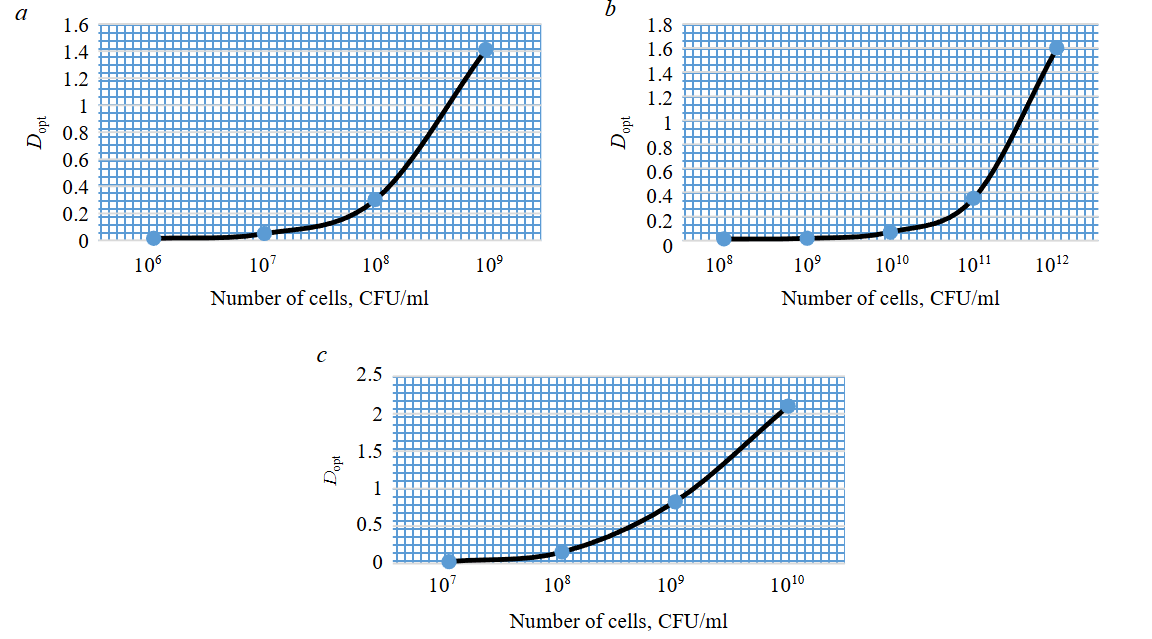
Fig.3. Dependences of the optical density of suspension of strains 3202 (a), 1295 (b), 858 (c) on the number of cells
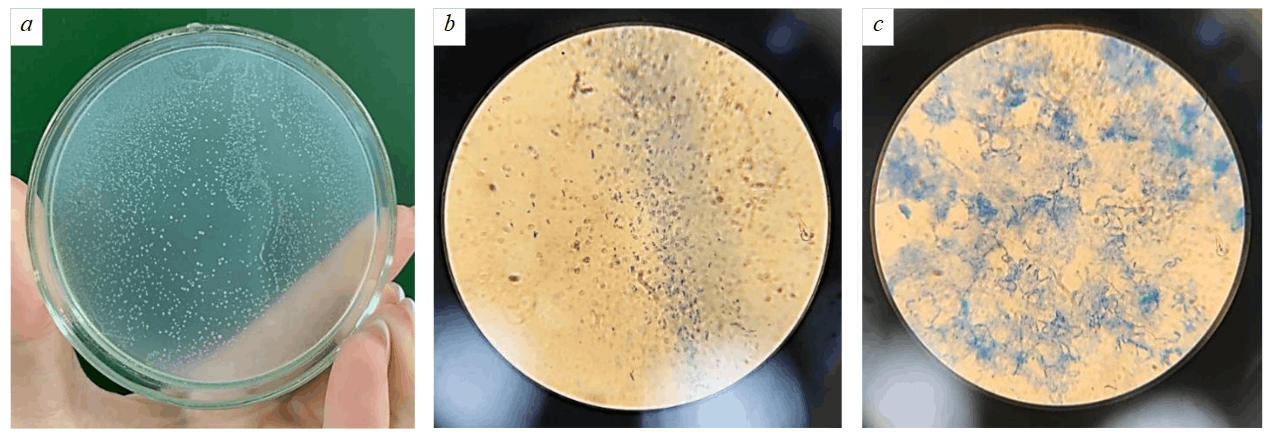
Fig.4. Microscopic pictures of cells of strain 3202 on Voroshilova – Dianova nutrient medium with the addition of a carbon source (a); strain 858 (magnification ×400) (b); strain 1295 on a nutrient medium with the addition of glucose (magnification ×400) (c)
The assessment of the growth of the 3202 strain culture was carried out visually due to the good distinctness of the colonies on the nutrient medium: small colonies have the appearance of a solid cloudy coating, larger colonies are convex, round, white, shiny (Fig.4, a).
Colonies of strain 858 on all nutrient media had the appearance of a continuous cloudy-white coating. To identify the growth of the culture, fixed preparations of colony cells grown on nutrient medium in Petri dishes were prepared. The presence of a large number of bacterial cells in smears from the surface of the nutrient medium for strain 858 was recorded at an increase of 400 times (Fig.4, b).
Despite the absence of visual differences in cultural properties, polymorphism of strain 1295 cells was revealed in the microscopic picture. When growing on a nutrient medium with the addition of glucose (a rich substrate), a significantly larger number of bacterial cells are observed, they are shortened, lined up in chains (Fig.4, c). On a nutrient medium with the addition of petroleum products (poor substrate), there are significantly fewer cells in the field of view, they are connected in stellate structures and have different lengths.
The results of the evaluation of the growth activity of strains on nutrient media with petroleum products and glucose are presented in Table 3.
Table 3
Growth activity of strains on nutrient media with the addition of petroleum products
|
Strain |
Glucose |
Oil |
Oil product |
Gasoline |
Diesel fuel |
|
3202 |
++ |
+ |
– |
++ |
– |
|
858 |
++ |
+ |
+ |
+ |
+ |
|
1295 |
+ |
+ |
+ |
+ |
++ |
Note. + low growth activity; ++ high growth activity; – no growth.
As can be seen from Table 3, the growth activity of the strains was recorded for almost all experiments based on the evaluation results. The exception was the experience with the addition of petroleum products and diesel fuel for strain 3202, where there was no growth.
Based on the data obtained, variants of the composition of the bio-based product with different proportions of bacterial suspensions are proposed (Table 4).
Table 4
Variants of bio-based product compositions
|
Strain |
Composit 1 |
Composit 2 |
Composit 3 |
|
Proportions of application of bacterial suspensions |
|||
|
3202 |
1 |
1 |
1 |
|
858 |
1 |
2 |
2 |
|
1295 |
2 |
1 |
2 |
The following samples were prepared to evaluate the effectiveness of cleaning oil-contaminated soils using the developed formulations:
- soil with the introduction of crude oil (O) 5 wt.%;
- soil with diesel fuel (DF) 5 wt.%;
- soil with gasoline (G) 5 wt.%;
- soil with petroleum products (PP) from the spill.
Bacterial suspensions were prepared by flushing to introduce bioremediation compounds into the soil. The optical density of bacterial suspensions and the concentration of bacterial cells in suspensions (CFU/ml) were determined by the spectrophotometric method based on the calibration dependences obtained, and in all bacterial suspensions the cell concentration was in the range of 107-1012 CFU/ml. Next, the soil samples were packaged in isolated 200 g cuvettes in accordance with the proportions of bacterial suspensions (Table 4) in the amount of 20 ml for each soil sample. Soil samples without bacterial suspensions were used as controls (Table 5).
Table 5
Sample matrix
|
Pollutant |
Temperature |
||||||||
|
20±1 °C |
10±1 °C |
||||||||
|
Composition 1 |
Composition 2 |
Composition 3 |
С |
Composition 1 |
Composition 2 |
Composition 3 |
С |
|
|
|
G |
G/1 |
G/2 |
G/3 |
G/С |
G/1 |
G/2 |
G/3 |
G/С |
|
|
O |
O/1 |
O/2 |
O/3 |
O/С |
O/1 |
O/2 |
O/3 |
O/С |
|
|
DF |
DF/1 |
DF/2 |
DF/3 |
DF/С |
DF/1 |
DF/2 |
DF/3 |
DF/С |
|
|
PP |
PP/1 |
PP/2 |
PP/3 |
PP/С |
PP/1 |
PP/2 |
PP/3 |
PP/С |
|
The simulation of the climatic conditions of the warm season, typical for the Leningrad Region, was carried out at temperatures of 20±1 and 10±1 °C for 60 days using the Klimatostat R-2 equipment. The studied soil samples were periodically moistened and mixed with a sterile spatula. Then, for 60 days, soil samples were taken to determine the concentration of oil and petroleum products using the fluorimetric method.
Discussion
The evaluation of the effectiveness of soil purification from petroleum products using the developed biological product was carried out through mathematical processing of the data obtained. Diagrams reflecting the dynamics of the decrease in the concentration of petroleum products under the action of biologics compositions relative to the initial values (IV) are shown in Fig.5, 6.
The results of evaluating the effectiveness of soil purification with various compositions of the developed biological product for 60 days at temperatures of 20±1 and 10±1 °C are presented in the Table 6.
Table 6
Efficiency of soil purification from petroleum products
|
Pollutant |
The composition with the highest efficiency |
The proportion of bacterial suspension application |
Reducing the concentration of pollutants in 60 days, % |
|
20±1 °C |
|||
|
PP |
1 |
1:1:2 |
71,97 |
|
O |
2 |
1:2:1 |
75,59 |
|
DF |
2 |
1:2:1 |
90,53 |
|
G |
3 |
1:2:2 |
75,81 |
|
10±1 °C |
|||
|
PP |
3 |
1:2:2 |
49,58 |
|
O |
1 |
1:1:2 |
40,62 |
|
DF |
1 |
1:1:2 |
69,06 |
|
G |
1 |
1:1:2 |
68,10 |
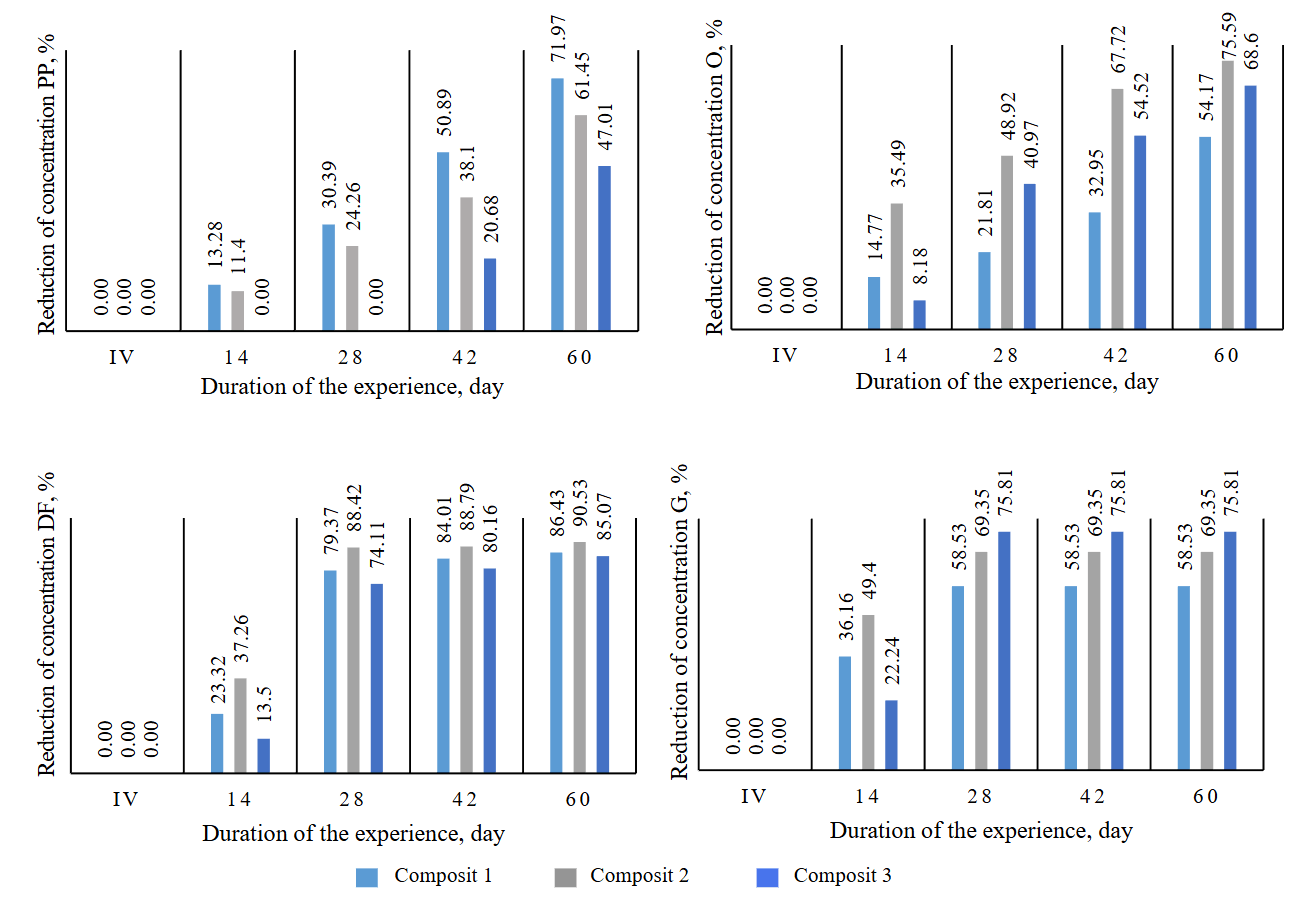
Fig.5. The dynamics of the concentration of oil and petroleum products at 20±1 °C
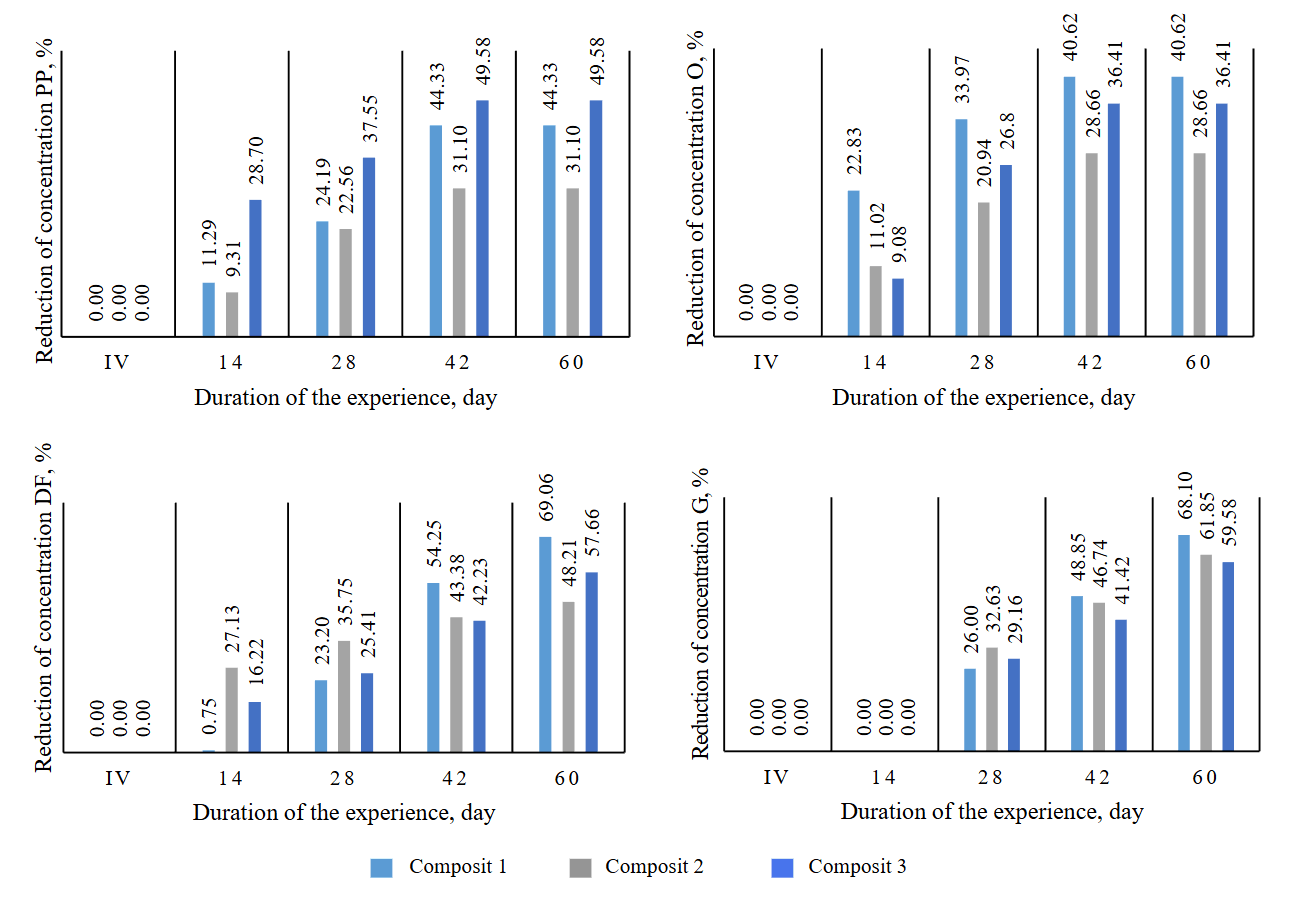
Fig.6. The dynamics of the concentration of oil and petroleum products at 10±1 °C
Conclusion
Soil pollution by oil and petroleum products remains an urgent environmental problem requiring comprehensive study and development of new effective cleaning technologies. Among the numerous methods of removing pollutants from soils, microbiological remediation is the most promising, the advantages of which include waste-free, high efficiency, low cost, and the possibility of restoring the fertile properties of the soil.
As part of the study, a new biological product was developed, which includes the bacterial consortium Acinetobacter sp. (VKM B-3202), Rhodococcus erythropolis (VKM Ac-858 T), Pseudomonas alcaligenes (VKM B-1295), which has a recycling activity against petroleum hydrocarbons. Three variants of the composition of this biological product have been prepared, differing in the volume ratio of bacterial suspensions (1:1:2, 1:2:1, 1:2:2 for compositions 1, 2, 3). It was found that all bacterial strains exhibit high growth activity in the presence of oil, gasoline, diesel fuel, and petroleum products from the spill as the only carbon source in nutrient media, with the exception of strain B-3202 because in the experimental variants with diesel fuel and petroleum products, bacterial growth on nutrient media was not recorded.
According to the results of evaluating the effectiveness of cleaning oil-contaminated soils with the application of the developed biological product at a temperature of 20±1 °C and natural soil moisture after 60 days of the experiment, the following maximum concentration reduction rates were obtained: for crude oil – 75.59 %; for oil products from the spill – 71.97 %; for diesel fuel – 90.53 %; for gasoline – 75.81 %. At a temperature of 10±1 °C: for crude oil – 40.62 %; for oil products from the spill – 49.58 %; for diesel fuel – 69.06 %; for gasoline – 68.10 %.
The developed biological product can be used to clean oil-contaminated soils in the Northwestern Federal District, including in the area of the Tammisuo railway station (Vyborg, Leningrad Region) or in regions with similar soil and climatic conditions.
The direction of further research is to evaluate the effectiveness of the developed technology for reclamation of oil-contaminated soils in the field.
The results presented in this study are protected by a patent [37].
References
- Ponomarenko T.V., Gorbatyuk I.G., Cherepovitsyn A.E. Industrial clusters as an organizational model for the development of Russia petrochemical industry. Journal of Mining Institute. 2024. Vol. 270, p. 1024-1037.
- Strizhenok A.V., Korelskiy D.S., Choi Y. Assessment of the Efficiency of Using Organic Waste from the Brewing Industry for Bioremediation of Oil-Contaminated Soils. Journal of Ecological Engineering. 2021. Vol. 22. Iss. 4, p. 66-77. DOI: 10.12911/22998993/133966
- Batukova D.V. Geoecological problems associated with the supervision and operation of oil production facilities. Treshnikov readings – 2022. Modern geographical global picture and technology of geographic education. Materialy vserossiiskoi nauchno-prakticheskoi konferentsii s mezhdunarodnym uchastiem, posvyashchennoi pamyati znamenitogo rossiiskogo okeanologa, issledovatelya Arktiki i Antarktiki, akademika Alekseya Fedorovicha Treshnikova i 90-letiyu FGBOU VO “UlGPU im. I.N.Ulyanova”, 14-15 aprelya 2022, Ulyanovsk, Rossiya. Ulyanovsk: Ulyanovskii gosudarstvennyi pedagogicheskii universitet imeni I.N.Ulyanova, 2022, p. 23-24 (in Russian). DOI: 10.33065/978-5-907216-88-4-2022-23-24
- Chukaeva M.A., Zaytseva T.A., Matveeva V.A., Sverchkov I.P. Purification of Oil-Contaminated Wastewater with a Modified Natural Adsorbent. Ecological Engineering and Environmental Technology. 2021. Vol. 22. N 2, p. 46-51. DOI: 10.12912/27197050/133331
- Strizhenok A.V., Ivanov A.V. Monitoring of Air Pollution in the Area Affected by the Storage of Primary Oil Refining Waste. Journal of Ecological Engineering. 2021. Vol. 22. Iss. 1, p. 60-67. DOI: 10.12911/22998993/128873
- Shulaev N.S., Kadyrov R.R., Pryanichnikova V.V. Combined method of phytoremediation and electrical treatment for cleaning contaminated areas of the oil complex. Journal of Mining Institute. 2024. Vol. 265, p. 147-155.
- Volosnikova G.A., Sokolov A.S. Identification of the source of territory pollution with petroleum products and justification for the choice of technology for its environmental rehabilitation. Ekonomika stroitelstva. 2024. N 6, p. 240-245 (in Russian).
- Minnikova T.V., Kolesnikov S.I. Environmental assessment of biochar application for remediation of oil-contaminated soils under various economic uses. Journal of Mining Institute. 2025. Vol. 271, p. 84-94.
- Tishin A.S., Tishina Yu.R. A comparison of foreign and domestic experience in cleaning soils contaminated with petroleum products. International Research Journal. 2021. N 10 (112), p. 106-112 (in Russian). DOI: 10.23670/IRJ.2021.112.10.018
- Polyak Y.M., Bakina L.G., Chugunova M.V., Gerasimov A.O. Diagnostics of the effeciency of remediation methods of oil-polluted agricultural podzolic soil by the complex of agrochemical and biological indicators. Agrochemistry and ecology problems. 2024. N 3, p. 47-52 (in Russian). DOI: 10.26178/AE.2024.83.31.007
- Meredov E.N., Veldzhanova A.N., Khatamova M.Ch. The use of biotechnologies for the restoration of degraded lands prone to desertification and salinization: methods of phytoremediation and microbiological remediation. Mezhdunarodnyi zhurnal gumanitarnykh i estestvennykh nauk. 2024. N 10-3 (97), p. 153-155. DOI: 10.24412/2500-1000-2024-10-3-153-155
- Sotnikova Yu.M., Grigoriadi A.S., Fedyaev V.V. et al. Application of microbiological preparations and lucern plants for phytoremediating activities on oil contaminated soils. Journal of Agriculture and Environment. 2022. N 5 (25), p. 6. DOI: 10.23649/jae.2022.5.25.02
- Korshunova T.Yu., Kuzina E.V., Sharipov D.A., Rafikova G.F. Bacteria of the genera Acinetobacter and Ochrobactrum in the processes of bioremediation of oil-contaminated objects (review). Theoretical and Applied Ecology. 2021. N 3, p. 13-20 (in Russian). DOI: 10.25750/1995-4301-2021-3-013-020
- Yang H., Kim G., Cho K.-S. Bioaugmentation of diesel-contaminated soil with Pseudomonas sp. DTF1. International Journal of Environmental Science and Technology. 2023. Vol. 20. Iss. 11, p. 12499-12510. DOI: 10.1007/s13762-023-04846-4
- Kulikova N.A., Klein O.I., Landesman E.O. The effect of humic substances on the degradation of aromatic hydrocarbons of oil by basidial fungi in soil and peat at low temperature. Agrochemistry and ecology problems. 2024. N 3, p. 37-46 (in Russian). DOI: 10.26178/AE.2024.73.22.006
- Kuyukina M.S., Glebov G.G., Osipenko M.A., Elkin A.A. Interspecies Interactions of Rhodococcus Beneficial for Bioremediation as Revealed by Ecological Modeling. Science and Global Challenges of the 21st Century – Science and Technology, p. 427-433. DOI: 10.1007/978-3-030-89477-1_43
- Korchagina Yu.S., Shchemelinina T.N. Patent N 2764305 RF. Method for purifying soils from petroleum contamination by the method of hydroseeding a biological mixture using microalgae Chlorella vulgaris globosa IPPAS C-2024. Publ. 17.01.2022. Bul. N 2 (in Russian).
- Haque S., Srivastava N., Pal D.B. et al. Functional microbiome strategies for the bioremediation of petroleum-hydrocarbon and heavy metal contaminated soils: A review. Science of The Total Environment. 2022. Vol. 833. N 155222. DOI: 10.1016/j.scitotenv.2022.155222
- Decesaro A., Rempel A., Machado T.S. et al. Bacterial biosurfactant increases ex situ biodiesel bioremediation in clayey soil. Biodegradation. 2021. Vol. 32. Iss. 4, p. 389-401. DOI: 10.1007/s10532-021-09944-z
- Glyaznetsova Yu.S., Lifshits S.Kh., Zueva I.N., Chalaya O.N. Issues of recultivation of oil-contaminated areas. Regional Environmental Issues. 2021. N 5, p. 109-112 (in Russian). DOI: 10.24412/1728-323X-2021-5-109-112
- Serzhantov V.G., Khaptsev Z.Yu. Patent N 2779935 RF. Means based on glauconite for immobilization of living bacterial cells. Publ. 15.09.2022. Bul. N 26 (in Russian).
- Qun Luo, Dengyong Hou, Dingwen Jiang, Wei Chen. Bioremediation of marine oil spills by immobilized oil-degrading bacteria and nutrition emulsion. Biodegradation. 2021. Vol. 32. Iss. 2, p. 165-177. DOI: 10.1007/s10532-021-09930-5
- Chao Zhang, Daoji Wu, Huixue Ren. Bioremediation of oil contaminated soil using agricultural wastes via microbial consortium. Scientific Reports. 2020. Vol. 10. N 9188. DOI: 10.1038/s41598-020-66169-5
- Minnikova T.V., Ruseva A.S., Revina S.Yu. et al. Assessment of the efficiency of bioremediation by oil-contaminated eutric cambisols in the Republic of Kalmykia (model experiment). Aridnye ekosistemy. 2023. Vol. 29. N 4 (97), p. 166-176 (in Russian). DOI: 10.24412/1993-3916-2023-4-166-176
- Galiullina Y.R., Kulagin A.A. Determination of the degree of water purification after application of oil-absorbent sorbents. Ecology of Urban Areas. 2021. N 1, p. 29-32 (in Russian). DOI: 10.24412/1816-1863-2021-1-29-32
- Petrova T.A., Rudzisha E. Utilization of sewage sludge as an ameliorant for reclamation of technogenically disturbed lands. Journal of Mining Institute. 2021. Vol. 251, p. 767-776. DOI: 10.31897/PMI.2021.5.16
- Mazlova E.A., Kherrera-Alvarado L.A. Patent N 2568063 RF. Biological preparation for decontamination of soil and slimes from oil and oil products. Publ. 10.11.2015. Bul. N 31 (in Russian).
- Tretyakova M.S., Belovezhets L.A., Markova Yu.A. Patent N 2705290 RF. Microbial preparation for bioremediation of soil contaminated with oil and oil products. Publ. 06.11.2019. Bul. N 31 (in Russian).
- Gamzaeva R.S. Application of the Bak-Verad biodestructor on soddy-podzolic soil contaminated with oil products. Izvestiya Saint-Petersburg State Agrarian University. 2019. N 2 (55), p. 38-45 (in Russian). DOI: 10.24411/2078-1318-2019-12038
- Bykova M.V., Pashkevich M.A. Assessment of oil pollution of soils of production facilities of different soil and climatic zones of the Russian Federation. News of the Tula State University. Sciences of Earth. 2020. Iss. 1, p. 46-59 (in Russian). DOI: 10.46689/2218-5194-2020-1-1-46-59
- Evseeva E.A., Golov V.I., Zakharova E.B., Panasyuk A.N. Impact of effective microorganisms on reduction of soil pathogenicity in different soil and climatic conditions. Dalnevostochnyj agrarnyj vestnik. 2023. Vol. 17. N 4, p. 25-38 (in Russian). DOI: 10.22450/1999-6837-2023-17-4-25-38
- Sozina I.D., Danilov A.S. Microbiological remediation of oil-contaminated soils. Journal of Mining Institute. 2023. Vol. 260, p. 297-312. DOI: 10.31897/PMI.2023.8
- Pashkevich M.A., Bykova M.V. Methodology for thermal desorption treatment of local soil pollution by oil products at the facilities of the mineral resource industry. Journal of Mining Institute. 2022. Vol. 253, p. 49-60. DOI: 10.31897/PMI.2022.6
- Temerdashev Z.A., Musorina T.N., Kiseleva N.V. et al. Gas Chromatography–Mass Spectrometry Determination of Polycyclic Aromatic Hydrocarbons in Surface Water. Journal of Analytical Chemistry. 2018. Vol. 73. N 12, p. 1154-1161. DOI: 10.1134/S1061934818120109
- Chaporginа A.A., Korneykova M.V. Evaluation of the microorganisms consortium efficiency to cleaning soils polluted by oil products in the Kola North conditions. Theoretical and Applied Ecology. 2020. N 2, p. 136-142 (in Russian). DOI: 10.25750/1995-4301-2020-2-136-142
- Pashkevich M.A., Bykova M.V. Improvability of measurement accuracy in determining the level of soil contamination with petroleum products. Mining Informational and Analytical Bulletin. 2022. N 4, p. 67-86 (in Russian). DOI: 10.25018/0236_1493_2022_4_0_67
- Danilov A.S., Duka A.A., Ivanchenko O.B., Sozina I.D. Patent N 2808248 RF. Composition for bioremediation of soil contaminated with oil and petroleum products. Publ. 28.11.2023. Bul. N 34 (in Russian).