

Geological and geochemical characteristics of solid bitumen inclusions in volcanites of the pre-Jurassic complex of the Litvakovsky oil field
- 1 — Ph.D. Senior Researcher V.I.Shpilman Research and Analytical Centre for the rational use of the subsoil ▪ Orcid
- 2 — Head of Laboratory V.I.Shpilman Research and Analytical Centre for the rational use of the subsoil ▪ Orcid
- 3 — Ph.D. Head of Laboratory V.I.Shpilman Research and Analytical Centre for the rational use of the subsoil ▪ Orcid
- 4 — Leading Engineer V.I.Shpilman Research and Analytical Centre for the rational use of the subsoil ▪ Orcid
- 5 — Leading Engineer V.I.Shpilman Research and Analytical Centre for the rational use of the subsoil ▪ Orcid
- 6 — Head of Laboratory V.I.Shpilman Research and Analytical Centre for the rational use of the subsoil ▪ Orcid
Abstract
The investigation of bitumen occurrences confined to zones of hydrothermal alteration developed within volcanic rocks of the Late Permian-Early Triassic age, intersected by a well in the upper part of the pre-Jurassic basement section at the Litvakovskoye oil field, is of critical importance for predicting the petroleum potential of the West Siberian basement. The presence of bitumen in metasomatically altered basalts provides evidence of either a destroyed oil accumulation or the existence of hydrocarbon migration pathways within the pre-Jurassic complex. According to mineralogical and petrographic data, hydrocarbon emplacement occurred after the hydrothermal-metasomatic alteration of the volcanic rocks. Based on V.A.Uspensky’s classification, the studied bitumens are identified as pure asphaltites and transitional asphaltite – kerite varieties. Molecular composition and carbon isotope data suggest that the precursor source organic matter of the naphthides was formed under reducing conditions in a shallow basin with elevated water salinity and clay – carbonate sedimentation, which may have received humic material input. The level of thermocatalytic transformation of the bitumens corresponds to the early phase of the oil window. The naphthides have been variably affected by hypergenic and, possibly, migrational processes. In addition to the typical biodegradation markers – C28-C34 25-norhopanes – the bitumens reveal, for the first time, their lighter homologs: demethylated tricyclic C19 and tetracyclic C23 terpanes, as well as unusual tetracyclic hydrocarbons of the hopanoid type (secohopanes C27, C29, C30). These compounds, along with bicyclic terpanes C17-C24, may be considered a distinctive feature of the solid naphthides from the pre-Jurassic complex of the study area. The bitumens are characterized by low sterane content and exhibit specific compositional features similar to those of crude oils from the Kotyg'yeganskoye and Severo-Khokhryakovskoye oil fields. The distribution of tri- and tetracyclic terpanes indicates a similarity between the bitumens and both crude oils and bitumoids of the Tyumen Formation. The observed sterane and terpane signatures in the bitumens may be attributed to the contribution of humic material to the precursor source organic matter and suggest a possible genetic link between the naphthides and the deposits of the Tyumen Formation.
None
Introduction
The Litvakovskoye oil field, discovered in 2001, is located in the Nizhnevartovsk District of the Khanty-Mansiysk Autonomous Okrug – Yugra, within the Vasyugan petroleum oil and gas bearing area (Fig.1). In terms of reserves, it is classified as a small field (recoverable/geological reserves: 0.21/0.8 million t), and in terms of geological structure, it is considered simple [1]. At the same time, inclusions of solid bitumen have been discovered in the Upper Permian-Lower Triassic igneous rocks of the pre-Jurassic complex at this field [2, 3]. The origin of these bitumens remains controversial and may be interpreted by researchers from the perspectives of pyrogenic, juvenile, or migration hypotheses [4].
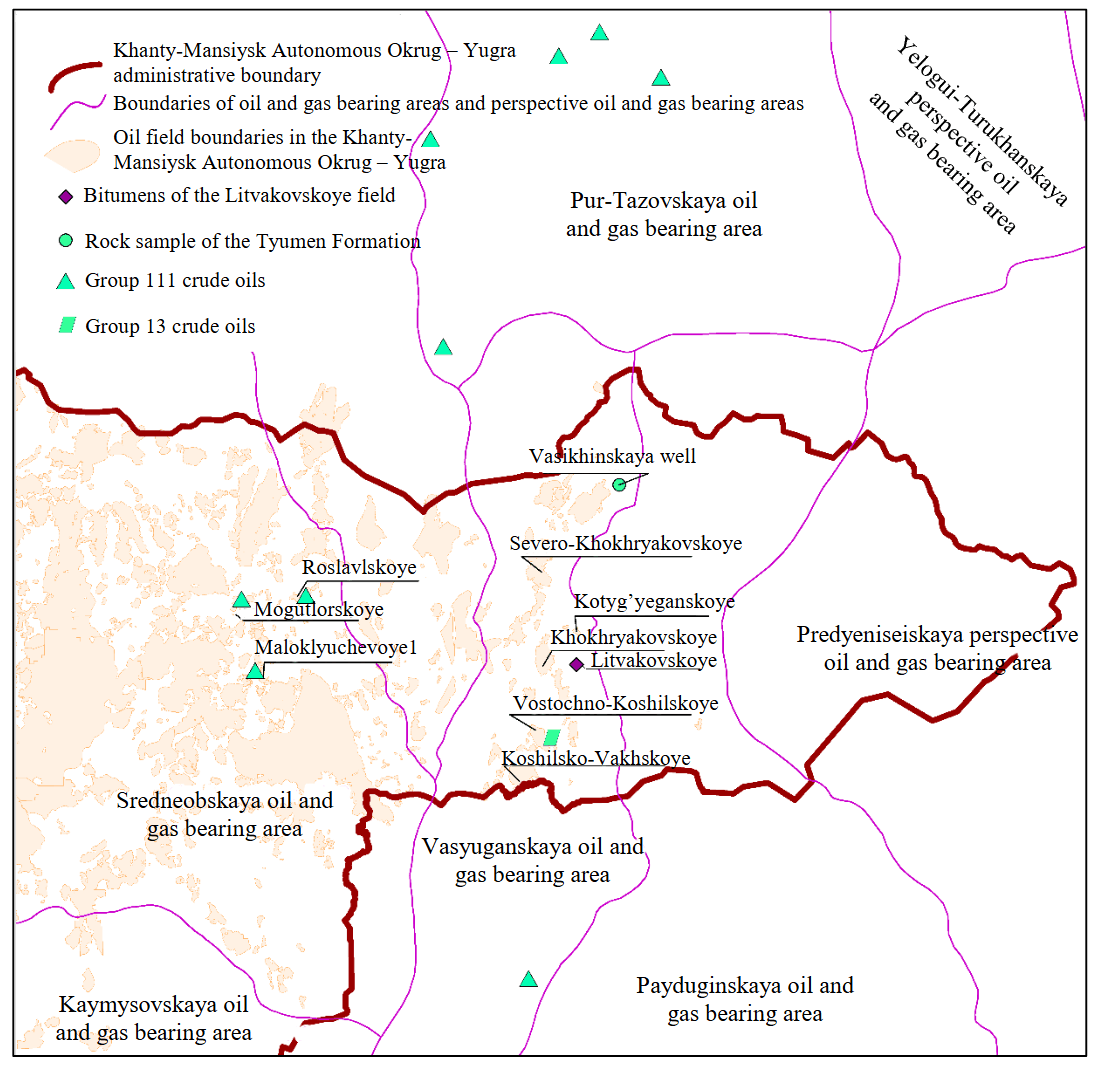
Fig.1. Schematic map of the study area
Composition of crude oils in Western Siberia according to data from [5]: group 111 – oil families of the Tyumen and Vasyugan formations, primarily from the northeastern periphery of the basin (13 samples); group 13 – an oil family comprising two samples from the Tyumen Formation of well 347 at the Koshilskoye field
Similar occurrences of bitumen have been found in agate amygdules within Permian-Triassic volcanic rocks in the Middle Urals, in a section along the Sinara River [6], and in amygdules within trappean basalts of the Nidym Formation (T1), in rock exposures on the bank of the Nizhnyaya Tunguska River (Eastern Siberia) [7].
The bitumens developed directly within metasomatites after the Upper Permian-Lower Triassic basalts of the Litvakovskoye field were previously studied in [2, 3] using IR and Raman spectroscopy. They were classified as low-grade anthraxolites, and their reconstructed transformation temperatures were found to correspond to the temperature of metasomatic alteration of the host rocks, estimated at less than 150 °C based on geothermometry [8].
These data on the bulk composition of the bitumen are preliminary and useful for determining its type and the thermal conditions of its formation; however, they do not allow unambiguous conclusions regarding its origin. To establish the facies and genetic characteristics of the precursor source organic matter (OM) and the probable lithological composition of the source rocks, naphthides are traditionally studied at the molecular level.
Addressing the issues related to determining the genesis of solid bitumen inclusions in volcanic rocks of the pre-Jurassic complex, based on mineralogical-petrographic studies of the bitumen bearing rocks and detailed geochemical investigations of the bitumens, appears promising for understanding the petroleum potential of the West Siberian basement. Within this basement, more than 150 hydrocarbon accumulations are known in the territory of the Khanty-Mansiysk Autonomous Okrug – Yugra [9]. Moreover, at the Kotyg’yeganskoye field, located north of the Litvakovskoye field, testing of the interval 3026-3042 m in dolomitic breccias yielded an oil-with-water flow at a rate of 53.1 m3/day [10].
The aim of this study is to investigate the nature of large bitumen inclusions confined to weakly altered volcanic rocks of the Late Permian-Early Triassic age, intersected by a well in the upper section of the pre-Jurassic basement.
Methods
Mineralogical and petrographic studies of core material from well Litvakovskaya-108 were performed for the depth interval 2715.00-2738.95 m. Petrographic examinations were carried out using an Olympus BX53 polarizing microscope equipped with a Simagis XS-6CU digital camera. Mineralogical investigations were conducted on a Carl Zeiss EVO-50 scanning electron microscope (SEM) equipped with an INCA Energy 350 energy-dispersive spectrometer (Oxford Instruments).
To study the composition of organic matter in the volcanic rocks of the pre-Jurassic complex, two sites containing solid bitumen inclusions (samples 5 and 6) were selected in quantities sufficient for the planned suite of analytical geochemical studies. The selected samples were mechanically extracted from the pores indicated in the photographs (Fig.2, 3). Subsequently, the samples were extracted with chloroform in Soxhlet apparatuses for 72 h, with periodic replacement of the solvent with fresh portions until no change in the luminescence intensity of the solution (under UV light at λ = 365 nm) was observed in the extraction chamber after overnight settling. After removal of the solvent from the extracts using a Hei-VAP Precision ML Adv/Pre rotary evaporator (Heidolph, Germany), the yield of the chloroform-soluble fraction or chloroform bitumoid (СhB “A”) was calculated as a weight percentage relative to the original sample. The rock samples were then subjected to pyrolytic analysis to determine the content of insoluble organic matter (carbenes + carboids) using a HAWK RW rock analyzer (Wildcat Technologies, USA) in PAM multi-zone mode.
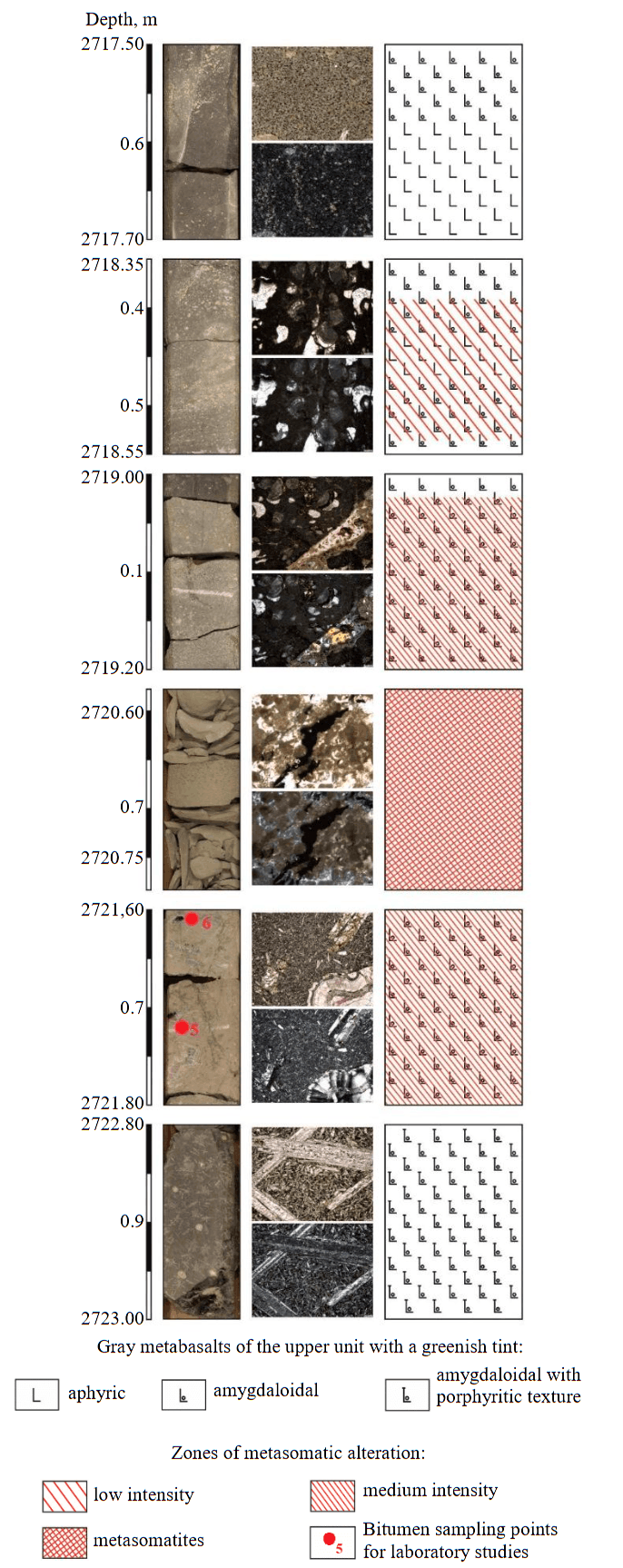
Fig.2. Fragmented section of the upper unit of Upper Permian-Lower Triassic metabasalts penetrated by well
Litvakovskaya-108, indicating sampling points for laboratory analyses
The isolated chloroform bitumoids were subjected to SARA analysis. First, asphaltenes were precipitated using a 40-fold excess of n-pentane (cold Golde method) [11]. This procedure was repeated twice to ensure effective removal of co-precipitated components. Subsequently, the maltenes from the СhB “A” were separated into three component groups (paraffin-naphthenes, aromatic compounds, and resins) by column liquid-adsorption chromatography on silica gel, using sequential elution with solvents of increasing polarity.
Analysis of the molecular composition of the paraffin-naphthene and aromatic component groups was performed using a Trace 1310 TSQ 8000 EVO gas chromatography-mass spectrometry system (Thermo Fisher Scientific, USA) operating in total ion current (TIC), selected ion monitoring (SIM), and multiple reaction monitoring (MRM) modes.
For geochemical interpretation, chromatograms obtained in TIC mode were used for normal and isoprenoid alkanes, in MRM mode for polycyclic naphthenes (due to significant peak overlap among different compound classes), and in SIM mode for aromatic compounds. Data acquisition and processing were carried out using Xcalibur 4.0 software. Peak identification of individual components was performed using the NIST 2017 mass spectral library, published reference manuals, literature, and guidelines on biomarker analysis of crude oils.
Determination of the carbon isotope composition (δ13C) of the paraffin-naphthene and aromatic component groups was performed on a Delta V Advantage isotope ratio mass spectrometer (Thermo Fisher Scientific, Germany) coupled with a Flash IRMS elemental analyzer (EA IsoLink CNSOH) via a ConFlo IV universal interface. δ13C measurements were calibrated against the VPDB standard, with a measurement precision of ±0.2 ‰.
Discussion of results
In the depth interval 2715.00-2738.95 m, well Litvakovskaya-108 penetrated Upper Permian-Lower Triassic trappean dolerites and basalts within the submeridional graben-rift of the Sabunskaya structural-formational zone [12]. Based on the results of mineralogical and petrographic studies, the structural and textural characteristics of the rocks were determined. These characteristics allow the subdivision of the penetrated volcanic sequence into two units, with basalts occurring in the upper part of each unit and dolerites in the lower part. The intensity of metasomatic processes was assessed. Intervals affected by low-temperature hydrothermal alteration and propylitization were identified (Fig.2).
The basalts of the upper unit are characterized by a gray to dark-gray color with a greenish tint, while those of the lower unit exhibit an intense cherry-red tint. The contact between the units (at a depth of 2731.45 m) is disturbed by a core break. The transition between the gray basalts of the upper unit and the dolerites is obscured by metasomatic products, whereas the contact between the cherry-red basalts of the lower unit and the underlying dolerites is gradual. Based on petrographic characte-ristics, the basalts are represented by aphyric, porphyritic, vesicular, amygdaloidal, and fluidal varieties, exhibiting various combinations of structural and textural features. The dolerites display a porphyritic-like texture. Porphyritic phenocrysts are represented by grains of basic and intermediate plagioclase (with distinct zoning) of elongated-prismatic and tabular shape, often forming stellate aggregates. Amygdaloidal texture is typical for the basalts, with taxitic texture occurring less frequently.
Throughout the entire section of igneous rocks penetrated by the well, bitumen segregations and inclusions are observed. The abundance and size of bitumen segregations increase sharply in the zone of bleached volcanic rocks directly adjacent to propylitization areas, reaching 15-20 mm.
Several shapes of bitumen occurrence in the rocks have been identified:
- in amygdules and fractures, together with low-temperature hydrothermal minerals (Fig.3, a-d);
- in microfractures within the zone of propylitized rocks (Fig.3, e, f );
- in the groundmass of basalts, without any noticeable connection to pore space.
Bitumen occurrences with similar morphology were observed by the authors of publications [13, 14] in the volcanic rocks of the Sokhochul bitumen occurrence in the Minusinskaya depression, which has been described in a number of publications.
In this study, bitumen segregations within the pore space of basalts from areas of metasomatically altered bleached basalts (Fig.3), directly adjacent to the propylitization zone, were selected for detailed geochemical characterization using chromatographic analytical methods. These correspond to samples 5 and 6 from the depth interval 2721.60-2721.80 m.
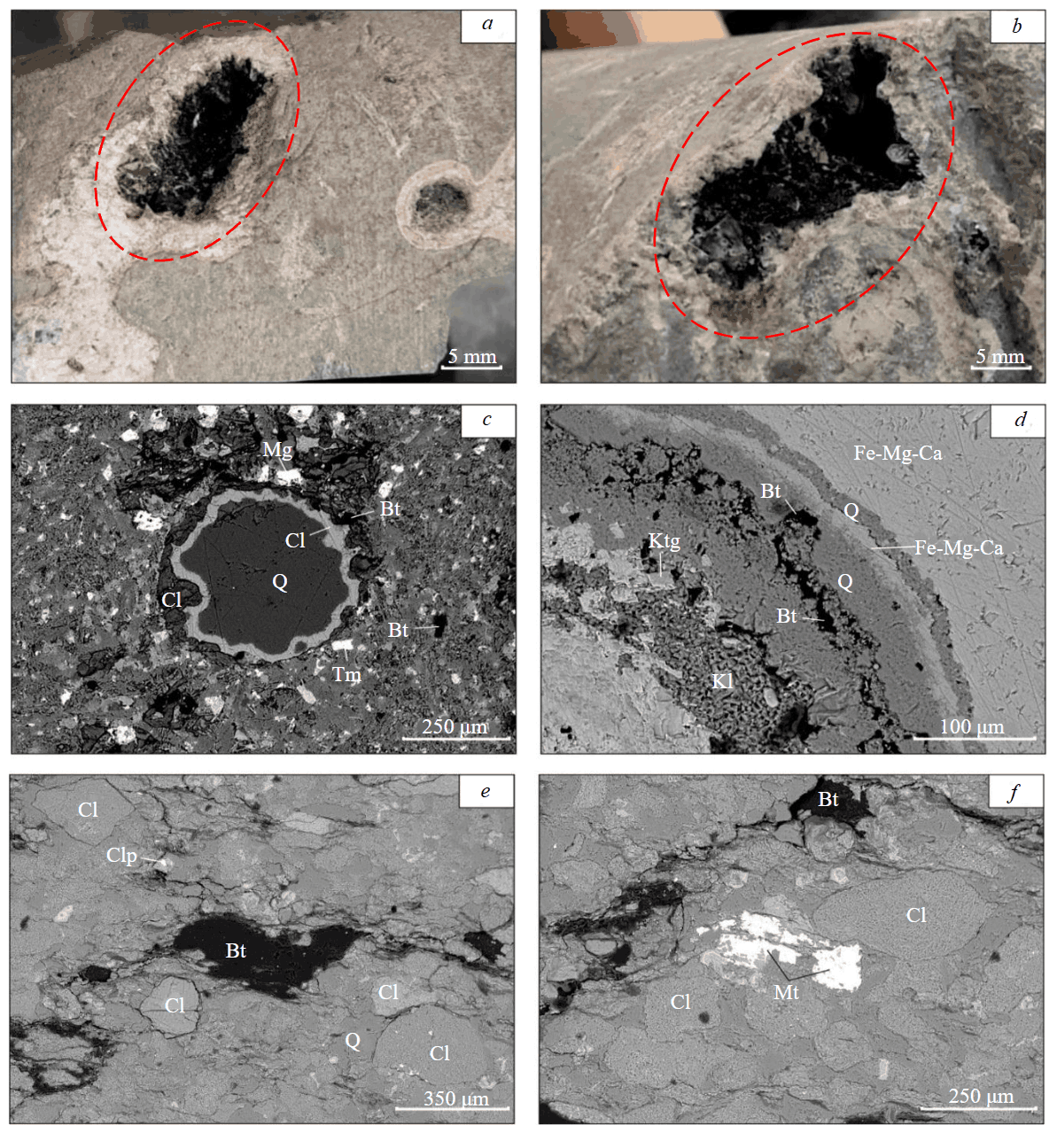
Fig.3. Macrophotographs and SEM microphotographs of bitumen-bearing rocks: a, b – macroscopic bitumen occurrences filling amygdules in bleached basalts in the interval 2722.3-2722.7 m (samples 5 and 6); c, d – mineralogical zonation of amygdule fillings in basalts; e, f – petrographic and mineralogical features of propylites.
Fe-Mg-Сa – ferromagnesian calcite; Q – quartz; Cl – chlorite; Ktg – kutnohorite; Kl – kaolinite; Bt – bitumen; Tm – titanomagnetite; Mt – magnetite; Clp – chalcopyrite; the red dashed line indicates the bitumen sampling location
Results of geochemical investigation of bitumens
Group composition of bitumens
For the diagnostic classification of bitumen type according to V.A.Uspensky’s classification, the results of SARA analysis of the chloroform-soluble fraction and pyrolysis data of the rock after extraction (to determine the content of residual, non-extractable organic matter) were used (see Table). Based on the calculated group composition, the bitumen from sample 5 is classified as transitional asphaltite – kerite varieties, while the bitumen from sample 6 is classified as asphaltite.
Group composition of bitumens
|
Sample |
Depth, m |
Composition, rel.% of the original sample |
Group composition, rel.% of total OM |
||||||
|
Mineral phase |
Soluble OM (ChB “A”) |
Insoluble OM (carbenes + carboids)* |
Insoluble OM (carbenes + carboids)* |
Soluble OM (ChB “A”) |
|||||
|
Oily Fraction |
Resins |
Asphaltenes |
|||||||
|
PNF |
Aromatic compounds |
||||||||
|
5 |
2721.72 |
30.51 |
58.42 |
11.07 |
15.9 |
15.9 |
10.4 |
13.1 |
44.7 |
|
6 |
2721.61 |
14.60 |
85.25 |
0.15 |
0.17 |
18.9 |
16.4 |
10.3 |
54.2 |
Note. * – sum of chloroform-insoluble organic matter; ChB “A” – chloroform bitumoid A; PNF – paraffin-naphthene fraction.
Molecular composition
Within the paraffin-naphthene fraction of the ChB “A” from the samples, the following compounds were identified: normal and isoprenoid alkanes (n-alkanes and isoalkanes), as well as bi-, tri-, tetra-, and pentacyclic biomarkers – sesquiterpanes, pregnanes, steranes, terpanes, and demethylated 25-norhopanes. On the TIC mass chromatograms, against the background of unresolved complex (naphthenic) mixture (UCM), n-alkanes appear reduced, while prominent peaks of terpanes – comparable in intensity to the n-alkanes – are observed; steranes, however, are difficult to identify (Fig.4, a). In sample 6, compared to sample 5, a lower content of low-molecular-weight compounds is evident. Based on the overall appearance of the mass chromatograms, it is inferred that the primary composition of the naphthides has been affected by secondary hypergenic processes, including physical (degassing, evaporation, water washing), chemical, and biochemical alteration.
Alkanes Normal alkanes with chain lengths ranging from 12 to 32 carbon atoms, as well as the isoprenoids pristane and phytane, were identified. The molecular weight distributions (MWD) of n-alkanes exhibit unimodal profiles, with maximums occurring in the n-C14-n-C16 range for sample 5 and in the n-C19-n-C21 range for sample 6 (Fig.4, b). The predominance of n-C10-n-C20 alkanes in the MWD of sample 5 indicates a marine origin for the precursor source OM. The slight shift toward higher abundances of n-C21-n-C30 alkanes in sample 6 is likely related to a greater influence of hypergenic factors on its composition, which is also reflected in elevated values of the Wax and Ki geochemical indices, as well as a reduced Pr/Ph ratio (Fig.4, b). Meanwhile, both samples exhibit a distinct predominance of n-C29 alkane over its homologs, which is typically associated with the input of terrigenous OM into the depositional basin. According to the Connan – Сassou diagram (Fig.4, c), the precursor source OM of the bitumens was formed in shallow-water marine settings under reducing conditions.
Steranes In both samples, steranes were detected in minor amounts – on mass chromatograms acquired in SIM mode at m/z 217, only peaks of C21-C22 pregnanes are visible, while rearranged and regular C27-C29 steranes are suppressed, suggesting a significant impact of biochemical oxidation processes on their composition. However, when individual compounds and their isomers were recorded in MRM mode, the target C21-C22 and C27-C29 naphthenes were identified. As shown in Fig.5, a, the peaks of biosteranes (ααR-isomers) are comparable to those of geosteranes (ααS-, ββR-, and ββS-isomers). Based on the ratios of bio- to geosteranes, commonly used to assess the degree of organic matter cata-genesis, the investigated bitumens can be characterized as products of the realization of the hydrocarbon potential of kerogen at the initial stages of its transformation – C29Rββ/(ββ + αα) = 0.48-0.59 [15]. The values of the C29ααS/(S + R) = 0.55-0.48 may appear elevated; however, it should be taken into account that the R- and S-epimers of the ααα configuration reach thermodynamic equilibrium more rapidly than the αββ and ααα epimers [16]. The predominance of diasteranes over regular steranes (C27Dia/Reg ratio = 1.49-1.87) may serve as an indicator of clay-rich environments during early diagenesis and may also be explained by their selective enrichment during biochemical oxidation due to their greater stability compared to regular steranes [17]. Considering the sequence of individual sterane depletion during biodegradation [18], it cannot be ruled out that the low concentrations of pregnanes and steranes may be attributable to the compositional characteristics of the OM in the source rocks. Among the regular steranes C27, C28, and C29, which reflect the contribution of specific groups of organisms to the precursor source organic matter, the abundances of the C27 and C29 homologs are similar, with a slight predominance of C29. This may indicate a mixed composition of the precursor source organic matter, formed from the remains of aquatic organisms with an input of terrigenous OM that was transported into the depositional basin (Fig.5, b).
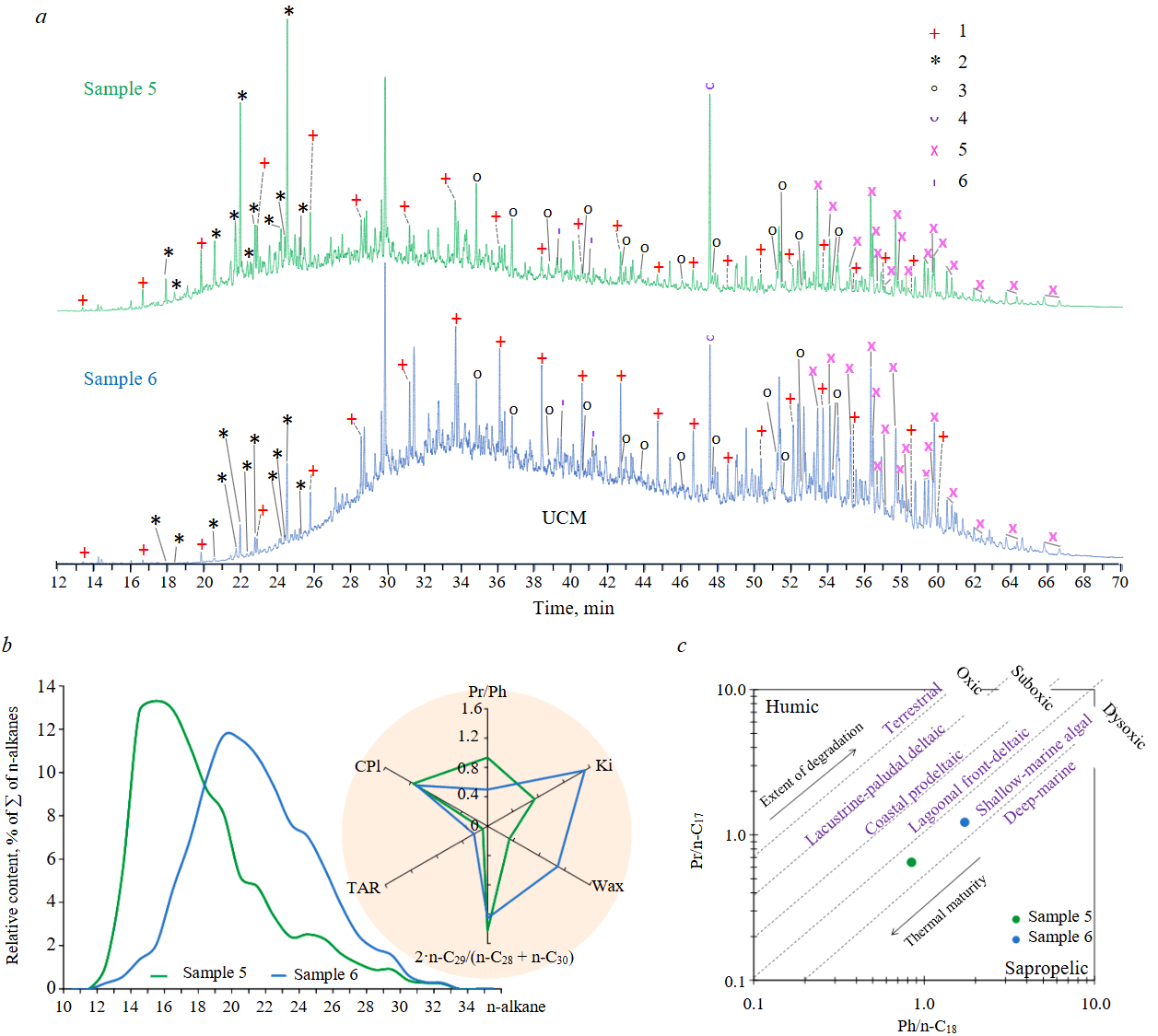
Fig.4. Composition of normal and isoprenoid alkanes: a – mass chromatograms of the paraffin-naphthene fraction in TIC mode; b – MWD of n-alkanes and star diagram of geochemical indices; c – Connan – Cassou diagram
1 – normal alkanes C12-C32; 2 – sesquiterpanes C14-C16; 3 – tricyclic terpanes C19-C30; 4 – tetracyclic terpane C24; 5 – pentacyclic terpanes C27-C35; 6 – pregnanes C21
Pr/Ph = iso-C19/iso-C20; TAR = (n-C27 + n-C29 + n-C31)/(n-C15 + n-C17 + n-C19);
Wax = ∑(n-C21-n-C31)/∑(n-C15-n-C20); Ki = (iso-C19 + iso-C20)/(n-C17 + n-C18);
CPI = 0.5[ (∑odd(n-C25-n-C33)/∑even(n-C24-n-C32)) + (∑odd(n-C25-n-C33)/∑even(n-C26-n-C34))];
Pr/n-C17 = iso-C19/n-C17; Ph/n-C18 = iso-C20/n-C18
In most crude oils from various petroleum-bearing complexes of Western Siberia, steranes are present at levels readily detectable in SIM mode. Therefore, the study additionally examines the sterane composition in oils from nearby productive areas relative to the Litvakovskoye field, based on published data and previously obtained results from investigations of crude oils in the Khanty-Mansiysk Autonomous Okrug. Specifically, low sterane content relative to hopanes was noted by E.A.Belitskaya [19] in oils from reservoirs Yu1 and Yu2 of the Severo-Khokhryakovskoye field. This was attributed either to a significant contribution of terrigenous plants to the precursor source organic matter or to its active microbial reworking during accumulation. I.V.Goncharov previously demonstrated the predominance of C29 ethylcholestanes over C27 cholestanes, coupled with a low pristane/phytane ratio, in oils from well 23 of the Kotyg’yeganskoye field (Yu10, Pz). This was explained by a genetic link between the oils and Paleozoic or older marine source rocks [10].
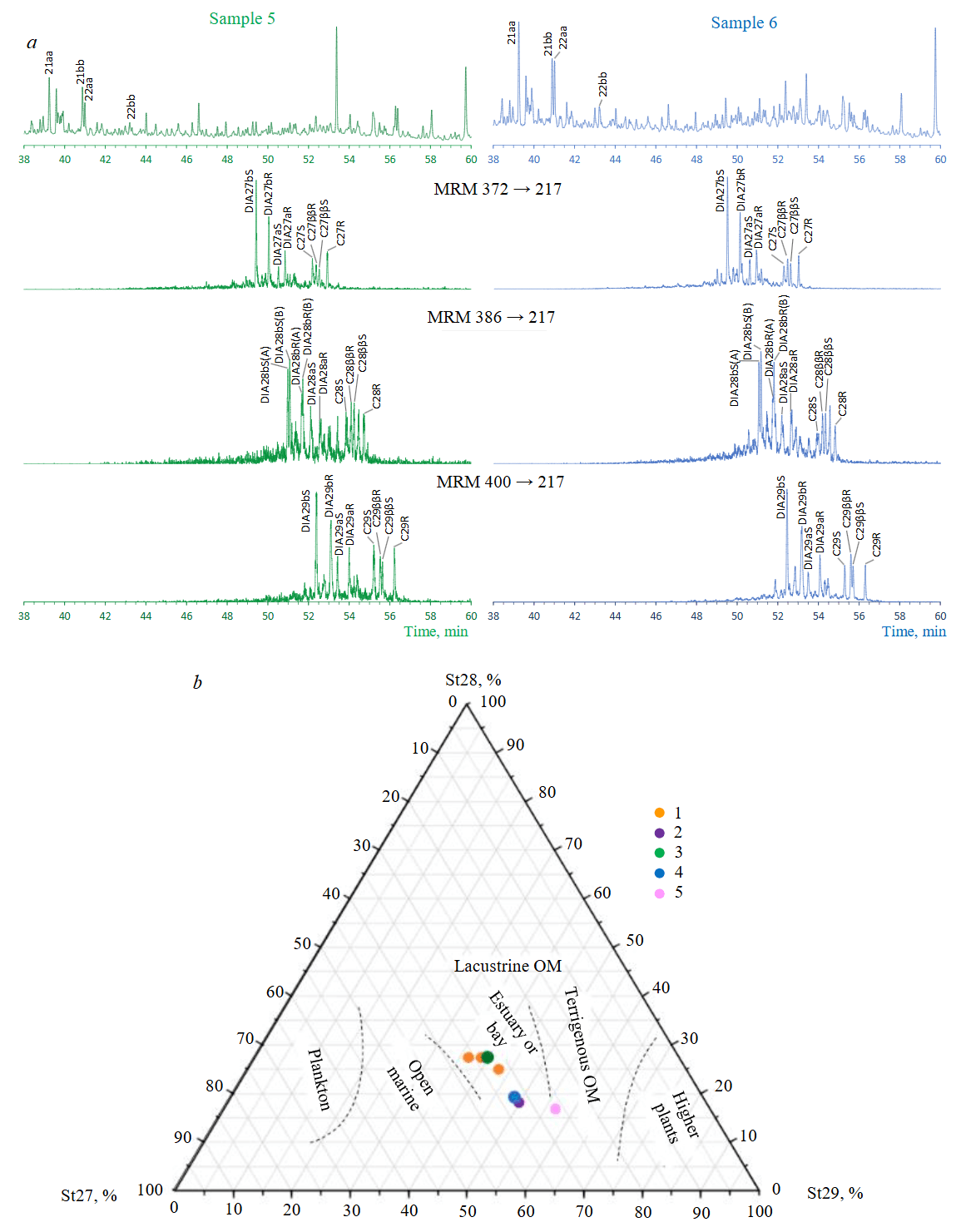
Fig.5. Sterane composition: a – mass chromatograms of C21-C22 pregnanes, rearranged (DIA) and regular bio- and geosteranes C27-C29 in SIM and MRM modes; b – determination of genetic types of OM based on the ratio of C27, C28, C29 isosteranes
1 – crude oils of the Severo-Khokhryakovskoye field, reservoir Yu1/2; 2 – crude oil of the Kotyg'yeganskoye field, reservoir YuV10; 3 – bitumen, sample 5; 4 – bitumen, sample 6; 5 – crude oil of the Kotyg'yeganskoye field, pre-Jurassic complex
Based on the results of our previous studies, crude oils from nearby productive areas, like the investigated bitumens, are characterized by a predominance of ethylcholestane (see Fig.4, b). Furthermore, in the oil from the pre-Jurassic complex of the Kotyg'yeganskoye field, a significant predominance of terpanes over steranes – similar to that observed in the bitumens – was noted. In oils from the Yu1/2 reservoirs of the Severo-Khokhryakovskoye field and the YuV10 reservoir of the Kotyg'yeganskoye field, terpanes also predominate over steranes, albeit to a lesser extent.
Terpanes Among the terpanes in both samples, the following compounds were identified: bicyclic C14-C16, tricyclic C19-C30, tetracyclic C24, pentacyclic C27-C35 terpanes, C30 gammacerane, and C27-C34 25-norhopanes. On the mass chromatograms at m/z 191, the high peaks of C19 and C20 cheilanthanes and the tetracyclic terpane C24 are particularly noteworthy (Fig.6, a). For the first time in the studied bitumens, demethylated tricyclic (DTr19) and tetracyclic (DTet23) terpanes were identified – compounds previously reported in the OM of Middle Cambrian rocks and the Vendian Khatyspyt Formation of the Siberian Platform [20, 21]. Based on fragment ions at m/z 123 and 193, tetracyclic hydrocarbons of the hopanoid type, referred to as secohopanes (Sh27, Sh29, Sh30), were detected; these are often associated by researchers [22] with biodegraded oil and bitumen accumulations (Fig.6, a). These compounds, along with the aforementioned demethylated terpanes in the bitumens of the study area, have not been previously reported in published literature.
The presence of demethylated tri- and tetracyclic terpanes indicates significant biodegradation of the naphthides [23, 24]; however, only individual structures of this type are observed on the mass chromatograms. At the same time, cheilanthanes and tetracyclic terpanes are considered among the most resistant to thermal and biochemical alteration (to varying degrees) among saturated chemofossils [25]. It may be hypothesized that biodegradation processes did not completely alter the composition of the tri- and tetracyclic terpanes, and that the distribution of these compounds observed on the mass chromatograms reflects the composition of the precursor source OM. A similar distribution of tri- and tetracyclic terpanes has been noted in crude oils (J2, terrigenous reservoir) and source rock extracts (J1, coal-bearing formation) from the Fukang Sag exploration block in the Junggar Basin, Northwestern China [26], as well as in extracts of coal-bearing rocks from the Tyumen Formation (based on the results of our own studies) (Fig.6, a).
Among the tricyclanes, the C19-C20 homologs predominate over C23-C26, indicating the presence of terrigenous OM in the depositional basin (Its = 1.33-1.32; T19/T23 = 4.21-3.58), as previously noted from the composition of n-alkanes and steranes. The high abundance of the tetracyclic terpane C24 and the presence of gammacerane (Ga/H = 0.37-0.60) may indicate hypersaline conditions with stratification of the water column, in which the original bioproducers lived [27, 28]. It is possible that the existing saline regime of the waters was responsible for the reduced species diversity of living organisms, which subsequently determined the compositional characteristics of the precursor source organic matter depleted in sterols. This is reflected, among other features, in the overall low concentration of steranes in the naphthides and the predominance of pregnanes and homopregnanes within this compound class [29]. Elevated concentrations of gammacerane, typical of source rocks from carbonate-evaporite basins of Hindustan and Oman, are explained by researchers as resulting from the widespread occurrence of protozoan ciliates of the Tetrahymena type in ancient water basins [30]. At the same time, the literature reports that both eukaryotes and bacteria may serve as potential sources of the triterpenoid alcohol tetrahymanol, the precursor of gammacerane [31].
Based on the ratio of pentacyclic trisnorneohopane to trisnorhopane (Ts/Tm = 2.22-1.06), a genetic link between the naphthides and clay-rich source rocks is inferred. Considering the values of the parameters T24/T23 (0.35-0.42), T26/T25 (0.5-0.7), and the adiantane/hopane ratio (H29/H = 1.40-1.61), the precursor source OM is interpreted to have been formed in clay-carbonate depositional settings. The isomeric ratios of the R- and S-epimers of C31 hopanes approach equilibrium values (C31HSR = 0.52-0.48) and correspond to the upper boundary of the oil window.
It should be added that a previous study [5] examined the molecular composition of crude oils in Western Siberia for which the rocks of the Tyumen Formation are presumed to be the source. These oils and the studied bitumen samples 5 and 6 show good agreement in the values of parameters based on tricyclic terpanes and steranes that are indicative of the genesis of the precursor source organic matter, suggesting the involvement of terrigenous OM. Certain differences are attributed to facies variability of the depositional environment and are reflected in the clay-rich composition of the source rocks for the oils versus the clay-carbonate composition for the bitumens. A.A.Sevastyanov reported data on the presence of carbonate varieties and limestone interbeds in the middle and upper parts of the Tyumen Formation [32].
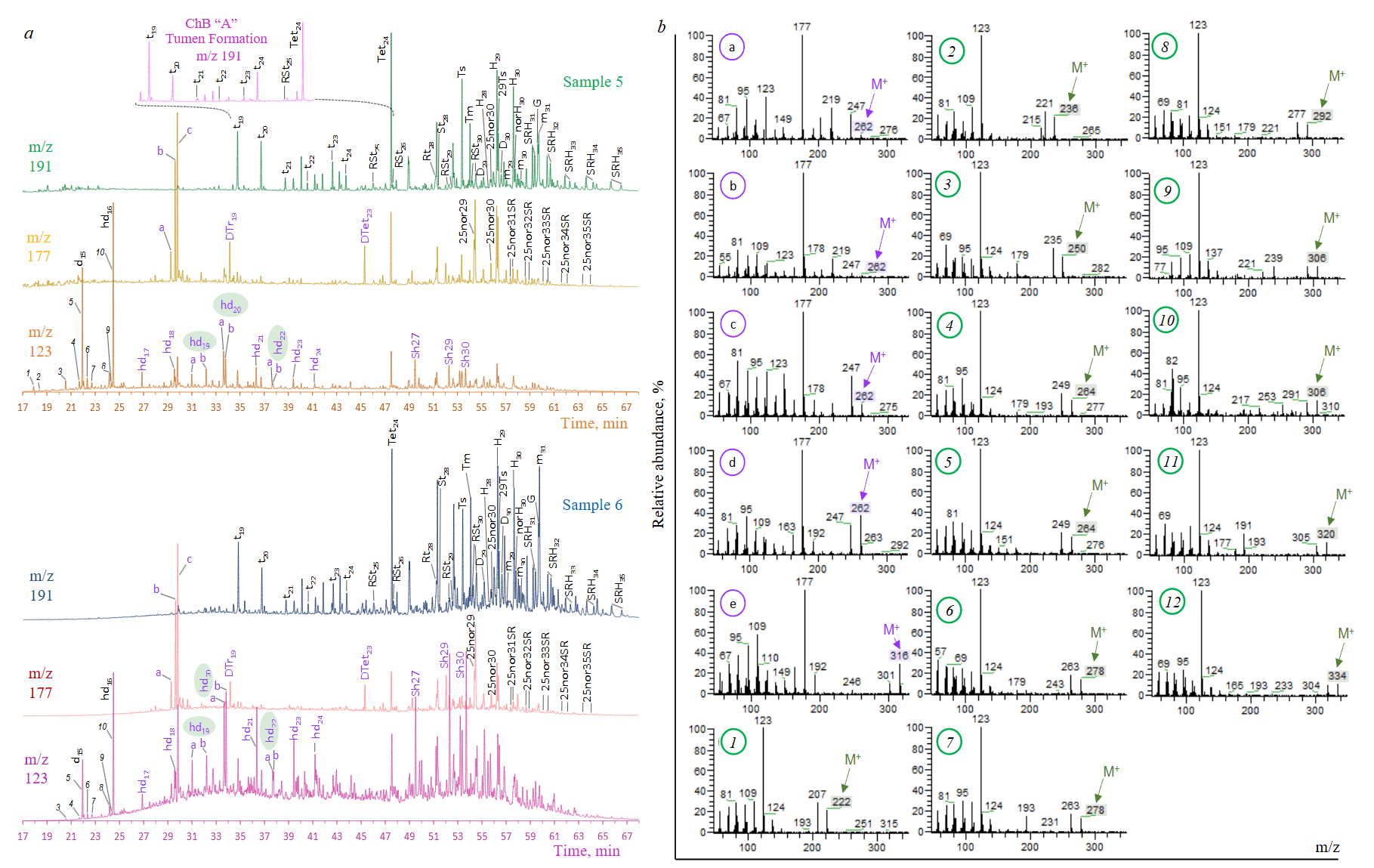
Fig.6. Terpane composition: a – mass chromatograms of C14-C35 terpanes in SIM mode; b – mass spectra of individual bi- and tricyclic naphthenic compounds
1-10 – bicyclic sesquiterpanes C14-C16; t19-t30 – tricyclic terpanes; Ts – C27 trisnorhopane; Tm – C27 trisnorhopane; 29Ts – C29 trisnorhopane; H28-H35 – hopanes and homohopanes; D29-D30 – diahopanes; m29-m31 – moretanes; G – gammacerane; demethylated 25-nor-: DTr19 (cheilanthane), DTet23 (tetracyclic terpane), C28-C34 hopanes; Sh27, Sh29, Sh30 – secohopanes; hd17-hd24 – bicyclic alkanes; unidentified structures: a, b, c – demethylated 25-nor-C19, 1-12 – bicyclic alkanes hd17-hd24; identified structures: d – demethylated tricyclic terpane DTr19, e – demethylated tetracyclic terpane DTet23
The bicyclic compounds of the drimane and homodrimane series (C14-C16) identified in the bitumens are generally regarded as markers of terrigenous input; however, the literature also documents their occurrence in various prokaryotic organisms [33, 34]. On SIM mass chromatograms at m/z 177 and the corresponding MRM transitions (M+ → 177), demethylated hopane structures – C28-C34 25-norhopanes – are recorded. Their presence is considered by many researchers to be an indicator of extensive biodegradation of naphthides [35, 36]. Since hopanes are less resistant to biochemical oxidation than tri- and tetracyclic terpanes, geochemical interpretations based on homohopane indices should be approached with caution [37]. In addition to the compounds mentioned above, the bitumens contain a number of structures that can be tentatively assigned to demethylated C19 compounds (M+ 262), based on the intense fragment ion at m/z 177, as well as higher-molecular-weight homologs (and isomers) of bicyclic compounds in the C17-C24 range (M+ 236-334), identified by the dominant ion at m/z 123. Mass fragmentograms of these compounds are presented in Fig.6, b.
The presence of normal and isoprenoid alkanes in the PNF, along with the occurrence of biochemical oxidation markers, may be related to the dilution of initially biodegraded naphthides during subsequent inflows of new portions of hydrocarbon fluids, as demonstrated in the case of accumulations in Argentina [38] and Western Siberia [39].
Aromatic compounds The aromatic fraction was found to contain biaromatic (naphthalenes), triaromatic (phenanthrenes), triaromatic steroids, and sulfur-containing (dibenzothiophenes) compounds. In the relative distribution of the latter three groups of compounds, bitumen 5 exhibits a notably higher content of phenanthrenes, while bitumen 6 contains approximately 35 % each of phenanthrenes and dibenzothiophenes, and 30 % triaromatic steroids. Retene is present in the bitumens; it has traditionally been considered a biomarker of coniferous plants. However, in recent years, evidence has emerged suggesting its possible algal or cyanobacterial origin. For reliable determination of its provenance, isotopic analyses (δ13C) of retene itself, as well as of n-C16-C30 alkanes and stigmastane, are employed [40]. Among the alkylnaphthalenes, trimethylnaphthalenes predominate (56-57 %), while the contents of methyl- and dimethylnaphthalenes are lower (20 and 23-24 %). This may indicate a contribution of humic components to the precursor source OM [41]. Based on the values of the 4-MDBT/Phen ratio (0.01-0.04), as well as the C27 Dia/Reg and Ts/Tm parameters, clay-rich depositional environments for the parent organic matter are inferred [42]. Based on the ratio of 4- and 1-methyldibenzothiophene isomers, which possess different thermodynamic stability (MDR = 0.87-0.54), the naphthides are characterized by a low degree of thermal transformation. The calculated [43] Ro value is 0.57-0.55 %.
Carbon isotope composition In the PNF and aromatic fraction of sample 5, the content of the heavy carbon isotope 13C is higher compared to sample 6 and is closer to that in the ChB “A” of the Tyumen Formation (Fig.7, a). This may be related to a greater contribution of terrigenous OM transformation products to its composition. Based on the carbon isotope composition, as well as on a number of biomarker parameters in the PNF, the studied bitumens are similar to crude oils of the Tyumen Formation from well 347 of the Koshilskoye field [5], as illustrated in the star diagram in Fig.7, b.
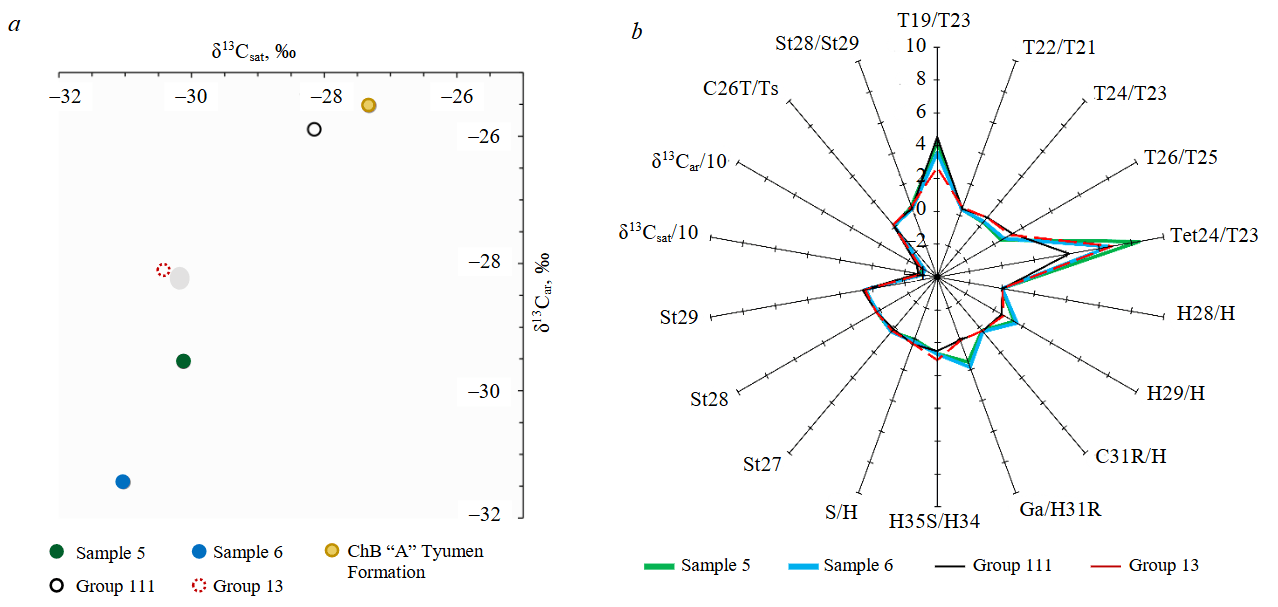
Fig.7. Comparison of the composition of the studied pre-Jurassic complex bitumens with crude oils and bitumoids of the Tyumen Formation: a – carbon isotope composition of the oily fraction; b – star diagram of biomarker parameters of the PNF and carbon isotope composition of the oily fraction
Composition of crude oils in Western Siberia according to data from [5]: Group 111 – oil families of the Tyumen and Vasyugan formations, predominantly from the northeastern periphery of the basin (13 samples); Group 13 – an oil family comprising two samples from the Tyumen Formation of Well 347 at the Koshilskoye field
Conclusion
The presence of bitumen in metasomatically altered basalts provides evidence of either a destroyed oil accumulation or the existence of hydrocarbon migration pathways within the Permian-Triassic pre-Jurassic complex of the Litvakovskoye field. According to the data obtained from mine-ralogical and petrographic studies, migration occurred after the hydrothermal-metasomatic alteration of the volcanic rocks. The results of the investigation of the bitumen group composition, based on extraction, pyrolysis, and SARA analysis, allowed, according to V.A.Uspensky, to classify sample 5 as transitional asphaltite – kerite varieties and sample 6 as asphaltite. Based on the molecular composition and carbon isotope signatures of the paraffin-naphthene and aromatic compound groups, the formation of the precursor source organic matter of the naphthides is inferred to have occurred under reducing conditions in a shallow-water basin with elevated water salinity, which may have received humic material input. The isomeric ratios of steranes, terpanes, and methyldibenzothiophenes indicate level of thermocatalytic transformation of the bitumens corresponding to the early phase of the oil window. The naphthides have been affected by hypergenic processes, including biochemical alteration, to varying degrees. In addition to the typical biodegradation markers – C28-C34 25-norhopanes – the bitumens reveal, for the first time, their lighter homologs: demethylated tricyclic C19 and tetracyclic C23 terpanes, as well as unusual tetracyclic hydrocarbons of the hopanoid type (secohopanes C27, C29, C30). These compounds, along with bicyclic terpanes in the C17-C24 range, may be considered characteristic features of the solid naphthides from the pre-Jurassic complex of the study area. The simultaneous presence in the bitumen extracts of normal and isoprenoid alkanes, along with compounds indicative of biodegradation processes, is likely attributable to the dilution of previously formed naphthides with new portions of hydrocarbon fluids. Additional compositional features of the bitumens include a low sterane content, while specific characteristics similar to those of crude oils from the Kotyg'yeganskoye and Severo-Khokhryakovskoye fields have been identified. At the same time, the investigated bitumens show a close similarity to bitumoids and crude oils, for which the deposits of the Tyumen Formation are considered the source rocks, based on the distribution of tricyclic C19-C23 and tetracyclic C24 terpanes. The observed sterane and terpane signatures in the bitumens may be attributed to the contribution of humic material to the precursor source organic matter and suggest a possible genetic link between the naphthides and the deposits of the Tyumen Formation. Given the presence of favorable geological prerequisites, undiscovered hydrocarbon accumulations can be forecast in the Lower, Middle Jurassic deposits and the pre-Jurassic basement of the study area.
References
- Named oil and gas fields of Tyumenskaya oblast / Ed. by N.N.Zakirova. Tyumen: Tyumenskii industrialnyi universitet, 2020, p. 208.
- Lepekha S.V., Berzin S.V. Study of natural bitumen by Fourier transform infrared spectroscopy. XXX Zimnei Shkoly po khimii tverdogo tela, 9-10 fevralya 2021, Ekaterinburg, Russia. Ekaterinburg: Izd-vo Uralskogo universiteta, 2021, p. 58-61.
- Berzin S.V., Ivanov K.S., Pankrushina E.A. et al. Occurrences of bitumen in apobasaltic metasomatites within the pre-Jurassic basement of the West Siberian platform. Uralskaya mineralogicheskaya shkola. 2022. N 28, p. 15-16.
- Fedoseev G.S., Fadeeva V.P., Melenevsky V.N. Veined pyrobitumen in dolerites of the Kuzmensky complex (Minusa intermontane trough). Russian Geology and Geophysics. 2001. Vol. 42. N 7, p. 1052-1060 (in Russian).
- Peters K.E., Ramos L.S., Zumberge J.E. et al. Circum-Arctic petroleum systems identified using decision-tree chemometrics. AAPG Bulletin. 2007. Vol. 91. N 6, p. 877-913. DOI: 10.1306/12290606097
- Erokhin Yu.V., Ivanov K.S. On the discovery and study of anthraxolite in Triassic plagiorhyolite on the border of the Ural and western Siberia. Geosciences Journal. 2019. Vol. 23. Iss. 2, p. 273-279. DOI: 10.1007/s12303-018-0030-3
- Gosudarstvennaya geologicheskaya karta Rossiiskoi Federatsii. Masshtab 1:1000000 (trete pokolenie). Seriya Norilskaya. List Q-47 – Tura. Obyasnitelnaya zapiska. St. Petersburg: Kartograficheskaya fabrika VSEGEI, 2018, p. 328.
- Kouketsu Y., Mizukami T., Mori H. et al. A new approach to develop the Raman carbonaceous material geothermometer for low-grade metamorphism using peak width. Island Arc. 2014. Vol. 23. Iss. 1, p. 33-50. DOI: 10.1111/iar.12057
- Tugareva A.V., Chernova G.A., Yakovleva N.P., Moroz M.L. Geological structure and oil and gas potential of the pre-Jurassic deposits of the central part of the west Siberian plate. Oil and Gas Studies. 2017. N 5, p. 58-66 (in Russian). DOI: 10.31660/0445-0108-2017-5-58-66
- Moroz M.L., Chernova G.A. Composition, geochemical investigations, and findings of bitumens in rocks of the pre-Jurasic complex in the territory of KhMAO – Yugra. Puti realizatsii neftegazovogo potentsiala Zapadnoi Sibiri: Materialy Dvadtsat shestoi nauchno-prakticheskoi konferentsii, 22-25 noyabrya 2022, Khanty-Mansiisk, Rossiya. Khanty-Mansiisk: Nauchno-analiticheskii tsentr ratsionalnogo nedropolzovaniya im. V.I.Shpilmana, 2023, p. 324-332 (in Russian).
- Yudina N.V., Nebogina N.A., Prozorova I.V. Composition of the Resin-Asphaltene Components in the Interfacial Layers of Water-in-Oil Emulsions. Petroleum Chemistry. 2021. Vol. 61. N 5, p. 568-575. DOI: 10.1134/S0965544121060050
- Ivanov K.S., Fedorov Yu.N., Erokhin Yu.V., Ponomarev V.S. The geological structure of the base the Ural part of the west Siberian petroleum megabasin. Ekaterinburg: Institut geologii i geokhimii im. akademika A.N.Zavaritskogo, 2016, p. 302 (in Russian).
- Serebrennikova O.V., Vasilev B.D., Turov Yu.P. et al. Sokhochul oil occurrence in Northern Khakassia. Izvestiya Tomskogo politekhnicheskogo universiteta. 2002. Vol. 305. N 8, p. 78-83.
- Serebrennikova O.V., Vasilev B.D., Turov Yu.P., Filippova T.Yu. Naphthides in Lower Devonian basalts in the North Minusinsk Depression. Doklady Earth Sciences. 2003. Vol. 390. N 4, p. 604-606.
- Xiaotao Zhang, Bin Shen, Jiajia Yang et al. Evolution characteristics of maturity-related sterane and terpane biomarker parameters during hydrothermal experiments in a semi-open system under geological constraint. Journal of Petroleum Science and Engineering. 2021. Vol. 201. N 108412. DOI: 10.1016/j.petrol.2021.108412
- Hackley P.C., Ryder R.T. Organic geochemistry and petrology of Devonian shale in eastern Ohio: Implications for petroleum systems assessment. AAPG Bulletin. 2021. Vol. 105. N 3, p. 543-573. DOI: 10.1306/08192019076
- Siqin Huang, Guosheng Xu, Fanghao Xu et al. Biomarker distributions and depositional environments of continental source rocks in Sichuan Basin, SW China. Energy Exploration & Exploitation. 2020. Vol. 38. Iss. 6, p. 2296-2324. DOI: 10.1177/0144598720915533
- Chosson P., Connan J., Dessort D., Lanau C. In Vitro Biodegradation of Steranes and Terpanes: A Clue to Understanding Geological Situations. Biological Markers in Sediments and Petroleum. Prentice-Hall, 1992, p. 320-349.
- Belitskaya E.A. Crude oils from the Koltogor rift and adjacent areas (West Siberia): specifics of the composition of aromatic compounds: Avtoref. dis. … kand. khim. nauk. Tomsk: Institut khimii nefti SO RAN, 2008, p. 24.
- Parfenova T.M., Kashirtsev V.A., Korovnikov I.V. New discoveries of naphthide occurrences in middle Cambrian rocks of the north-east Siberian platform. Neftegazovaya geologiya. Teoriya i praktika. 2014. Vol. 9. N 2, p 22. DOI: 10.17353/2070-5379/25_2014
- Melnik D.S., Parfenova T.M., Rogov V.I. (2020). Biodegraded bitumens dispersed in Vendian (Neoproterozoic) rocks of the Khatyspyt Formation, Northeastern Siberia. Georesursy. 2020. Vol. 22. N 2, p. 37-44 (in Russian). DOI: 10.18599/grs.2020.2.37-44
- Kashirtsev V.A. New and less common sterane and terpane hydrocarbons in oils from the Nepa-Botuoba anteclise (Eastern Siberia). Petroleum Chemistry. 2013. Vol. 53. N 1, p. 1-8. DOI: 10.1134/S0965544112060072
- Kashirtsev V.A. Natural bitumens of the northeast of the Siberian Platform. Yakutsk: Yakutskii filial Sibirskogo otdeleniya Akademii nauk SSSR, 1988, p. 103 (In Russian).
- Alberdi M., Moldowan J.M., Peters K. E., Dahl J.E. Stereoselective biodegradation of tricyclic terpanes in heavy oils from the Bolivar Coastal Fields, Venezuela. Organic Geochemistry. 2001. Vol. 32. Iss. 1, p. 181-191. DOI: 10.1016/S0146-6380(00)00130-3
- Mao-Guo Hou, Ming Zha, Xiu-Jian Ding et al. Source and accumulation process of Jurassic biodegraded oil in the Eastern Junggar Basin, NW China. Petroleum Science. 2021. Vol. 18. Iss. 4, p. 1033-1046. DOI: 10.1016/j.petsci.2021.07.010
- Bocai Li, Youjun Tang, Zhonghong Chen et al. The Geochemical Characteristics of Source Rock and Oil in the Fukang Sag, Junggar Basin, NW China. Minerals. 2023. Vol. 13. Iss. 3. N 432. DOI: 10.3390/min13030432
- Akhmedova A.R., Serebrennikova O.V., Shiganova O.V. Composition of Hydrocarbons in Oils from Central Part of the Eastern Siberia. Journal of Siberian Federal University. Chemistry. 2018. N 11 (2), p. 230-248 (in Russian).
- Zibin Zhao, Grohmann S., Zieger L. et al. Evolution of organic matter quantity and quality in a warm, hypersaline, alkaline lake: The example of the Miocene Nördlinger Ries impact crater, Germany. Frontiers in Earth Science. 2022. Vol. 10. N 989478. DOI: 10.3389/feart.2022.989478
- Akhmedova A.R., Serebrennikova O.V., Shiganova O.V. Saturated and Aromatic Hydrocarbons Biomarkers in Crude Oil and Bitumens from Kugas 364-0 Parametric Well (Sakha (Yakutia) Republic, Russia). Petroleum Chemistry. 2023. Vol. 63. N 1, p. 82-92. DOI: 10.1134/S0965544123020056
- Kashirtsev V.A., Parfenova T.M., Moiseev S.A. et al. The Sukhana Sedimentary Basin, Siberian Platform: Source Rock Characterization and Direct Evidence of Oil and Gas Presence. Russian Geology and Geophysics. 2019. Vol. 60. N 10, p. 1175-1187. DOI: 10.15372/RGG2019119
- Banta A.B., Wei J.H., Welander P.V. A distinct pathway for tetrahymanol synthesis in bacteria. PNAS. 2015. Vol. 112. N 44, p. 13478-13483. DOI: 10.1073/pnas.1511482112
- Sevastyanov A.A., Korovin K.V., Zotova O.P., Zubarev D.I. Prospects of development Tyumen suite deposits in the territory of KHMAO-Yugra. Advances in current natural sciences. 2016. N 12-2, p. 444-448 (in Russian).
- Dongxu Zhang, Wenyu Du, Xingming Pan et al. Discovery and biosynthesis of bacterial drimane-type sesquiterpenoids from Streptomyces clavuligerus. Beilstein Journal of Organic Chemistry. 2024. Vol. 20, p. 815-822. DOI: 10.3762/bjoc.20.73
- Konopleva I.V., Sevastianov V.S. Geochemical Significance of Bicyclic Sesquiterpanes in the Hydrothermal Oil of the Uzon Volcano Caldera (Kamchatka). Geochemistry International. 2023. Vol. 61. N 2, p. 203-209. DOI: 10.1134/S0016702923020052
- Peters K.E., Moldowan J.M., McCaffrey M.A., Fago F.J. Selective biodegradation of extended hopanes to 25-norhopanes in petroleum reservoirs. Insights from molecular mechanics. Organic Geochemistry. 1996. Vol. 24. Iss. 8-9, p. 765-783. DOI: 10.1016/S0146-6380(96)00086-1
- Dingsheng Cheng, Lirong Dou, Qingyao Chen, Wenqiang Wang. Geochemical characteristics and origins of biodegraded oils in the Bongor Basin (Chad) and their implications for petroleum exploration. Energy Exploration & Exploitation. 2022. Vol. 40. Iss. 2, p. 682-700. DOI: 10.1177/01445987211069582
- Fursenko E.A., Borisova L.S., Burukhina A.I., Saitov R.M. Geochemistry of Crude Oils of the Van-Yeganskoye Oil and Gas Condensate Field. Petroleum Chemistry. 2021. Vol. 61. N 5, p. 588-601. DOI: 10.1134/S0965544121060074
- Philp R.P. Correlation of crude oils from the San Jorges Basin, Argentina. Geochimica et Cosmochimica Acta. 1983. Vol. 47. Iss. 2, p. 267-275. DOI: 10.1016/0016-7037(83)90139-4
- Kashirtsev V.A., Nesterov I.I., Melenevskii V.N. et al. Biomarkers and adamantanes in crude oils from Cenomanian deposits of northern West Siberia. Russian Geology and Geophysics. 2013. Vol. 54. N 8, p. 958-965. DOI: 10.1016/j.rgg.2013.07.012
- Zakrzewski A., Kosakowski P., Kowalski T. Terrigenous or not? δ13C reveals the origin of the retene and dehydroabietic acid methyl ester. Chemical Geology. 2024. Vol. 670. N 122414. DOI: 10.1016/j.chemgeo.2024.122414
- Golovko A.K., Kontorovich A.E., Pevneva G.S., Fursenko E.A. Composition and distribution of alkylnaphthalenes in West Siberian oils. Russian Geology and Geophysics. 2014. Vol. 55. N 5-6, p. 737-744. DOI: 10.1016/j.rgg.2014.05.016
- Chakhmakhchev A., Suzuki N. Saturate biomarkers and aromatic sulfur compounds in oils and condensates from different source rock lithologies of Kazakhstan, Japan and Russia. Organic Geochemistry. 1995. Vol. 23. Iss. 4, p. 289-299. DOI: 10.1016/0146-6380(95)00018-A
- Radke M. Application of aromatic compounds as maturity indicators in source rocks and crude oils. Marine and Petroleum Geology. 1988. Vol. 5. Iss. 3, p. 224-236. DOI: 10.1016/0264-8172(88)90003-7