

Microfragments of the Saratov meteorite in the magnetic fraction of modern soils: search and identification
- 1 — Ph.D. Leading Researcher Lomonosov Moscow State University ▪ Orcid
- 2 — Ph.D., Dr.Sci. Professor Lomonosov Moscow State University ▪ Orcid
- 3 — Ph.D. Researcher Shirshov Institute of Oceanology of RAS ▪ Orcid
- 4 — Ph.D. Senior Researcher Lomonosov Moscow State University ▪ Orcid
- 5 — Researcher Schmidt Institute of Physics of the Earth of the RAS ▪ Orcid
- 6 — Ph.D., Dr.Sci. Professor Center for the Development of the Saratov Agglomeration and Industrial Parks ▪ Orcid
- 7 — Ph.D., Dr.Sci. Leading Researcher Lomonosov Moscow State University ▪ Orcid
- 8 — Ph.D. Senior Researcher Lomonosov Moscow State University ▪ Orcid
- 9 — Postgraduate Student Lomonosov Moscow State University ▪ Orcid
- 10 — Postgraduate Student Lomonosov Moscow State University ▪ Orcid
- 11 — Postgraduate Student Lomonosov Moscow State University ▪ Orcid
- 12 — Ph.D. Senior Researcher Lomonosov Moscow State University ▪ Orcid
Abstract
The paper addresses the problem of identifying microscopic traces of meteoritic material in soils more than 100 years after a fall. The area of the Saratov meteorite shower of October 6, 1918 was selected as the study site. In 2024, soil samples were collected along the historical flight trajectory, and the magnetic fraction was separated using the heavy-mineral concentration (panning) method. A combination of techniques – optical microscopy, scanning electron microscopy with energy-dispersive X-ray analysis (SEM-EDX), and Raman spectroscopy – was used to study the morphology and composition of the separated particles. It is shown that the bulk of the magnetic spherules are likely technogenic in origin. However, microfragments of rock containing fayalite and olivine with Ni and Cr admixtures, as well as plagioclase with reduced crystallinity, were detected in the samples. Their composition and morphology are consistent with published data on the Saratov meteorite. The obtained results demonstrate the fundamental feasibility of detecting microfragments of meteoritic material in modern soils and illustrate the effectiveness of an integrated mineralogical-geochemical approach for reconstructing the strewn fields of meteorite showers.
Fieldwork and sampling were carried out with financial support from the state assignments of the Earth Science Museum of Lomonosov MSU AAAA-A16-116042010089-2 and AAAA-A16-116042710030-7 within the framework of the State assignment of the IG RAS FMWS-2026-0005. The material for the study was obtained during the scientific and educational expedition “Flotilla of Floating Universities”. SEM-EDX and Raman spectroscopy analyses were performed at the SRF of the IPE RAS with support from the IPE RAS State assignment. Partial funding was provided by the State assignment of the IO RAS (theme N FMWE-2024-0020). Sample preparation and interpretation of analytical data were carried out with financial support from the State assignment of the GEOKHI RAS and within the framework of the State assignment of Lomonosov MSU N AAAA-A16-116033010119-4.
Introduction
The study of cosmic material in soils and rocks has long been an actively developing field. However, the transformation and preservation of meteoritic microfragments over long time intervals, the possibility of their identification in deposits and soils along the meteorite's flight path, and the discrimination of cosmogenic micromaterial from technogenic “counterparts” (especially in modern soils) remain relevant and promising challenges.
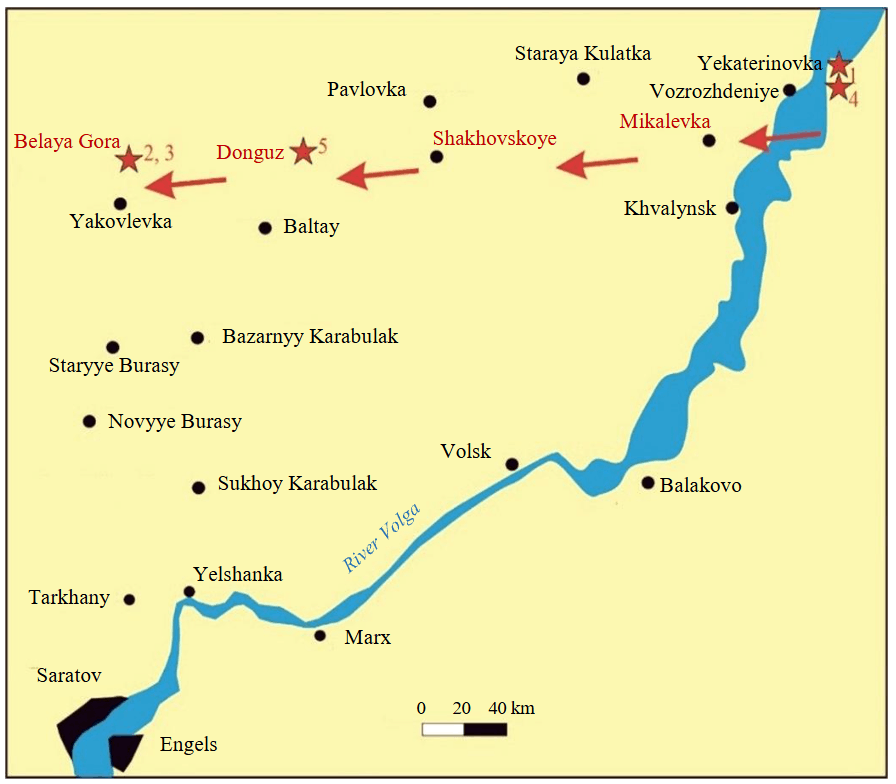
Fig.1. Schematic distribution of the main known collection sites for macrofragments of the Saratov meteorite and sampling points
Red arrows – flight trajectory of the Saratov meteorite; names in red – settlements where known Saratov meteorite finds were recovered; red stars – sampling sites and their numbers
The Saratov meteorite shower of October 6, 1918, located in the northern right-bank part of the Saratov Volga region, was selected as the model study area (Fig.1). The material of the Saratov meteorite was collected by local residents during the fall, and later by a special expedition led by L.A.Kulik with the active assistance of the population, especially local history and scientific-educational communities [1, 2]. The mass of fragments found at several locations along the flight axis (Fig.1), is now distributed among various museums in Russia (the Earth Science Museum of MSU, the Earth Science Museum of Saratov University, etc.). During the 20th century, the meteoritic material was studied by many researchers, including its geochemical and mineralogical characte-ristics [3-5], physical properties [5, 6], structural features, spectral reflectance of the material [7], etc. The Saratov meteorite continues to attract interest from modern researchers in the 21st century [8-10]. Special attention to this topic, from the very moment of the cosmic event, was paid by representatives of V.I.Vernadskyʼs school working at Saratov University – P.P.Pilipenko and his student V.S.Vasiliev [5, 11].
The aim of this work is to test the hypothesis of identifying meteoritic material in the magnetic fraction of modern soils as a tool for studying the area of a meteorite shower.
The research objectives included:
- collection of heavy-mineral soil samples along the flight trajectory of the Saratov meteorite;
- washing and examination of the heavy-mineral concentrates using a combination of methods;
- interpretation of the integrated dataset.
During fragmentation of a meteorite, unablated meteoroids, partially melted cosmic spherules, and meteoric fragments are formed, which settle under gravity according to their sizes [12]. During ablation, ablated metal atoms oxidize to form various compounds (oxides, hydroxides, and carbonates), which then condense to form meteoric smoke particles (MSP) [12, 13]. Due to their significantly smaller size, MSP particles do not settle as quickly under gravity and circulate in the atmosphere for up to several years [12, 14, 15]. Our study is focused on the search for microfragments resulting from fragmentation, which largely preserve the composition of the “parent” body, as well as ablation spherules with characteristic cosmogenic features.
The expected characteristics of the primary heavy-mineral material were determined, in particular, by observations of previous researchers. Alterations of the meteoritic material were identified and described within a year after the fall. P.N.Chirvinskii wrote about the studied material: “Other pieces have turned somewhat brown, as they lay in the field through the winter” [5, p. 103]. As V.S.Vasiliev noted, “the chondrules in the Belaya Gora sample are 1-2 mm and rarely 10 mm in diameter. The bulk mass is fragile; with some effort it can be ground into an ash-like powder in the palm, separating chondrules and iron inclusions” [5, p. 112]. In such a case, after 100 years, the heavy concentrate would most likely contain “rusted” individual chondrules or their fragments.
Various models exist for the atmospheric disruption and deceleration phase of bodies ~10-100 m in diameter: the Pancake Model (expanding perpendicular to the trajectory under aerodynamic pressure); the Debris Cloud Model (the body continuously fragments, and the cloud of small debris expands at a constant velocity proportional to the flight speed); and the Chain Reaction Model (the body progressively breaks into increasingly smaller and stronger fragments, with the expansion rate depending on the current strength of the fragments) [16]. According to researchers, to accurately predict the strewn field of a particular body, it is necessary to narrow the range of its initial physical parameters as much as possible, since these affect the outcome more strongly than the differences between the models themselves. Large and strong fragments have a higher mass-to-cross-sectional area ratio (greater ballistic resistance) and can travel farther along the trajectory, forming the “head” part of the ellipse with the largest meteorites, while dust-sized particles and the least strong fragments decelerate and are lost by ablation in the atmosphere earlier, forming the tail part.
It has been established that ordinary chondrites have an average strewn field width of 3.8 km, most being around 2-4 km [17]. At the same time, the term “strewn ellipse” itself is criticized by some researchers: according to modeling and observations, the main contribution to the shape, size, and location of the strewn field is made by atmospheric winds (if fragment shape and orientation were decisive, the effect of wind drift would not be so evident). The most typical form is a long, narrow, curved zone rather than a symmetric ellipse, where the curvature is caused by changes in wind direction with altitude [17]. For several meteorites, it has been shown that atmospheric fragmentation is often incomplete and the main body survives as the largest fragment, while the mass distribution of recovered fragments strongly depends on the completeness of the collection, especially the inclusion of the largest fragments, and is skewed due to rare finds of small fragments [18, 19]. The Saratov meteorite was used in these works as physical material for experimentation. In our study, to overcome the need for model calculations, material was collected near settlements where known large fragments of the Saratov meteorite were recovered (Fig.1).
In the area of the Saratov meteorite shower, Paleocene terrigenous rocks crop out (glauconite-quartz sands-sandstones and siltstones-siltites of the Syzran and Saratov formations). In the easternmost part, Lower Cretaceous deposits are observed: the Aptian Stage (sands, sandstones, clays with levels of ferruginization and siderite concretions of the Verkhazovskaya Formation) and the Albian Stage (sands, sandstones, clays of the Paramonovskaya Formation). Upper Cretaceous deposits are also present: Cenomanian, Turonian, Coniacian, Santonian, Campanian, and Maastrichtian Stages (chalk-marl and sandy-clayey sequences of the Melovatka, Bannovka, Sengilei, and Radishchevo formations). Quaternary deposits are represented by various genetic types, dominated by locally developed colluvium and proluvium. Moraine and fluvioglacial deposits, from which fragments of crystalline rocks containing olivine may potentially be derived, are developed mainly to the west, in the areas of Rtishchevo and Atkarsk.
Materials and methods
Point heavy-mineral samples were collected along the flight axis of the Saratov meteorite during the work of a special team of the scientific-educational expedition “Flotilla of Floating Universities” in 2024 [20]. The sampling procedure followed instructions for searching for meteoritic material, which recommend taking 10 cm of soil from 1 m2, washing it, and then extracting the remaining fraction with a magnet. This method is most suitable for detecting mini-fragments of a celestial body, including known meteoritic spherules. For each specific sample, the “envelope” method was used, involving partial material collection at several locations within a single site, followed by combining into a single container. The interval cut was within the upper 10 cm of the soil layer, which clearly corresponds to the intensity of natural soil-forming processes in this area. Structural features of the layer were monitored to exclude possible changes over the last 100 years – erosion, washout, etc.
During field work (Fig.1) five samples of about 50 kg each were collected along the meteoriteʼs flight axis – the villages of Yekaterinovka (left bank of the Volga River, two samples), Donguz, and Belaya Gora (two samples). In these locations (except for Yekaterinovka), macrofragments of the Saratov meteorite were recovered in the first years after its fall.
Washing of the heavy concentrates was performed at the Department of Geology, Geochemistry, and Economic Minerals, Faculty of Geology, Lomonosov Moscow State University. Particles presumably of cosmogenic origin were separated by dividing the sample of the upper soil horizon into non-magnetic and magnetic fractions. From the magnetic fraction, spherules and magnetite aggregates with other minerals were then selected using an optical microscope. The magnetic fraction was separated on an electromagnetic separator UEM-1 at 0.5 A. The fraction was further purified with a permanent magnet.
Microphotographs and X-ray spectral microanalysis were performed at the Shared Research Facility of the IPE RAS [21] using a TESCAN MIRA LMS scanning electron microscope (SEM) equipped with an Ultim Max 65 energy-dispersive X-ray (EDX) spectrometer with integrated AZtecLive Automated software (Oxford Instruments). The analyses were carried out at an accelerating voltage of 20 kV and a working distance of 15 mm. For SEM analysis, grains from the magnetic fraction were arranged in rows, then embedded in epoxy resin; the mounts for microprobe analysis were then ground and polished.
Additional mineral identification was carried out at the Shared Research Facility of the IPE RAS using Raman spectroscopy (Raman scattering spectroscopy) with an EnSpectr R532 spectrometer coupled to an Olympus BX53 M optical microscope. Key technical specifications of the EnSpectr R532 Raman spectrometer: laser wavelength – 532 nm, grating – 1800 grooves/mm, entrance slit – 20 µm, focal length – 75 mm. Spectra were recorded using a 50-fold objective lens (total magnification ×500) at a laser power of 2.2 mW, with spectrum accumulation in averaging mode of 20-50 measurements with 0.5-2 s exposure.
Results
Composition of the magnetic fraction
In all heavy concentrates, ferromagnetic fractions of similar order were separated – weighing from 2.2 to 10 g. The fraction is represented by spherules (predominantly magnetite), angular magnetite fragments coated with hematite oxides, and moderately rounded magnetite fragments. The contents of these components are given in Table.1, Fig.2. Certain trends in the compositional variation of the material along the meteoriteʼs flight trajectory were identified, requiring further confirmation. A trend was established toward an increase in the concentration of spherules (from 0.5-1 to 5 %) and their average sizes (from 50 to 300 µm) toward the head part of the dispersion swarm, corresponding to the Belaya Gora area. A similar trend is characteristic of the concentration of angular magnetite grains. For all samples, an exceptionally wide size range of magnetite particles is observed – up to one to two orders of magnitude within a single sample (e.g., Yekaterinovka – from 50 µm to 5 mm). The origin of these particles remains unclear, since the underlying soils at the sampling sites differ. The distribution of rounded magnetite grains along the axis is relatively uniform. Possibly, their formation is related to technogenic processes.
Table 1
Distribution of ferromagnetic fraction components along the meteorite flight axis
|
Type |
Village Yekaterinovka (concentrate 1) |
Village Belaya Gora (concentrate 2) |
Village Belaya Gora (concentrate 3) |
Village Yekaterinovka (concentrate 4) |
Village Donguz (concentrate 5) |
|
Spherules |
Up to 50 µm / 1 % |
50-300 µm / 2 % |
50-150 µm / 5 % |
Up to 50 µm / 0.5 % |
50 µm / 2 % |
|
Magnetite (angular) |
200-1000 µm |
200-1000 µm |
50-200 µm |
Up to 50 µm, single up to до 5 mm |
20-100 µm, single up to 2 mm |
|
Magnetite (rounded) |
50-100 µm |
5-100 µm |
5-100 µm |
20-100 µm |
20-100 µm |
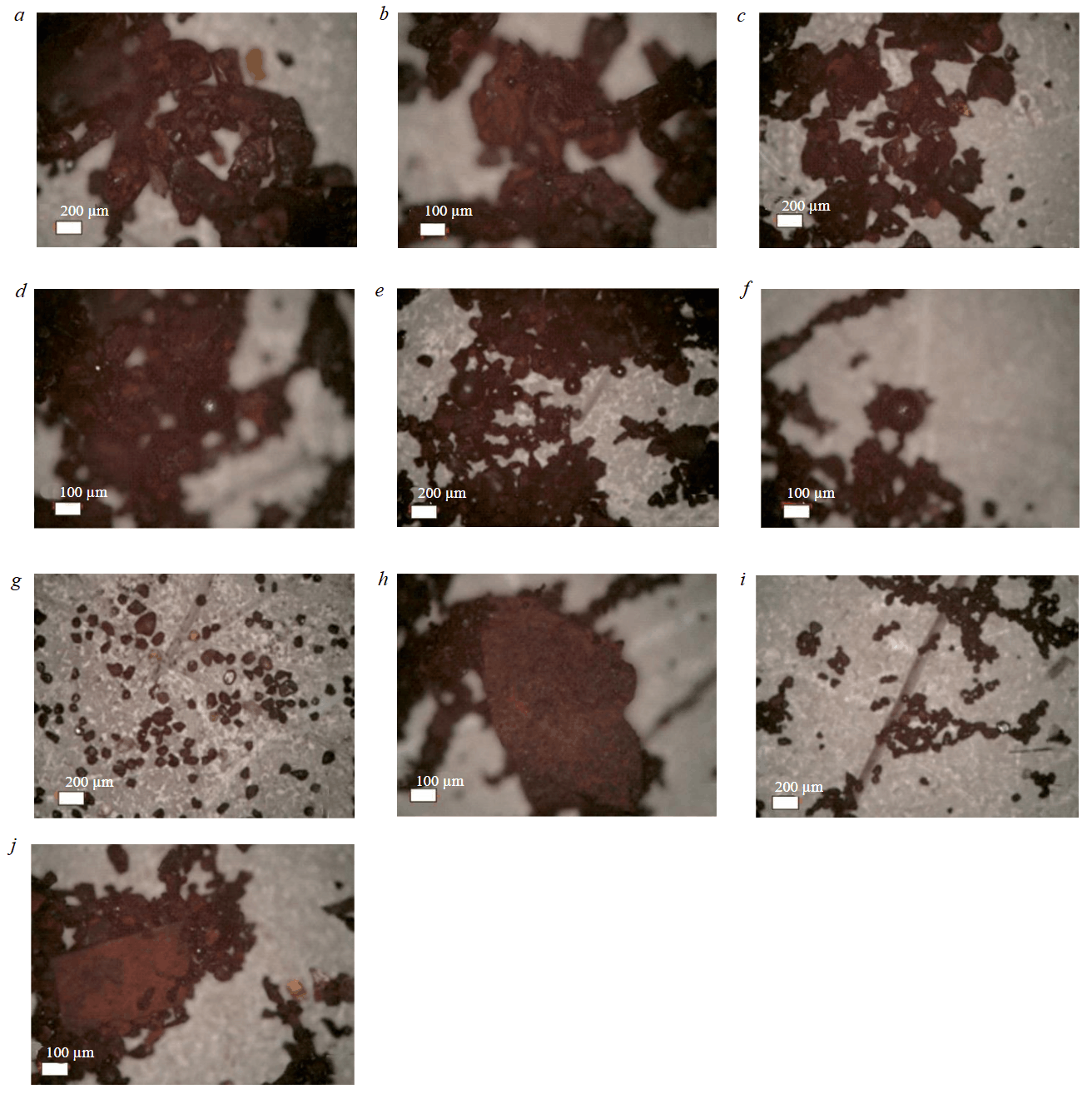
Fig.2. Photographs of heavy concentrates: а, b – concentrate 1 (Volga River bank, village Yekaterinovka); c, d – concentrate 2 (village Belaya Gora); e, f – concentrate 3 (village Belaya Gora); g-i – concentrate 4 (Volga River bank, 1 km south of village Yekaterinovka); j – concentrate 5 ( village Donguz)
The non-magnetic fraction consists of quartz, K-feldspar, and amphiboles. The ferromagnetic fraction is mainly represented by magnetite of angular (200-1000 µm) and moderately rounded (50-100 µm) morphology. The angular grains are coated with hematite. The oxide color is brown or red. The magnetite color is iron-black with a weak metallic luster. Under an optical microscope, magnetite spherules with no signs of oxidation are clearly distinguishable, differing in luster (from bright metallic to black iron). The content of such spherules in the magnetic fraction is about 5 %.
Electron microscopy data revealed the presence in the magnetic fraction of chromite, titanomagnetite, fragments of native iron, and likely chromferride. Also distinguishable are rock fragments/aggregates of non-magnetic and weakly magnetic minerals with magnetite. The spherules found in the concentrates were examined in more detail for their morphology and chemical composition.
Morphology and composition of spherules
The selected spherules consist of magnetite or wüstite with admixtures of Mn, Cr, or Ti. Between the magnetite crystals, compounds with admixtures of silicon, titanium, and calcium grow as dendrites, probably reflecting the widespread process of sphene-formation (sphenitization) of magnetite. Most spherules are hollow inside, but several were found to have an iron core (Fig.3, d). As a rule, the composition of the spherules is heterogeneous. Table 2 presents average concentrations for the main magnetite mass and separately for the veinlets.
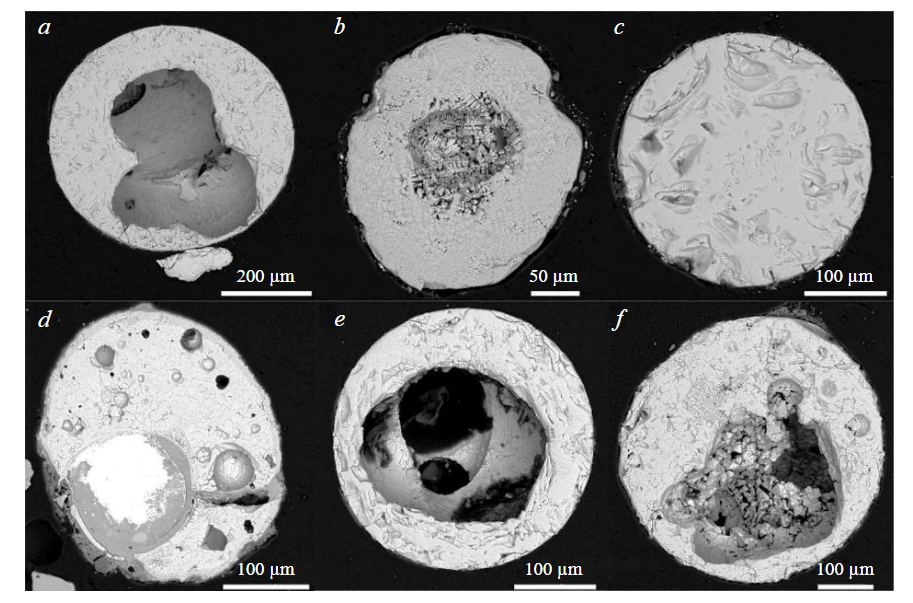
Fig.3. Magnetite spherules from village Belaya Gora concentrates (SEM BSE): а-c – concentrate 2, d-f – concentrate 3
Table 2
Composition of magnetite spherules, wt.%
|
Spectrum label |
Magnetite |
Veinlets |
||||
|
n = 16 |
n = 13 |
|||||
|
Min |
Max |
Median |
Min |
Max |
Median |
|
|
O |
17.06 |
28.81 |
22.93 |
19.64 |
34.87 |
28.04 |
|
Mg |
0 |
0.72 |
– |
bdl |
bdl |
bdl |
|
Al |
0.31 |
1.8 |
1.12 |
0.28 |
0.74 |
0.44 |
|
Si |
bdl |
bdl |
bdl |
1.17 |
14.64 |
8.72 |
|
K |
bdl |
bdl |
bdl |
0.34 |
0.49 |
0.41 |
|
Ca |
bdl |
bdl |
bdl |
0.36 |
16.58 |
4.55 |
|
Ti |
0.81 |
7.56 |
3.12 |
8.05 |
9.67 |
8.82 |
|
Cr |
0.24 |
0.39 |
0.33 |
bdl |
bdl |
bdl |
|
Mn |
0.39 |
2.55 |
0.96 |
0.33 |
2.47 |
1.37 |
|
Fe |
56.3 |
76.13 |
70.48 |
31.05 |
72.11 |
49.00 |
Note. Dash – Mg reliably determined in only one sample; bdl – below detection limit.
Rock fragments
The largest number of rock fragments/aggregates of non-magnetic and weakly magnetic minerals with magnetite was found in concentrate 2. We describe the composition of the most representative ones. In the first fragment (Fig.4), magnetite, quartz, and barite forming small veinlets are clearly identified. To more accurately determine the mineral constituting the bulk of the fragment, Raman spectroscopy was performed. Its elemental composition and Raman spectra correspond to the clinopyroxene group, probably aegirine.
The second fragment (Table 3, 4, Fig.5) is composed of fayalite (Fa 81) with Mg and Mn admixtures (EDX spectrum 92), magnetite (spectra 24, 30, 31), and plagioclase (EDX spectra 26-29) with reduced crystallinity (poorly crystallized), expressed as broadening of Raman peaks. Olivine and plagioclase spectra were compared with literature data [22-24].
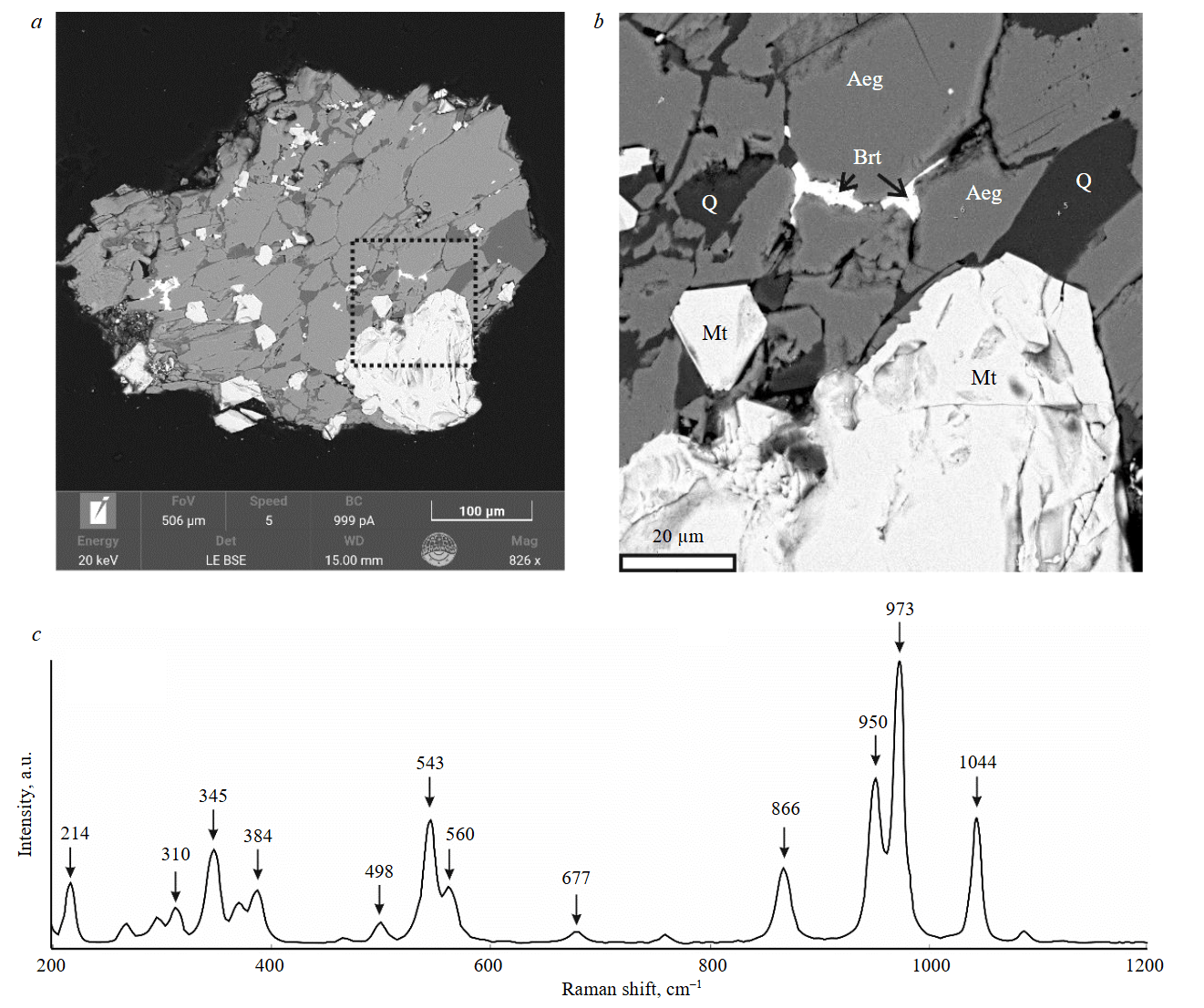
Fig.4. General view of the first fragment (SEM BSE) (а); mineral phases constituting it (b) and Raman spectrum of aegirine from the fragment (c)
Mt – magnetite; Aeg – aegirine; Brt – barite. Dashed contour – area of the studied fragment
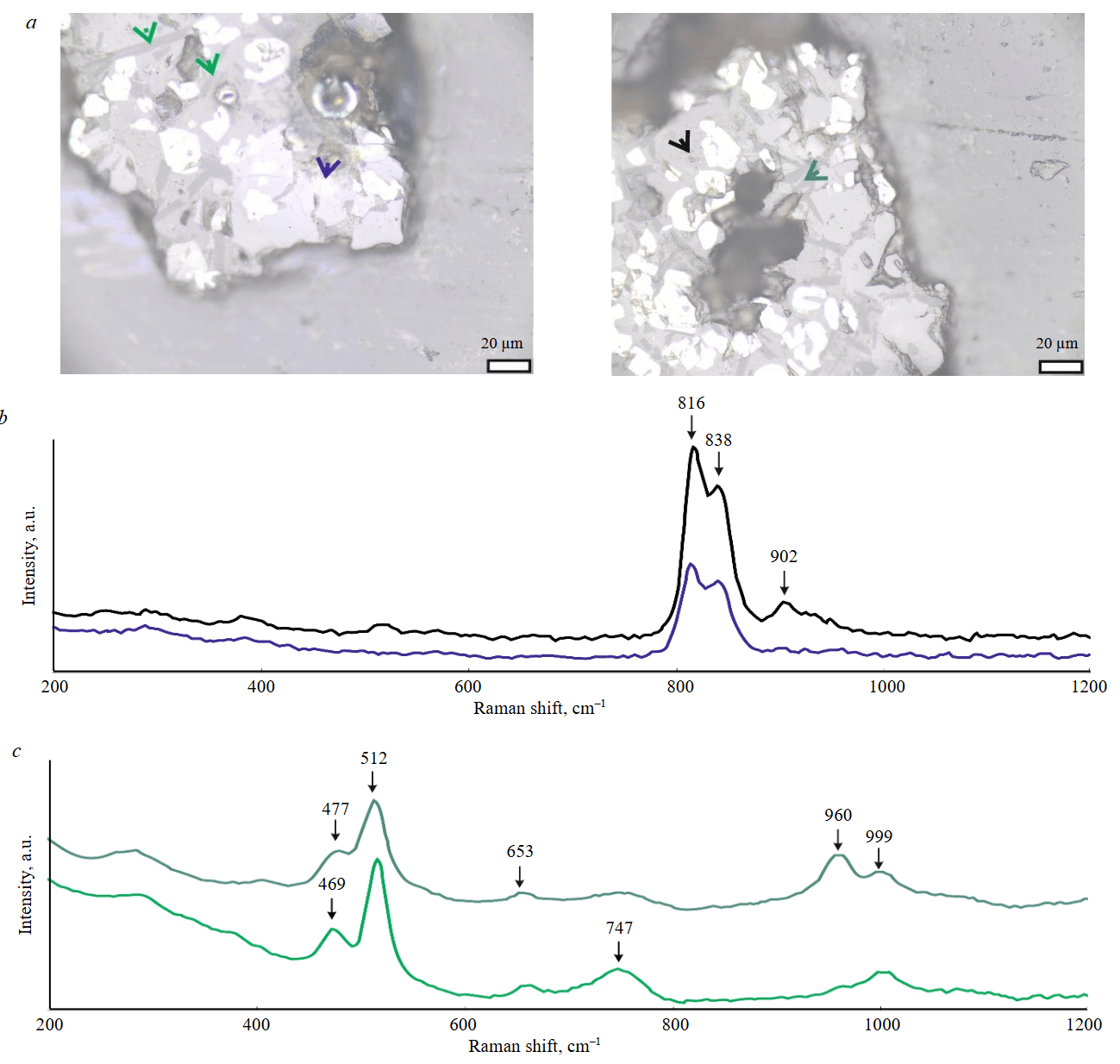
Fig.5. General view of the second fragment (а), Raman spectra for olivines (b) and plagioclases (c).
Colored arrows mark analyzed spots corresponding to the color of the spectra
Table 3
Content of major oxides in plagioclases, wt.%
|
Spectrum label |
SiO2 |
Al2O3 |
Fe2O3 |
MnO |
CaO |
MgO |
P2O5 |
∑ |
|
Spectrum 28 |
38.11 |
3.42 |
28.51 |
1.92 |
20.63 |
0.6 |
6.82 |
100 |
|
Spectrum 29 |
39.05 |
3.16 |
29.27 |
2.12 |
19.72 |
0.5 |
6.18 |
100 |
Table 4
Composition of major phases constituting the second fragment, wt.%
|
Spectrum label |
Spectrum 92 |
Spectrum 24 |
Spectrum 25 |
Spectrum 26 |
Spectrum 27 |
Spectrum 28 |
Spectrum 29 |
Spectrum 30 |
Spectrum 31 |
|
O |
31.5 |
20.67 |
29.07 |
43.27 |
42.65 |
40.32 |
39.93 |
21.46 |
20.24 |
|
Na |
bdl |
bdl |
bdl |
0.81 |
0.56 |
bdl |
bdl |
bdl |
bdl |
|
Mg |
4.52 |
0.4 |
0.62 |
bdl |
bdl |
0.36 |
0.3 |
bdl |
bdl |
|
Al |
bdl |
2.25 |
1.6 |
13.16 |
12.09 |
1.81 |
1.66 |
2.59 |
1.94 |
|
Si |
15.45 |
0.95 |
15.55 |
23.06 |
24.21 |
17.87 |
18.15 |
2.29 |
bdl |
|
P |
bdl |
bdl |
3.7 |
bdl |
bdl |
2.99 |
2.68 |
bdl |
bdl |
|
K |
bdl |
bdl |
bdl |
3.09 |
6.15 |
bdl |
bdl |
bdl |
bdl |
|
Ca |
0.92 |
0.21 |
17.19 |
6.27 |
1.91 |
14.79 |
14.01 |
1.2 |
bdl |
|
Ti |
bdl |
0.42 |
bdl |
bdl |
bdl |
bdl |
bdl |
0.45 |
0.3 |
|
Mn |
3.4 |
0.77 |
1.26 |
bdl |
bdl |
1.49 |
1.63 |
0.66 |
0.61 |
|
Fe |
43.65 |
67.56 |
19.31 |
2.36 |
1.46 |
20.69 |
21.05 |
63.74 |
69.12 |
|
Sr |
bdl |
bdl |
bdl |
2.43 |
2.49 |
bdl |
bdl |
bdl |
bdl |
|
Ba |
bdl |
bdl |
bdl |
4.6 |
9.4 |
bdl |
bdl |
bdl |
bdl |
|
∑ |
99.44 |
93.24 |
88.31 |
99.05 |
100.92 |
100.33 |
99.41 |
92.38 |
92.21 |
The elemental map (Fig.6) clearly demonstrates the mutual arrangement of the phases. Prismatic plagioclase crystals (“rods”) are distinguishable.
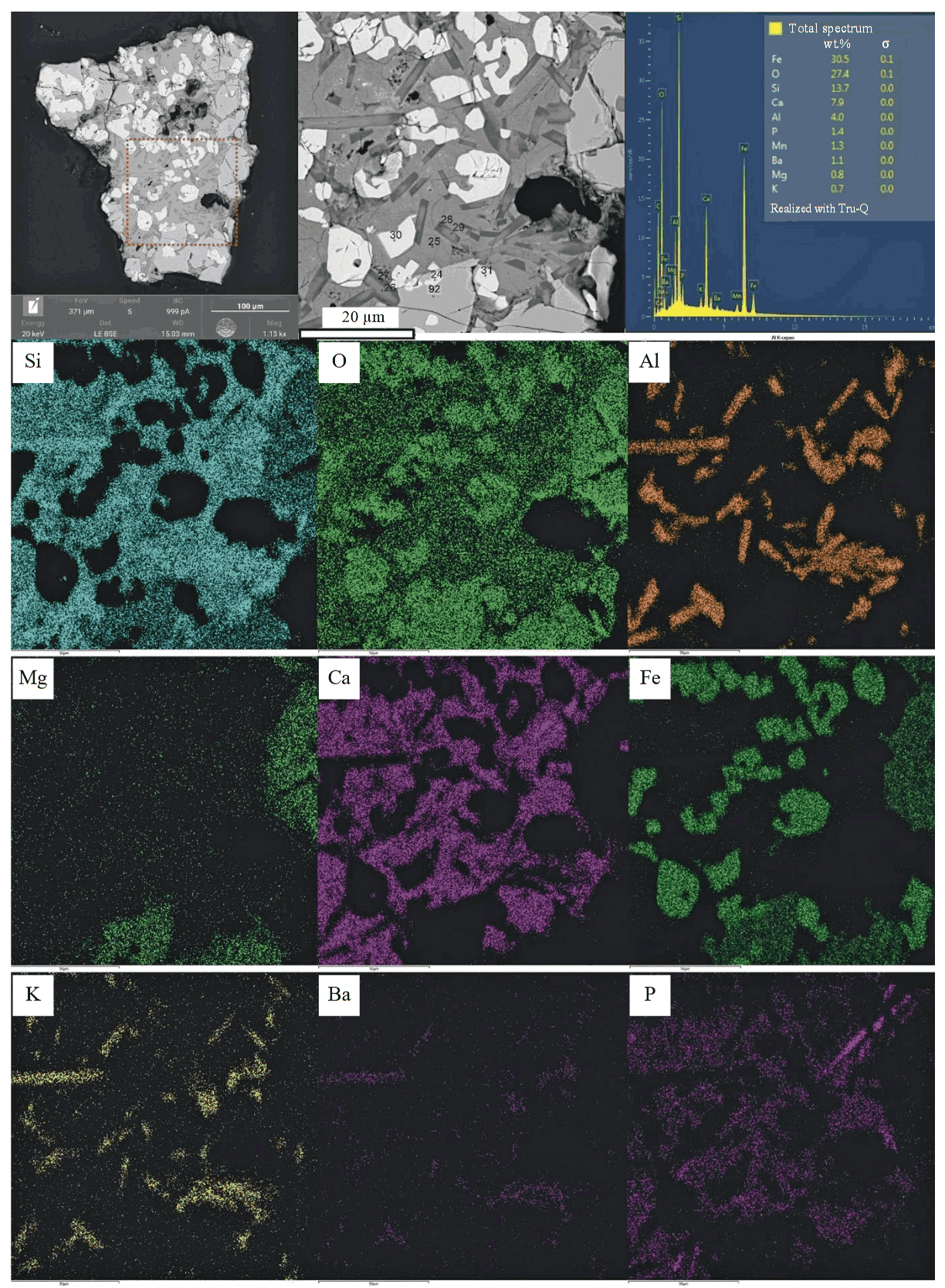
Fig.6. Elemental maps for the second fragment (dashed contour).
Dots indicate microprobe analysis spots and corresponding spectrum numbers from Table 4
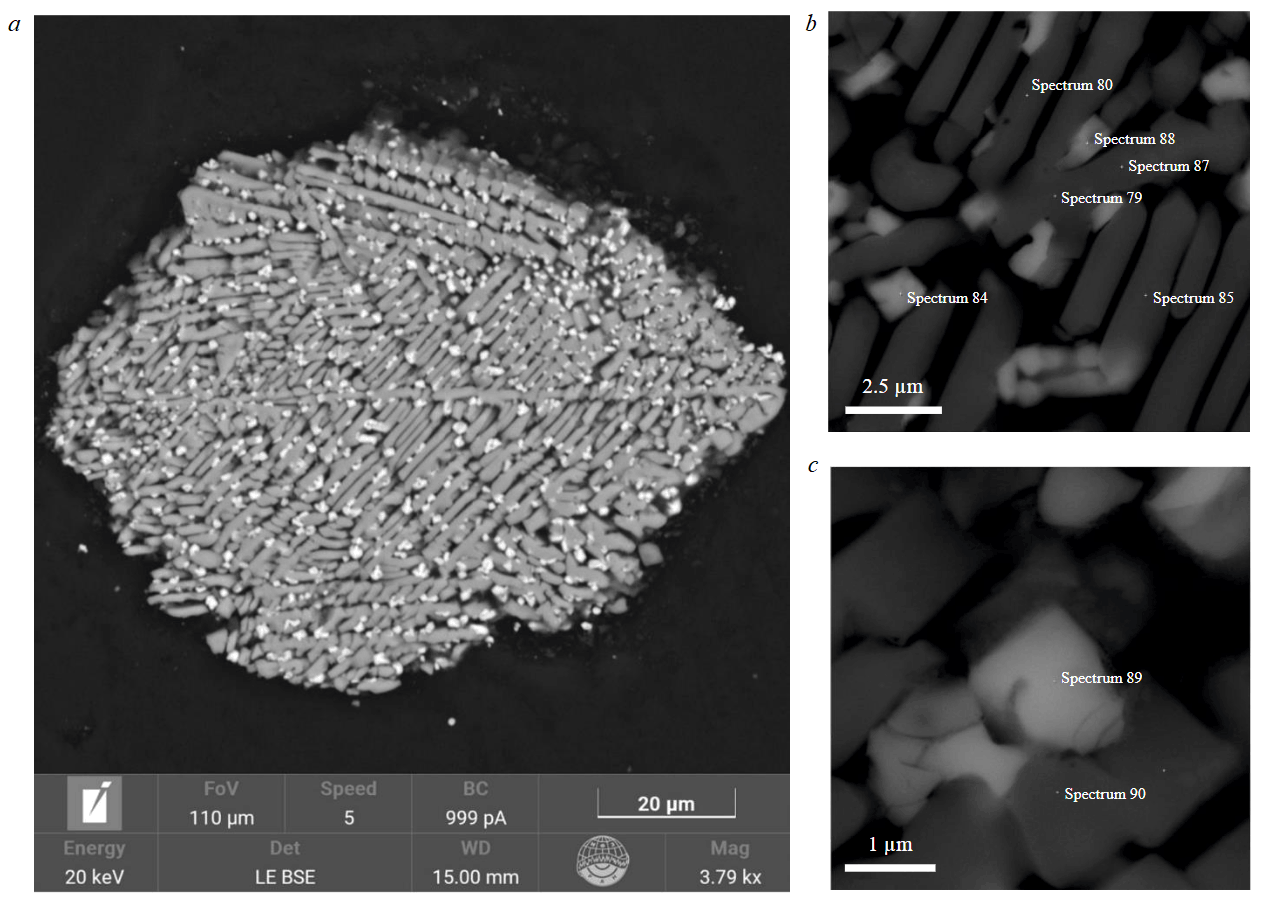
Fig.7. Third fragment (SEM BSE) (а) and microprobe analysis spots (b, c)
The most interesting is the third fragment with specific morphology (Fig.7). It is a spherical grain, not exceeding 80 µm along the long axis, composed of olivine with Cr and Ni admixtures (Table 5). Its composition is heterogeneous. Some crystals have forsterite Fo 62-73, while the inclusion in spectrum 89 has Fo 37 (for similar spots in another area (spectra 84 and 88) Fo 65-71).
Table 5
Composition of olivine in the third fragment, wt.%
|
Spectrum label |
O |
Mg |
Al |
Si |
Ca |
Cr |
Mn |
Fe |
Co |
Ni |
∑ |
|
Spectrum 79 |
41.6 |
21.34 |
0.36 |
16.5 |
0.18 |
0.42 |
0.24 |
20.15 |
bdl |
1.49 |
102.27 |
|
Spectrum 80 |
38.97 |
18.55 |
0.43 |
13.69 |
0.14 |
0.68 |
0.24 |
26.08 |
bdl |
1.3 |
100.1 |
|
Spectrum 84 |
37.4 |
18.07 |
0.47 |
13.74 |
0.12 |
0.56 |
0.17 |
22.74 |
bdl |
1.42 |
94.69 |
|
Spectrum 85 |
37.79 |
18.93 |
0.22 |
15.53 |
0.16 |
0.29 |
0.21 |
17.91 |
bdl |
1.25 |
92.3 |
|
Spectrum 87 |
39.97 |
20.5 |
bdl |
16.81 |
0.18 |
0.31 |
0.23 |
17.45 |
bdl |
1.41 |
96.84 |
|
Spectrum 88 |
38.6 |
19.33 |
0.2 |
16.04 |
0.16 |
0.28 |
0.26 |
17.76 |
bdl |
1.33 |
93.96 |
|
Spectrum 89 |
33.45 |
10.92 |
1.33 |
6.5 |
0.08 |
1.43 |
0.19 |
43.03 |
0.49 |
1.22 |
98.64 |
|
Spectrum 90 |
36.88 |
15.53 |
0.51 |
10.81 |
0.11 |
0.74 |
0.25 |
33.97 |
0.4 |
1.21 |
100.41 |
Note. Deficiency in totals is due to sample topography.
Discussion
Identification of meteoritic material
When studying spherules of potentially cosmogenic origin, possible genetic types should be considered. These may be micrometeorites, ablation spherules, or impact-melt spherules. Micrometeorites contribute significantly to the flux of extraterrestrial material reaching the Earth and are more common in the sedimentary record (including modern deep-sea sediments) than fragments of large meteorites [25-27], and also carry important information about past paleogeographic conditions [28-30]. Let us consider the criteria for identifying micrometeorites [31] – the presence of a partial or complete magnetite shell around micrometeorites [32, 33]; native nicke-liron; chemical composition close to chondritic [34]. Secondary features include olivine with high CaO and Cr2O3 and very low FeO, which is uncharacteristic of terrestrial rocks [35]; evidence of surface heating (due to atmospheric entry); spherical particle morphology. The spherules we discuss from the magnetic fraction could theoretically correspond in morphology and composition to type I micrometeorites [31]. In micrometeorites of this type, FeO predominates with a small admixture of other oxides (mainly MgO and SiO2); mineralogically they are composed of wüstite and magnetite, sometimes with a core of nickel-iron or platinum-group elements [31]. Type I spherules are often devoid of such a core and may be hollow.
There are meteoritic ablation spheres formed during atmospheric entry of larger bodies [36], and microtektites condensed from vapour plumes [37] or detached from impact melt produced by collision of cosmic bodies with the Earth [38]. Ablation spherules are formed by surface heating, melting, evaporation, oxidation of the material, and blow-off of the melt by the incoming atmospheric flow [39].
Technogenic spherules, impact spherules, and ablation spherules can have similar morphology, and industrial magnetite spherules are mineralogically indistinguishable from some melted micrometeorites [31]. Moreover, “terrestrial” spherules are highly diverse [34]. The absence of Ni in iron oxide particles is generally considered evidence of a “terrestrial” or technogenic origin of magnetite spherules [40]. In the studied spherules, Ni is either absent or below the detection limit of the method, which does not allow an unambiguous interpretation of their origin. Although spherules with an iron core similar to Fig.3, d, but enriched in Co and Ni, have been described as micrometeorites in works [28, 41], the studied magnetite spherules are most likely technogenic formations.
When discussing the composition of the magnetic fraction, it is worth mentioning that Fe-Ni minerals, even under arid desert weathering of ordinary chondrites, oxidize to paramagnetic iron oxyhydroxides (akaganeite), and at later stages form small amounts of ferromagnetic oxides (magnetite/maghemite) [42]. It can be assumed that the abundantly represented iron oxides and oxyhydroxides in the heavy concentrates are partly products of weathering of meteoritic fragments. In this regard, much more attention should be paid to rock fragments. Quartz and barite are not found in unaltered meteorites, but their alternative origin is possible as a result of alteration under terrestrial conditions or on parent bodies [43]. At the same time, distinguishing coesite and stishovite – shock-induced minerals in meteorites – from quartz is not possible. The genesis of the first fragment remains controversial.
The geochemical features of olivine from the Saratov meteorite were previously presented in the work of K.G.Sukhanova and co-authors [8]. According to these researchers, the olivine composition corresponds to forsterite and is rather heterogeneous (Fo 73-77), but no differences between chondrule and matrix olivine in terms of major element composition were found. In the fragments we studied, olivine corresponds to fayalite (Fa 81), although it has Mg admixtures. At the same time, fayalite and olivines (Mg, Fe)2(SiO4) occur in many types of meteorites [43]. Plagioclases with reduced crystallinity are probably “poorly crystallized mesostasis of oligoclase-labradorite composition” [8]. The second fragment can be assumed to belong to the Saratov meteorite or its alteration products.
The third fragment, by its composition (Ni admixtures) and morphology, is probably a non-porphyritic chondrule (barred/dendritic olivine chondrules according to [44]). The composition of the olivine constituting the third fragment is heterogeneous, but at individual points Fo 71-73 is determined (spectra 79, 85, 87, 88). Thus, in the magnetic fraction of modern soils at the Saratov meteorite fall site, individual microfragments and/or their alteration products can be identified.
D.M.Pechersky and co-authors [45] showed that meteorites (of the types they studied) have identical compositions of primary magnetic minerals (kamacite, taenite, schreibersite) and differ only in concentration. Kamacite from meteorites is fully compositionally equivalent to kamacite from cosmic dust in terrestrial sediments, indicating their common origin from the cores of parent planets. Based on thermomagnetic and microprobe analyses of Quaternary deposits of the Darhad Basin (Northern Mongolia), they established no correlation with magnetite and pyrite contents, and a negative correlation with sedimentation rate, which, together with data from other regions of Eurasia and the Atlantic, indicates a predominantly cosmic origin of native iron particles in sediments [46]. It has been established that in meteorites, pure iron, kamacite, and taenite form three distinct groups with gaps in Ni content. This is explained by the specific crystallization and decomposition of Fe-Ni alloys in space [47]. Native iron without nickel in terrestrial rocks (mantle xenoliths, traps, basalts) and in meteorites has a common nature, and its global distribution in sediments is related to cosmic interplanetary dust from the asteroid belt [48]. Fragments of native iron (96-97 % Fe with Mn and Cr admixtures < 1 % and Si 2.4 %) were found in the magnetic fraction of the studied soil heavy-mineral samples, but the absence of nickel in the composition and reasonable skepticism do not allow their genesis to be determined as cosmogenic.
Geochemistry of meteoritic material and biogenic functions
According to data [4] n the chemical composition of the Saratov meteorite, the magnetic fraction (in the form soluble in hot aqua regia) contains, %: Fe 67.74-71.26; Ni 7.79-9.16; Co 0.2-0.43; SiO2 0.38-3.38; CaO 0.72-1.54; MgO 3.71-7.73; MnO 0.06-0.07; P2O5 0.17-0.18; Stotal 0.29-1.77; TiO2 and Al2O3 – traces. For the same magnetic fraction, but in the form insoluble in hot aqua regia, the following are noted, %: FeO 1.03-2.03; SiO2 7.23-8.85; Al2O3 0.46-0.58; Cr2O3 0.3-0.31; CaO 0.48-0.87; MgO 1.93-2.22; MnO 0.04; P2O5 0.01.
A fundamental property of soil as a bio-inert system is its ability to accumulate in the solid phase the products of its own functioning, which leads to the formation of stable pedogenic features and a restructuring of its morphological appearance. As noted by V.O.Targulian and M.A.Bronnikova, it is the accumulation and distribution of solid-phase products that constitute the essence of elementary soil-forming processes and form the “memory” of the soil [49]. The products of meteoritic material breakdown in soil are variously subjected to processes of accumulation and migration of the chemical elements composing them. As a rule, cobalt, chromium, and nickel are markers of the cosmogenic petrogenic background. At the same time, an excess of these heavy metals is toxic to plants. In this regard, further study of soils and plants within the meteoritic material dispersion area, and specifically at the points of heavy-mineral sampling of the magnetic fraction where Ni- and Cr-bearing minerals (chromite, chromferride, some olivines) were identified in our study, appears promising.
Conclusion
In the soil sample from the Belaya Gora area, a grain of fayalite was found, which with a high degree of probability can be considered a fragment of a chondrule-bearing formation of a chondrite meteorite (the Saratov meteorite belongs to this type). In several grains, unique feldspar structures were found (morphologically described in the mid-20th century in the Saratov meteorite by Professor V.S.Vasiliev of Saratov University).
Traces of the Saratov meteorite can be detected 100 years after the fall of the cosmic body at the level of microfragments. Even in the absence of detailed spatial referencing of many previous fragments and macro-finds, it is possible to effectively study the features of a meteorite shower by combining geochemical, mineralogical, and soil-science methods. In the future, it is planned to apply more extensively the integrated method of soil studies in the area of the celestial bodyʼs fall, to delineate the strewn field of fragments and dust fallout, which will allow assessment of the eventʼs characteristics and parameters of one of the worldʼs largest meteorite showers.
References
- Kulik L.A. To the fall of the meteorite in Saratov province in September 1918. Mirovedenie. 1921. N 1 (40), p. 71 (in Russian).
- Kulik L.A. Report of the Meteorite Expedition on the work carried out from May 19, 1921 to November 29, 1922. Bulletin de l’Academie des Sciences de Russie. 1922. Vol. 16, p. 391-410 (in Russian).
- Kupletsky B.M., Ostrovsky I.A. Materials on the Microscopical study of the Meteorites of the USSR. 6. The Saratov Stone Meteorite. Meteoritica. 1941. Iss. II, p. 77-81 (in Russian).
- Selivanov L.S. Chemical analysis of the “Saratov” meteorite. Doklady Akademii nauk SSSR. 1940. Vol. 26. N 4, p. 397-400 (in Russian).
- Chirvinskii P.N. Chemical-mineralogical composition and microstructure of the Saratov stone meteorite. Meteoritica. 1951. Iss. 9, p. 102-116 (in Russian).
- Volarovitch M.P., Leontieva A.A. A Study of the Viscosity of Meteorites. Meteoritica. 1941. Iss. I, p. 33-41 (in Russian).
- Krinov E.L. Spectral reflectance of sample N 308 of the “Saratov” meteorite of 1918. Astronomicheskii zhurnal. 1937. Vol. 14. N 4, p. 356-363 (in Russian).
- Sukhanova K.G., Kuznetsov A.B., Galankina O.L. Features of olivine crystallization in ordinary chondrites (Saratov meteorite): geochemistry of trace and rare earth elements. Journal of Mining Institute. 2022. Vol. 254, p. 149-157. DOI: 10.31897/PMI.2022.39
- Sukhanova K.G., Skublov S.G., Galankina O.L. et al. Geochemistry of Trace Elements in Minerals of Porphyritic and Nonporphyritic Chondrules from Equilibrated Ordinary Chondrites. Geochemistry International. 2023. Vol. 61. N 5, p. 468-483. DOI: 10.1134/S0016702923050075
- Bezaeva N.S., Badjukov D.D., Rochette P. et al. Experimental shock metamorphism of the L4 ordinary chondrite Saratov induced by spherical shock waves up to 400 GPa. Meteoritics & Planetary Science. 2010. Vol. 45. Iss. 6, p. 1007-1020. DOI: 10.1111/j.1945-5100.2010.01069.x
- Ivanov A.V. Role of V.I. Vernadsky’s students and followers in the development of the geoscientific school of aregion (on the example of the Saratov Volga region). Life of the Earth. 2023. Vol. 45. N 1, p. 138-152 (in Russian). DOI: 10.29003/m3159.0514-7468.2023_45_1/138-151
- James A.D., Pace F., Sikora S.N.F. et al. The importance of acid-processed meteoric smoke relative to meteoric fragments for crystal nucleation in polar stratospheric clouds. Atmospheric Chemistry and Physics. 2023. Vol. 23. Iss. 3, p. 2215-2233. DOI: 10.5194/acp-23-2215-2023
- Plane J.M.C., Wuhu Feng, Dawkins E.C.M. The Mesosphere and Metals: Chemistry and Changes. Chemical Reviews. 2015. Vol. 115. Iss. 10, p. 4497-4541. DOI: 10.1021/cr500501m
- Brooke J.S.A., Wuhu Feng, Carrillo-Sánchez J.D. et al. Meteoric Smoke Deposition in the Polar Regions: A Comparison of Measurements With Global Atmospheric Models. Journal of Geophysical Research: Atmospheres. 2017. Vol. 122. Iss. 20, p. 11112-11130. DOI: 10.1002/2017JD027143
- Dhomse S.S., Saunders R.W., Tian W. et al. Plutonium-238 observations as a test of modeled transport and surface deposition of meteoric smoke particles. Geophysical Research Letters. 2013. Vol. 40. Iss. 16, p. 4454-4458. DOI: 10.1002/grl.50840
- McMullan S., Collins G.S. Uncertainty quantification in continuous fragmentation airburst models. Icarus. 2019. Vol. 327, p. 19-35. DOI: 10.1016/j.icarus.2019.02.013
- Moilanen J., Gritsevich M., Lyytinen E. Determination of strewn fields for meteorite falls. Monthly Notices of the Royal Astronomical Society. 2021. Vol. 503. Iss. 3, p. 3337-3350. DOI: 10.1093/mnras/stab586
- Brykina I.G., Egorova L.A. Describing the fragment mass distribution in meteorite showers. Planetary and Space Science. 2024. Vol. 241. N 105838. DOI: 10.1016/j.pss.2024.105838
- Brykina I.G., Egorova L.A. On the Power Index in Description of Mass Distributions of Fragments of Disrupted Meteoroids and Asteroids. Moscow University Mechanics Bulletin. 2025. Vol. 80. N 4, p. 152-160. DOI: 10.3103/S0027133025700244
- Ivanov A.V., Yashkov I.A., Smurov A.V. et al. Organization of complex expeditions in the Volga region: the tenth season of the “Flotilla of Floating Universities”. Life of the Earth. 2025. Vol. 47. N 2, p. 266-278 (in Russian). DOI: 10.29003/m4694.0514-7468.2020_47_2/266-278
- Veselovskiy R.V., Dubinya N.V., Ponomarev A.V. et al. Shared Research Facilities “Petrophysics, Geomechanics and Paleomagnetism” of the Schmidt Institute of Physics of the Earth RAS. Geodynamics & Tectonophysics. 2022. Vol. 13. N 2. N 0579 (in Russian). DOI: 10.5800/GT-2022-13-2-0579
- Kuebler K.E., Jolliff B.L., Wang A., Haskin L.A. Extracting olivine (Fo–Fa) compositions from Raman spectral peak positions. Geochimica et Cosmochimica Acta. 2006. Vol. 70. Iss. 24, p. 6201-6222. DOI: 10.1016/j.gca.2006.07.035
- Freeman J.J., Wang A., Kuebler K.E. et al. Characterization of natural feldspars by Raman spectroscopy for future planetary exploration. The Canadian Mineralogist. 2008. Vol. 46. N 6, p. 1477-1500. DOI: 10.3749/canmin.46.6.1477
- Mouri T., Enami M. Raman spectroscopic study of olivine-group minerals. Journal of Mineralogical and Petrological Sciences. 2008. Vol. 103. Iss. 2, p. 100-104. DOI: 10.2465/jmps.071015
- Rojas J., Duprat J., Engrand C. et al. The micrometeorite flux at Dome C (Antarctica), monitoring the accretion of extraterrestrial dust on Earth. Earth and Planetary Science Letters. 2021. Vol. 560. N 116794. DOI: 10.1016/j.epsl.2021.116794
- Pandey M., Rudraswami N.G., Singh V.P., Viegas A. Geochemical evaluation of cosmic spherules collected from the Central Indian Ocean Basin. Deep Sea Research Part I: Oceanographic Research Papers. 2023. Vol. 200. N 104153. DOI: 10.1016/j.dsr.2023.104153
- Singh V.P., Rudraswami N.G. Spatial variation of micrometeorite abundance in global ocean. Deep Sea Research Part I: Oceanographic Research Papers. 2025. Vol. 222. N 104533. DOI: 10.1016/j.dsr.2025.104533
- Suttle M.D., Campanale F., Folco L. et al. Fossil micrometeorites from Monte dei Corvi: Searching for dust from the Veritas asteroid family and the utility of micrometeorites as a palaeoclimate proxy. Geochimica et Cosmochimica Acta. 2023. Vol. 355, p. 75-88. DOI: 10.1016/j.gca.2023.06.027
- Gabdullin R.R., Badulina N.V., Ivanov A.V. Astroclimatic benchmarks of stratigraphic correlation for Neogene-Quaternary deposits. Moscow University Bulletin. Series 4. Geology. 2024. N 6, p. 61-71 (in Russian). DOI: 10.55959/MSU0579-9406-4-2024-63-6-61-71
- Ruggiu L.K., Villeneuve J., Da Silva A.-C. et al. Diversity among fossil micrometeorites in the late Devonian. Geochimica et Cosmochimica Acta. 2025. Vol. 405, p. 114-131. DOI: 10.1016/j.gca.2025.07.016
- Genge M.J., Engrand C., Gounelle M., Taylor S. The classification of micrometeorites. Meteoritics & Planetary Science. 2008. Vol. 43. Iss. 3, p. 497-515. DOI: 10.1111/j.1945-5100.2008.tb00668.x
- Toppani A., Libourel G., Engrand C., Maurette M. Experimental simulation of atmospheric entry of micrometeorites. Meteoritics & Planetary Science. 2001. Vol. 36. Iss. 10, p. 1377-1396. DOI: 10.1111/j.1945-5100.2001.tb01831.x
- Toppani A., Libourel G. Factors controlling compositions of cosmic spinels: application to atmospheric entry conditions of meteoritic materials. Geochimica et Cosmochimica Acta. 2003. Vol. 67. Iss. 23, p. 4621-4638. DOI: 10.1016/S0016-7037(03)00383-1
- Wozniakiewicz P.J., Alesbrook L.S., Bradley J.P. et al. Atmospheric collection of extraterrestrial dust at the Earth’s surface in the mid-Pacific. Meteoritics & Planetary Science. 2024. Vol. 59. Iss. 10, p. 2789-2817. DOI: 10.1111/maps.14251
- Brearley A.J., Jones R.H. Chondritic Meteorites. Reviews in Mineralogy. Mineralogical Society of America, 1998. Vol. 36, p. 3-001-3-398.
- Genge M.J., Alesbrook L., Almeida N.V. et al. The fusion crust of the Winchcombe meteorite: A preserved record of atmospheric entry processes. Meteoritics & Planetary Science. 2024. Vol. 59. Iss. 5, p. 948-972. DOI: 10.1111/maps.13937
- Velázquez V.-F., Gomes C.B., Mansueto M. et al. Morphological aspects, textural features and chemical composition of spherules from the Colônia impact crater, São Paulo, Brazil. Solid Earth Sciences. 2021. Vol. 6. Iss. 1, p. 27-36. DOI: 10.1016/j.sesci.2020.12.004
- Genge M.J., Davies B., Suttle M.D. et al. The mineralogy and petrology of I-type cosmic spherules: Implications for their sources, origins and identification in sedimentary rocks. Geochimica et Cosmochimica Acta. 2017. Vol. 218, p. 167-200. DOI: 10.1016/j.gca.2017.09.004
- Stulov V.P., Mirskii V.N., Vislyi A.I. Aerodynamics of bolides. Moscow: Nauka. Fizmatlit, 1995, p. 240 (in Russian).
- Badyukov D.D., Raitala J. Ablation Spherules in the Sikhote Alin Meteorite and Their Genesis. Petrology. 2012. Vol. 20. N 6, p. 520-528. DOI: 10.1134/S086959111206001X
- Savelyev D.P., Savelyeva O.L., Moskaleva S.V., Rashidov V.A. Composition of Cosmic Spherules from Ferromanganese Crusts of the Magellan Seamounts. Geochemistry International. 2022. Vol. 60. N 5, p. 411-420. DOI: 10.1134/S0016702922050081
- Kuzina D., Gattacceca J., Gouilloux H. et al. The effect of terrestrial weathering on the magnetic properties of meteorites from the Atacama Desert. Uchenye Zapiski Kazanskogo Universiteta. Seriya Estestvennye Nauki. 2025. Vol. 167. N 2, p. 353-366. DOI: 10.26907/2542-064X.2025.2.353-366
- Ivanov A.V., Yaroshevskiy A.A., Ivanova M.A. Meteorite Minerals. Geochemistry International. 2019. Vol. 57. N 8, p. 931-939. DOI: 10.1134/S0016702919080056
- Jones R.H., Villeneuve J., Libourel G. Thermal Histories of Chondrules. Petrologic Observations and Experimental Constraints. Chondrules: Records of Protoplanetary Disk Processes. Cambridge University Press, 2018, p. 57-90. DOI: 10.1017/9781108284073.003
- Pechersky D.M., Markov G.P., Tselmovich V.A., Sharonova Z.V. Extraterrestrial Magnetic Minerals. Izvestiya, Physics of the Solid Earth. 2012. Vol. 48. N 7-8, p. 653-669. DOI: 10.1134/s1069351312070051
- Pechersky D.M., Gilmanova D.M., Kazansky A.Yu. et al. Native iron in Quaternary deposits of the Darhad Basin (northern Mongolia). Russian Geology and Geophysics. 2013. Vol. 54. N 12, p. 1499-1514. DOI: 10.1016/j.rgg.2013.10.017
- Pechersky D.M., Markov G.P., Tselmovich V.A. Pure Iron and Other Magnetic Minerals in Meteorites. Solar System Research. 2015. Vol. 49. N 1, p. 61-71. DOI: 10.1134/S0038094614060070
- Pechersky D.M., Kuzina D.M., Nurgaliev D.K., Tselmovich V.A. The common nature of native iron in terrestrial rocks and meteorites: Microprobe and thermomagnetic data. Izvestiya, Physics of the Solid Earth. 2015. Vol. 51. N 5, p. 748-763. DOI: 10.1134/S1069351315050109
- Targulian V.O., Bronnikova M.A. Soil Memory: Theoretical Basics of the Concept, Its Current State, and Prospects for Development. Eurasian Soil Science. 2019. Vol. 52. N 3, p. 229-243. DOI: 10.1134/S1064229319030116