

Morphological features, internal structure, and compositional signatures of native gold from the Murzinka placer group (Middle Urals): identification of lode sources and conditions of placer formation
- 1 — Junior Researcher South Ural Scientific Centre Mineralogy and Environmental Geology of the Ural branch RAS ▪ Orcid
- 2 — Ph.D. Senior Researcher South Ural Scientific Centre Mineralogy and Environmental Geology of the Ural branch RAS ▪ Scopus
- 3 — Ph.D. Researcher South Ural Scientific Centre Mineralogy and Environmental Geology of the Ural branch RAS ▪ Orcid
- 4 — Junior Researcher South Ural Scientific Centre Mineralogy and Environmental Geology of the Ural branch RAS ▪ Orcid
- 5 — Engineer Saint Petersburg State University ▪ Orcid
Abstract
The paper presents the results of a complex study of native gold from nine placers of the Murzinka group in the Middle Urals. Morphological features, chemical composition, and internal structure of native gold, as well as mineral inclusions within it, are described in detail. Based on the analysis of morphological characteristics and the gold particles rounding degree, the proximity of lode gold sources is inferred ranging from several hundred meters to the first few kilometers. Three types of native gold were identified according to the chemical composition and mineral inclusions. Type I (the predominant type) is characterized by high fineness with Ag and Hg admixture and inclusions of pyrite, chalcopyrite, galena, molybdenite, and petzite. The variation in admixture content within this type allows the definition of subtypes; their distribution in placers reflects the zoning of lode quartz gold mineralization. Type II is distinguished by elevated copper contents and bornite inclusions; Type III is defined by high Ag contents. Lode sources for the different gold types have been identified: for Type I, a quartz gold lode deposits; for Type II, precious metal mineralization in the gabbroids of the Pavdinsky massif. Application of the electron backscatter diffraction (EBSD) technique enabled a detailed characterization of the internal structure of gold particles. The observed high fineness intergranular veins and intergrowths of gold with minerals of the rhabdophane group suggest that native gold was located in the supergene zone during the period of active weathering crust development in the Upper Mesozoic and Palaeogene. It is established that the placer system in the Murzinka River basin formed during the Neogene-Quaternary period, primarily due to lode quartz gold mineralization. The obtained data allow the localization of prospective areas for the exploration of lode gold deposits and expand the understanding of the region’s metallogenic potential.
The study conducted under research topic of the SUSC MEG UbRAS N FUUR-2025-0007.
Introduction
The history of placer gold mining in the Urals spans two centuries. Placer gold reserves have been largely depleted over this period, making prospecting for new deposits increasingly important. Goal of expanding and revitalizing the mineral resource base is a key priority of the government policy [1]. Detailed study of gold placers of unknown sources is considered one of possible approaches to achieving this goal when it comes to precious metals.
Placer gold is a traditional subject of mineralogical studies aimed at determining types and localization of lode precious-metal mineralization. Detrital gold from unconsolidated sediments becomes highly informative for prospecting and exploration in areas with limited outcrops. The studies of the morphological characteristics and chemical composition of native gold, as well as associations of mineral inclusions, have made it possible to reliably establish the link between placers and certain geological complexes for many placer regions around the world [2-5]. Use of the mineralo-gical signatures of placer gold to predict lode mineralization has been demonstrated in numerous studies [6, 7].
Local artisanal and small-scale mining began in the 1850s and continued sporadically until the middle of the 20th century, when the volume of production increased significantly due to the use of dredging technologies. According to historical records, over the entire period of mining, approximately 1.5 t of gold were extracted from alluvial and alluvial-deluvial deposits in the valleys of the Murzinka River and its tributaries. Despite the abundance of detrital gold, which can be found to a varying degree in all watercourses of the Murzinka River basin, there is virtually no data on primary sources of gold. There are only brief records of some lode occurrences of gold; no lode gold deposits of industrial significance are known in the area.
This study seeks to identify types of lode sources and genesis conditions of placers within the Murzinka group. The analysis is based on the morphological features, internal structure, and chemical composition of detrital gold recovered from alluvial and alluvial-deluvial sediments. The relevance of this study is determined by the possible use of the obtained data to assess the mineral resource potential of the area. In recent years, there has been an increase in the number of exploration projects within the geological complexes of the Tagil megazone in the Middle and Northern Urals, driven by depletion of reserves at known deposits and discovery of new gold-bearing deposits, such as the Peschernoye deposit [8]. Typically, acid leaching method is used to study internal structure of native gold [9]. The use of the electron backscatter diffraction (EBSD) method in this study has made it possible to investigate the internal structures of native gold from the Murzinka group placers at a completely new level.
Methods
Trial pits with a depth of 2.5-3.5 m were excavated to study the stratigraphic sections of placer deposits in the valleys of the Murzinka, Talaya, Matyushenka, Malaya Nyasma, Maksimovka, Kamenka, Bolshaya Velichka, Kholodnaya, and Ozhegovka rivers. Samples were taken from the walls of the test pits exposing alluvial deposits. The average volume of a standard sample was 40 l, and that of a large sample was 1000 l. A total of 79 samples were collected from 11 test pits. Each sample was processed by panning to recover heavy mineral concentrates; bulk samples were washed using a sluice box.
The morphological features and size of detrital gold were studied using an optical microscope and a scanning electron microscope (SEM). A total of 208 gold particles were examined using the SEM. To investigate the assemblages of mineral inclusions using a TESCAN VEGA 3 SEM (Shared-Use Centre of SUSC MEG UbRAS, Miass, analyst M.A.Rassomakhin), the gold particles were embedded in epoxy resin discs and polished. Data on the chemical composition of the native gold were obtained using electron probe microanalysers with wavelength dispersive spectrometers Cameca SX100 (“Geoanalitik” Shared-Use Centre of the A.N.Zavaritsky Institute of Geology and Geochemistry of the Ural Branch of the RAS, Ekaterinburg, analyst V.A.Bulatov) and JEOL JXA-733 (Shared-Use Centre of SUSC MEG UbRAS, Miass, analyst V.A.Kotlyarov). A total of 130 analyses were obtained from core parts of the gold particles. The analysis was carried out at an accelerating voltage of 15-20 kV and an electron probe current of 40 nA. The pulse accumulation time at the peak maximum was 10 s. During the measurements, CuFeS2 (for analyzing Fe and Cu content), HgTe (Hg, Te) and HgCl (Hg), as well as Au, Ag and Pd, were used as standards. The analysis was carried out on the following lines: Kα (Cu, Fe), Lα (Au, Ag, Te, Hg) and Mα (Hg, Au). The detection limits for the elements determined in native gold were, wt.%: Au – 0.068; Ag – 0.064; Hg – 0.080; Cu – 0.075.
Polished planar sections of gold particles were etched using an argon plasma beam on an Oxford IonFab 300 system (“Nanophotonica” Resource Centre, SPbSU, Saint Petersburg, M.S.Lozhkin). Etching conditions: exposure time 10 min, accelerating voltage 500 V, current 200 mA, angle 45°. The distribution of crystal lattice orientations in native gold was investigated using backscattered electron diffraction on a TESCAN MIRA scanning electron microscope equipped with an Oxford Nordlys Nano EBSD detector (“Geoanalitik” Shared-Use Centre of the A.N.Zavaritsky Institute of Geology and Geochemistry of the Ural Branch of the RAS, analyst N.S.Chebykin) and Hitachi S-3400N with an Oxford Instruments X-Max 20 energy-dispersive spectrometer (“Geomodel” Resource Centre, SPbSU, Saint Petersburg, analyst N.S.Vlasenko). Data acquisition conditions: accelerating voltage 30 kV, beam current 3 nA. Using the EBSD method, nine images of the distribution of crystal lattice orientations in the gold particles were obtained.
Geological setting of the area and placer deposits structure
Geological setting of the area
The Murzinka placer group is located on the eastern slope of the Urals within the Tagil megazone (Fig.1, a) [10]. The structure of the area comprises various complexes of intrusive rocks and volcanic rock sequences (Fig.1, c), formed during the development of the Tagil island arc. The oldest unit in the area is the Late Ordovician Mariinsky metamorphic complex, dominated by amphibolites and amphibolised dolerites. The rocks of the complex host Late Ordovician gabbroids of the Pavdinsky polyformational massif, which forms part of the Ural Platinum Belt (UPB) [11]. East of the intrusion, a large area is occupied by the volcanic rocks of the Kabanskaya formation, which span the Late Ordovician to Early Silurian. The formation comprises volcanic rocks of a contrasting bimodal association (mafic-felsic), with basalts and andesite-basalts markedly predominating over rhyodacites. The Kabanskaya formation hosts numerous copper-zinc VMS type occurrences [12], typical of the bimodal volcanic association in the Tagil megazone. To the east, the Kabanskaya formation is verlain by the younger Pavdinskaya formation comprising basalts, andesite-basalts, and rhyolites. In the northern part of the area, hosting the Murzinka group placers, lies the Kamensky massif, composed of diorites and gabbro-diorites of the Petropavlovsk complex. This intrusive complex is comagmatic with the volcanic rocks of the Pavdinskaya formation. Small granite stocks of the Late Silurian Severorudnichny complex intrude the rocks of the Kamensky intrusion.
Located in the axial part of Middle Urals, the Murzinka placer group belongs to the Cenozoic placer belt and lies within the prospective Isovskaya gold-ore zone [11]. Two quartz-gold occurrences are known locally, but no substantial data available.
Geomorphology and structure of placer deposits
Large-scale geomorphological and palaeoclimatic studies carried out by the team of researchers under the leadership of A.P.Sigov between 1960 and 1980 [13], distinguished six key tectonic-climatе stages in the history of the relief development of the eastern slope of the Middle Urals: the Eo-Mesozoic (I), Lower Mesozoic (II), Upper Mesozoic (III), Upper Palaeogene (IV), Miocene (V), and Pliocene-Quaternary (VI). The Murzinka placer group is characterized by a wide distribution of sediments and peneplain surfaces corresponding to stages III, V, and VI. During the Upper Mesozoic stage, a stable tectonic regime combined with a predominantly humid climate caused the widespread formation of weathering crusts. Subsequently, the upper eluvial horizons of the Mesozoic peneplain were partially eroded. In the present day structure of the area, these Mesozoic weathering crusts constitute a basal surface (bedrock) that underlies younger placer deposits. The Miocene stage was marked by declining tectonic activity and a semi-arid climate, which reduced the rates of erosion and denudation. In the absence of permanent watercourses, ravine networks developed and accumulated sediments of deluvial and proluvial genesis. Unconsolidated sediments of this stage are locally exposed in the upper reaches of the Talaya and Malaya Nyasma rivers. Tectonic reactivation during the Pliocene-Quaternary period, expressed through episodic uplift of the territory, together with a shift to a moderately cold and wetter climate, significantly intensified denudation. This combination of factors caused relief dissection and established the modern drainage network. These processes were accompanied by the accumulation of the major volume of gold-bearing alluvial-deluvial and alluvial deposits [13].
All studied placer deposits are characterized by a similar structure and lithological composition (Fig.2). They belong to the alluvial and alluvial-deluvial (ravine) types. At the base of the placer sections lie Mesozoic weathering crusts developed over volcanic rocks; these act as a basal surface for the placers and are represented by grus-rubble, grus-clayey, and clayey varieties. Overlying these are Upper Pleistocene alluvial-deluvial deposits of the Kustanai formation, predominantly composed of loams with slightly rounded pebbles of volcanic rocks. These are overlain with an erosional contact by Middle Pleistocene hillslope and ravine sediments of clayey and sandy-clayey composition. The upper part of the section consists of clayey deluvium of the Upper Pleistocene and modern channel alluvium, represented by sandy loams containing a large amount of gravel and pebble material. Gold mineralization has been identified in all deposits of alluvial and alluvial-deluvial genesis, ranging from the Upper Pliocene to the Holocene. Native gold is distributed very heterogeneously throughout the sediments. The highest concentrations, satisfying current industrial cut-off grades, are preferentially located in the basal zone adjacent to the bedrock surface.
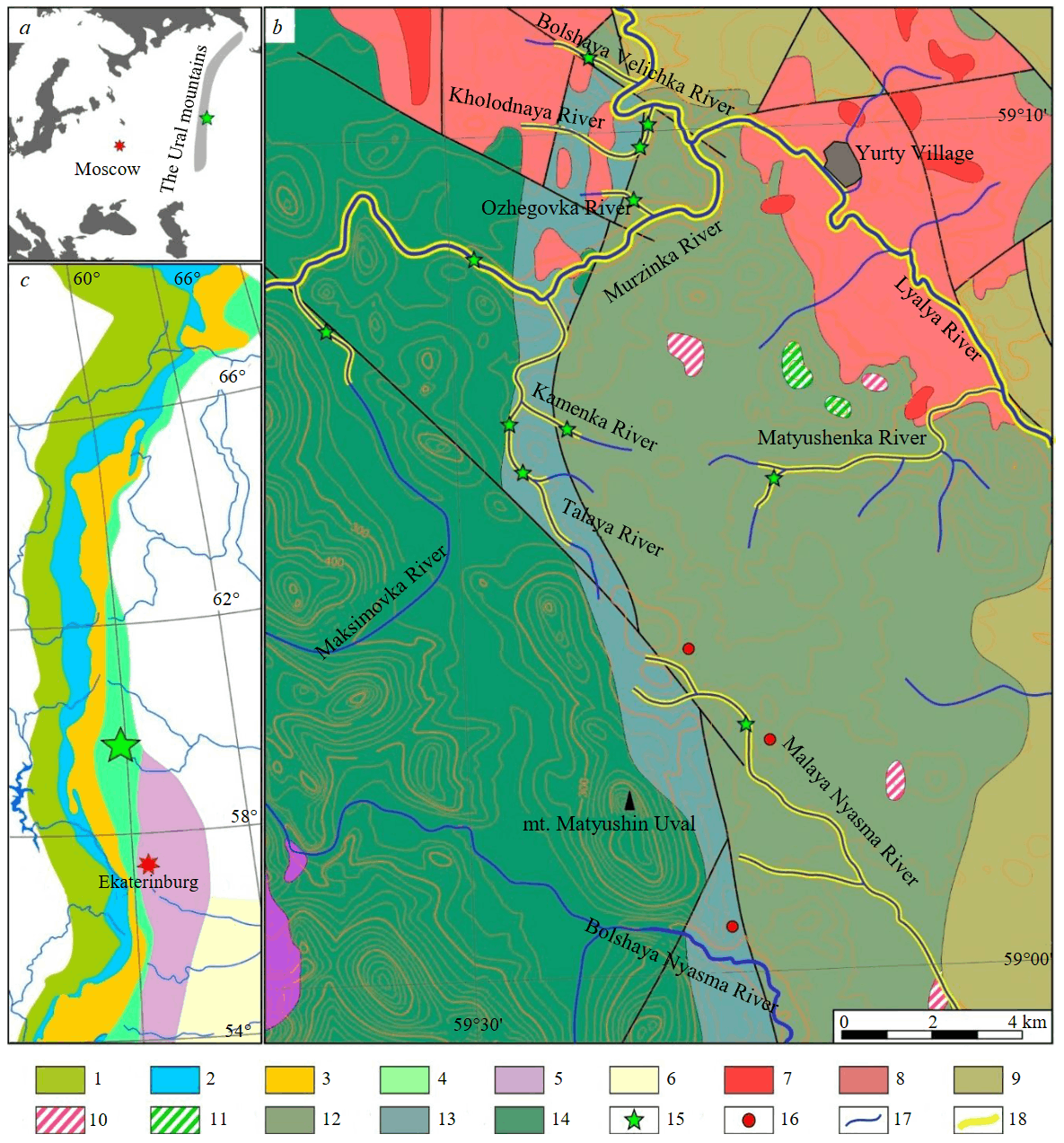
Fig.1. Location (a), geological structure (b) and tectonic setting (c) of the Murzinska placer group area (compiled using the following materials [10, 11])
1 – Preuralian foredeep; 2-6 – zones: 2 – West Uralian, 3 – Central Uralian, 4 – Tagilo-Magnitogorskaya, 5 – East Uralian, 6 – Transuralian; 7 – Late Silurian granites; 8 – Early Silurian diorites and gabbrodiorites of the Kamensky massif; 9 – Early Silurian volcanic rocks of the Pavdinskaya formation from basalts to rhyolites; 10 – Kaban subvolcanic formations, gabbro-dolerite stocks; 11 – Kaban subvolcanic formations, rhyodacite stocks; 12 – Late Ordovician-Early Silurian volcanic rocks of the Kabanskaya formation from basalts to rhyolites; 13 – Late Ordovician amphibolites and amphibolised dolerites of the Mariinsky metamorphic complex; 14 – Late Ordovician gabbroids of the Pavdinsky massif; 15 – sampling points; 16 – gold occurrences; 17 – watercourses; 18 – gold placers
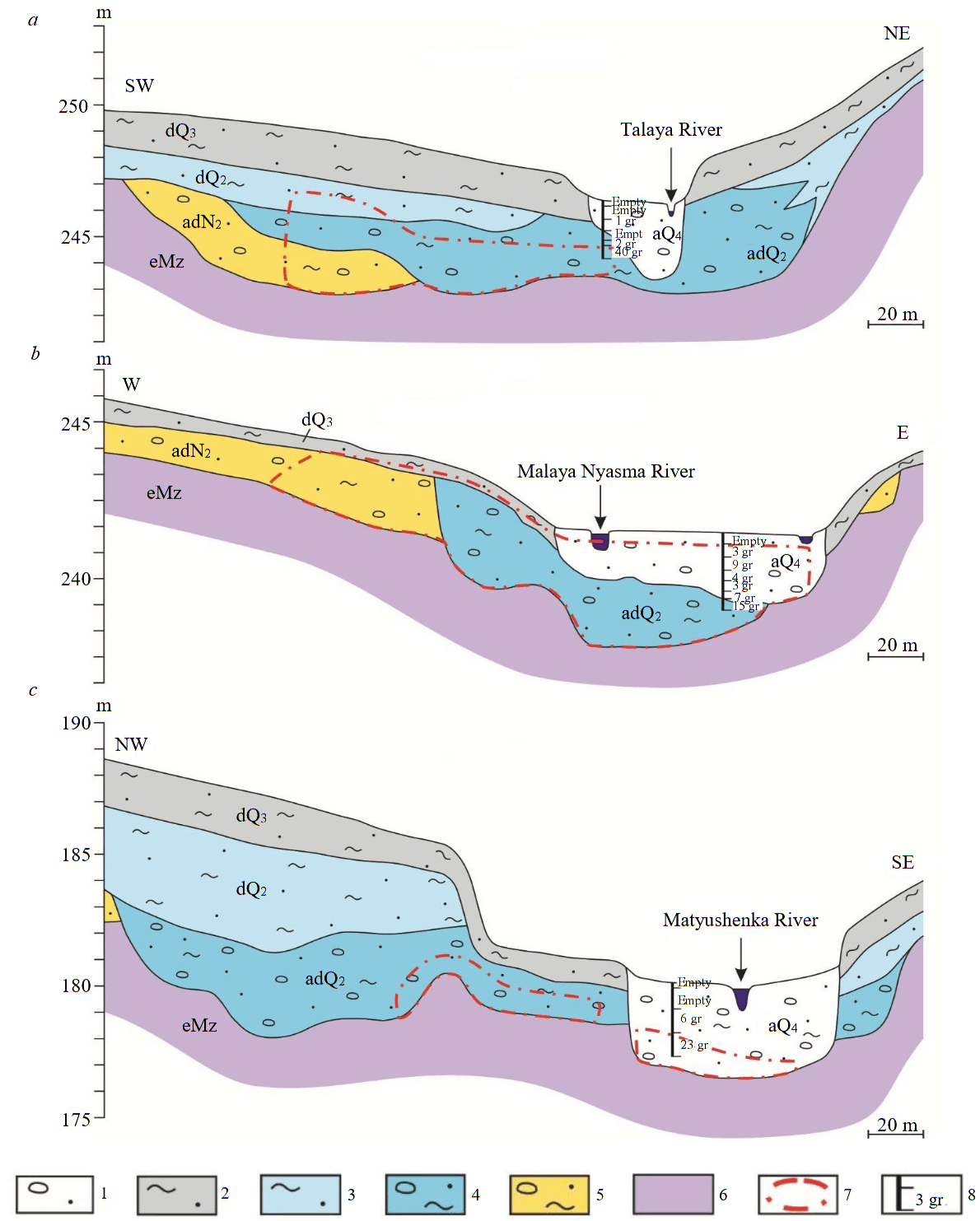
Fig.2. Representative cross-sections of alluvial and alluvial-deluvial placers of the Murzinka group of rivers: Talaya (a), Malaya Nyasma (b) и Matyushenka (c)
1 – Holocene channel alluvium (aQ4); 2 – Upper Pleistocene deluvial deposits (dQ3); 3 – Middle Pleistocene deluvial deposits (dQ2); 4 – Middle Pleistocene alluvial-deluvial deposits (adQ2); 5 – Upper Pliocene alluvial-deluvial deposits (adN2); 6 – Mesozoic weathering crusts developed on volcanic rocks (eMz); 7 – outlines of placer gold grades exceeding 0.1 g/m3; 8 – sampling intervals in pits and the number of gold grains in the samples, Empty – placer gold was not detected. The cross-sections were compiled based on the authors’ field observations with reference to archival reports (A.P.Nizovoy, 1970; N.D.Shchur, 2007)
Results
Size and morphological features of placer gold
The grain-size distribution of native gold in the various placers of the Murzinka group exhibits only minor variations (Table 1). The predominant size fractions comprise relatively coarse particles in the 0.25-0.5 mm and 0.5-1.0 mm classes, which are present in approximately equal proportions within the samples and collectively account for 70 % of the gold particles. The 0.1-0.25 mm fraction ranks third in terms of frequency of occurrence and constitutes 20-30 % of the particles. Particles belonging to the coarser 1.0-2.0 mm size class are significantly less abundant, typically representing only a few percent of the total grain population. An exception to this pattern is observed in the placers of the Talaya River and its tributary, the Kamenka River, where the share of this fraction reaches up to 10 %. Notably, samples recovered from the alluvial deposits of the Talaya River contain the largest gold particles identified in the study, with maximum sizes attaining 7 mm.
Table 1
Native gold from placers of Murzinka group
|
Placers of the rivers |
Number of particles n |
Grain-size distribution, % |
Flattening coefficient |
|||||
|
Gold particles size, mm |
||||||||
|
< 0.1 |
0.1-0.25 |
0.25-0.5 |
0.5-1.0 |
1.0-2.0 |
> 2 |
|||
|
Talaya |
107 |
– |
22.43 |
33.64 |
31.78 |
10.28 |
1.87 |
2.48 |
|
Kamenka |
76 |
– |
21.05 |
31.58 |
39.47 |
7.89 |
– |
2.98 |
|
Matyushenka |
29 |
– |
27.59 |
31.03 |
41.38 |
– |
– |
2.34 |
|
Malaya Nyasma |
41 |
2.44 |
24.39 |
41.46 |
29.27 |
2.44 |
– |
2.53 |
The morphological features of native gold are highly diverse. Gold particles frequently exhibit a slightly flattened form, with flattening coefficient values being fairly consistent across all placers and ranging within 2-3 units (Table 1). The flattening of gold particles is not related to deformation processes and represents a primary morphological feature, as it is observed in both rounded and angular particles. particles with an elongated or lumpy shape are less common.
The majority of gold particles show a moderate degree of roundness (Fig.3). The surfaces of the particles are hummocky and show multiple signs of mechanical reworking: cavities, scratches, and smoothing of protruding parts. Traces of the initial morphology remain evident in the general grain outline and isolated surface segments. Native gold individual grains and aggregates of a primary rough morphology occur much less frequently. They are characterised by intricate shapes with stepped surfaces indicative of simultaneous growth with gangue minerals. Only a few particles of this variety were identified within the Talaya River placer.
Internal structure of placer gold
Study of the internal structures using electron backscatter diffraction reveals that the majority of gold particles are granular aggregates. These consist of misoriented polygonal grains with straight or slightly curved boundaries. A correlation has been observed between the grain size and the overall size of the aggregates they compose. Aggregates ranging from 100 to 300 µm in size incorporate grains of 30-100 µm; in larger native gold particles (2-5 mm), the grain size increases to 500-1000 µm. Monocrystals are extremely rare, and their size does not exceed 250 µm. Numerous mechanical deformations are manifested in the internal structure of native gold as zones of lattice misorientation.
Images acquired with a scanning electron microscope in BSE mode demonstrate a chemically homogeneous internal structure of the placer gold, with high-fineness rims developed along the periphery. The thickness of these rims amounts to the first tens of micrometers; their boundary with the core parts of the gold particles is sharp and sinuous. Another distinctive feature of the internal structure is the presence of high-fineness veinlets developed along the boundaries of the grains composing the native gold aggregates. The thickness of these intergranular veinlets is 5-10 µm.
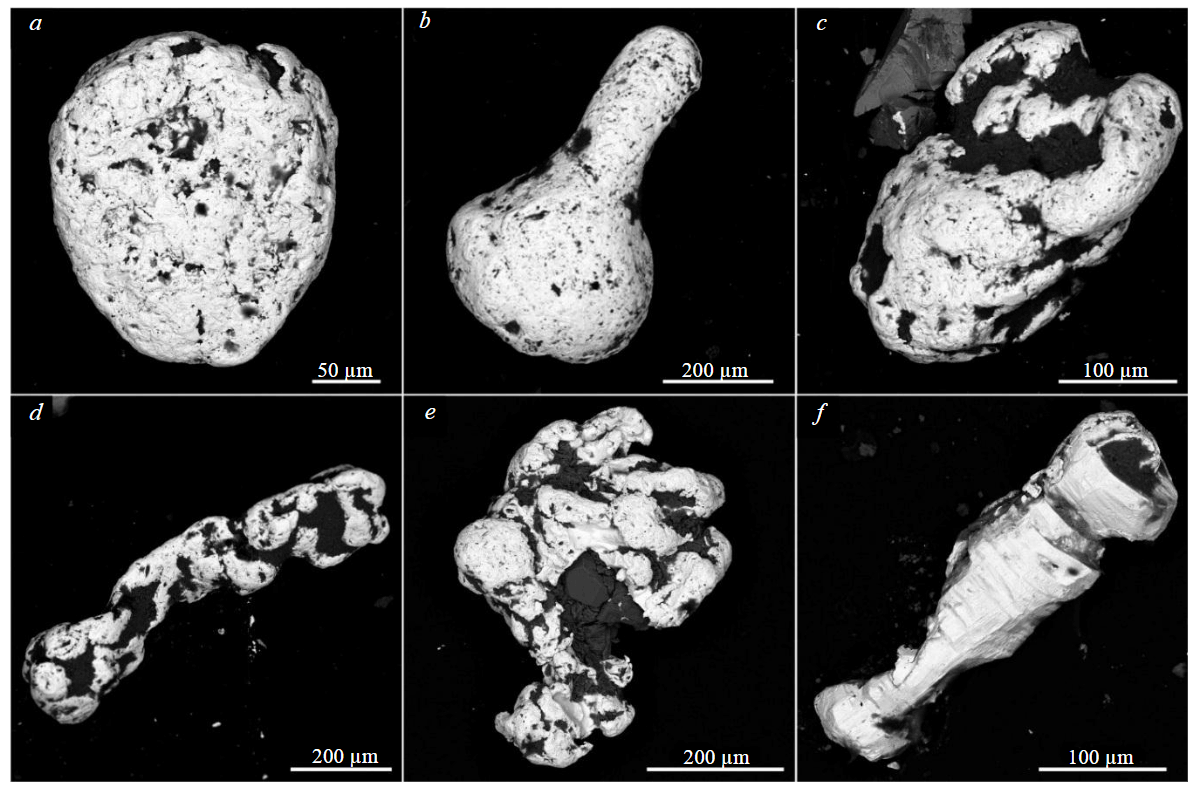
Fig.3. Morphology of native gold from the placers of the Murzinka group of rivers Malaya Nyasma (a), Ozhegovka (b), Matyushenka (c), Bolshaya Velichka (d), Kholodnaya (e), Talaya (f). BSE image
Chemical composition of placer gold
The characteristics of the chemical composition allow three types of native gold to be distinguished in the placers of the Murzinka group (Table 2, 3). Type I is the most widespread and is characterized by the presence of Ag and Hg admixture in the native gold. Variations in the admixture content allow to divide this type into four subtypes: a – the Maksimovka River placer; b – the placers of the Bolshaya Velichka, Malaya Nyasma and Murzinka rivers; c – the alluvial deposits of the Talaya and Kholodnaya rivers; d – the alluvial deposits of the Matyushenka, Kamenka, and Ozhegovka rivers. Placers grouped according to these gold subtypes exhibit very similar fineness values and concentrations of silver and mercury impurities.
Table 2
Average chemical composition of Type I placer gold, wt.%
|
Placers of the rivers |
Number of particles n |
Subtype |
Hg |
Ag |
Au |
||||||
|
Median |
Min |
Max |
Median |
Min |
Max |
Median |
Min |
Max |
|||
|
Maksimovka |
17 |
a |
0.99 |
– |
3.01 |
16.76 |
3.39 |
26.15 |
82.68 |
73.74 |
97.36 |
|
Bolshaya Velichka |
15 |
b |
1.23 |
– |
3.24 |
13.50 |
4.02 |
23.42 |
86.20 |
74.98 |
96.66 |
|
Malaya Nyasma |
17 |
0.38 |
– |
4.40 |
13.01 |
1.42 |
23.85 |
86.63 |
76.68 |
99.97 |
|
|
Murzinka |
13 |
1.24 |
– |
4.28 |
13.40 |
1.02 |
19.90 |
84.68 |
79.81 |
97.31 |
|
|
Talaya |
18 |
c |
0.43 |
– |
4.96 |
10.03 |
0.57 |
23.11 |
90.26 |
74.60 |
99.99 |
|
Kholodnaya |
14 |
– |
– |
0.83 |
7.00 |
0.74 |
23.43 |
92.83 |
75.73 |
100.00 |
|
|
Matyushenka |
11 |
d |
– |
– |
0.50 |
7.32 |
– |
11.00 |
93.54 |
89.68 |
98.88 |
|
Kamenka |
13 |
– |
– |
1.68 |
8.68 |
– |
14.82 |
91.28 |
83.40 |
100.00 |
|
|
Ozhegovka |
5 |
– |
– |
– |
7.66 |
6.53 |
14.12 |
92.48 |
86.33 |
94.73 |
|
Type II gold is considerably less abundant; single particles were found only in the placer deposits of three watercourses: the Bolshaya Velichka, Maksimovka, and Malaya Nyasma rivers. A distinctive signature of this type is the presence of copper, the content of which varies widely (0.21-23.22 wt.%), coupled with low silver levels (0.25-5.46 wt.%). Mercury is present at concentrations up to 1.15 wt.%. The fineness of this gold type ranges from 767 to 974 ‰. Owing to the limited amount of Type II gold particles, a robust assessment of compositional variability and mean admixture concentrations is not possible.
Type III native gold is provisionally defined, based on two particles collected from the Matyushenka River placer. These particles display a composition fundamentally distinct from Types I and II, with silver as the only detectable admixture at levels of 44.53 and 49.78 wt.%.
Table 3
Average chemical composition of Types II and III placer gold, wt.%
|
Placers of the rivers |
Type |
Cu |
Hg |
Ag |
Au |
|
Bolshaya Velichka |
II |
0.21 |
0.82 |
2.51 |
96.65 |
|
1.62 |
– |
1.41 |
97.36 |
||
|
Maksimovka |
II |
3.83 |
1.15 |
5.46 |
89.74 |
|
0.82 |
– |
3.60 |
95.99 |
||
|
Malaya Nyasma |
II |
23.22 |
– |
0.25 |
76.74 |
|
Matyushenka |
III |
– |
– |
44.53 |
56.72 |
|
– |
– |
49.78 |
50.95 |
Gold-rich rims, which often form along the periphery of native gold particles in alluvial deposits, have also been studied in terms of their chemical composition. They are characterized by a sharp decrease in the content of all impurities. The degree of refinement of the high-purity rims does not appear to depend on the initial composition of the gold nuggets, and the total impurity content does not exceed a few percent.
Mineral inclusions assemblages
Detrital gold contains a substantial number of ore mineral inclusions (Table 4). Pyrite is the predominant inclusion, occurring as grains with irregular shapes as well as those displaying elements of crystallographic faceting (Fig.4, a); the grain size ranges from 5 to 20 µm. Sporadic occurrences of pyrrhotite (Py), chalcopyrite (Chp), petzite (Ptz), galena (Gn), and molybdenite (Mol) are present as single grains (Fig.4, a, c). A single bornite inclusion, 4 µm in size, was identified in Cu-bearing Type II native gold from the Bolshaya Velichka River placer deposit.
Table 4
Mineral inclusions in native gold
|
Placers of the rivers |
Gold type |
Py |
Pyh |
Chp |
Bn |
Gn |
Mol |
Ptz |
|
Talaya |
I |
4 |
1 |
1 |
– |
1 |
– |
– |
|
Kamenka |
I |
10 |
– |
1 |
– |
1 |
1 |
– |
|
Matyushenka |
I |
3 |
1 |
– |
– |
– |
– |
– |
|
Malaya Nyasma |
I |
3 |
– |
– |
– |
– |
– |
2 |
|
Maksimovka |
I |
1 |
– |
– |
– |
– |
– |
– |
|
Bolshaya Velichka |
II |
– |
– |
– |
1 |
– |
– |
– |
Gangue minerals are commonly observed as inclusions within native gold. Quartz, albite, and epidote are the most widespread phases, whereas calcite and apatite occur less frequently. Abundant inclusions of a hydrated REE phosphate, presumably rhabdophane, have been identified in the gold particles from Talaya River placer deposit (Fig.4, b). These inclusions exhibit intricate worm-like morphology and range in size from 1 to 10 µm. It is noteworthy that rhabdophane inclusions occur only in the marginal parts of the gold particle, which is characterized by a higher gold fineness relative to the core parts and the virtual absence of admixtures.
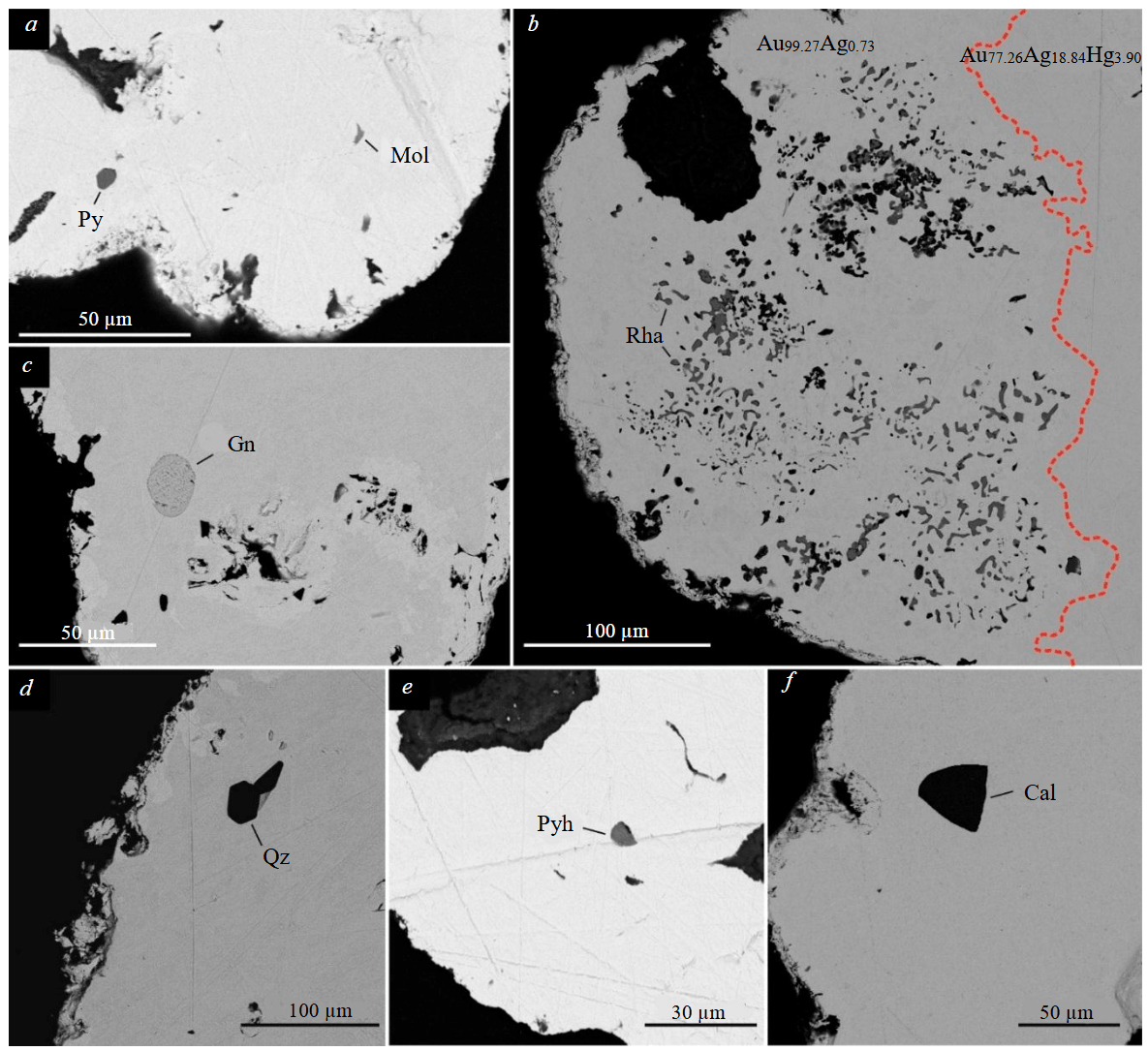
Fig.4. Inclusions in native gold from the placers of the Murzinka group
Gn – galena; Mol – molybdenite; Py – pyrite; Rha – rhabdophane; Qz – quartz; Pyh – pyrrhotite; Cal – calcite.
The red dashed line marks the boundary of the high-fineness zone of the native gold
Discussion
The Murzinka River placer system, including its tributaries, constitute a significant part of the gold resource base in the Middle Urals. Approximately 1.5 t of native gold have been extracted from these placer deposits. The accumulation of such a substantial volume of gold reflects the combined influence of several key factors. The principal controls include high productivity of the lode sources and the succession of climatic and geomorphological conditions that facilitated accumulation of gold-bearing alluvium. The typomorphic features of native gold make it possible to evaluate the conditions of placer formation and identify types of lode sources.
Distance of transport from lode sources
Observation of the morphological characteristics of detrital gold from the Murzinka group placers has established the distance to the lode sources. During fluvial transport, as the distance increases and the number of mechanical deformations rises, gold particles experience consequent morphological changes, primarily manifesting as rounding and flattening [14]. Rounding, smoothing of protruding parts and grain surfaces occur during the early stages of transport, as demonstrated by studies of placers in the Klondike region (British Columbia) [15]. The degree of rounding reaches a maximum at approximately 5 km from the source and remains essentially constant with further transport. Mechanical flattening of gold particles becomes evident at distances exceeding 3 km and develops in a near linear fashion with increasing distance. The native gold from the studied placers is characterized by a predominance of moderate rounding and a shagreen surface, typical of gold transported in aqueous flows [6, 15]. The presence of slightly flattened and lumpy particles suggests preservation of primary morphologies and indicates a lack of substantial mechanical flattening. This implies that native gold in the Murzinka group placers derived from proximal lode sources, with transport distances limited to the first few kilometers. In contrast, single primary rough gold particles recovered from the Talaya River alluvial deposits retain intricate shapes with fine elements of surface, pointing to an additional local contribution from a nearby source located within the first few hundred meters.
Supergene transformation of native gold
The internal structure of native gold preserves evidence of supergene alteration. A distinctive feature is the occurrence of high-fineness veinlets developed along grain boundaries in gold aggregates. These features are common in both placer and lode gold occurrences, yet their genesis is not established. According to widely accepted interpretations [9, 16], such veins form in oxidation zones through the filling of intergranular voids that were produced during diffusion. An alternative hypothesis links these structures to metamorphically induced granulation of gold and silver redistribution [17]. Additionally, it has been proposed [18] that gold-rich intergranular veins may crystallize during the late stages of hydrothermal ore-forming processes. Taking into account the geological history of the region, the most likely cause of such structures is supergene transformation of gold within the weathering crusts developed during the Upper Mesozoic climatic stage.
Particular significance attaches to the intricate intergrowths of native gold with hydrated REE phosphates. The sinuous, worm-like structures of rhabdophane group minerals within the high-fineness marginal parts of the gold aggregates provide evidence of co-crystallization. Within the gold rich parts, abundant silver-enriched fragments of gold are observed; their chemical composition corresponds to that of the core zones. The crystallographic orientation of these fragments commonly aligns with that of larger primary native gold particles in the immediate vicinity (Fig.5). This observation suggests these fragments are relict domains of primary gold that have been partially replaced by aggregate of high-fineness gold. The internal structure of the gold rich marginal zones is characterized by smaller constituent grains. Moreover, numerous elongated twinning structures are present within these grains. Fine-grained textures are commonly reported in gold-rich rims of placer gold particles [19]. Their formation attributed to complete recrystallization of mechanically deformed zones coupled with the removal of impurities from the gold [5]. According to the morphological principles of isometricity and minimum boundary length [20], complete recrystallization produces aggregates consisting of isometric polyhedral. Development of twins and elongated individual grains is not expected under such conditions. Therefore, the microstructures observed in the gold-rich parts of the particles cannot be the result of recrystallization.
There are two possible explanations for the observed twin structures – free growth of individual crystals (growth twins) and twinning resulting from a change in the orientation of the crystal lattice due to mechanical deformations (mechanical twins). The results of backscattered electron diffraction revealed identical crystal lattice orientation within each individual grain. There are virtually no zones of local misorientation, which indicates the absence of mechanical deformations in the gold-rich parts. Thus, the twinning structures, which are common in high-fineness zones of gold particles, are interpreted as growth twins.
The REE redeposition during the formation of supergene mineralization, including rhabdophane, was documented in weathering crusts developed on granites [21, 22] and in volcanic sedimentary sequences hosting polymetallic mineralization [23]. Researchers emphasize the significance of sulfide minerals oxidation, which results in the generation of sulfate solutions. These solutions promote the decomposition of primary minerals, the liberation of REE [23], and their migration along the oxidation zone profile [21]. The oxidation of sulfides (predominantly pyrite) and plagioclase is a key factor in thiosulfate formation. Thiosulfates enable the remobilization, transport, and subsequent redeposition of native gold, leading to the development of high fineness gold aggregates within weathering crusts [24, 25]. Studies of the weathering crust at the Suzdal deposit provided evidence for the formation of high fineness gold via dissolution and redeposition under oxidation zone conditions [26]. The migration of gold caused by pyrite decomposition in the oxidation zone of gold-sulfide deposits has been described in detail by a research team led by V.M.Kreiter [27]. Considering the observed internal structure of native gold, the purification mechanism can be explained by the model of self-electrorefining of gold during dissolution and instantaneous subsequent deposition, as proposed by J.Groen and co-authors [19]. Thus, conditions favorable for the co-crystallization of native gold and rhabdophane may exist within the oxidation zone due to the breakdown of sulfides minerals and plagioclase, as well as the introduction of phosphorus by groundwater. During redeposition, native gold is purified from admixtures and attains a higher fineness. The complex morphologies of hydrous REE minerals and high fineness gold intergrowths provide direct evidence for the development of gold-rich zones under conditions of weathering crust.
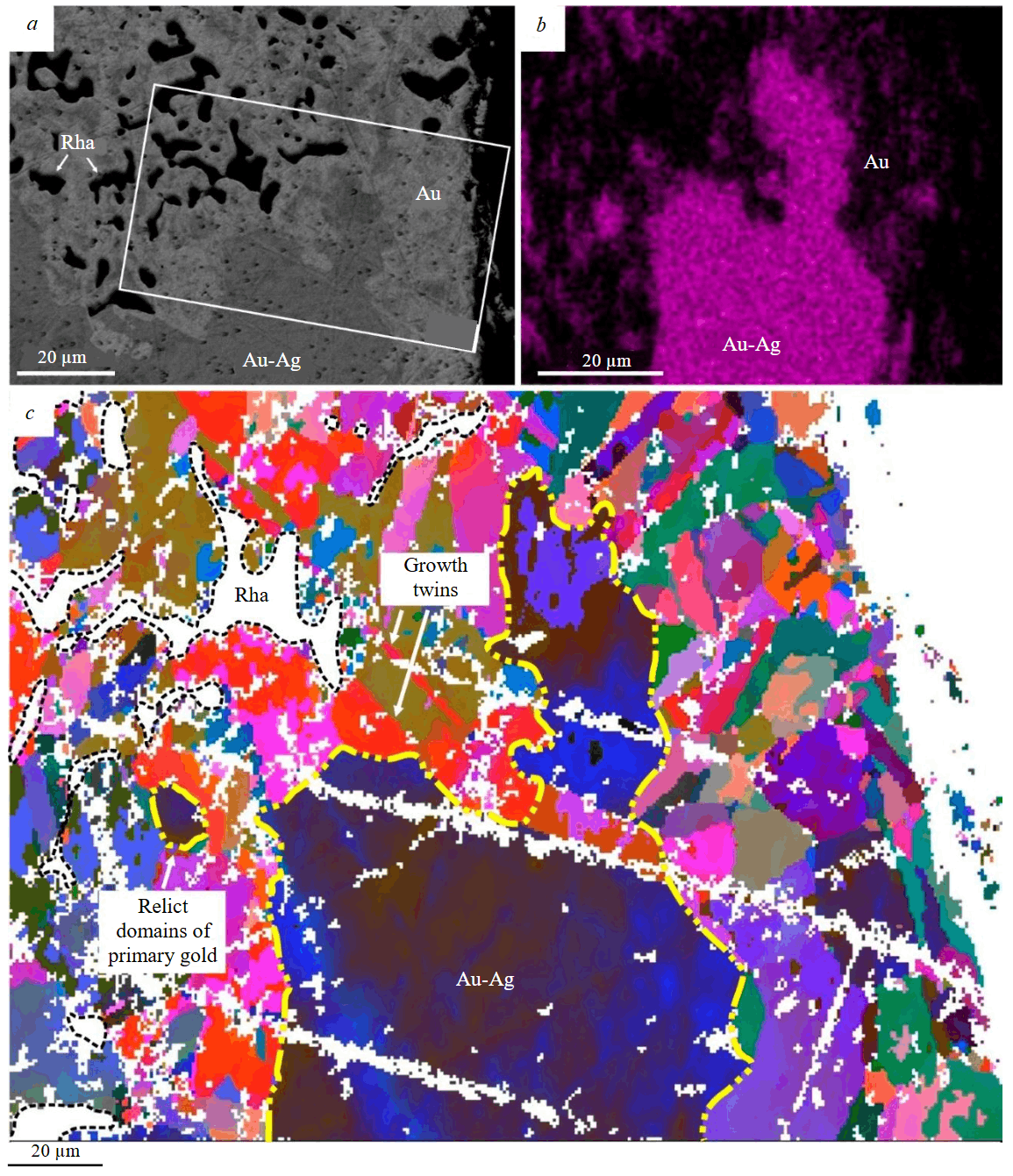
Fig.5. Internal structure of native gold with rhabdophane inclusions. BSE image (a); Au leves map (b); crystal lattice orientation map in Euler colors, obtained by EBSD, step size 0.25 µm (c).
The white outline in Fig. a marks the gold grain area shown in Fig. b and c
The internal structure of native gold preserves evidence of mechanical deformations sustained during its transport from lode sources to placer deposits. Electron backscatter diffraction reveals numerous domains of crystal lattice misorientation, formed as a result of collisions between gold particles and rock fragments. The most significant deformations took place in the marginal zones of the native gold particles, leading to the accumulation of stresses within the particles. The abundance of gold-rich rims can be explained by processes of gold purification from admixtures resulting from the recrystallization of the deformed zones [5, 28, 29]. During the development of Quaternary alluvial deposits, older Pleistocene and Neogene gold-bearing alluvial and alluvial-deluvial units underwent partial erosion. This is clearly evident in the stratigraphic sections of the modern watercourse network. The erosional process probably was accompanied by the redeposition of some placer gold. Such redeposition may have intensified the deformation of gold particles and promoted the formation of high-fineness gold-rich rims. A similar conception of native gold redeposition from intermediate Pliocene-Pleistocene reservoirs into Quaternary placers has been described for the Vagran gold bearing placer cluster in the Northern Urals [30], located approximately 100 km north of the Murzinka placer group.
Lode sources of native gold
The identification of native gold with markedly distinct compositional characteristics indicates the contribution of lode sources of multiple types to the formation of the studied placers. The similarity in the composition of native gold containing silver and mercury admixtures (Type I) across all the studied placer deposits points to a single type of the lode sources of this type of gold. Similar compositional signatures of detrital gold have been documented in placers in diverse geological settings. Numerous studies of placer clusters associated with orogenic gold deposits demonstrate a prevalent compositional variability in alluvial gold, with respect to silver content and up to a few percent of mercury [2-5, 31]. Analyses of gold from Witwatersrand conglomerates report fineness values of 809-929 ‰, silver concentrations of 6.0-17.6 wt.%, and mercury contents of 0.6-5.8 wt.% [32]. Research on the Northern Salair placers has established that metasomatic rocks related to intrusive systems can act as source for gold bearing silver and mercury impurities [33, 34]. Analogous compositional ranges (fineness of 800-995 ‰ and mercury up to 4.68 wt.%) have been determined for placer gold derived from the upper levels of the Bystrinsky skarn-porphyry Au-Cu-Fe deposit. High fineness native gold (892-899 ‰) with substantial mercury admixtures (1.72-2.16 wt.%) has been reported in watercourses of the Unya Bomsk ore-placer complex [35]. Consequently, the chemical composition of native gold does not allow the lode sources to be unequivocally attributed to a specific type. The insufficiency of compositional data for resolving the question of placer sources is corroborated by studies of detrital gold from districts where lode mineralisation of different types is combined [31].
Grain size could be an additional criterion in identifying lode sources of detrital gold in the Murzinka placer group. The predominance of the coarse gold particles (0.5-1.0 mm) and historical records of gold nuggets up to 725 g recovered during artisanal mining supports the hypothesis that Type I placer gold originated from gold quartz type sources. Such size characteristics are typical of gold derived from gold quartz veins, which are known to host big gold aggregates [36] and nuggets [9]. This interpretation is consistent with compositional data on gold from gold quartz deposits [37] and with the regional geological setting. In the upper reaches of the Malaya Nyasma River, the Malonyasmenskoe lode occurrence of the gold quartz type is documented; the erosion and mechanical breakdown of such occurrences likely supplied the material for the placers. Additionally, exploratory drilling in the Talaya River valley identified a gold bearing quartz vein at the Talovskoye ore occurrence [11].
The mineral inclusion assemblage in Type I placer gold is dominated by pyrite, pyrrhotite, galena, chalcopyrite, molybdenite, and petzite are less abundant. Such mineral inclusions can be critically important for establishing a genetic link between placer gold and bedrock precious metal mineralization. Studies of inclusion assemblages in native gold from placers hosted in areas with multiple genetic types of mineralization indicate that the aforementioned minerals are most commonly observed as inclusions in placer gold associated with plutogenic hydrothermal systems [38]. Inclusions of molybdenite and tellurides provide an evidence of a connection between the lode sources and magmatic processes [39]. Therefore, quartz veins related to the intrusion of diorites of the Kamensky massif may represent the lode source of Type I native gold in the Murzinka group placers.
Histograms of native gold fineness and cumulative curves of silver content (Fig.6) reveal a systematic compositional trend within Type I gold, progressing from subtype a to subtype d. Subtype a (Maksimovka River placer) is characterized by the highest silver contents (median 16.76 wt.%) and elevated mercury levels (up to 3.01 wt.%). In subtype b (placers of the Bolshaya Velichka, Malaya Nyasma, and Murzinka rivers), median silver contents decrease to 13.01-13.40 wt.%, while mercury admixture remain high (up to 4.40 wt.%). Subtype d (placers of the Matyushenka, Kamenka, and Ozhegovka rivers) exhibits the lowest silver contents (median 7.32-8.66 wt.%), with mercury largely undetectable in most particles. Subtype c (Talaya and Kholodnaya rivers) displays a bimodal fineness distribution (Fig.6, c) and occupies an intermediate position in terms of impurities content. Maximum silver and mercury values (up to 23.43 wt.% Ag and 4.96 wt.% Hg) align this gold with Type Ib, whereas the median silver contents (10.03 and 7.00 wt.%) are closer to those of Type Id (placers of the Matyushenka, Kamenka, and Ozhegovka rivers). The transitional character of Type Ic native gold from the placer deposits of the Talaya and Kholodnaya rivers is clearly reflected in the cumulative silver content curves (Fig.6, e). Thus, the population gold particles in the Talaya and Kholodnaya placers results from the mixing of Type I subtypes b and d.
A distinct spatial pattern is evident in the distribution of placers hosting Type I native gold (Fig.7). Placer deposits containing gold of subtype d, characterized by minimal admixture content, occur in close spatial association along the Kamenka, Matyushenka, and Ozhegovka rivers, within the volcanic rocks of the Kabanskaya formation. Placers with Type Ib and Ic gold form two elongated belts within the Mariinsky metamorphic complex and the gabbroids of the Pavdinsky massif. The westernmost occurrence is the Maximovka River placer, which hosts subtype а gold marked by the highest admixture levels. Considering the limited transport distance of the gold, the observed distribution of Type I subtypes across the Murzinka group placers reflects a zonation of lode gold quartz mineralization. This zonation is expressed as a progressive decrease in fineness and a concurrent increase in Ag and Hg content from east to west.
The observed zonation pattern can be attributed to variations in the distance of quartz vein formation from the Kamensky intrusion, which acted as the source of hydrothermal fluids. With increasing distance from the intrusion (either vertically or laterally), a decline in temperature and a shift in fluid composition likely occurred. These changes would have resulted in the deposition of native gold of lower fineness and with higher Ag and Hg contents. An additional control on gold composition is the nature of the host rocks. Placer deposits situated within the volcanogenic sedimentary strata of the Kabanskaya formation contain gold of higher fineness compared to that found in placers hosted within the gabbroids of the Pavdinsky Massif. This suggests that host rock chemistry contributed to the local variation in gold fineness in gold-bearing veins.
The main distinctive feature of Type II native gold is the presence of copper in its composition, coupled with lower silver and mercury levels relative to Type I gold. All finds of copper-bearing gold within the Murzinka placer group (Malaya Nyasma, Maksimovka, and Bolshaya Velichka rivers) are restricted to its western part. In this area, detrital material was transported into the river valleys from hillslopes underlain by mafic rocks of the Pavdinsky Complex. Copper enrichment in native gold is a significant feature of precious metal mineralization hosted in the gabbroid parts of the UPB massifs [40-42]. Considering the chemical signature of Type II gold, its spatial distribution within the Murzinka group placers, and the regional geology, the gabbroids of the Pavdinsky massif are inferred to represent the lode source of this gold variety. The absence of palladium admixture, which is also typical of native gold from the UPB massifs, may be attributed to the limited sample size of the analyzed gold particles.
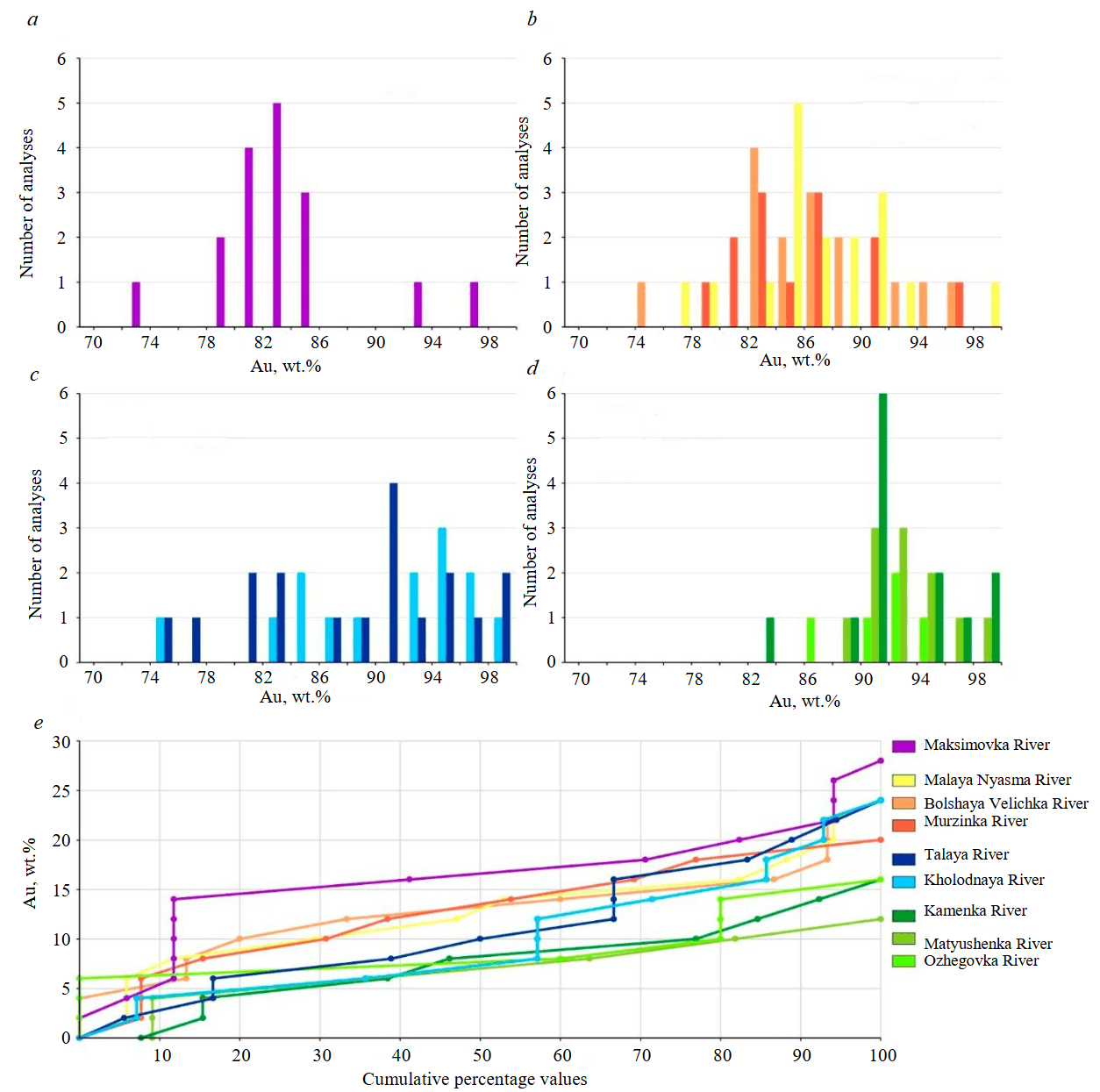
Fig.6. Distribution of Type I native gold by fineness (a-d) and cumulative curves of Ag content (e)
The histograms were plotted with a 2 wt.% interval
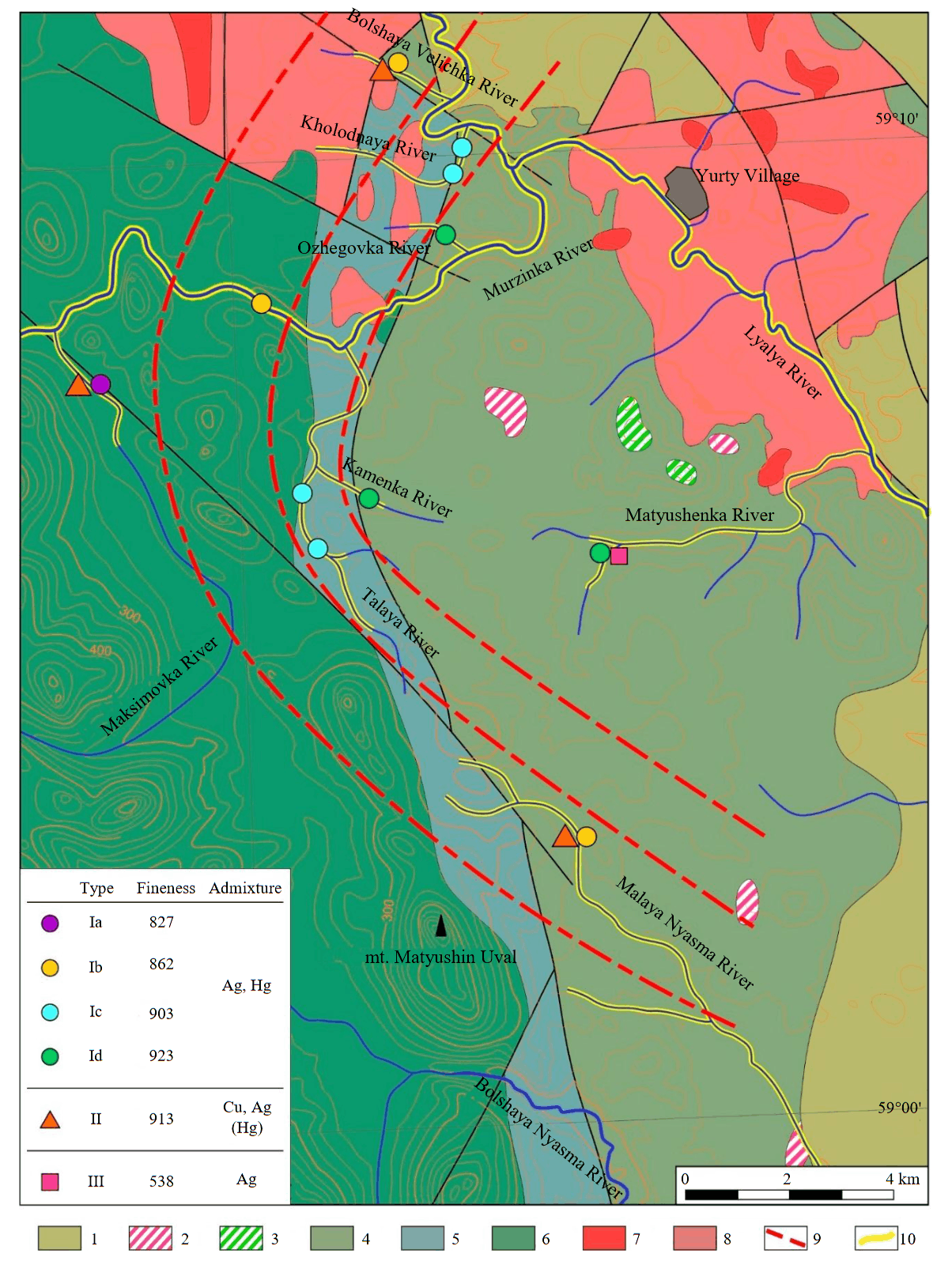
Fig.7. Distribution of native gold of different types in the placers of the Murzinskaya group
1 – Late Ordovician-Early Silurian volcanic rocks of the Kabanskaya formation from basalts to rhyolites; 2 – Kaban subvolcanic formations, gabbrodolerite stocks; 3 – Kaban subvolcanic formations, rhyodacite stocks; 4 – Early Silurian volcanic rocks of the Pavdinskaya formation from basalts to rhyolites; 5 – Late Ordovician amphibolites and amphibolised dolerites of the Mariinsky metamorphic complex; 6 – Late Ordovician gabbroids of the Pavdinsky massif; 7 – Late Silurian granites; 8 – Early Silurian diorites and gabbrodiorites of the Kamensky massif; 9 – inferred zonation pattern of Type I gold-quartz lode mineralization; 10 – gold placers
The marked differences between Types I and II of native detrital gold are also reflected in the assemblages of mineral inclusions. Bornite is the only opaque mineral forming inclusions in copper-bearing gold. Mineralogical and geochemical research of gabbro from the Serebryansky Kamen massif (a part of the Kytlym pluton within the UPB) reveal that the highest precious metal grades occur in mineralized zones characterized by a chalcopyrite-chalcocite-bornite association of copper sulphide minerals [43]. These observations support the inference that Type II native gold is genetically linked to copper-precious metal mineralization hosted in gabbro.
The origin of Type III native gold, which is characterized by low fineness, remains poorly constrained due to its restricted abundance and the insufficient sample size for a statistically robust assessment of its chemical composition. Consequently, any hypotheses regarding its genesis are necessarily speculative. Lower formation depths of the quartz veins, which are the source of Type I gold, likely accounts for the presence of low-grade native gold in the Murzinka placer deposits.
Based on the integrated analysis of the studied properties of native gold, it can be concluded with a high degree of confidence that the primary source for the placers is represented by lode gold quartz veins. Zones of copper-sulphide mineralization within the gabbro of the Pavdinsky massif, which host associated precious metal mineralization, play a secondary role in the formation of the placer gold deposits of the Murzinka River and its tributaries.
Conclusion
As a result of the conducted research, the morphological features, chemical composition, and internal structure of native gold from nine placers in the Murzinka group have been characterized in detail. Analysis of grain morphology and the rounding degree indicates that the lode gold sources are located in close proximity to the placers, at distances ranging from several hundred meters to the few kilometers.
The observed internal structure patterns of gold can be attributed to the tectono-climatic and geomorphological evolution of the region. High fineness intergranular veinlets and intergrowths of gold and rhabdophane group mineral indicate that native gold resided within the oxidation zone during the period of active weathering crust development in the Upper Cretaceous and Palaeogene. Subsequent erosion and redeposition of weathering crust material, which contributed to placer formation, are recorded in the mechanical deformations of gold particles sustained during transport. Following accumulation of gold particles in alluvial and alluvial deluvial deposits, recrystallization of the most deformed marginal zones of gold particles occurred, resulting in admixture depletion and the gold-rich rims formation.
Analysis of chemical composition and mineral inclusion assemblages enabled the identification of three types of native gold in the placers and revealed their genetic links to distinct lode sources. Type I gold, characterised by high fineness and Ag and Hg admixture, is dominant in the placer deposits. This type is interpreted to originate from bedrock gold quartz mineralization, which is widely represented the study area. The variation in impurity content within Type I gold allows the recognition of subtypes. Their spatial distribution in the placers reflects the zonation pattern of the lode gold quartz mineralization.
Type II native gold, distinguished by elevated copper contents, is linked to precious metal mineralisation hosted in the gabbroids of the Pavdinsky massif. This finding represents the first reliably documented instance of native gold derived from mafic intrusives being concentrated in placers within the Ural fold belt. It confirms the potential for placer accumulation of the previously described gravity concentratable native gold from UPB gabbro.
Type III native gold, characterized by low fineness, was encountered only as a few particles, which limits the ability to confidently identify its lode source. One plausible explanation for the reduced fineness is a decrease in the formation depth of the quartz veins that served as the source for Type I gold.
The large placer system in the Murzinka River basin formed predominantly from gold quartz type sources. This, combined with the limited transport distance indicated by grain morphology, allows the prospective areas for lode gold quartz mineralization to be effectively localized. An additional contribution to the placers derives from the zones of precious metal mineralization in the mafic rocks of the Pavdinsky massif. This finding notably expands the understanding of the metallogenic and placer forming potential of gabbro within the Ural Platinum Belt.
References
- Litvinenko V.S., Petrov E.I., Vasilevskaya D.V. et al. Assessment of the role of the state in the management of mineral resources. Journal of Mining Institute. 2023. Vol. 259, p. 95-111. DOI: 10.31897/PMI.2022.100
- Chapman R.J., Mortensen J.K., Crawford E.C., Lebarge W.P. Microchemical Studies of Placer and Lode Gold in the Klondike District, Yukon, Canada: 2. Constraints on the Nature and Location of Regional Lode Sources. Economic Geology. 2010. Vol. 105. N 8, p. 1393-1410. DOI: 10.2113/econgeo.105.8.1393
- Chapman R.J., Mortensen J.K., LeBarge W.P. Styles of lode gold mineralization contributing to the placers of the Indian River and Black Hills Creek, Yukon Territory, Canada as deduced from microchemical characterization of placer gold grains. Mineralium Deposita. 2011. Vol. 46. Iss. 8, p. 881-903. DOI: 10.1007/s00126-011-0356-5
- Zaykov V.V., Melekestseva I.Yu., Zaykova E.V. et al. Gold and platinum group minerals in placers of the South Urals: Composition, microinclusions of ore minerals and primary sources. Ore Geology Reviews. 2017. Vol. 85, p. 299-320. DOI: 10.1016/j.oregeorev.2016.10.001
- Kozin A.K., Stepanov S.Yu., Palamarchuk R.S. et al. Mineral Associations of Concentrates from Gold-Bearing Placers of the Miass Placer Zone (South Urals) and Possible Primary Sources of Gold. Russian Geology and Geophysics. 2023. Vol. 64. N 9, p. 1015-1030. DOI: 10.2113/rgg20234543
- Nikiforova Z.S., Kalinin Yu.A., Makarov V.A. Evolution of Native Gold under Exogenous Conditions. Russian Geology and Geophysics. 2020. Vol. 61. N 11, p. 1244-1259. DOI: 10.15372/rgg2020109
- Lalomov A.V., Naumov V.A., Grigorieva A.V. et al. Evolution of the Vagran Gold-Bearing Placer Cluster (Northern Urals) and Prospects for Revealing Bedrock Mineralization. Geology of Ore Deposits. 2020. Vol. 62. N 5, p. 407-418. DOI: 10.1134/S1075701520050049
- Kuznetsov D.V., Stepanov S.Yu., Butnyakov A.V., Igosheva V.S. Lamprophyres of the Peshchernoe gold deposit, their geological position, material composition, and metasomatic alterations (Northern Urals). Journal of Mining Institute. 2025. Vol. 271, p. 22-41.
- Petrovskaya N.V. Native gold: general characteristics, typomorphism, questions of genesis. Moscow: Nauka, 1973, p. 347 (in Russian).
- Puchkov V.N. Paleogeodynamics of the Southern and Middle Urals. Ufa: Gilem, 2000, p. 146 (in Russian).
- Gosudarstvennaya geologicheskaya karta Rossiiskoi Federatsii. Masshtab 1:200000. Izdanie vtoroe. Seriya Yuzhno-Uralskaya. List N-41-VII. Obyasnitelnaya zapiska. Moscow: Moskovskii filial VSEGEI, 2015, p. 167.
- Desiatnichenko L.I., Fadeicheva I.F., Smirnov V.N. et al. Late Ordovician-Silurian volcanic rocks associations of Tagil zone (Eastern slope of Middle Urals): Composition of the rocks, age, amplified scheme of division. Litosfera. 2005. N 2, p. 68-96 (in Russian).
- Sigov A.P. The metallogeny of the Mesozoic and Cenozoic of the Urals. Moscow: Nedra, 1969, p. 296 (in Russian).
- Nikiforova Z. Criteria for Determining the Genesis of Placers and Their Different Sources Based on the Morphological Features of Placer Gold. Minerals. 2021. Vol. 11. Iss. 4. N 381. DOI: 10.3390/min11040381
- Knight J.B., Mortensen J.K., Morison S.R. Lode and placer gold composition in the Klondike District, Yukon Territory, Canada; implications for the nature and genesis of Klondike placer and lode gold deposits. Economic Geology. 1999. Vol. 94. N 5, p. 649-664. DOI: 10.2113/gsecongeo.94.5.649
- Gerasimov B.B. Internal Structures of Placer Gold Grains As Prospecting Indicators of Primary Gold Sources in the Northeast of the Siberian Platform. Geology of Ore Deposits. 2023. Vol. 65. N 8, p. 857-874. DOI: 10.1134/S1075701523080056
- Nikolaeva L.A. Genetic features of native gold as criteria in the search and evaluation of ores and placers. Moscow: Nedra, 1978, p. 101 (in Russian).
- Savva N.E., Preis V.K. Atlas of native gold of the Northeast of the USSR Moscow: Nauka, 1990, p. 292 (in Russian).
- Groen J.C., Craig J.R., Rimstidt J.D. Gold-rich rim formation on electrum grains in placers. The Canadian Mineralogist. 1990. Vol. 28. N 2, p. 207-228.
- Popov V.A. Practical genetic mineralogy. Ekaterinburg: UrO RAN, 2011, p. 167 (in Russian).
- Berger A., Janots E., Gnos E. et al. Rare earth element mineralogy and geochemistry in a laterite profile from Madagascar. Applied Geochemistry. 2014. Vol. 41, p. 218-228. DOI: 10.1016/j.apgeochem.2013.12.013
- Ichimura K., Sanematsu K., Kon Y. et al. REE redistributions during granite weathering: Implications for Ce anomaly as a proxy for paleoredox states. American Mineralogist. 2020. Vol. 105. N 6, p. 848-859. DOI: 10.2138/am-2020-7148
- Belogub E.V., Shilovskikh V.V., Novoselov K.A. et al. Authigenic rhabdophane from brown iron ore of the oxidation zone of the Babaryk massive sulfide occurrence (South Urals): scanning electron microscope (SEM) and electron backscattered diffraction (EBSD) study. European Journal of Mineralogy. 2021. Vol. 33. Iss. 5, p. 605-620. DOI: 10.5194/ejm-33-605-2021
- Craw D., Kerr G. Geochemistry and mineralogy of contrasting supergene gold alteration zones, southern New Zealand. Applied Geochemistry. 2017. Vol. 85. Part A, p. 19-34. DOI: 10.1016/j.apgeochem.2017.08.005
- Craw D., Lilly K. Gold nugget morphology and geochemical environments of nugget formation, southern New Zealand. Ore Geology Reviews. 2016. Vol. 79, p. 301-315. DOI: 10.1016/j.oregeorev.2016.06.001
- Kalinin Y.A., Palyanova G.A., Naumov E.A. et al. Supergene remobilization of Au in Au-bearing regolith related to orogenic deposits: A case study from Kazakhstan. Ore Geology Reviews. 2019. Vol. 109, p. 358-369. DOI: 10.1016/j.oregeorev.2019.04.019
- Kreiter V.M., Aristov V.V., Volynskii I.S. et al. Behavior of gold in the oxidation zone of gold-sulfide deposits. Moscow: Gosgeoltekhizdat, 1958, p. 268 (in Russian).
- Palmer M., Ritchie T., Craw D. Contrasting evolution of beach gold on two sides of an active orogen, Southern Alps, New Zealand. New Zealand Journal of Geology and Geophysics. 2024. Vol. 68. Iss. 2, p. 260-281. DOI: 10.1080/00288306.2024.2314468
- Stewart J., Kerr G., Prior D. et al. Low temperature recrystallisation of alluvial gold in paleoplacer deposits. Ore Geology Reviews. 2017. Vol. 88, p. 43-56. DOI: 10.1016/j.oregeorev.2017.04.020
- Lalomov A.V., Chefranov R.M., Naumov V.A. et al. Typomorphic features of placer gold of Vagran cluster (the Northern Urals) and search indicators for primary bedrock gold deposits. Ore Geology Reviews. 2017. Vol. 85, p. 321-335. DOI: 10.1016/j.oregeorev.2016.06.018
- Chapman R., Mortensen J.K., Murphy R. Compositional Signatures of Gold from Different Deposit Types in British Columbia, Canada. Minerals. 2023. Vol. 13. Iss. 8. N 1072. DOI: 10.3390/min13081072
- Frimmel H.E., Gartz V.H. Witwatersrand gold particle chemistry matches model of metamorphosed, hydrothermally altered placer deposits. Mineralium Deposita. 1997. Vol. 32. Iss. 6, p. 523-530. DOI: 10.1007/s001260050119
- Nevolko P.A., Kolpakov V.V., Nesterenko G.V., Fominykh P.A. Alluvial-Placer Gold of Northwestern Salair: Composition, Types, and Mineral Microinclusions. Russian Geology and Geophysics. 2019. Vol. 60. N 1, p. 67-85. DOI: 10.15372/RGG2019005
- Fominykh P.A., Nevolko P.A., Svetlitskaya T.V., Kolpakov V.V. Native gold from the Kamenka-Barabanovsky and Kharuzovka alluvial placers (Northwest Salair Ridge, Western Siberia, Russia): Typomorphic features and possible bedrock sources. Ore Geology Reviews. 2020. Vol. 126. N 103781. DOI: 10.1016/j.oregeorev.2020.103781
- Stepanov V.A., Melnikov A.V. Unja-Bomsky ore-placer node of Amur gold province. Izvestiya Vysshikh Uchebnykh Zavedeniy. Geologiya i razvedka. 2014. N 6, p. 26-31 (in Russian).
- Nikolaeva L.A., Gavrilov A.M., Nekrasova A.N. et al. Native gold of ore and placer deposits of Russia: Atlas. Moscow: Akvarel, 2015, p. 200 (in Russian).
- Nikiforova Z.S., Tolstov A.V. Gold-Bearing Placer Assemblages in the East of the Siberian Platform: Origin and Prospects. Geology of Ore Deposits. 2022. Vol. 64. N 1-2, p. 1-25. DOI: 10.1134/S1075701522020027
- Chapman R.J., Mortensen J.K., Allan M.M. et al. A New Approach to Characterizing Deposit Type Using Mineral Inclusion Assemblages in Gold Particles. Economic Geology. 2022. Vol. 117. N 2, p. 361-381. DOI: 10.5382/econgeo.4863
- Afifi A.M., Kelly W.C., Essene E.J. Phase relations among tellurides, sulfides, and oxides; Pt. II. Applications to telluride-bearing ore deposits. Economic Geology. 1988. Vol. 83. N 2, p. 395-404. DOI: 10.2113/gsecongeo.83.2.395
- Anikina E.V., Alekseev A.V. Mineral-geochemical characteristic of gold-palladium mineralization in the Volkov gabbro massif (Platiniferous Urals Belt). Litosfera. 2010. N 5, p. 75-100 (in Russian).
- Murzin V.V., Palyanova G.A., Anikina E.V., Moloshag V.P. Mineralogy of noble metals (Au, Ag, Pd, Pt) in Volkovskoe Cu-Fe-Ti-V deposit (Middle Urals, Russia). Lithosphere. 2021. Vol. 21. N 5, p. 643-659 (in Russian). DOI: 10.24930/1681-9004-2021-21-5-643-659
- Stepanov S.Yu., Palamarchuk R.S., Puchkov V.N., Petrov S.V. Features of the Chemical Composition of Gold Minerals from Gabbro Massifs in the Uralian Platinum Belt, Russia. Doklady Earth Sciences. 2022. Vol. 507. Iss. 2, p. 1057-1063. DOI: 10.1134/S1028334X22600979
- Mikhailov V.V., Stepanov S.Yu., Kozlov A.V. et al. New Copper–Precious Metal Occurrence in Gabbro of the Serebryansky Kamen Massif, Ural Platinum Belt, Northern Urals. Geology of Ore Deposits. 2021. Vol. 63. N 6, p. 528-555. DOI: 10.1134/S1075701521060040