

Investigation of “Kolchedan amber” with IR spectroscopy
- 1 — Ph.D. Senior Researcher Empress Catherine ΙΙ Saint Petersburg Mining University ▪ Orcid
- 2 — Ph.D., Dr.Sci. Leading Researcher Empress Catherine ΙΙ Saint Petersburg Mining University ▪ Orcid ▪ Elibrary ▪ Scopus
Abstract
This work is devoted to the study of fossil resins from the collection of the Mining Museum using infrared spectroscopy (FTIR). Samples of amber from the Iset River in the Middle Urals, collected in the early 19th century and known as “Kolchedan amber”, were examined. For comparison, fossil resins from other localities in Northern Eurasia were studied: the Peschanka River on the coast of the Barents Sea, the Amderma River on the Yugorsky Peninsula, and the Khatanga River on the Taimyr Peninsula. The obtained data indicate that “Kolchedan amber” belongs to an independent and widespread type of fossil resin in Northern Eurasia, the finds of which are confined to Cretaceous deposits. Previously, this type of resin was identified as “krantzite” for the locality on the Iset River or as “retinite” for localities on the coast of the Arctic Ocean. A comparison with other mineral species of fossil resins is carried out in this work. An analysis of the absorption peaks in the IR spectrum suggests that, according to K.Anderson’s resin classification, “Kolchedan amber” belongs to Class I, which is represented by resins with a predominance of labdane-type diterpenoids. A distinctive and most characteristic feature of the IR spectrum of “Kolchedan amber” is a “comb” consisting of three approximately equal absorption peaks at 936, 909, and 888 cm–1. An analysis of the systematically significant features of the IR spectrum indicates that the most likely biological source of this type of fossil resin was plants from the Pinaceae family. An additional argument supporting such a biological origin is the comparison of the diagnostic region of the IR spectrum of “Kolchedan amber” with the spectrum of amber from Axel Heiberg Island in the Canadian Arctic, which originated from the resin of the genus Pseudolarix.
None
Introduction
Due to their resistance to chemical degradation, fossil resins are preserved in sedimentary deposits for hundreds of millions of years, dating back to the Carboniferous period [1]. Currently, the most widely used methods for their study are infrared spectroscopy (FTIR) and gas chromatography (Py-MsCS), which make it possible to obtain data on the chemical composition of the resin, upon which modern classifications of fossil resins are based [2, 3]. These methods can accurately distinguish between different types of resins, allowing researchers to study their geographical and stratigraphic distribution and, prospectively, to use fossil resins as geological and paleontological markers. Once a resin is identified, it is possible to infer the age and stratigraphic position of the deposits from which it originated; furthermore, if the biological source of the resin is known, data can be obtained on the distribution of specific plant communities and paleoclimatic zonation, since different resin-producing plants grow under different climatic conditions. For paleobotanical research, fossil resins represent an alternative source of information that complements data from the analysis of spore-pollen assemblages and the study of leaf floras.
The extensive paleontological and mineralogical collections [4, 5] are housed in the Mining Museum of Empress Catherine II Saint Petersburg Mining University, serving as a basis for modern scientific research [6-8]. The museum’s collections also contain fossil resin specimens, including “Kolchedan amber” – a long-known but still poorly studied mineralogical object. Occurrences of amber were discovered near the village of Kolchedan on the Iset River in the Middle Urals as early as the end of the 18th century. In 1802, the specimen was examined by the famous chemist, academician T.E.Lowitz, who concluded that this resin did not differ from Baltic amber [9]. No special mineralogical name was proposed for it, and subsequently, in the literature, it is referred to as “Kolchedan amber” – after the location of its initial collection. A report on the geological section of its locality was presented by the mining engineer, head of the Kamensky plant, captain Barozzi de Elsa [9]. Specimens of “Kolchedan amber”, collected “from sandstone strata of Kolchedan settlement 18 versts from the Kamensky plant” have been stored in the Mining Museum since 1835.
In 1935, specimens from the Mining Museum were studied at the Central Geological Prospecting Institute in Leningrad – solubility analyses were performed, and the relative content of chemical elements was calculated. Based on the results of these studies, “Kolchedan amber” was assigned to the “krantzite group”, which combines properties of “immature ambers” with obvious chemical transformations of the material [10].
In 1964 and 1966, specimens of this amber from the Mining Museum were taken for research by S.S.Savkevich, who was one of the first in the world to study fossil resins using infrared spectroscopy. These studies are evidenced by receipts for the specimens, which are preserved in the collections together with the labels; however, the results remained unknown, and later S.S.Savkevich classified amber from the Middle Urals as gedanite [11, рис.1.3]. Since 2020, “Kolchedan amber” has once again come into the focus of scientists [12, 13]. Specimens from the Mining Museum collection were not studied, but based on the characteristic physical properties (elasticity, softness) described earlier by Barozzi de Elsa [9], a hypothesis was proposed that they belong to krantzite – a rare type of fossil resin from Paleogene deposits of Europe [13]. Currently, data on “Kolchedan amber” are contradictory, and its botanical origin and chemical composition remain unknown. Therefore, 60 years after the research of S.S.Savkevich, specimens of “Kolchedan amber” from the Mining Museum collection were again studied using infrared spectroscopy, and a comparison was made between this amber and fossil resins from other localities.
Materials and methods
All studied specimens of fossil resins (40 specimens) are stored in the Mining Museum (Table 1).
Table 1
Studied specimens of fossil resins from the collection of the Mining Museum
|
Locality |
Age, geological data |
Numbers of specimens, collection MGS 930 |
|
Iset River, Kolchedan Village, Middle Urals |
Late Cretaceous (Coniacian), Kamyshlovka Formation, shallow coastal-marine deposits |
25/1, 25/2, 25/3, 25/4, 25/5, 25/6_2, 25/6_3, 25/6_4, 25/6_5, 25/6_6 |
|
Peschanka River, Arkhangelsk Region |
Late Cretaceous (?), Arctic Ocean shelf |
94/1, 94/2, 94/3, 94/4, 94/5, 94/6, 94/7, 94/8, 94/9 |
|
Amderma River, Yugorsky Peninsula |
41/1, 41/2, 41/3 |
|
|
Khatanga River, Taimyr Peninsula |
Late Cretaceous (Santonian), Kheta Formation, coastal-marine deposits |
95/1, 95/2, 95/3, 95/4, 95/5, 95/6, 95/7, 95/8, 95/9, 95/10, 95/11, 95/12, 95/13, 95/14, 95/15, 95/16, 95/17 |
|
Yantarny settlement, Kaliningrad Region |
Paleogene (Eocene), Prussian Formation, coastal-marine deposits |
930/92/11 |
“Kolchedan amber” was collected in the 19th century on the banks of the Iset River from layers of clays and brown coal overlain by reddish sandstone [9] (Fig.1). Some recent authors indicate that the age of the deposits from which it originates is Eocene [12]; however, A.P.Karpinsky noted the occurrence of two Cretaceous horizons in the vicinity of Kolchedan Village – a lower horizon with plant remains and an upper horizon with remains of marine Cretaceous fauna [14]. Based on the location of the site, it can be established that the layers containing “Kolchedan amber” belong to shallow marine deposits of the Kamyshlovka Formation of Coniacian age and are overlain by deeper marine deposits of the Fadyushkina Formation of Campanian age [15].
The locality designated on the label as “Peschanka River, Arkhangelsk Region” is presu-mably located on the coast of the Barents Sea. Relatively nearby, in the area of the Amderma River on the Yugorsky Peninsula, fossil resin finds are asso-ciated with reworked shelf deposits of the Arctic Ocean of Late Cretaceous age [16]. On the Taimyr Peninsula, the Kheta River, a tributary of the Khatanga, exposes several formations of Late Cretaceous age; the amber-bearing locality Yantardakh, the richest in amber, belongs to the Kheta Formation of Santonian-Campanian age [17] (Fig.1).
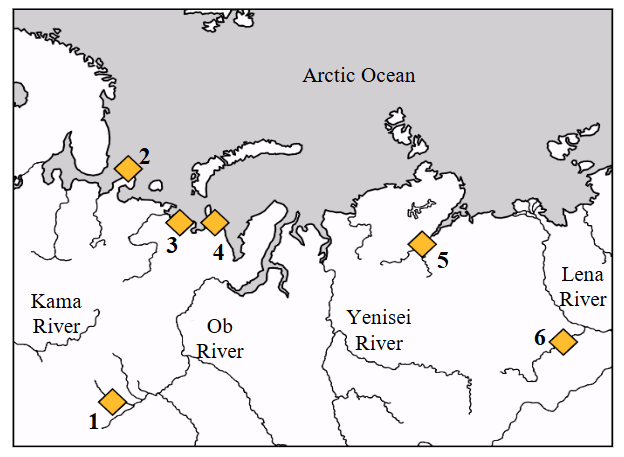
Fig.1. Localities of fossil resins with IR spectrum same with “Kolchedan amber”
1 – Kolchedan village, Iset River; 2 – Kanin Peninsula; 3 – Peschanka River, Arkhangelsk Region; 4 – Amderma River, Yugorsky Peninsula; 5 – Khatanga River, Taimyr Peninsula; 6 – Vilyuy River, Khatyryk-Khomo settlement
The fossil resin specimens were studied using FTIR (Fourier-Transform Infrared Spectroscopy) to obtain IR absorption spectra in the range of 4000-600 cm–1. The work was carried out on a VERTEX 70 spectrometer (Bruker, Germany) with a Hyperion 1000 microscope at the Shared Research Center of the Mining University. Transparent particles of the specimen, taken from a fresh surface with a thickness of less than 50 μm, were placed on a KBr plate for IR spectral acquisition. Data in .dpt format were converted into graphs using Matplotlib, Pandas, and NumPy libraries in the Python 3 software environment. The parallel coordinates plot method was used for visualization of the spectral data. Each of the four spectral ratios is represented by a separate axis, and specimens are represented by thin lines connecting their values across all axes, which allows simultaneous visualization of differences between different types of fossil resins across all parameters.
Results and discussion
Physical properties and IR spectrum of “Kolchedan amber”
Amber collected from the Iset River consists of roughly rounded resin pieces up to 3 cm in size, covered with an opaque weathering crust (Fig.2). The color varies from light yellow to dark orange and reddish; transparent areas of the resin are combined with the cloudy texture of “cloudy amber” – opaque white streaks. By analogy with Baltic amber, such opaque areas within the resin are not related to its chemical composition but result from water incorporation into the stillunhardened resin. “Kolchedan amber” is character-rized by plasticity – the material is cut with a scalpel rather than crumbling.
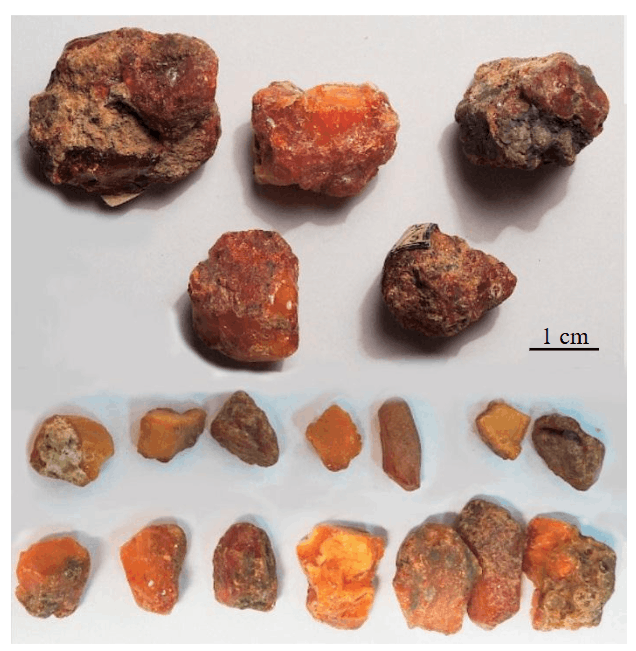
Fig.2. Samples of fossil resin from the Iset River, collection of Mining Museum (MGS 930/25)
Spectroscopy results show that all specimens from the Mining Museum originating from the Iset River, from the coast of the Barents Sea, and some specimens from the Taimyr Peninsula and the Yugorsky Peninsula have an identical set of absorption bands in the IR spectrum and belong to the same type of fossil resin (Fig.3). Depending on the degree of weathering, the IR spectrum plot may be more or less smoothed, and weak absorption bands become difficult to distinguish, but this does not affect the wavenumber values and the relative height of the peaks in the plot.
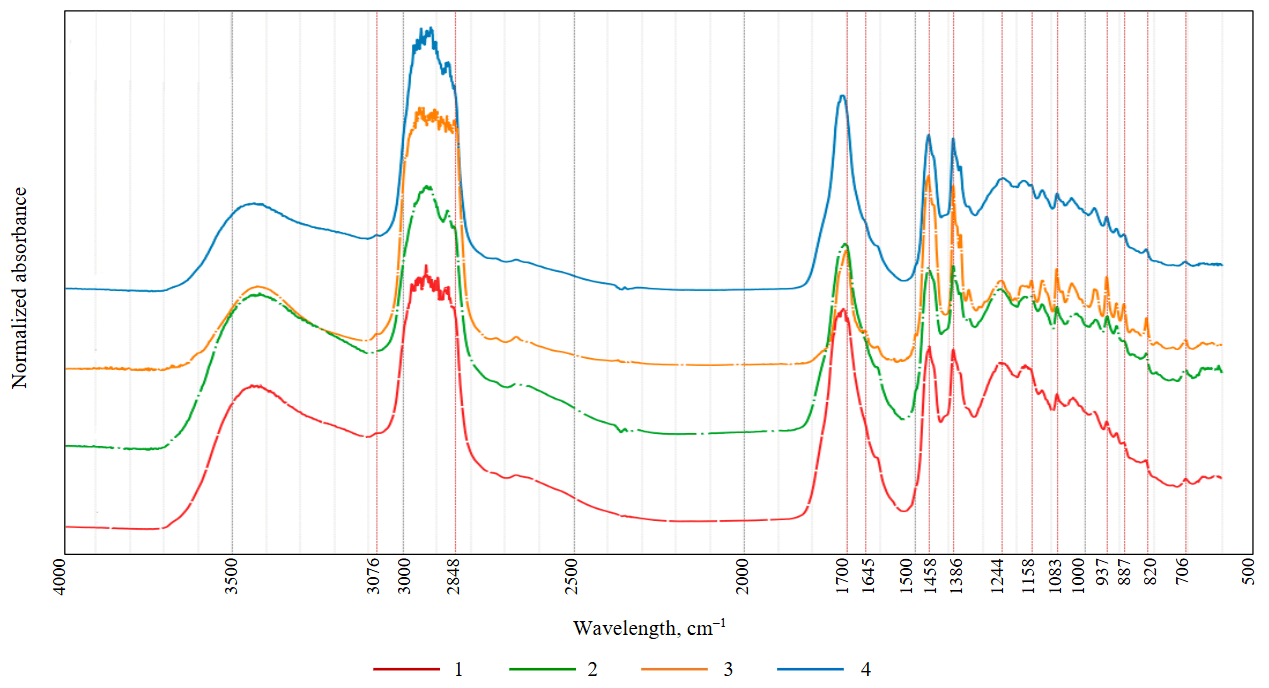
Fig.3. IR spectra of “Kolchedan amber” from different localities in range of 4000-600 cm–1
1 – spec. 930/25/4, Kolchedan Village, Middle Urals; 2 – spec. 930/25/6/4, Kolchedan Village, Middle Urals; 3 – spec. 930/41/1, Amderma River, Yugorsky Peninsula; 4 – spec. 930/94/9, Peschanka River, Barents Sea
The identified absorption bands of the IR spectrum of “Kolchedan amber” are shown in Table 2; the identification of structural groups in the IR spectra was carried out based on literature data [2, 18, 19].
Table 2
Absorption bands in the IR spectrum of “Kolchedan amber”
|
Value, cm–1 |
Intensity |
Functional group |
|
706 |
△△ |
Cis-configuration of double bond –CH=CH– |
|
743 |
△ |
CH=CH bonds. Methyl substitution at the α-position |
|
790 |
△ |
Absorption band of unsaturated bond R1R2C=CHR3 |
|
820 |
△△ |
Cis-configuration of CH=CH–COOR group |
|
861 |
△ |
Not identified |
|
887 |
△△ |
C–H bond in exocyclic methylene group =CH2 |
|
909 |
△△ |
C–O bonds in primary alcohols |
|
937 |
△△ |
C–O bonds in primary alcohols |
|
972 |
△△ |
OH group of carboxylic acids in solid state |
|
1001 |
△ |
C–O groups in primary alcohols or phenolic hydroxyls |
|
1039 |
△△ |
C–O bond in secondary and tertiary alcohols |
|
1067 |
△ |
C–O bond in secondary and tertiary alcohols |
|
1083 |
△△ |
C–O bond in secondary and tertiary alcohols |
|
1125 |
△△ |
C–O bond in secondary and tertiary alcohols |
|
1158 |
△△ |
C–O bond of esters |
|
1245 |
△△ |
C–O bond of carboxylic acids |
|
1293 |
△ |
C–O bonds |
|
1310 |
△ |
C–O bonds |
|
1365 |
△△ |
C–H bonds |
|
1341 |
△△ |
C–H bonds |
|
1386 |
△△△ |
C–H bond in CH3 adjacent to carbonyl group (acids, esters) |
|
1458 |
△△△ |
C–H bond in CH2 adjacent to carbonyl group (acids, esters) |
|
1496 |
△ |
C–H bond |
|
1609 |
△ |
Carbon–carbon bonds in aromatic compounds |
|
1645 |
△ |
Exocyclic methylene group CH2 |
|
1701 |
△△△ |
C=O bond in unsaturated carboxylic acids |
|
1720 |
△△ |
C=O bond in saturated carboxylic acids and esters |
|
2667 |
△ |
Associated OH group of carboxyl |
|
2727 |
△ |
Associated OH group of carboxyl |
|
2900 |
△△△ |
C–H bond in aliphatic CH2 and CH3 groups |
|
3076 |
△ |
Secondary C–H bond in exocyclic =CH2 group |
|
3426 |
△△ |
O–H bond of water and carboxylic acids |
Notes: △ – weak, △△ – medium, △△△ – strong intensity.
The IR absorption bands of “Kolchedan amber” from the Mining Museum correspond to the spectra of typical terpenoid resins [20, 21]. The most pronounced absorption bands are associated with the following functional groups: OH of alcohols and carboxylic acids (3400-3480 cm–1), aliphatic CH2 and CH3 groups (2900 cm–1, 2840 cm–1), CH2 and CH3 groups of organic acids and esters (1370 cm–1, 1458 cm–1). The combined presence of absorption bands at 888, 1642, and 3076 cm–1 indicates the presence of compounds with exocyclic methylene groups, likely bicyclic diterpenoids of the labdane type. This suggests that “Kolchedan amber” belongs to Class I according to Anderson’s classification [3, 22] – the most widespread among fossil resins – with the caveat that chromatographic studies of the chemical composition are required for a definitive conclusion. The absence of absorption peaks at 1735 cm–1 and 1160 cm–1 suggests the absence of a polymer matrix of succinic acid esters with labdane components [23]. The absorption peak of carboxyl groups at 1720-1700 cm–1 indicates that the material belongs to fragile fossil resins. A weak peak at approximately 1600 cm–1 indicates the presence of aromatic compounds; in fossil resins, their source is often abietic acid derivatives (e.g., dehydroabietic acid).
Distribution of “Kolchedan amber”
Examination of IR spectra of fossil resin specimens from different localities showed that this type is frequently encountered in the subarctic region of Eurasia, predominantly in Late Cretaceous deposits. Identical IR spectra are exhibited by all studied specimens from the Peschanka River (coast of the Barents Sea). Despite minor individual spectral variations, the set of absorption peaks in these specimens is the same as that of “Kolchedan amber”, and a “comb” of three distinct and approximately equal-height peaks at 936, 909, and 888 cm–1 is particularly characteristic of these resins (Fig.4). This type of resin is also found among specimens from the Taimyr Peninsula and the Yugorsky Peninsula.
In some specimens from the Khatanga River basin, the absorption band at 1030 cm–1 is strongly pronounced. According to M.A.Bogdasarov, this is characteristic of retinites: “... a feature of the IR spectra of retinites is strong absorption in the range of 980-1300 cm–1 with a dominant peak at 1030 cm–1” [24]. However, since the remainder of the spectrum of the “retinite-like” specimens does not differ from that of typical “Kolchedan amber” and “normal” specimens from the Khatanga River, it would be incorrect to consider them a different type of fossil resin. Thus, “Kolchedan amber” is not a fossil resin type specific to the Middle Urals. Identical fossil resins are widely distributed in many localities of the Arctic Ocean basin (Fig.4) but are usually classified as other types of fossil resins, most often as retinites.
IR spectra published in the literature also confirm the wide distribution of fossil resin with the “Kolchedan amber” spectrum in the Russian Subarctic. It is present in the Santonian deposits of the Kheta Formation at Yantardakh Mountain on the Taimyr Peninsula, in the Late Cretaceous deposits near the village of Khatyryk-Khomo on the Vilyuy River in Yakutia, and on the Kanin Peninsula [16, 24, 26]. However, “Kolchedan amber” is not recognized as a distinct type of fossil resin, except for the work of S.S.Savkevich [24], who notes that this type of resin “has no known analogues in terms of IR spectra” and proposes assigning it to the “retinite family”. Probably the same type of resin is referred to by O.V.Martirosyan [17], who writes that “resins from the Khatanga River area are close in spectral characteristics to both retinite and gedanite”.
The chemical composition of fossil resin from the Khatanga River basin was studied using pyrolysis chromatography [24, 27]; however, due to the co-occurrence of different resin types in this region and the lack of IR spectra for the studied specimens, we cannot state with certainty that the published data can be attributed specifically to “Kolchedan amber”. According to K.Anderson, fossil resins from the Yantardakh locality (Khatanga River) have an atypical chemical composition – they belong to Class Ib of fossil resins and consist of a mixture of labdane-type diterpenoids (biformene) and communol derivatives, with the absence of free monomers of communic acid [27].
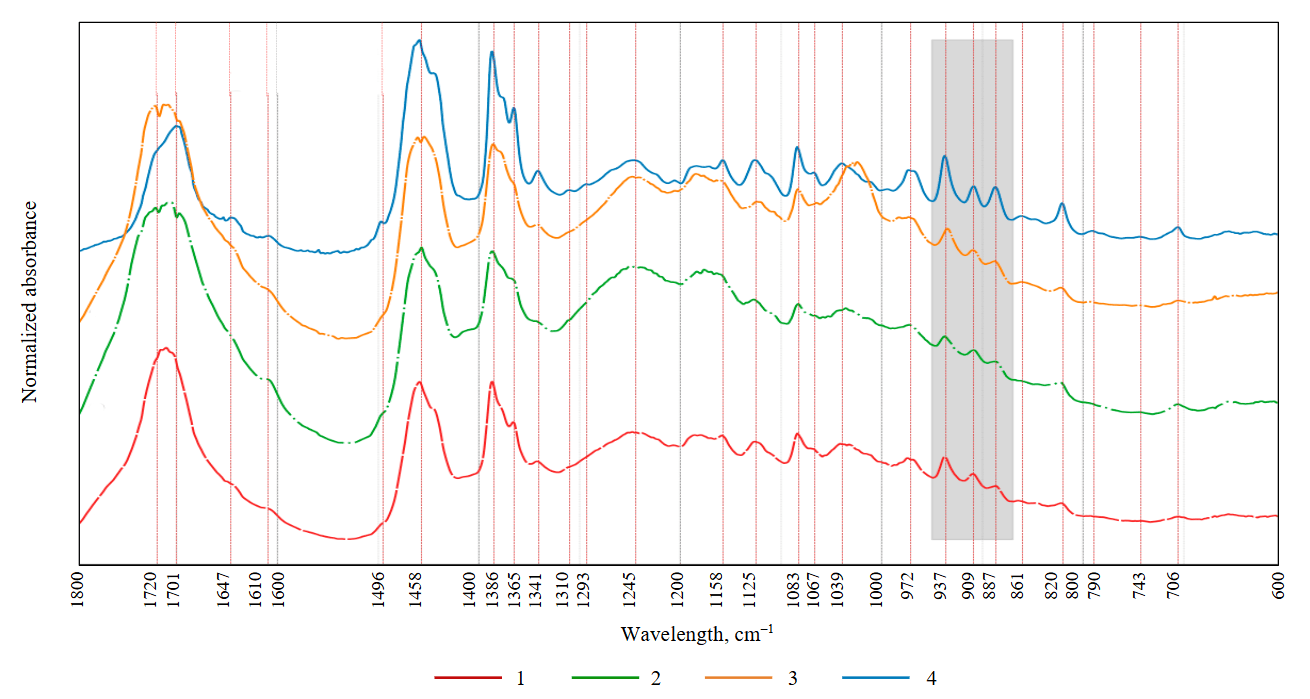
Fig.4. IR spectra of “Kolchedan amber” from different localities in the range of 1800-600 cm–1.
The diagnostic “comb” region is highlighted in gray
1 – spec. 930/94/1, Peschanka River, Yugorsky Peninsula; 2 – spec. 930/25/4, Kolchedan Village, Middle Urals; 3 – spec. 930/95/3, Khatanga River, Taimyr Peninsula; 4 – spec. 930/41/1, Amderma River, Yugorsky Peninsula
Position of “Kolchedan amber” in the classification of fossil resins
Amber found on the Iset River was presumed to belong to Baltic amber (succinite) or krantzite [9, 13]; however, the IR spectrum of “Kolchedan amber” (curve 1, Fig.5) differs greatly from the spectra of both fossil resin types. The IR spectrum of European krantzite from Germany [26, 28] is characterized by very strong absorption bands at 700 cm–1 and 750 cm–1 (curve 2, Fig.5) and a weak band at 921 cm–1, which are not observed in “Kolchedan amber”, whereas krantzite lacks absorption peaks at 909 and 937 cm–1. Thus, the property of plasticity, which is observed in both fossil resin types, is not a diagnostic feature that could be used to confirm their mineral species.
Some scientists believe that krantzite has a separate oxidized form – oxykrantzite [28, 29] (Geisetal, Germany), the IR spectrum of which is characterized by weak expression of the absorption bands at 700 cm–1 and 750 cm–1 (curve 3, Fig.5). However, the IR spectrum of oxykrantzite is similar to that of krantzite in terms of its set of absorption bands and shows strong smoothing across the entire range, which is not observed in “Kolchedan amber”, while the diagnostic bands of the latter, including 909 and 937 cm–1, are absent in oxykrantzite.
The spectrum of succinite differs greatly in many features – it has a maximum of the carboxyl group band at 1735 cm–1 and a pronounced “Baltic shoulder” with a maximum at 1160 cm–1; moreover, it lacks the absorption peaks at 907 and 937 cm–1 characteristic of “Kolchedan amber” (curve 4, Fig.5).
According to S.S.Savkevich, O.V.Martirosyan, and M.A.Bogdasarov, two mineral species of fossil resins occur on the coast of the Arctic Ocean – gedanite and retinite [17, 24], and it was logical to assume that “Kolchedan amber” might belong to one of them. In this work, a comparison was made with gedanite, a specimen of which originates from the Upper Cretaceous deposits of the Taimyr Peninsula, where it occurs together with “Kolchedan amber”. In terms of its IR spectrum, gedanite differs sharply by the absence of absorption bands at 909, 936, and 1125 cm–1 and by stronger absorption bands at 887 and 975 cm–1 (curve 5, Fig.5).
Unlike the previous mineral species of fossil resins, retinite is often a synonym for “fragile fossil resin”, and this name may encompass different types of fossil resins with different chemical compositions [10]. For example, the IR spectrum of “retinite” presented in the monograph [29] differs sharply from the spectra of any modern and fossil resins (curve 7, Fig.5). Another type of fossil resin – oxkrantzite [28] – has also historically been defined as “retinite” (curve 3, Fig.5). Some scientists deny the existence of retinite as a distinct mineral species of fossil resin [31].
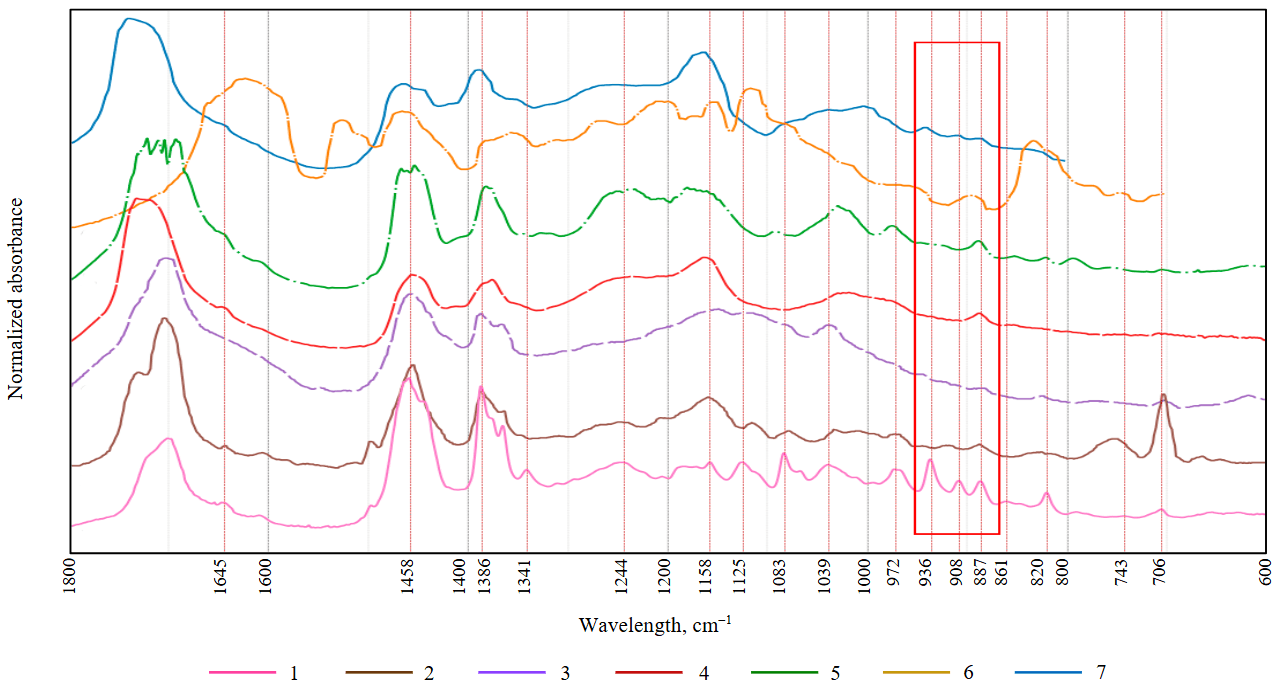
Fig.5. IR spectra of “Kolchedan amber” from different localities in the range of 1800-600 cm–1.
The diagnostic “comb” region, in which “Kolchedan amber” exhibits three characteristic absorption peaks, is highlighted with a red rectangle
1 – “Kolchedan amber” (spec. 930/25/6); 2 – krantzite, Geiselthal [28]; 3 – oxykrantzite, Geiselthal (retinite) [28]; 4 – succinite, Baltic amber (spec. 930/92/11); 5 – gedanite, Khatanga River (spec. 930/95/13); 6 – retinite from Halle [29]; 7 – amber from Axel Heiberg Island (Canadian Arctic) originating from golden larch (Pseudolarix) resin [30]
Retinite as a mineral species of fossil resin and the distinctive features of its IR spectrum are discussed in publications of Russian scientists [2, 18, 32]. According to the classification of O.V.Martirosyan and M.A.Bogdasarov [2], retinite has a pimarane skeleton and consists of tricyclic labdane diterpenoids (pimaric, isopimaric, abietic acids), which do not polymerize. This corresponds to Class V of Anderson’s resin classification [3]. At the same time, the only fossil resin assigned to Class V on the basis of gas pyrolysis chromatography data is Eocene London copalite [3], for which IR spectroscopy was not performed. The widespread distribution of retinite in Eurasia, according to [2], requires confirmation; it is also necessary to define a “typical” retinite whose IR spectrum could be relied upon for the identification of fossil resin species.
The IR spectrum of “Kolchedan amber” does not correspond to the spectral characteristics of retinite [2, 18, 32] – its IR spectrum has an absorption band at 824 cm–1, characteristic of immature resins and absent in retinite, and a band at 1085 cm–1 that is more intense than that of gedanite. The band at 1030 cm–1, important for the identification of retinite, is very intense in some “Kolchedan amber” specimens from the Taimyr Peninsula but is weakly expressed in specimens from other localities. The distinctive spectral bands of “Kolchedan amber” at 936 and 909 cm–1 are not observed in retinite. Thus, “Kolchedan amber” cannot be assigned to the recognized mineral species of fossil resins established for Northern Eurasia.
Biological origin of “Kolchedan amber”
An important issue in the study of fossil resins is not only the formal determination of their mineral type but also the identification of the resin-producing plant. In this case, a particular type of fossil resin can become an indicator of the age, climate, and range that were characteristic of that resin-producing plant. Furthermore, resins accumulate in the soils of forest biological communities [3]; therefore, they themselves indicate the presence of forest landscapes in the past and can provide data on the forest-forming plants that grew on interfluves area, the remains of which rarely enter the “standard” assemblages of leaf floras from alluvial deposits.
The possibility that fossil resins preserve features by which they can be linked to modern plants is assessed differently by different authors. In the Russian literature, the dominant viewpoint is that the geochemical conditions of the surrounding environment play a key role in shaping the chemical composition of fossil resin, whereas differences in the composition of the original plant resin are secondary [24, 32, 33]. In the foreign literature, conversely, it is often argued that the chemical composition of terpenoid resins is extremely resistant to external influences, and their IR spectra retain a characteristic set of absorption bands for tens or hundreds of millions of years over a certain range [30, 34, 35]. This is supported by comparisons of IR spectra of fossil resins with established biological origins and their “analogues” from modern plants [19, 30, 36], including for localities in the Southern Hemisphere [37].
In the IR spectrum of terpenoid resins, there is a variable region in the range of 1550-650 cm–1, the so-called “fingerprint region” [34], which has a unique set of absorption bands for different plant species. Theoretically, this makes it possible to distinguish some plant species from others based on a resin sample, but it does not allow the sample to be classified within botanical systematics, since the systematic significance of individual absorption bands in the IR spectrum is poorly understood [38].
According to R.Tappert [38], who studied resins from 60 species of modern conifers, IR spectroscopy allows a resin to be assigned to one of two groups – pine-type resins or cypress-type resins. Resins of the first type are produced by plants from the families Pinaceae (pine family) and Taxaceae (yew family), and those of the second type – from Cupressaceae (cypress family), Podocarpaceae (podocarp family), Araucariaceae (araucaria family), and Sciadopityaceae (umbrella pine family). To determine the resin type, R.Tappert proposed using four ratios of absorption band values: 832/791, 1460/1448, 1448/1385, and 2858/2848 [38]. The results of a comparison of the spectra of “Kolchedan amber”, gedanite, and Baltic amber against a database of modern resins are shown in Fig.6.
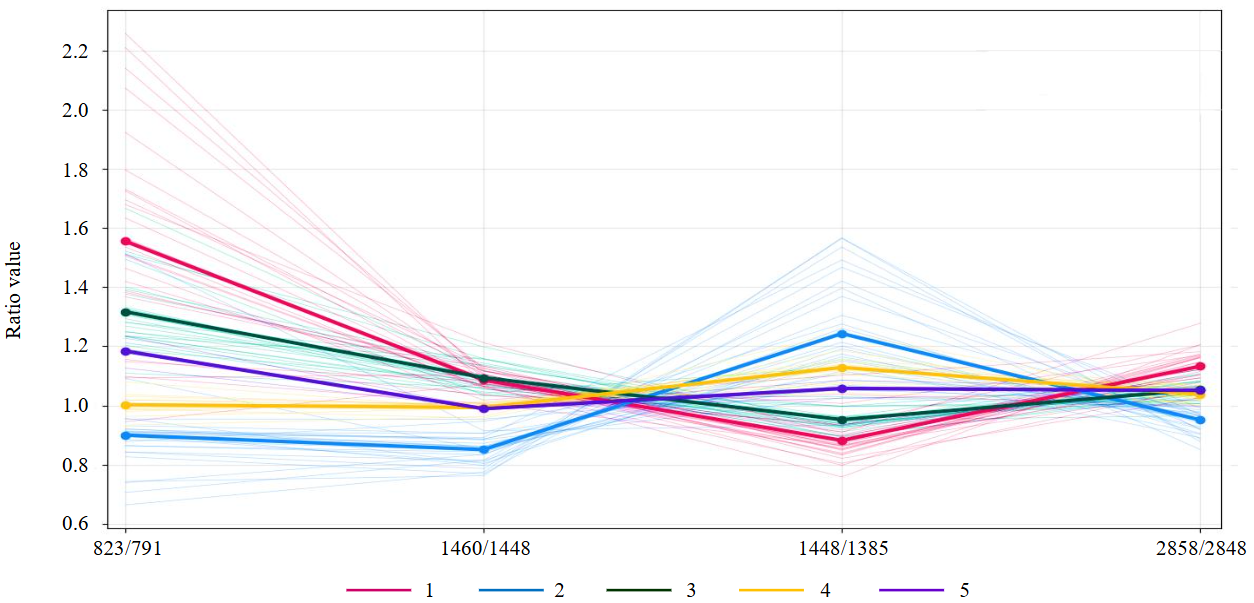
Fig.6. Parallel coordinates plot for visualizing differences in IR spectra of modern and fossil resins
1 – pine-type resin; 2 – cypress-type resin; 3 – “Kolchedan amber”; 4 – gedanite; 5 – Baltic amber
Based on the results of comparing the IR spectral features of fossil resins with modern resins, the following conclusions can be drawn:
- “Kolchedan amber” and gedanite are clearly separated into two distinct groups, confirming that they are different types of fossil resins, although they often occur together;
- specimens of “Kolchedan amber” are closer to pine-type resins, whereas gedanite is closer to cypress-type resins, indicating different plant sources for these resins;
- the ratio of the absorption band values at 2858/2848 in this work is uninformative, since in this part of the spectrum the strong bands of C–H bonds create noise, against which the small peak at 2858 cm–1 is often lost;
- based on these spectral characteristics, Baltic amber cannot be assigned to either cypress-type or pine-type resins.
The results of this comparison also provide an argument in favor of the fact that the source of “Kolchedan amber” was some plant from the Pinaceae family (pine family), although fossil resins of pine origin are considered rarer [30].
When comparing the IR spectroscopy results of “Kolchedan amber” with other fossil resins, partial similarity was found with amber from Axel Heiberg Island in the Canadian Arctic. For the latter, the parent plant has been firmly established [39] – an extinct species of false larch, Pseudolarix wehrii Gooch, from the Pinaceae family. The IR spectra of fossil resin from Axel Heiberg Island [39], similarly to “Kolchedan amber”, exhibit three characteristic “comb” peaks (936, 909, and 888 cm–1) in the “fingerprint region” (curve 7, Fig.5). Mass spectrometry of the Canadian specimens has shown [40] that their base consists of labdane-type monomers of a non-regular but enantio-configuration (predominantly ozic acid and enantio-biformenes). The similarity of the IR spectra of fossil resin from false larch and “Kolchedan amber” provides an additional argument in favor of its origin from a pine-type resin. However, the Canadian specimens contain a large amount of bound succinic acid, and because of this, their IR spectrum is distinguished by a shift of the carboxyl group peak to 1735 cm–1 and the presence of a “Baltic shoulder” in the range of 1250-1160 cm–1. Fresh conifer resins do not contain succinic acid, as it is a degradation product of other compounds [40]. In “Kolchedanamber”, succinic acid is absent or, at least, does not form cross-links between diterpenoid molecules. Although false larch was widely distributed at high and middle latitudes of Eurasia and North America during the Late Cretaceous and Paleogene [36], including in the localities where “Kolchedan amber” is found, without finds of the latter in organic association with remains of golden larch, it cannot be asserted that this plant was its source.
Conclusion
The studies of fossil resins from the collections of the Mining Museum have shown that “Kolchedan amber” does not belong to krantzite but rather to a distinct and widely distributed type of fossil resin in Northern Eurasia. The most valuable diagnostic feature of its IR spectrum is a “comb” of three approximately equal absorption peaks at 936, 909, and 888 cm–1. The presence of “Kolchedan amber” in different localities of the Russian Subarctic is confirmed both by studies of resins from the Mining Museum collection and by literature data. Most of its finds are associated with Late Cretaceous deposits, including the locality near the village of Kolchedan studied by mining engineers. The museum collections also house fossil resin specimens of this type from localities on the Peschanka River (Arkhangelsk Region), the Amderma River (Yugorsky Peninsula), and the Khatanga River (Taimyr Peninsula). Fossil resin specimens with similar IR spectra have also been recorded on the Kanin Peninsula (coast of the Barents Sea) and on the Vilyuy River (Yakutia).
The IR spectra of “Kolchedan amber” suggest that, in terms of its chemical composition, it belongs to Class I of Anderson’s resin classification, which is represented by resins with a predominance of labdane-type diterpenoids. This is the most widespread class for fossil resins, comprising four subclasses. Unfortunately, the features of the IR spectrum are insufficient to determine the specific subclass to which the studied specimens belong.
Formal mineral species identification according to the system proposed by O.V.Martirosyan and M.A.Bogdasarov also proved impossible due to the lack of reference spectra for specific fossil resin species in this classification and the contradictory interpretation of the term “retinite”. IR spectroscopy data indicate that “Kolchedan amber” from the Iset River in the Middle Urals and from numerous localities in the Russian Arctic belongs to a distinct type of fragile fossil resin that has not yet been discovered in localities in Europe or North America. The specific absorption bands of the IR spectrum indicate that the source of this fossil resin type was plants from the Pinaceae family. An additional argument supporting such an origin for “Kolchedan amber” is the similarity of its diagnostic IR spectral regions to those of the IR spectrum of fossil resin from false larch (Pseudolarix) from Axel Heiberg Island in the Canadian Arctic.
References
- Bray P.S., Anderson K.B. Identification of Carboniferous (320 Million Years Old) Class Ic Amber. Science. 2009. Vol. 326. N 5949, p. 132-134. DOI: 10.1126/science.1177539
- Martirosyan O.V., Bogdasarov M.A. Fossil resins: diagnostics, classification and structural transformation under the thermal influence. Vestnik IG Komi SC UB RAS. 2014. N 4 (232), p. 10-15 (in Russian).
- Seyfullah L.J., Beimforde C., Dal Corso J. et al. Production and preservation of resins – past and present. Biological Reviews. 2018. Vol. 93. Iss. 3, p. 1684-1714. DOI: 10.1111/brv.12414
- Borovkova N.V., Pilipenko A.R., Yakimaha M.N. From England to Russia: Fluorite Vases from the Second Half of the 18th – Beginning of the 19th Centuries. Vestnik of Saint Petersburg University. Arts. 2022. Vol. 12. Iss. 2, p. 380-395 (in Russian). DOI: 10.21638/spbu15.2022.208
- Alekseev P.I., Vasiliev E.A. Study of Rumanite and Rumanite-Like Resins from the Collections of the Mining Museum with IR Spectroscopy. Zapiski Rossiiskogo mineralogicheskogo оbshchestva. 2025. Vol. 154. N 4, p. 113-124 (in Russian). DOI: 10.7868/S2658435225040084
- Bazhin V.Yu., Suslov A.P., Gorshkova O.A. Examining the structure and properties of 1823 silver rouble. Tsvetnye metally. 2023. N 8, p. 85-92 (in Russian). DOI: 10.17580/tsm.2023.08.14
- Sennikov A.G., Sennikova E.A., Saburov P.G. The first dinosaurs in Mining Museum of St. Petersburg Mining University. Priroda. 2024. N 5 (1305), p. 26-45 (in Russian). DOI: 10.7868/S0032874X24050037
- Petrov D.A., Ryzhkova S.O., Gembitskaya I.M. Rare minerals of noble metals in the collection of the Mining Museum: new data. Journal of Mining Institute. 2022. Vol. 255, p. 493-500. DOI: 10.31897/PMI.2022.42
- Mamyshev N.R. On the amber locality near the Kamensky Plant in the Yekaterinburg district. Gornyi zhurnal. 1836. Kn. 4. Part. 2, p. 180-186.
- Orlov N.A., Uspenskii V.A. Mineralogy of Caustobiolites. Moscow; Leningrad: Izd-vo Akademii nauk SSSR, 1936, p. 198.
- Savkevich S.S. New Developments in Amber and other Fossil Resins Mineralogical Studies. Gem Minerals. Proceedings of the XI General Meeting of IMA, 4-10 September, 1978, Novosibirsk, USSR. Leningrad: Nauka, 1980, p. 17-28.
- Martirosyan O.V. Is there amber in the Middle Urals? Vestnik of Geosciences. 2020. N 6 (306), p. 27-30 (in Russian). DOI: 10.19110/geov.2020.6.5
- Martirosyan О.V. “Immature amber” – krantzite – in the Middle Urals. Vestnik of Geosciences. 2022. N 3 (327), p. 25-30 (in Russian). DOI: 10.19110/geov.2022.3.3
- Karpinskii A.P. Collected Works. In 4 volumes. Vol. 4. Geological Investigations on the Eastern Slope of the Urals. Moscow: Izd-vo Akademii nauk SSSR, 1949, p. 464.
- Gosudarstvennaya geologicheskaya karta Rossiiskoi Federatsii. Masshtab 1:100000 (trete pokolenie). List O-41 – Ekaterinburg. Obyasnitelnaya zapiska. St.Petersburg: Kartfabrika VSEGEI, 2011, p. 492.
- Krylov A.V., Vasiliev E.A., Trikolidi F.A. et al. The amber and jet of the Russian Arctic: the new finds and perspectives of the practice using. Relief and quaternary deposits of the Arctic, Subarctic and North-West Russia. 2021. Iss. 8, p. 125-135 (in Russian). DOI: 10.24412/2687-1092-2021-8-125-135
- Martirosyan О.V. Fossil resins of the Russian Arctic: to the history of study. Zapiski Rossiiskogo mineralogicheskogo оbshchestva. 2020. Vol. 149. N 1, p. 131-138 (in Russian). DOI: 10.31857/S0869605520010098
- Martirosyan О.V., Bogdasarov M.A. Varieties of fossil resins of South Sakhalin and their molecular composition. Zapiski Rossiiskogo mineralogicheskogo оbshchestva. 2024. Vol. 153. N 3, p. 97-112 (in Russian). DOI: 10.31857/S0869605524030061
- Wolfe A.P., Csank A.Z., Reyes A.V. et al. Pristine Early Eocene Wood Buried Deeply in Kimberlite from Northern Canada. PLOS ONE. 2012. Vol. 7(9). N e45537. DOI: 10.1371/journal.pone.0045537
- Wolfe A.P., McKellar R.C., Tappert R. et al. Bitterfeld amber is not Baltic amber: Three geochemical tests and further constraints on the botanical affinities of succinate. Review of Palaeobotany and Palynology. 2016. Vol. 225, p. 21-32. DOI: 10.1016/j.revpalbo.2015.11.002
- Seyfullah L.J., Szwedo J., Schmidt A.R., Prestianni C. Chemical and palaeoentomological evidence of a relationship between early Eocene Belgian and Oise (France) ambers. Scientific Reports. 2024. Vol. 14. N 13705. DOI: 10.1038/s41598-024-64286-z
- Anderson K.B., Winans R.E., Botto R.E. The nature and fate of natural resins in the geosphere–II. Identification, classification and nomenclature of resinites. Organic Geochemistry. 1992. Vol. 18. Iss. 6, p. 829-841. DOI: 10.1016/0146-6380(92)90051-X
- Poulin J., Helwig K. Inside amber: New insights into the macromolecular structure of Class Ib resinite. Organic Geochemistry. 2015. Vol. 86, p. 94-106. DOI: 10.1016/j.orggeochem.2015.05.009
- Bogdasarov M.A. Mesozoic fossil resins of Northern Eurasia. Vestnik IG Komi SC UB RAS. 2017. N 7, p. 3-11 (in Russian). DOI: 10.19110/2221-1381-2017-7-3-11
- Savkevich S.S., Popkova T.N. New Data on the “Amber” from the Right Bank of the Kheta and Khatanga Rivers. Doklady Akademii nauk SSSR. 1973. Vol. 208. N 2, p. 427-429.
- Kosmowska-Ceranowicz B. Infrared spectra atlas of fossil resins, subfossil resing and selected imitations of amber. Infrared Spectra of the World’s Resins. Holotype Characteristics. Atlas. Warszawa: Polska Akademia Nauk Muzeum Ziemi w Warszawie, 2015, p. 4-214.
- Anderson K.B. The nature and fate of natural resins in the geosphere–IV. Middle and Upper Cretaceous amber from the Taimyr Peninsula, Siberia–evidence for a new form of polylabdanoid of resinite and revision of the classification of Class I resinites. Organic Geochemistry. 1994. Vol. 21. Iss. 2, p. 209-212. DOI: 10.1016/0146-6380(94)90155-4
- Wimmer R., Galle H., Wagner-Wysiecka E. Retinit im mittleren Geiseltal und in Nordwestsachsen. Mauritiana (Altenburg). 2019. Band 37. S. 32-41 (in German).
- Shaks I.A., Faizullina E.M. Infrared Spectra of Fossil Organic Matter. Leningrad: Nedra, 1974, p. 131.
- Wolfe A.P., Tappert R., Muehlenbachs K. et al. A new proposal concerning the botanical origin of Baltic amber. Proceedings of Royal Society B. Biological Sciences. 2009. Vol. 276. Iss. 1672, p. 3403-3412. DOI: 10.1098/rspb.2009.0806
- Vavra N. Mineral names used for fossil resins, subfossil resins and similar materials. Infrared Spectra of the World’s Resins. Holotype Characteristics. Atlas. Warszawa: Polska Akademia Nauk Muzeum Ziemi w Warszawie, 2015, p. 215-280.
- Martirosyan О.V., Bogdasarov M.A. Varieties of cretaceous fossil resins of the Caucasus and features of their molecular structure. Zapiski Rossiiskogo mineralogicheskogo оbshchestva. 2022. Vol. 151. N 1, p. 92-104 (in Russian). DOI: 10.31857/S0869605521060058
- Bogdasarov M.A., Rudko G.I. The Geological-Evolutional Concept of Resin Genesis. Journal of Geological Resource and Engineering. 2018. Vol. 6. Iss. 3, p. 112-123. DOI: 10.17265/2328-2193/2018.03.003
- Beck C.W. Spectroscopic investigations of Amber. Applied Spectroscopy Reviews. 1986. Vol. 22. Iss. 1, p. 57-110. DOI: 10.1080/05704928608060438
- Tappert R., McKellar R.C., Wolfe A.P. et al. Stable carbon isotopes of C3 plant resins and ambers record changes in atmospheric oxygen since the Triassic. Geochimica et Cosmochimica Acta. 2013. Vol. 121, p. 240-262. DOI: 10.1016/j.gca.2013.07.011
- Anderson K.B., LePage B.A. Analysis of Fossil Resins from Axel Heiberg Island, Canadian Arctic. Amber, Resinite, and Fossil Resins. American Chemical Society, 1995, p. 170-192. DOI: 10.1021/bk-1995-0617.ch009
- Mays C., Coward A.J., O’Dell L.A., Tappert R. The botanical provenance and taphonomy of Late Cretaceous Chatham amber, Chatham Islands, New Zealand. Review of Palaeobotany and Palynology. 2019. Vol. 260, p. 16-26. DOI: 10.1016/j.revpalbo.2018.08.004
- Tappert R., Wolfe A.P., McKellar R.C. et al. Characterizing Modern and Fossil Gymnosperm Exudates Using Micro-Fourier Transform Infrared Spectroscopy. International Journal of Plant Sciences. 2011. Vol. 172. N 1, p. 120-138. DOI: 10.1086/657277
- Poulin J., Helwig K. Class Id resinite from Canada: A new sub-class containing succinic acid. Organic Geochemistry. 2012. Vol. 44, p. 37-44. DOI: 10.1016/j.orggeochem.2011.11.012
- Poulin J., Helwig K. Inside Amber: The Structural Role of Succinic Acid in Class Ia and Class Id Resinite. Analytical Chemistry. 2014. Vol. 86. Iss. 15, p. 7428-7435. DOI: 10.1021/ac501073k