


Principles for classifying explosive seismic sources using the USBM formula
- 1 — Ph.D., Dr.Sci. Head of Department Empress Catherine II Saint Petersburg Mining University ▪ Orcid ▪ Scopus
- 2 — Ph.D. Associate Professor Empress Catherine II Saint Petersburg Mining University ▪ Orcid
- 3 — Ph.D. Associate Professor Empress Catherine II Saint Petersburg Mining University ▪ Orcid
- 4 — Ph.D., Dr.Sci. Professor Saint Petersburg Electrotechnical University ▪ Orcid ▪ Scopus
Abstract
This article examines the seismic effects of blasting operations on protected structures, highlights the importance of this factor for ensuring occupational safety at mines, and reviews advances in predicting the magnitude of seismic effects. The relevance of applying two classical formulas, Sadovsky’s formula and the USBM formula, is substantiated for predicting the parameters of blast-induced ground vibrations. As the problem of classifying blasting operations according to their seismic effect has already been solved using Sadovsky’s formula, the present study addresses a similar classification problem for the USBM formula, given its widespread use in international practice. The problem was solved based on a statistical analysis of paired values of the seismic coefficient and attenuation exponent for blast-induced ground vibrations, compiled from open literature sources. For the first time, the attenuation exponent is shown to follow a normal distribution, while the seismic coefficient follows a lognormal distribution; the key parameters of these distributions are also estimated. A classification criterion is proposed for explosive seismic sources based on their seismic impact level, distinguishing between high and low seismic effects. The statistical significance of the paired regression is evaluated, leading to the conclusion that the coefficients in the classification criterion are statistically significant. Challenges associated with classifying explosive seismic sources by seismic impact level are discussed for both the USBM and Sadovsky’s formulas. Practical examples are presented to demonstrate the application of the proposed classification for the comparative assessment of seismic effects generated by different explosive sources. Directions for further research are also outlined.
None
Introduction
Blasting operations are widely used in mining and construction for the efficient fragmentation of hard and moderately hard rocks, and it is unlikely that a viable alternative will emerge in the foreseeable future [1, 2]. However, the release of explosive energy is accompanied by adverse effects of blast-induced seismic waves on protected structures, including quarry slopes and benches [3], operating gas pipelines [4, 5], underground mine workings subjected to surface blasting, surface infrastructure [6-8], process equipment [9], transport tunnels [10], and others. A relationship has been established between the frequency of induced seismic events and the explosive charge mass based on observations from Kuzbass open-pit mines. Furthermore, a causal link has been identified between bulk blasting and induced seismicity [11, 12]. This issue becomes particularly critical when mining deposits prone to rock bursts [13]. Consequently, the design of blasting operations that ensure safe levels of ground vibration at the foundations of protected structures is a key engineering challenge.
Modern approaches to blast design include the use of numerical modeling algorithms [14-16] and machine learning methods [17-19]. Analytical prediction models [20-22], which are an essential component of mining engineering education, remain relevant today [23]. However, these approaches have the following limitations: the use of complex mathematical tools inevitably leads to the need to make numerous assumptions about the modeled impact on the structure; machine learning methods depend on large datasets covering a wide range of blasting conditions; and analytical models often involve empirical coefficients with significant uncertainty and, in some cases, unclear physical interpretation. These limitations restrict the reliability of predicting blast-induced vibration levels at the early stages of mining. Therefore, classical formulas used in blasting practice for predicting peak particle velocity (PPV) remain highly relevant:
where K is the site-specific seismic coefficient; n is the attenuation exponent ; is the reduced distance from the blast to the point of interest (Sadovsky’s formula); is the reduced distance from the blast to the point of interest for a spherical charge (USBM formula); is the distance, m; Q is the explosive charge mass, kg.
A previous study [24] established a functional relationship between the attenuation exponent and the seismic coefficient in Sadovsky’s formula. Statistical distributions of these parameters were obtained, and a classification of explosive seismic sources based on their vibration impact level was developed. These results significantly improve the reliability of predicting blast-induced ground vibrations, even when only limited field data are available.
Given the widespread application of the USBM formula, it is relevant to conduct similar studies to establish statistical patterns among the parameters i ncluded in the USBM formula.
Methods
The proposed research methodology comprises the following stages:
- collection of paired values of the seismic coefficient K and attenuation exponent n from published experimental studies conducted under a wide range of blasting conditions;
- statistical analysis of the individual distributions of the parameters included in the USBM formula;
- derivation of a classification criterion, defined as a relationship between the attenuation exponent and the logarithm of the seismic coefficient, enabling the classification of explosive seismic sources into categories of high and low seismic impact;
- evaluation of the statistical significance of the parameters in the proposed classification criterion.
The classification criterion is derived by solving an optimization problem that minimizes the root-mean-square deviation between the envelope of the measured peak particle speed and the envelope predicted by the USBM formula, with both envelopes subjected to identical low-pass filtering. This approach has previously been applied to develop a classification criterion based on Sadovsky’s formula and to establish a classification framework for explosive seismic sources. In international blasting practice, predictions of PPV values using both Sadovsky’s and USBM formulas are often performed concurrently when analyzing the same experimental data. Thus, the methodology is based on statistical analysis of experimental data combined with signal processing techniques, including low-pass filtering. It should be noted that certain studies propose methods for improving the statistical reliability of PPV predictions without significantly increasing the volume of experimental data [25].
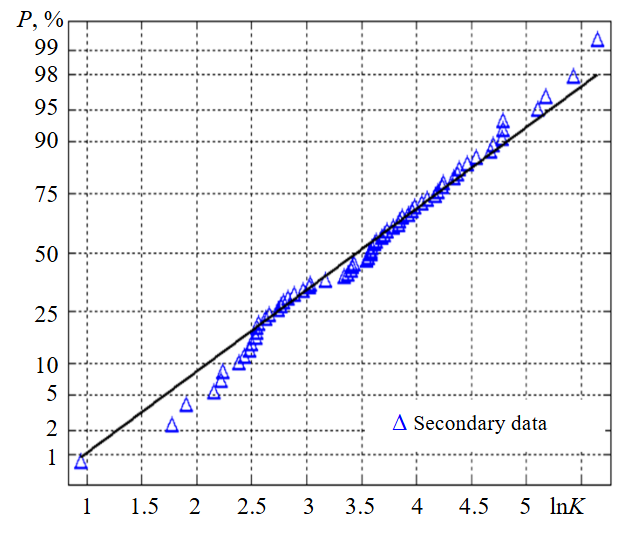
Fig.1. Cumulative natural logarithm of the seismic coefficient
Results
Based on data compiled from open sources [26, 27], a lognormal distribution of the seismic coefficient (Fig.1) and a normal distribution of the attenuation exponent (Fig.2) were obtained for the USBM formula. The distributions are limited to seismic coefficient values below 300 and attenuation exponent values below 2.5, as significant deviations from these distributions are observed at higher parameter values. Such statistical distributions for the USBM parameters are reported here for the first time.
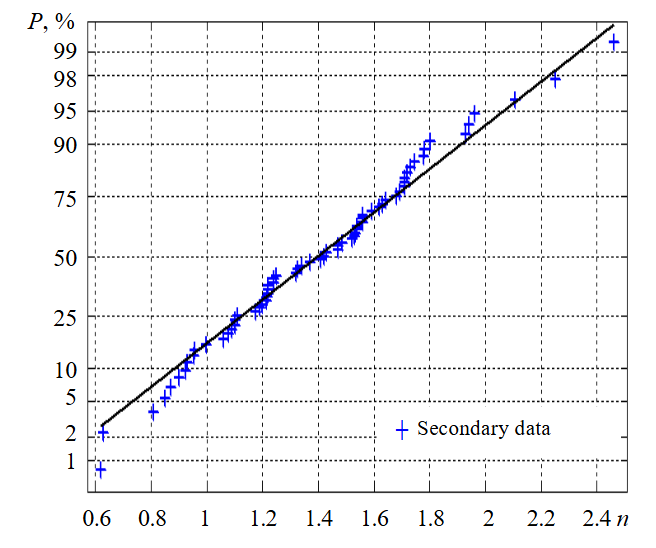
Fig.2. Cumulative straight-line graph of the attenuation exponent
Statistical distribution parameters for K and n at a 95 % confidence level are as follows: condition 2 < K < 300; N is the number of data points, N = 67; is the mean value of the natural logarithm of the seismic coefficient, ; σK is the standard deviation of the seismic coefficient, ; is the mean value of the seismic coefficient, ; Kmed is the median value of the seismic coefficient, ; is the mean value of the attenuation exponent, .
Analysis of Fig.1 shows that noticeable deviations from the cumulative straight line occur for seismic coefficient values K below 12 for a limited number of experimental data points. In contrast, the data points for the attenuation exponent n are distributed relatively uniformly along the cumulative line and do not exhibit pronounced deviations, unlike the case when the attenuation exponent n is calculated using Sadovsky’s formula. In the latter, peak values of n = 1.5 are observed, which are associated with the dominant contribution of Rayleigh waves, and values of n = 2, which are associated with body wave propagation.
To derive an expression for the classification criterion, experimental data from bulk blasting were used, as well as the methodology described in [24] and adapted for the USBM formula:
It is reasonable to associate the intercept in equation (1) with the geometry of the seismic source. Therefore, from a physical standpoint, the intercept should be non-negative.
According to equation (1), the approximating function for the paired parameters K and n is expressed as:
where is the slope and is the intercept.
The values of and are determined through statistical analysis of the paired values of K and n, whose distributions are shown in Fig.1, 2. The values of and , along with the corresponding confidence intervals, are presented in the Table below.
Statistical analysis results
|
Condition |
Confidence interval at a 95 % confidence level |
r2 |
|
|
|
|
||
|
Full sample (73 points) |
0.32±0.05 |
0.29±0.19 |
0.72 |
|
Adjusted sample (68 points) |
0.33±0.05 |
0.26±0.18 |
0.77 |
The condition for the existence of a relationship between the attenuation exponent n and the seismic coefficient K, taking into account the physical interpretation of the intercept and the lower bound of its confidence interval, is given by:
The values of n that do not satisfy inequality (2) must be excluded from the dataset, together with the corresponding values of K, as reflected in the Table. After that, the final expression for the classification criterion is obtained:
Let us evaluate the statistical significance of the paired regression equation. The calculated F-value is
The table F-value at a = 0.05 – Ftabl = 3.99, Fcalc >> Ftabl. Hence, the hypothesis of no linear relationship between the attenuation exponent n and the seismic coefficient K is rejected.
Let us evaluate the statistical significance of , , and r using Student’s t-test:
The generally accepted t-value (ttabl) equals 2 at a significance level a = 0.05; consequently, ta, tb, tr > ttabl. Hence, the parameters under consideration are not randomly different from zero and are statistically significant.
Equation (3) is consistent with the values of Kmed and and differs from equation (1) only in the value of the intercept. According to [24], data points with coordinates (K, n) located above line 2 (Fig.3) correspond to explosive sources with low seismic impact, whereas points located below line 2 (Fig.3) correspond to sources with high seismic impact. The classification of explosive seismic sources according to the USBM formula is illustrated in Fig.3. Due to the confidence interval associated with the intercept in the classification criterion, a transitional zone exists, in which the type of impact of an explosive source should be considered conditional, or which may be interpreted as the zone of sources with normal seismic impact (which would not be a critical mistake).
We can assess the relative seismic impact of different seismic sources. To do this, we need to consider two parameter pairs (K – n): (30.2 – 1.56) [28] and (177 – 1.72) from [29] (Fig.1-3). We need to find the difference between the attenuation exponent values in the given pairs and the values obtained according to equation (3): for pair 1, Δn1 =1.56 – 0.33ln30.2 – 0.26 = 0.18; for pair 2, Δn2 = –0.25.
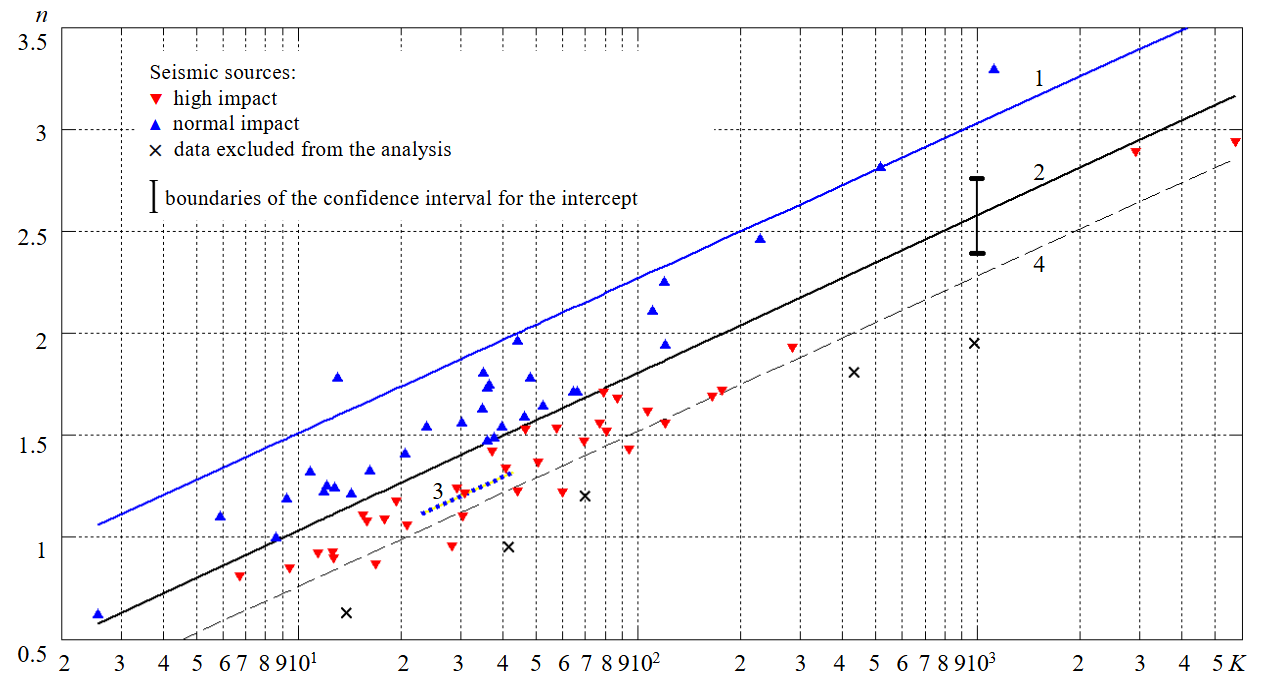
Fig.3. Classification of seismic sources according to the USBM formula
1 – the dependence of the attenuation exponent on the seismic coefficient, based on equation (1); 2 – linear regression of the sample n = 0.33lnK + 0.26, equation (3); 3 – data approximation [30]; 4 – equation n = 0.33lnK
Thus, pair 1 corresponds to a source with low seismic impact, whereas pair 2 corresponds to a source with high seismic impact. Since Δn1 – Δn2 > 0, the second source exhibits a higher seismic impact than the first. Conversely, from Δn1 – Δn2 < 0, the opposite is true (the seismic coefficient values were converted to cm/s based on Fig.1 in [28] and Fig.5 in [29].
According to [31], data excluded from the statistical analysis correspond to the seismic impact of blasting in highly fractured rock masses, which is not typical of high-seismic impact sources in such rocks.
Let us compare the results obtained using Equation (3) with those obtained using a Bayesian approach and Monte Carlo simulation in [30], which analyzed 520 vibration records under various soil geology and blasting conditions in Hong Kong. Figure 3 includes an approximation of these data plotted using equation (3), but with the intercept equal to 0.08 (line 3). The dataset from [30], collected in the mid-1980s, reflects blasting practices of that period, which were characterized by higher seismic impact.
In some cases, for the same blasts, sources classified as having normal seismic impact according to Sadovsky’s formula may be classified as having high seismic impact according to the USBM formula. This is observed for small charges [32]. From a physical standpoint, it is not appropriate to treat such charges as elongated sources, even over short distances.
When comparing Sadovsky’s and USBM formulas for identical blasts, the key parameter is the attenuation exponent n. Physically, the attenuation exponent in Sadovsky’s formula is expected to be higher than that in the USBM formulation; however, this is not always observed.
A detailed study of this issue shows that the attenuation exponent in the USBM formula exceeds that in Sadovsky’s formula when experimental points are unevenly distributed over the reduced distance [33]. If the points are distributed uniformly [34], no discrepancies in the classification of seismic sources emerge. Other factors include a narrow range of measured PPV values [35], anomalously high values of the seismic coefficient and the attenuation exponent [36], high variability in blasting parameters [37], and low regression coefficients [38]. The inconsistency in predicting PPV values is also noted in [39], where it is reported that, at large distances, the USBM formula may overestimate PPV values compared to Sadovsky’s formula. The detonation velocity along a borehole charge is finite; therefore, from the standpoint of seismic impact, a column charge may be approximated as a sequence of discrete concentrated charges.
Conclusion
A normal distribution of the attenuation exponent and a lognormal distribution of the seismic coefficient, elements of the USBM formula, was established, and their statistical characteristics were determined.
Correlation analysis of the paired attenuation exponents and seismic coefficients was performed. A classification criterion was developed that distinguishes between explosive sources with high and low seismic impact. The results of paired regression were statistically assessed, and a conclusion was made about the statistical significance of the parameters included in the classification criterion.
The challenges associated with classifying explosive seismic sources using both the USBM and Sadovsky’s formulas were discussed. Examples of how the proposed classification can be applied for the relative assessment of the seismic impact of different explosive sources were examined.
Future research should focus on expanding the database of experimental measurements to identify changes in the statistical distributions of the attenuation exponent and the seismic coefficient, as well as in their paired correlations. Additional work is needed to refine the boundaries within the classification of explosive sources by their seismic impact, with the objective of optimizing blasting parameters to minimize seismic impact on protected structures while maintaining efficient rock fragmentation.
References
- Alenichev I.A. Correction of explosive ratio with allowance for apatite-nepheline ores flooding. Mining Informational and Analytical Bulletin. 2016. N 7, p. 364-373 (in Russian).
- Kabelko S.G., Dunaev V.A., Yanitskii E.B., Rakhmanov R.A. Computer simulation of displacement of rock mass and estimation of ore dilution as a result of massive explosion in the open mining. Explosion technology. 2018. N 120/77, p. 94-108 (in Russian).
- Kolapo P., Oniyide G.O., Said K.O. et al. An Overview of Slope Failure in Mining Operations. Mining. 2022. Vol. 2. Iss. 2, p. 350-384. DOI: 10.3390/mining2020019
- Khokhlov S.V., Sokolov S.T., Vinogradov Yu.I., Frekel I.B. Conducting industrial explosions near gas pipelines. Journal of Mining Institute. 2021. Vol. 247, p. 48-56. DOI: 10.31897/PMI.2021.1.6
- Sokolov S.T., Khokhlov S.V., Bazhenova A.V. Design concepts for explosion products locking in chamber. Mining Informational and Analytical Bulletin. 2023. N 9-1, p. 122-134 (in Russian). DOI: 10.25018/0236_1493_2023_91_0_122
- Yakovlev V.L., Zharikov S.N., Regotunov A.S., Kutuev V.A. Methodological basis for adaptation of the drilling and blasting parameters to changing mining and geological conditions when mining complex-structured deposits. Russian Mining Industry. 2024. N 6, p. 89-97 (in Russian). DOI: 10.30686/1609-9192-2024-6-89-97
- Darbinyan T.P., Uvarov I.I., Fedoseev A.V., Trofimov A.V. Blasting-induced seismic impact on protected objects on ground surface at Zapolyarny Mine of Medvezhyi Ruchei LLC. Gornyi zhurnal. 2023. N 1, p. 102-106 (in Russian). DOI: 10.17580/gzh.2023.01.17
- Shaposhnik Yu.N., Konurin A.I., Neverov A.A., Neverov S.A. Assessment of seismic effect of underground large-scale blasting on surface buildings and structures. Journal of Fundamental and Applied Mining Science. 2024. Vol. 11. N 2, p. 97-104 (in Russian). DOI: 10.15372/FPVGN2024110213
- Vasilets V.V., Afanasev P.I., Pavlovich A.A. Safe operation of mining-and-transport system under impact of seismic shot waves. Mining Informational and Analytical Bulletin. 2020. N 1, p. 26-35 (in Russian). DOI: 10.25018/0236-1493-2020-1-0-26-35
- Wenxiang Xu, Jianjun Shi, Hao Zhang. Blasting Vibration Control and Signal Analysis of Adjacent Existing Deterioration Tunnels. Applied Sciences. 2024. Vol. 14. Iss. 5. N 2212. DOI: 10.3390/app14052212
- Adushkin V.V., Solovev S.P., Spivak A.A., Khazins V.M. Open Pit Mining with Blasting: GeoEcological Aftermath. Journal of Mining Science. 2020. Vol. 56. N 2, p. 309-321. DOI: 10.1134/S1062739120026794
- Protosenya A.G., Karasev M.A., Belyakov N.A., Tulin P.K. Prediction of the limit state and dilatancy of rocks around mine workings. Journal of Mining Institute. 2025. Vol. 276. Iss. 2, p. 107-122.
- Eremenko A.A., Mashukov I.V., Eremenko V.A. Geodynamic and Seismic Events under Rockburst-Hazardous Block Caving in Gornaya Shoria. Journal of Mining Science. 2017. Vol. 53. Iss. 1, p. 65-70. DOI: 10.1134/S1062739117011859
- Gladkov I.V., Yakunchikov E.N., Rumyantsev A.E., Sonnov M.A. Modeling the impact of surface mining operations on the condition of the underlying rock mass when planning underground mining operations using the CAE Fidesys software suite. Russian Mining Industry. 2024. N 4, p. 165-172 (in Russian). DOI: 10.30686/1609-9192-2024-4-165-172
- Bui Manh Tung, Nguyen Chi Thanh, Gospodarikov A.P., Zatsepin M.A. Developing prediction models for the cross-sectional areas of tunnels during drilling and blasting. Mining Informational and Analytical Bulletin. 2024. N 6, p. 31-49 (in Russian). DOI: 10.25018/0236_1493_2024_6_0_31
- Volokhov E.M., Kozhukharova V.K., Zelentsov S.N. et al. Assessment of interaction effects between the foundation and the base using numerical simulation methods for conditions of undermining the Mariinskii Theatre building in Saint Petersburg. Journal of Mining Institute. 2025. Vol. 276. Iss. 1, p. 16-29.
- Komadja G.C., Rana A., Glodji L.A. et al. Assessing Ground Vibration Caused by Rock Blasting in Surface Mines Using Machine-Learning Approaches: A Comparison of CART, SVR and MARS. Sustainability. 2022. Vol. 14. Iss. 17. N 11060. DOI: 10.3390/su141711060
- Fissha Y., Ikeda H., Toriya H. et al. Application of Bayesian Neural Network (BNN) for the Prediction of Blast-Induced Ground Vibration. Applied Sciences. 2023. Vol. 13. Iss. 5. N 3128. DOI: 10.3390/app13053128
- Nikitin V.I., Dvoynikov M.V., Kupavykh K.S., Panteleeva T.A. Application of machine learning to modeling Herschel – Bulkley drilling fluid parameters for optimizing wellbore cleaning. Journal of Mining Institute. 2025. Vol. 275, p. 70-80.
- Odeyemi O.Y., Taiwo B.O., Alaba O. Influence of explosive maximum instantaneous charge on blasting environmental impact. Journal of Sustainable Mining. 2023. Vol. 22. Iss. 4. N 6. DOI: 10.46873/2300-3960.1398
- Tyupin V.N. Prediction of the Ground Vibration Rate during Large-scale Explosions in the Underground Conditions. Occupational Safety in Industry. 2021. N 6, p. 41-45 (in Russian). DOI: 10.24000/0409-2961-2021-6-41-45
- Zharikov S.N., Kutuev V.A. Study of industrial seismics to clarify methodology of assessing impact of blasts on stability of protected facilities. Russian Mining Industry. 2023. N S1, p. 122-127 (in Russian). DOI: 10.30686/1609-9192-2023-S1-122-127
- Litvinenko V.S. A model of mining engineering education for the 21st century. Sustainable Development of Mountain Territories. 2025. Vol. 17. N 2 (64), p. 603-615. DOI: 10.21177/1998-4502-2025-17-2-603-615
- Kholodilov A.N., Gospodarikov A.P., Eremenko A.A. Procedural framework for explosion classification by the seismic load criterion. Gornyi zhurnal. 2021. N 5, p. 98-102 (in Russian). DOI: 10.17580/gzh.2021.05.13
- Novinkov A.G., Samusev P.A., Protasov S.I. Ensuring Seismic Safety of Construction Objects during Open-Pit Mine Blasts, Considering Limit States of the First Group. Occupational Safety in Industry. 2024. N 2, p. 48-57 (in Russian). DOI: 10.24000/0409-2961-2024-2-48-57
- Hajihassani M., Armaghani D.J., Marto A., Mohamad E.T. Ground vibration prediction in quarry blasting through an artificial neural network optimized by imperialist competitive algorithm. Bulletin of Engineering Geology and the Environment. 2015. Vol. 74. Iss. 3, p. 873-886. DOI: 10.1007/s10064-014-0657-x
- Khandelwal M., Armaghani D.J., Faradonbeh R.S. et al. Classification and regression tree technique in estimating peak particle velocity caused by blasting. Engineering with Computers. 2017. Vol. 33. Iss. 1, p. 45-53. DOI: 10.1007/s00366-016-0455-0
- Alipour A., Mokhtarian M., Abdollahei Sharif J. Artificial Neural Network or Empirical Criteria? A Comparative Approach in Evaluating Maximum Charge per Delay in Surface Mining – Sungun Copper Mine. Journal of the Geological Society of India. 2012. Vol. 79. N 6, p. 652-658. DOI: 10.1007/s12594-012-0102-3
- Tripathy G.R., Shirke R.R., Kudale M.D. Safety of engineered structures against blast vibrations: A case study. Journal of Rock Mechanics and Geotechnical Engineering. 2016. Vol. 8. Iss. 2, p. 248-255. DOI: 10.1016/j.jrmge.2015.10.007
- Yan W.M., Tham L.G., Yuen K.-V.Reliability of empirical relation on the attenuation of blast-induced vibrations. International Journal of Rock Mechanics and Mining Sciences. 2013. Vol. 59, p. 160-165. DOI: 10.1016/j.ijrmms.2012.12.005
- Mesec J., Strelec S., Težak D. Ground vibrations level characterization through the geological strength index (GSI). Rudarsko-geološko-naftni zbornik. 2017. Vol. 32. N 1. N 172685. DOI: 10.17794/rgn.2017.1.1
- Bhagwat V.P., Dey K. Comparison of Some Blast Vibration Predictors for Blasting in Underground Drifts and Some Observations. Journal of the Institution of Engineers (India): Series D. 2016. Vol. 97. Iss. 1, p. 33-38. DOI: 10.1007/s40033-015-0086-4
- Ataei M., Sereshki F. Improved prediction of blast-induced vibrations in limestone mines using Genetic Algorithm. Journal of Mining & Environment. 2017. Vol. 8. N 2, p. 291-304. DOI: 10.22044/jme.2016.654
- Novinkov A.G., Protasov S.I., Gukin A.S. Assessing seismic safety of bulk blasting. Occupational Safety in Industry. 2013. N 6, p. 40-46 (in Russian).
- Fouladgar N., Hasanipanah M., Bakhshandeh Amnieh H. Application of cuckoo search algorithm to estimate peak particle velocity in mine blasting. Engineering with Computers. 2017. Vol. 33. Iss. 2, p. 181-189. DOI: 10.1007/s00366-016-0463-0
- Parida A., Mishra M.K. Blast Vibration Analysis by Different Predictor Approaches – A Comparison. Procedia Earth and Planetary Science. 2015. Vol. 11, p. 337-345. DOI: 10.1016/j.proeps.2015.06.070
- Rai R., Singh T.N. A new predictor for ground vibration prediction and its comparison with other predictors. Indian Journal of Engineering and Materials Sciences. 2004. Vol. 11 (3), p. 178-184.
- Kozyrev S.A., Alenichev I.A., Sokolov A.V., Usachev E.A. Features and methods of decreasing of seismic presplitting blasting action on the out-contour rock mass of the open pit. Mining Informational and Analytical Bulletin. 2017. N 10. Special Issue 23, p. 307-315 (in Russian). DOI: 10.25018/0236-1493-2017-10-23-307-315
- Mohamad E.T., Noorani S.A., Armaghani D.J., Saad R. Simulation of Blasting Induced Ground Vibration by Using Artificial Neural Network. Тhe Electronic Journal of Geotechnical Engineering. 2012. Vol. 17/R, p. 2571-2584.