

Prospects of synthetic hydrocarbons in immature Cenozoic onshore shale-bearing strata of Eastern Azerbaijan: geological and geochemical assessment
- 1 — Ph.D., Dr.Sci. Chief Researcher Institute of Geology and Geophysics of the Ministry of Science and Education of the Republic of Azerbaijan ▪ Orcid
- 2 — Ph.D., Dr.Sci. Director of the Scientific and Pedagogical Center “Postgraduate Studies” Empress Catherine ΙΙ Saint Petersburg Mining University ▪ Orcid ▪ Elibrary ▪ Scopus ▪ ResearcherID
- 3 — Ph.D. Leading Specialist AzerGold CJSC ▪ Orcid
- 4 — Ph.D., Dr.Sci. Vice-President Azerbaijan National Academy of Sciences ▪ Orcid
- 5 — Ph.D., Dr.Sci. Director of the Research Institute of Geotechnical Problems of Oil, Gas and Chemistry Azerbaijan State Oil and Industry University ▪ Orcid
- 6 — Ph.D., Dr.Sci. Head of Laboratory Y.H.Mamedaliyev Institute of Petrochemical Processes of the Ministry of Science and Education of the Republic of Azerbaijan ▪ Orcid
- 7 — Researcher Institute of Geology and Geophysics of the Ministry of Science and Education of the Republic of Azerbaijan ▪ Orcid
- 8 — Researcher Institute of Geology and Geophysics of the Ministry of Science and Education of the Republic of Azerbaijan ▪ Orcid
Abstract
The formation of the principal hydrocarbon resource base of Eastern Azerbaijan is predominantly associated with deeply buried source kitchens within the Middle Eocene to Upper Miocene succession of the South Caspian Basin offshore area. Analogues of these deposits are widely distributed within uplifted onshore structural zones, where they crop out or occur at relatively shallow depths. Geochemical investigation of outcrop samples and rock fragments from mud volcano ejecta revealed that the Middle Eocene (Middle Koun Formation) and Middle-Upper Miocene (Diatom Formation) oil shales are characterized by exceptionally high organic carbon content. The Oligocene-Miocene Maikop Series, traditionally regarded as the principal source rocks of the region, are markedly inferior to these strata in terms of organic matter enrichment. Rock-Eval pyrolysis, thermogravimetric analysis, and kinetic modeling confirm that the Eocene and Diatom shales contain a Type II oil-generating kerogen characterized by low activation energy and active stepwise degradation. The Maikop shales are source rocks with a predominance of Type III kerogen, the degradation of which requires high activation energies and exhibits gas-generating potential. The mineral composition of the samples, characterized by a low degree of illitization, and FTIR spectroscopy data indicating the pronounced presence of long-chain aliphatic compounds, point to the low thermal maturity of the kerogen, which is corroborated by petrographic analysis results. Microscopic investigations and pyrolysis data suggest that shale oil may be retained within the kerogen matrix in an adsorbed or swollen state. The integration of geological and geochemical parameters that characterize the occurrence of immature, high-carbon strata with an effective thickness of up to 40 m at depths of up to 4 km confirms the high potential of their thermal conversion to synthetic hydrocarbons. The research results form a scientific basis for future projects on the development of unconventional hydrocarbons in oil shale strata.
None
Introduction
The global energy transition of the 21st century is characterized by the active development of a broad range of unconventional hydrocarbon resources, reflecting efforts to diversify the resource base and enhance the resilience of energy supply amid the ongoing transformation of the global energy sector [1-3]. According to contemporary global assessments, oil and natural gas, including resources from unconventional shale formations, continue to play a decisive role in ensuring global energy security in the medium term, while their long-term significance is primarily addressed within scenario-based projections.
From a geological perspective, petroleum source shale sequences constitute a continuous evolutionary series; however, they differ fundamentally in technological terms [4-7]. The first group comprises mature shale formations in which organic matter has already been transformed into mobile hydrocarbons, and the active exploitation of which formed the basis of the first wave of the “shale revolution” [8, 9]. The second group consists of immature oil shales containing primary solid organic matter (kerogen) and representing a substantial strategic reserve for the subsequent stages of industry development [10, 11].
The scale of the technological breakthrough in the exploitation of the first group of resources, enabled by horizontal drilling and multistage hydraulic fracturing, is reflected in current industry statistics. In the United States, the share of gas produced from shale and tight formations has reached 79 %; in 2024, a decline in production volumes compared to 2023 was recorded for the first time, which may indicate the onset of depletion in the most productive areas. China also demonstrates substantial technological and industrial progress; in 2023, its average daily shale gas production reached 71 million m³, accounting for 12 % of national output. At the same time, geological resource assessments indicate a substantial potential resource base (118.67 trillion m3), the development of which requires the introduction of new extraction methods [12]. Despite technological progress, the efficient development of mature formations still critically depends on high-productivity zones [13]. Intensive exploitation of these zones leads to a rapid decline in production rates, thereby limiting the long-term sustainability of this development model [14]. In this context, research is increasingly shifting toward immature oil shales, the specific characteristics of which require thermal conversion processes rather than hydrodynamic production methods [15, 16]. According to global estimates, the reserves of these resources reach approximately 690.2 billion tons of oil equivalent, significantly exceeding the volume of conventional oil [17]. However, the realization of this potential is determined not only by geological factors but also by the efficiency of technologies and economic conditions [18]. Therefore, resource development strategies range from surface processing for shallow deposits to in-situ conversion methods, which represent a key technological solution for deep reservoirs [16].
The technical feasibility of in-situ oil shale conversion has been convincingly demonstrated through field and pilot programs in the United States, where Shell’s Mahogany project, as well as trials conducted by Chevron and ExxonMobil, confirmed the viability of the concept of prolonged in-situ heating of kerogen-bearing strata. The decline in commercial activity in this field after 2010 was not driven by technological limitations, but rather by the economic non-competitiveness of energy-intensive thermal processes in the context of the rapid expansion of low-cost shale oil and gas production [11]. Over the past decade, the center of research has shifted to China, where technologies for electric, steam, and microwave heating, as well as catalytic and autothermal pyrolysis schemes, have been actively developed in the Ordos and Songliao basins, as evidenced by a number of experimental and pilot studies [19, 20]. The application of these approaches enables the production of lighter oil, an increase in product yield of more than 60 %, the elimination of the need for hydraulic fracturing, and a reduction in environmental impact [18, 21, 22]. Recent studies [23-25] indicate that key scientific and engineering challenges are focused on improving energy efficiency, optimizing heat transfer, and controlling the evolution of pore-fracture systems as interconnected thermochemical and structural processes that govern the effectiveness of in-situ conversion [26-29]. Taken together, the results of these studies, along with assessments of technological feasibility and resource applicability, allow in-situ conversion to be regarded as a key and most promising long-term pathway for the production of synthetic hydrocarbons under conditions of increasing technological maturity of the industry [30, 31].
The advancement of the aforementioned technological approaches requires a robust scientific foundation, within which the assessment of the oil and gas potential of oil shales is considered a key geological and geochemical task, forming the fundamental basis for planning future pilot projects and experimental-industrial operations [32-34]. This assessment is based not only on stratigraphic position, burial depth, and thickness of enriched intervals, but also on the systematic characterization of organic matter, including its content, kerogen type, and degree of thermal maturity [35, 36]. Along with this, the analysis of the phase state of hydrocarbons in the rock, specifically their distribution among solid organic matter, free fluids in the pore space, and components retained in a sorbed (both adsorbed and absorbed) state within the organic-mineral matrix, acquires fundamental importance [37, 38]. A systematic geological and geochemical assessment based on the integrated interpretation of these parameters, rather than their isolated consideration, allows for increased reliability in forecasting generation potential and for a well-founded determination of resource development strategy [39-44].
The South Caspian Basin is known for significant hydrocarbon reserves concentrated in the productive Cenozoic section of an ultra-thick sedimentary cover reaching 25-30 km [45]. In the deep-water part of the basin, the main source rock formations of Paleogene-Miocene age occur at depths of more than 6 km, where they have reached the peak of generation, ensuring the formation of conventional oil and gas fields [46-48]. However, in the uplifted onshore marginal zones, these same deposits occur at relatively shallow depths or crop out at the surface as thick oil shale units. Given the ongoing depletion of conventional hydrocarbon resources [49], this study presents the first systematic geological and geochemical assessment of these deposits to evaluate their potential as a resource base for surface retorting and in-situ conversion technologies.
Geological setting of the study area
Surface outcrops of oil shales
In Eastern Azerbaijan, more than 100 oil shale outcrops have been documented within a stratigraphic interval ranging from the Middle Eocene to the Upper Miocene (Fig.1). This outcrop belt extends for approximately 128 km along the regional Caucasian structural trend, from northwest to southeast.
In the southeastern plunge of the Greater Caucasus, the Eocene succession is composed predominantly of clay-rich sediments. The brown lithofacies of the Middle Eocene (Middle Koun) are lithologically and visually distinct from the underlying white and overlying green deposits. In the northern part of Gobustan, oil shale interbeds occurring in the upper part of the section are extremely thin (1-2 cm), as observed at the Ambizler and Shikhandagh localities. Southward, the intensity of rhythmic interbedding between oil shales and clays increases. A representative example is the Aghburun area, where up to 2700 oil shale-clay cycles have been recorded within a 118 m thick succession. The thickness of individual beds increases from 2-3 cm at the base to 10-15 cm at the top of the section. In Central Gobustan, an inversion in shale distribution is observed, with the principal oil shale-bearing packages concentrated in the lower part of the Jengichay section. From the northwest (from Diyalli area) toward the southeast to the center of Gobustan, an alternation of oil shale beds reaching 10 m in thickness is traced in the lower parts of the section. Southward from central Gobustan, the total thickness of the Middle Koun shale-bearing strata increases from approximately 250 to 400 m [46].
The Lower Maikop shales (Oligocene) in the Shamakhi-Gobustan and Pre-Talysh regions are represented by dense black rocks interbedded with thin layers of other lithofacies, as observed in the Jeyrankechmez-Gayiblar section. In the Talysh region, the shale-bearing strata is associated with the Perimbel Formation, which attains a maximum thickness of more than 1.5 km in the Vileshchay area.
The Upper Maikop deposits (Lower Miocene) in the Shamakhi-Gobustan region are subdivided into clay-rich (northern) and sandy-clayey (southern) facies. With respect to shale occurrence, the Riki Horizon is of particular interest, where numerous organic-rich interbeds are predominantly a few centimeters thick, only occasionally reaching thicknesses of up to 1 m, as observed in the Gayiblar section. The horizon is characterized by brown to dark-brown clays containing jarosite, gypsum, and siderite concretions. The total thickness of the shale-bearing strata within the Riki Horizon reaches 250 m.
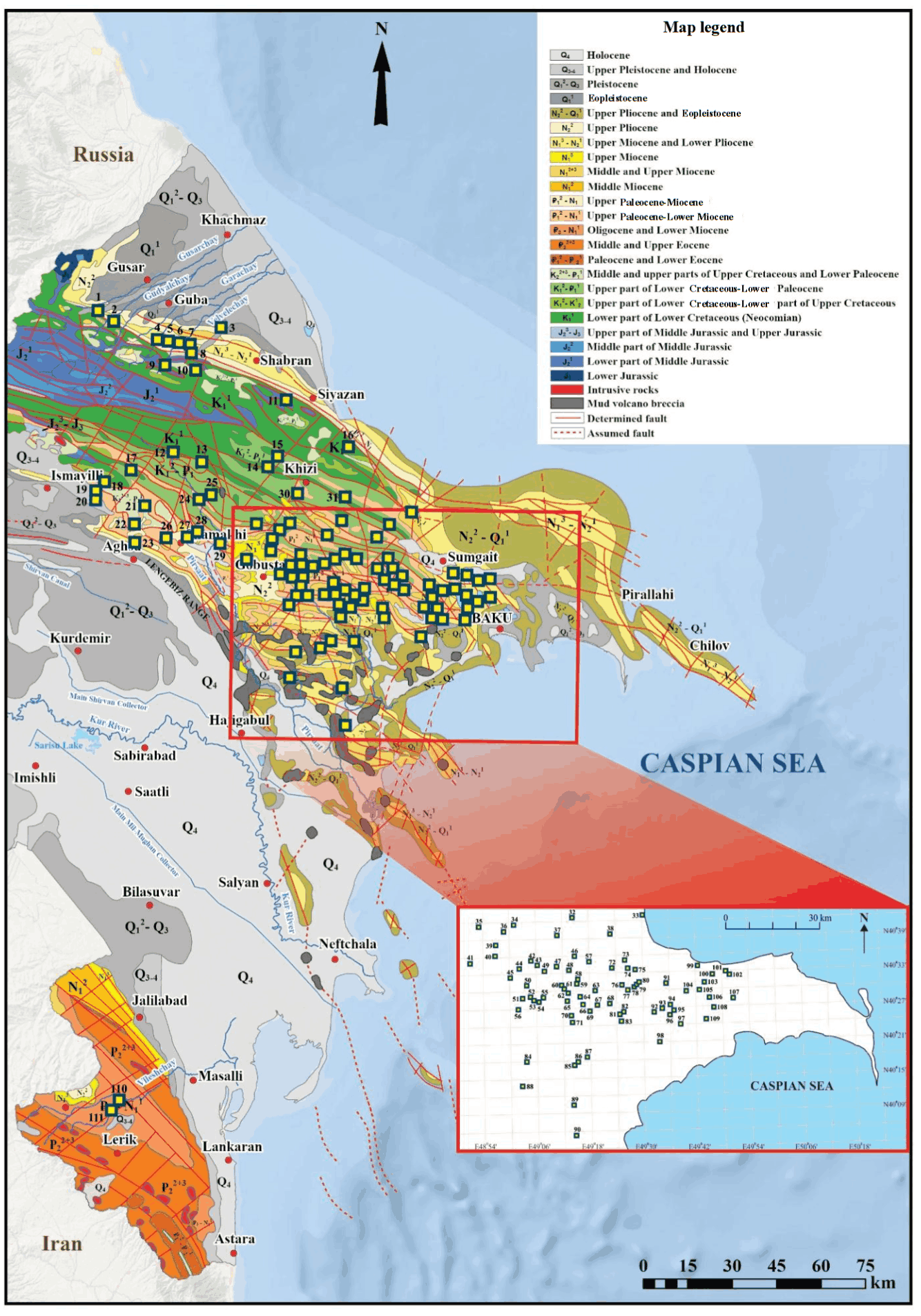
Fig.1. Geological map of Eastern Azerbaijan showing the location of identified oil shale outcrops: 1 – Anig; 2 – Guruchay (Susay); 3 – Velvelechay; 4 – Alij (Garachay); 5 – Garachay-Jaghachukchay; 6 – Rustov; 7 – Bahgchali; 8 – Khanagah; 9 – Kamalchay; 10 – Tengealti; 11 – Gilgilchay; 12 – Zarat-Kheybari; 13 – Saridashchay; 14 – Altiaghaj; 15 – Bakhishli; 16 – Gilazi (Zarat); 17 – Lahij; 18 – Sadiyan; 19 – Diyalli; 20 – Dahar deresi; 21 – Sarsura; 22 – Khasidere; 23 – Gurjuvan; 24 – Talyshnuru; 25 – Gizmeydan; 26 – Mirikend; 27 – Khinisli-Pirdireyi; 28 – Angekharan; 29 – Arabshalbash; 30 – Ambizler; 31 – Chargishlag; 32 – Kemchi; 33 – Shorabad-Yashma; 34 – Aghdere; 35 – Khilmilli; 36 – Goradil; 37 – Shikhandagh; 38 – Kurkechidag; 39 – Nabur; 40 – Bekle; 41 – Jayirli; 42 – Tuva; 43 – Garajuzlu; 44 – Ahudagh; 45 – Shimshedi; 46 – Boyuk Siyeki; 47 – Kichik Siyeki; 48 – Siyekilerarasi; 49 – Garatakhta; 50 – Kichik Mereze;51 – Shikhzerli; 52 – Gayiblar; 53 – Shayiblar; 54 – Jeyrankechmez-Gayiblar; 55 – Jeyrankechmez; 56 – Galaja; 57 – Gibledagh; 58 – Jengidagh; 59 – Jengichay; 60 – Chobandagh; 61 – Iyimish; 62 – Dashlija; 63 – Dostubozu; 64 – Sungur; 65 – Birgut; 66 – Baygushgaya; 67 – Alagishlag; 68 – Bayanata; 69 – Baygushlu; 70 – Donguzlug; 71 – Akhijan; 72 – Mayash; 73 – Aghburun; 74 – Yunusdagh; 75 – Ilkhidagh; 76 – Kecheller; 77 – Pirekeshkul; 78 – Garaislam; 79 – Islamdagh; 80 – Chayli (Goturdagh); 81 – Saridash; 82 – Girdagh; 83 – Girgishlag; 84 – Gungormez-Cheyildagh; 85 – Cheyildere; 86 – Cheyildagh-Nardaranakhtarma; 87 – Cheyildagh-Cheyilakhtarma; 88 – Dashmerdan; 89 – Gilinj; 90 – Solakhay; 91 – Nasosnu-Goytepe; 92 – Kusmelidagh; 93 – Uchtepe; 94 – Aghchala; 95 – Mushvigabad yolu; 96 – Damlamaja; 97 – Garaheybet; 98 – Shorbulag; 99 – Jorat; 100 – Orjandagh; 101 – Goredil; 102 – Fatmayi; 103 – Senger (Saray); 104 – Guzdek; 105 – Kecheldagh; 106 – Masazir; 107 – Binegedi; 108 – Zigilpiri-Khirdalan; 109 – Shabandagh; 110 – Tekdam; 111 – Vileshchay
Middle and Upper Miocene oil shale deposits of the Diatom Formation are genetically associated with the Konkian, Sarmatian, and Meotian regional stages. In the Caspian-Guba region, the Rustov Horizon of Upper Sarmatian age is distinguished, where oil shales are interbedded with carbonate-clay deposits. The most significant outcrops of this horizon are concentrated within a 30-kilometers wide belt between the Velvelechay and Gudyalchay rivers. In Central Gobustan, the diatomaceous oil shale‑bearing strata is represented by the Konkian (Baygushgaya Formation) and Meotian (Birgut Formation) intervals. The thickness of this succession reaches 200 m at the Sundu and Bekle sites (northwest), 250 m in the north, and 500 m in the center. In the Boyuk Siyeki and Mayash sections, composed of clays, marls, and volcanic ash, the oil shale beds attain considerable thickness. Texturally, they belong to the so-called “paper” shales, which develop pronounced fissility on weathered surfaces.
It should be noted that the cumulative thickness of oil shale-bearing strata in the sections reaches 500 m, while individual beds attain thicknesses of up to 40 m. The highest degree of shale development is observed in the Upper Maikop, where, due to the frequent alternation of thin interbeds, shales account for up to 60 % of the section. In the Middle Eocene, oil shales constitute 15 % of the section, locally increasing to 25 % in the parautochthonous zone (Jengichay area). In the Miocene complex of the Guba region (Sarmatian), oil shales occupy more than 10 % of the section, whereas in Central Gobustan (Konkian-Meotian) their proportion reaches 20 %.
Oil shale ejecta from mud volcanoes
Mud volcanic eruptions in Eastern Azerbaijan also bring fragments of oil shale to the surface as part of their solid ejecta [47, 50]. An integrated interpretation of micropaleontological data obtained from these fragments, together with regional geological and geophysical profiles crossing mud volcano provinces, makes it possible to determine their stratigraphic affiliation and depth of origin [46, 51]. Such an approach provides a basis for tracing the spatial continuity of oil shale strata exposed at the surface into deeply buried parts of the sedimentary section and for assessing their hydrocarbon potential using geological and geochemical data derived from actual samples. This strategy is of critical importance for the southern coastal parts of Gobustan, the Absheron Peninsula, and the Lower Kura Depression, where surface exposures are limited due to the development of a thick Pliocene-Quaternary sedimentary cover and where deeply buried horizons are inaccessible to conventional drilling methods [46].
Distribution of oil shale-bearing strata across different tectonic zones
The distribution of shale-bearing strata in the region is controlled by the boundaries of major tectonic elements. The Jeyrankechmez-South Caspian Megabasin is characterized not only by the widespread occurrence of these deposits but also by numerous mud volcanoes and hydrocarbon fields [52, 53]. Within the accretionary prism of the Greater Caucasus (Southern Slope Megazone), Middle Eocene oil shale outcrops are widely developed [46]. The central part of Gobustan (parautochthonous zone) is distinguished by the occurrence of oil shale deposits ranging in age from the Middle Eocene to the Upper Miocene.
The Greater Caucasus thrust determines the northern tectonic boundary of the distribution of Middle Eocene oil shales of Eastern Azerbaijan. Within the northern allochthonous zone of North Gobustan, outcrops of Middle Eocene oil shales are structurally mainly confined to the cores of synclines, where they are exposed in the upper parts of the section. In the paraautochthon of Central Gobustan (for example, on the Jengichay structure), oil shale-bearing deposits participate in the structure of anticline folds, forming their limbs and crest parts.
The distribution of Lower Maikop shales in the Vendam and Lerik-Yardimli zones has a wider distribution compared to the Jeyrankechmez-South Caspian Megabasin, particularly its parautochthonous zone in Central Gobustan. The development of Upper Maikop shale strata is restricted mainly to the limits of the megabasin itself, where they participate in the structure of both synclinal and anticlinal structures.
The northern distribution area of Sarmatian diatomaceous oil shales is localized outside the megabasin and is confined to the Guba tectonic zone [54]. Within the paraqutochthon of Central Gobustan, synclinal structures are characterized by the widespread development of Konkian and Meotian diatomaceous oil shales with a clear lithological dominance. In certain synclines, the thickness of Konkian oil shales also reaches significant values. A characteristic feature of this tectonic zone is the joint occurrence of these strata in a single stratigraphic section.
In the parautochthonous zone of the northern and central parts of Western Absheron, the diatomaceous oil shale strata participate in the structure of large anticlines. Lens-shaped outcrops of these rocks are confined to the periclines and crests of anticlinal structures, which are complicated by faults and mud volcanoes. A similar geological-structural setting is characteristic also of the Lengebiz-Alat fault structure in Southern Gobustan. The widespread development of natural oil seeps and surface accumulations of bituminized rocks within these structures indicates active vertical migration of hydrocarbons from deeply buried horizons. The specific texture of diatomaceous “paper” oil shales serves as a favorable factor for their secondary saturation by allochthonous fluids.
Deep-seated occurrence of oil shale-bearing strata
In the allochthonous zone of Northern Gobustan, oil shales occur at relatively shallow depths, overlain by a thrust complex of Cretaceous deposits. Within the Jeyrankechmez-South Caspian Megabasin, in particular in the parautochthonous zone of Central Gobustan, Middle Eocene and Maikop shale strata are buried at depths exceeding 4 km from the surface (Fig.2). This sharply contrasts with the geological-structural conditions of the coastal zone of Southern Gobustan and Southern Absheron, where the depth of occurrence of these complexes increases significantly [46]. Available data indicate extremely deep burial of Cenozoic shales in the offshore part of Eastern Azerbaijan; in some areas, wells with depths of up to 7 km penetrated exclusively Pliocene deposits. Outside the megabasin, Sarmatian diatomaceous and Lower Maikop shales are characterized by low-amplitude subsidence, occurring at depths of up to 1.4 km.
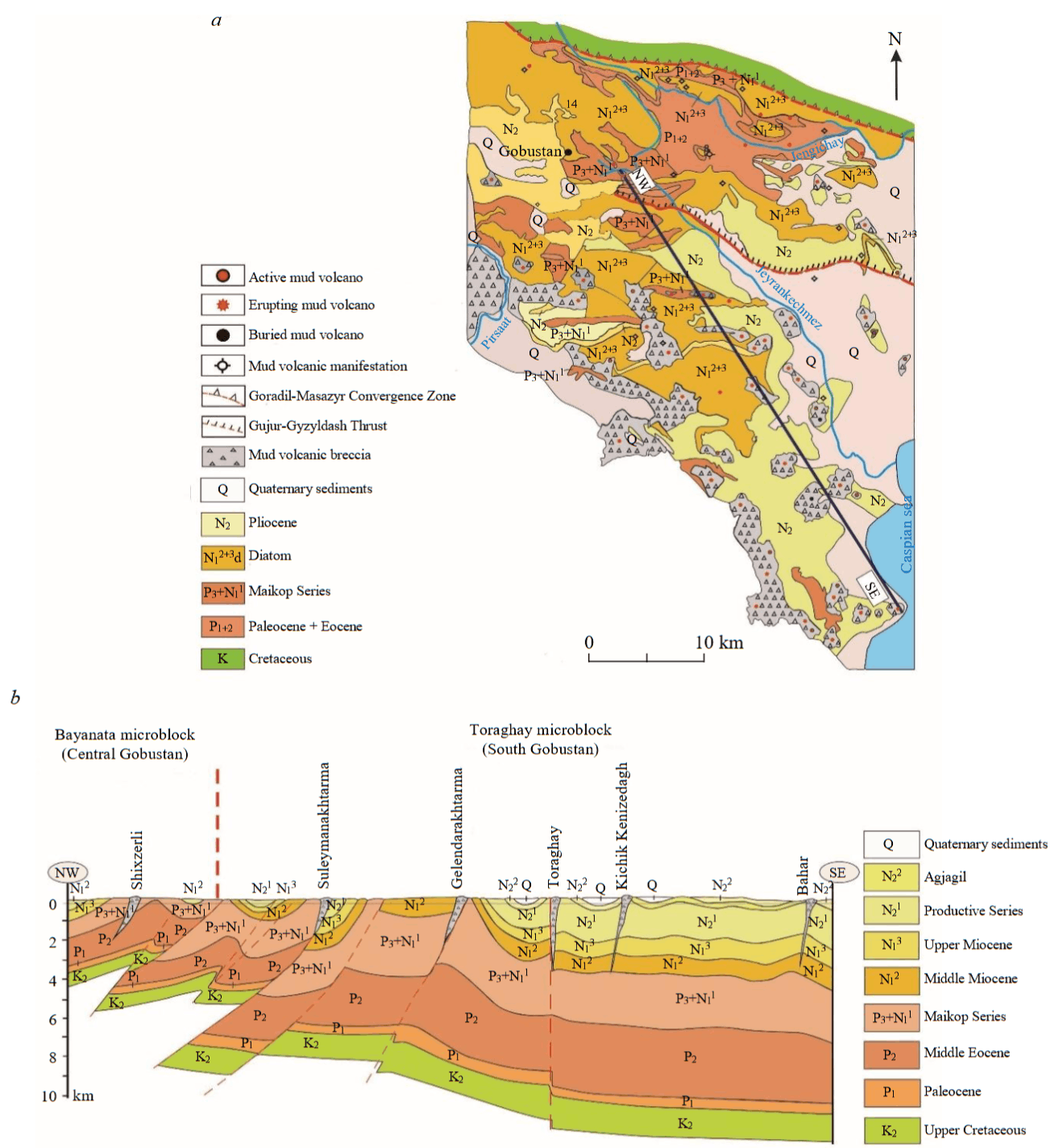
Fig.2. Geological map (a) and geological profile (b) of Central and Southern Gobustan [46]
Methods
Mineralogical and petrographic studies
Microfaunal analysis was performed at magnifications of ×200-300 using Loupe Zoom Paralux XTL 745 and MBS-10 microscopes. The acquired images were transferred to a computer using an OptixCam digital camera. The rock mineralogy was analyzed via X-ray diffraction (XRD) using a Rigaku MiniFlex diffractometer [46].
Petrographic studies were carried out using a Leica DM2500 P polarizing light microscope operating in reflected and transmitted light. The microscope, equipped with 50× and 20× oil immersion objectives, was used with white and polarized light illumination, crossed polarizers, a 1/4 λ plate, and a Lumenera Infinity 1-5C camera.
Extraction
Shale samples were subjected to extraction in a Soxhlet apparatus to determine the quantitative content of chloroform bitumoid and alcohol-benzene extract [55].
Geochemical analyses
Pyrolytic analyses were carried out on a modified Rock-Eval 6 instrument. FTIR spectra were obtained at room temperature using a diamond crystal on a LUMOS FTIR microscope in the wavenumber range from 600 to 4000 cm–1. Thermogravimetric analysis was performed on a NETZSCH STA 449F3 Jupiter thermal analyzer. Samples weighing 7-10 mg were heated at a rate of 10 °C/min at a nitrogen flow rate of 100 ml/min. All analyses were carried out in a temperature-programmed dynamic mode.
Gas analysis
The concentration of adsorbed hydrocarbon gases in rock samples was measured using a Micro GC Fusion gas chromatograph.
Results and discussion
Mineralogical classification
In the studied samples, 21 minerals of six mineral classes were identified. The distribution of the ten most common minerals is as follows: quartz, montmorillonite, illite, feldspar, calcite, jarosite, chlorite, kaolinite, hematite, and pyrite. Comparative analysis showed that samples from mud volcano ejecta contain a higher proportion of chlorite, whereas Upper Maikop shales are richer in quartz compared with those from the Middle Eocene and Diatom strata.
The results of mineralogical classification (Fig.3) show that shales of Eastern Azerbaijan are predominantly clay-siliceous. In contrast to the Maikop shales, samples from the Middle Eocene and the Diatom Formation with calcite contents of more than 10 % are shifted toward the carbonate field in the diagram. Carbonate-bearing shales were identified in the Lower Maikop sections of the Lerik-Yardimli tectonic zone. A group of Middle Eocene samples from Central Gobustan contains a higher proportion of brittle minerals, as do the Barnett and Bakken shales, from which shale hydrocarbons are produced.
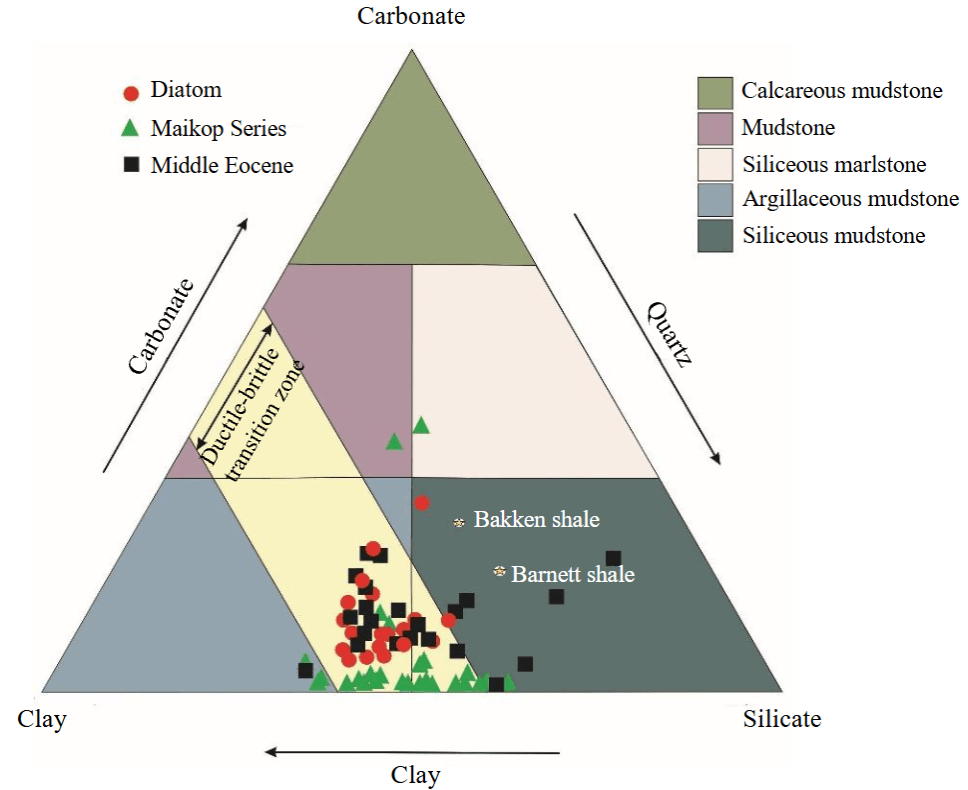
Fig.3. Distribution of shale samples on the ternary mineralogical classification diagram
Organic matter enrichment
Oil shales of the Middle Eocene and the Diatom Formation demonstrate significantly higher average contents of total organic carbon (TOC) (11.18 and 9.87 %, respectively) compared with deposits of the Maikop Series, which are considered [56] the most effective source rock in Azerbaijan. In shales of the Maikop Series, the average TOC values for the Lower and Upper Maikop are 2.9 and 5.26 %, respectively. The generation potential (GP) of the investigated shales, calculated based on S1 + S2 values, varies from 24.92 to 209.49 mg HC/g rock (average 63.47 mg HC/g rock) for the Middle Eocene, from 3.09 to 80.55 mg HC/g rock (average 18.63 mg HC/g rock) for the Maikop Series, and from 15.20 to 130.06 mg HC/g rock (average 56.05 mg HC/g rock) for the Diatom Formation. A two-dimensional plot showing the dependence of GP on TOC (Fig.4) indicates that the hydrocarbon generation potential in the samples ranges from good (Maikop Series) to excellent (Middle Eocene and the Diatom Formation).
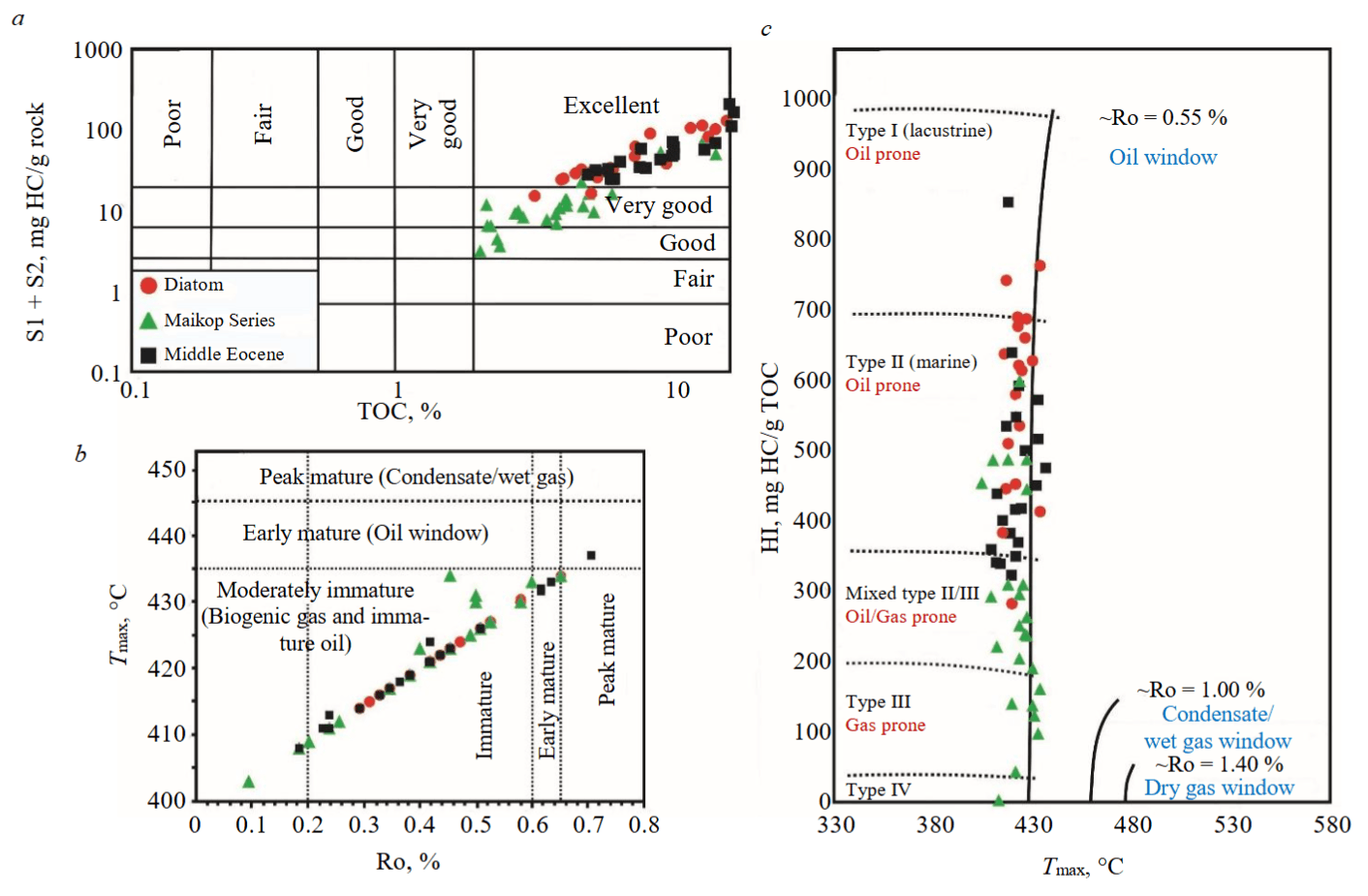
Fig.4. Diagrams showing TOC content (a), thermal maturity (b), and kerogen type (c) in samples based on pyrolysis data
Maceral composition of organic matter and its generation potential
The results of petrographic analysis (Fig.5) of oil shales in the interval from the Middle Eocene to the Diatom Formation show that the proportion of telalginite and lamalginite in the Middle Eocene intervals is significantly higher than that of vitrinite and inertinite; telalginite predominates over lamalginite in the Lower Maikop sections, whereas vitrinite is the dominant maceral group in Upper Maikop deposits; alginite is the key maceral in the Diatom Formation, being three times more abundant than vitrinite and ten times more abundant than inertinite. Upper Maikop shales, practically devoid of calcite, are characterized by higher quartz content in their mineralogical composition. These features demonstrate a strong correlation with the predominant influence of terrigenous sedimentation and allochthonous organic matter [46].
Oil shales of the Middle Eocene and the Diatom Formation, rich in calcite, were formed under the influence of seawater, which led to the predominance of autochthonous organic matter in their composition [46]. These rocks of Eastern Azerbaijan show similarity to the Eocene Huadian shales in China, in which autochthonous algal material also predominates, including telalginite (mainly derived from Botryococcus spp. and diatoms) and lamalginite, as well as macerals of the vitrinite, inertinite, and exinite groups formed from remains of higher plants [57]. These immature shales are considered excellent source rocks with TOC values exceeding 10.6 % and hydrogen index (HI) values above 500 mg HC/g TOC.
Analysis of extracts showed that the content of alcohol-benzene bitumoids in shales of the Maikop Series exceeds that of chloroform bitumoids. In contrast, in the organic matter of Middle Eocene shales and Diatom Formation, which are rich in chloroform bitumoid, saturated hydrocarbons predominate. The obtained data are confirmed by the results of FTIR spectroscopy, which was performed on the original shale samples and on the extracts isolated from them (see Table).
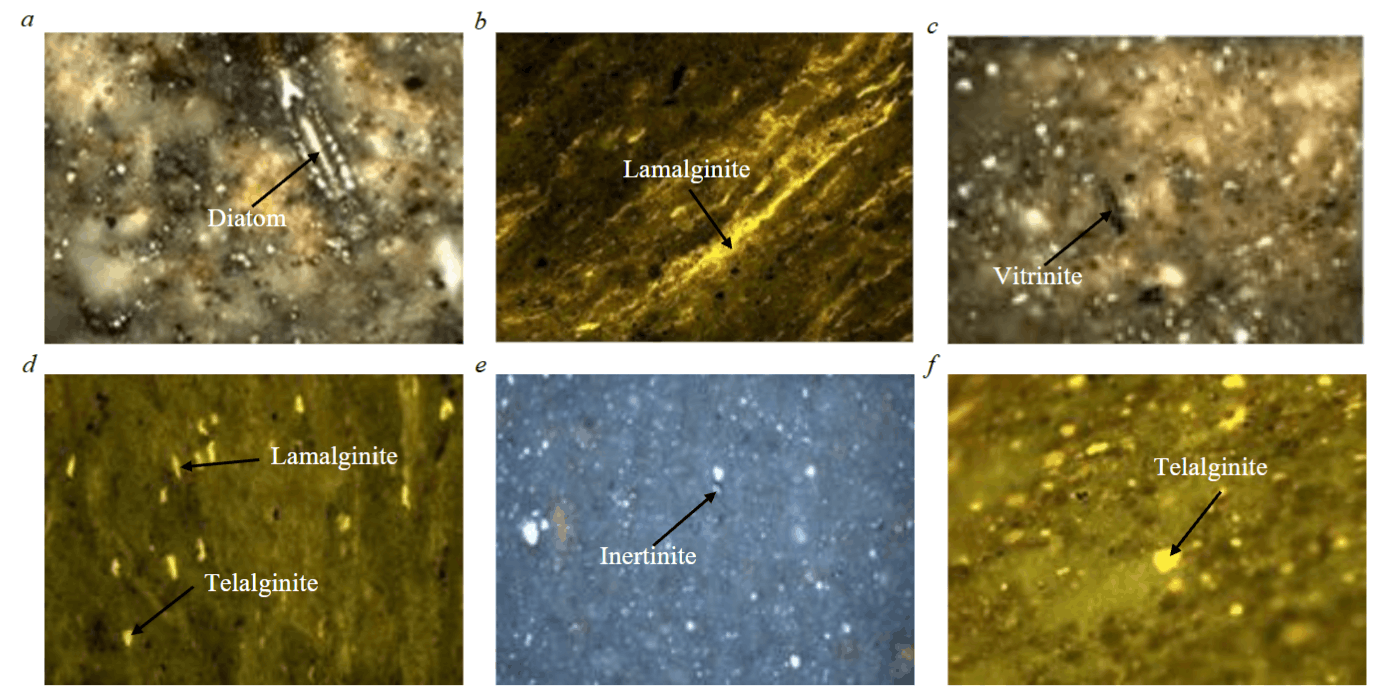
Fig.5. Photomicrographs of macerals in the studied shale samples: a, b – Diatom shale; c, d – Maikop shale; e, f – Middle Eocene shale [52]; a, c, e – reflected light microscopy; b, d, f – fluorescence microscopy
Characteristics of absorption bands in the IR spectra of original and extracted samples and their geochemical significance
|
Wavenumber, cm–1 |
Functional groups and bond types |
Geochemical significance |
|
2854; 2925; 2927 |
C–H stretching vibrations in methylene (–CH2–) and methyl (–CH3) groups |
High aliphaticity of organic matter; significant petroleum generation potential (Type I and II kerogen), low thermal maturity |
|
1385; 1457 |
C–H bending vibrations of aliphatic structures |
Predominance of paraffinic chains; low thermal maturity of organic matter |
|
700; 715; 716 |
Wagging vibrations of (–CH2–)n (n ≥ 4) |
Direct indicator of the presence of long-chain n-alkanes; high petroleum potential and low thermal maturity |
|
1212; 1234 |
C–O stretching vibrations (ethers, phenols, acids) |
High concentration of oxygen-containing groups; diagenetic stage (immature organic matter) |
|
932; 935 |
Out-of-plane C–H deformation vibrations (olefinic/vinyl groups) |
Presence of olefinic structures (terminal double bonds); preservation of the original structure at low thermal maturity |
|
1628; 1634 |
Aromatic C=C stretching vibrations |
Characterization of the aromatic skeleton structure; preservation of generation potential during early stages of transformation |
|
3418 |
O–H and N–H stretching vibrations of hydrogen-bonded groups |
Presence of heteroatomic compounds and hydrogen bonds characteristic of immature organic matter |
|
3646; 3647 |
Free O–H bonds (structural hydroxyl of minerals) |
Presence of structural water in the clay lattice of the studied rocks |
In the interval 100-275 °C, a mass loss of 4.15 % is observed in the Diatom Formation sample (Fig.6, a), accompanied by the release of water vapor and light volatile hydrocarbons, indicating the initial stage of thermal bitumen formation due to cleavage of the shortest and most unstable aliphatic kerogen chains. At temperatures from 275 to 550 °C, the cumulative mass loss reaches 23.4 % and reflects more intensive bitumen formation as well as the generation of oil, gas, and coke. In the Middle Eocene sample, the mass loss is 38.05 % in the interval 300-700 °C (Fig.6, c), while the 650-700 °C interval corresponds not only to the destruction of residual organic compounds but also to the decomposition of carbonate minerals, especially calcite, characteristic of these samples. In both cases, aliphatic compounds decompose in two stages; for the Diatom Formation, the second stage concludes at temperatures up to 410 °C, whereas for the Middle Eocene sample it occurs up to 375 and 475 °C. In the Middle Eocene sample, the high-temperature range indicates degradation of stable aliphatic and initial aromatic structures characteristic of the oil – gas transition zone, accompanied by the ongoing formation of heavy shale oil and the initial generation of C1–C5 fractions. The narrow, stepwise nature of thermal destruction and the extensive breakdown of aliphatic components in both samples confirm the efficiency of oil generation, as evidenced by lower values of activation energy (67.5 and 69.3 kJ/mol, respectively) and pre-exponential factors (3×10¹³ and ~7×10¹³ s–1, respectively), characteristic of paraffinic kerogen (Type II, see Fig.4, c). Thermal degradation of the Maikop shale occurs in the temperature range of 250-600 °C (Fig.6, b), while the maximum mass loss is relatively small (19.81 %). This indicates the requirement for higher temperatures and activation energy (76.4 kJ/mol at 2×10¹⁴ s–1) for the breakdown of strong C–C bonds characteristic of an aromatically enriched structure (see Table). Such kinetic parameters suggest a limited oil generation potential with a pronounced tendency toward gas and coke generation.
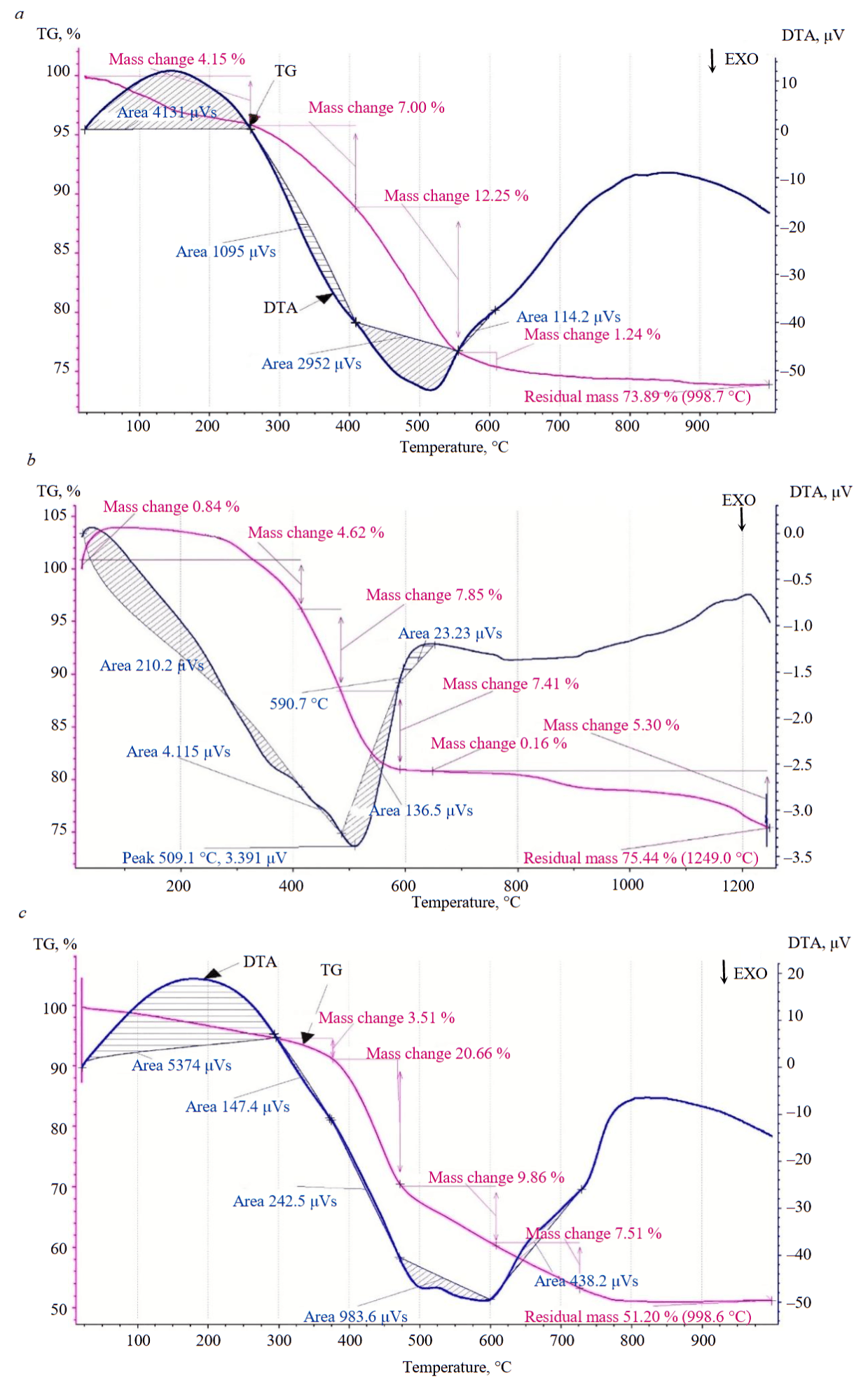
Fig.6. TG/DTA spectra of samples from high-TOC shale successions: Diatom (a), Upper Maikop (b), and Middle Eocene (c)
Thermal maturity of organic matter
Under diagenetic conditions, the transformation of smectite to illite occurs at temperatures above 50 °C. The illitization process promotes hydrocarbon migration from shale and the development of elevated formation pressure. An increase in illite content in mixed-layer illite-smectite minerals correlates with increasing depth and temperature. An illite proportion of up to 25 % corresponds to a vitrinite reflectance (Ro = 0.5 %), indicating the onset of oil generation at approximately 60 °C. The average illite content (14.69 %) in the analyzed samples indicates thermal immaturity. This is supported by FTIR spectroscopy results (see table), which show that the aliphatic structure of bitumen and kerogen is dominated by long-chain components, including methylene units (–CH2–) and terminal methyl groups (–CH3). The presence of these long-chain alkanes is characteristic of low-temperature diagenetic conditions (~45-50 °C). They are destroyed during the catagenetic stage (at T > 60 °C), undergoing shortening and/or branching, which leads to the formation of light hydrocarbons and gas.
Studies [58] emphasize a positive correlation between oxygen-containing groups and the immaturity of organic matter. FTIR spectroscopy data (see table), recording the presence of C–O bonds in the samples before and after extraction, also confirm that higher temperature conditions are required to achieve the maturity of the studied shales.
Some Middle Eocene and Maikop shales demonstrate elevated concentrations of illite and chlorite, as well as a moderate and high content of chloroform bitumoid, indicating the approach of their kerogen to the oil generation phase. These samples, collected from the area of mud volcanoes near the Caspian Sea, represent shales occurring at significant depths [46]. The high thermal maturity values observed in these samples (e.g., Ro = 0.62 % for the Otmanbozdagh samples and Ro = 0.58 % for Lokbatan, see Fig.4, b) demonstrate that the organic-rich Middle Eocene and Maikop shales occurring in the deepest parts of the Caspian Sea are key oil and gas source rocks for oil and gas fields that have been under exploitation for nearly two centuries. Given the depth of the Miocene deposits in the Caspian Sea, it is highly probable that Diatom shales could also act as a mature oil source rock, contributing to oil-generation in the South Caspian Basin.
Although the studied oil shales are generally thermally immature source rocks requiring artificial heating for commercial oil production, samples from the Shamakhi zone (e.g., Demirchi, Khilmilli, etc.) exhibit elevated Ro values. The enhanced internal heat source in this zone, characterized by a relatively thin sedimentary cover, is likely associated with the presence of major tectonic structures, including deep faults and thrusts within the North Gobustan allochthon, as well as magmatic intrusive bodies beneath the Earth’s surface [46]. The significantly high geothermal gradient recorded in this zone (up to 30 °C/km) further highlights its distinctive thermal regime.
Our study reveals a weak correlation between stratigraphic age and thermal maturity indicators (maximum pyrolysis temperature, Tmax, and Ro) in some samples. In Fig.4, b, a group of Diatom samples demonstrates higher Tmax values compared to older shales. A similar result was noted in [56]. This is probably related to the origin of the kerogen, including its formation under the dominant influence of plankton-derived organic matter, which is characterized by greater hydrogen enrichment. Although hydrogen-rich kerogens exhibit stabilization at a stage close to thermal maturity, their hydrogen content is depleted at lower or higher maturity stages. On the other hand, on the Ro versus Tmax plot (see Fig.4, b), in most Maikop samples Ro varies within the range of 0.4-0.5 %. This can be explained by the significant contribution of terrigenous organic matter, particularly vitrinite-rich macerals (see Fig.5, c), to the formation of their kerogen. The presence of vitrinite-rich macerals in the Maikop shales, which demonstrate a better correlation with Type III kerogen in Fig.4, c, is the reason for their relatively high Ro values. However, the basin in which the studied shale-bearing strata were formed is characterized by high tectonic activity. Consequently, in addition to uplifts and subsidences that occurred here throughout geological time, the present geothermal gradient may also be influenced by differences in sedimentation processes, pressures, and mineralogical factors.
Determinants of oil-bearing capacity of reservoir shales
Layered and (or) laminated organic-rich shales are considered priority targets for shale oil development because their texture plays a key role in controlling fracture formation [59, 60]. In particular, one of the key features determining the significance of laminated texture as a reservoir is explained by the fact that fracture formation along bedding is typical of mechanically weak surfaces between different laminae [61]. Along with microfractures, shale oil is mainly distributed in pores (free oil), on mineral surfaces, and in kerogen (adsorbed oil) [62-64]. Study [65] emphasizes that macropores contain most of the shale oil (more than 80 %) in lacustrine shales with Type II kerogen (HI > 400 mg HC/g TOC). Meanwhile, [61] established that the average pore size and pore connectivity in laminated shales are advantageous for shale oil retention and mobility, and although shale oil in such shales is associated with pores of 10-30 nm, pores larger than 100 nm can sometimes also make a certain contribution. The significant role of macropores in retaining a significant portion of free shale oil in shales rich in Type II kerogen [65], combined with the contribution of macro- and microfractures in the laminated shales, confirms the high assessment of the shale oil potential of the organic-rich Middle Eocene and Diatom oil shales of Eastern Azerbaijan.
Although the shales of Eastern Azerbaijan are predominantly enriched in clay minerals, samples from Central Gobustan contain a higher concentration of brittle minerals (see Fig.3). This mineralogical composition increases the shale oil potential, as it facilitates microfracture formation and oil movement. At the same time, the high clay content, although it may create technological difficulties, also positively affects oil adsorption and retention.
To intensify unconventional oil recovery, enrichment of low-permeability, organic-rich shales with organic acids and CO2 may be applied, since during hydrocarbon generation organic matter itself produces organic acids and carbon dioxide. Organic acids demonstrate a high capacity to dissolve carbonates and other soluble minerals in shales, thereby promoting pore formation [66]. Study [67] notes that among carbonate minerals, calcite possesses the highest CO2 storage potential (even at high temperatures and pressures). Taking these facts into account, thermal treatment of immature Middle Eocene and Diatom oil shales, which are richer in organic matter and calcite than most Maikop intervals (with the exception of samples from the Talysh Basin), can effectively release organic acids and CO2.
The shale oil potential of source rocks depends on their lipid content, particularly on the asso-ciation with sapropel-rich Type I and II kerogen, known for its oil-generating potential [61]. Unlike the Maikop shales, which strongly correlate with gas-generating kerogen (see Fig.4, c), the Diatom and Middle Eocene oil shales demonstrate a very low vitrinite content, which was revealed by petrographic analysis of organic matter (see Fig.5). The high oil-generation potential of both shale complexes is evident from their maceral composition; alginite predominates (>70 %) in the Diatom oil shales, whereas the Middle Eocene oil shales contain up to 70 % telalginite and lamalginite. The fluorescence observed in microfractures along bedding planes or in mineral pores (see Fig.5) indicates favorable conditions for the retention of free oil in the shale matrix at the mature stage [59].
A strong positive correlation of TOC both with the chloroform bitumenoid content (Fig.7, a) and with S1 (Fig.7, b), especially in the Middle Eocene and Diatom oil shales, emphasizes the role of organic matter in controlling retained oil and, at low values of the production index (PI) and oil saturation index (OSI), confirms the autochthonous nature of the organic matter without signs of secondary contamination of the samples (including volcanic ejecta) by allochthonous fluids. A weak correlation between TOC and OSI (Fig.7, c) suggests that a significant part of the shale oil may be retained within the solid organic matter in an adsorbed or swollen state [68].
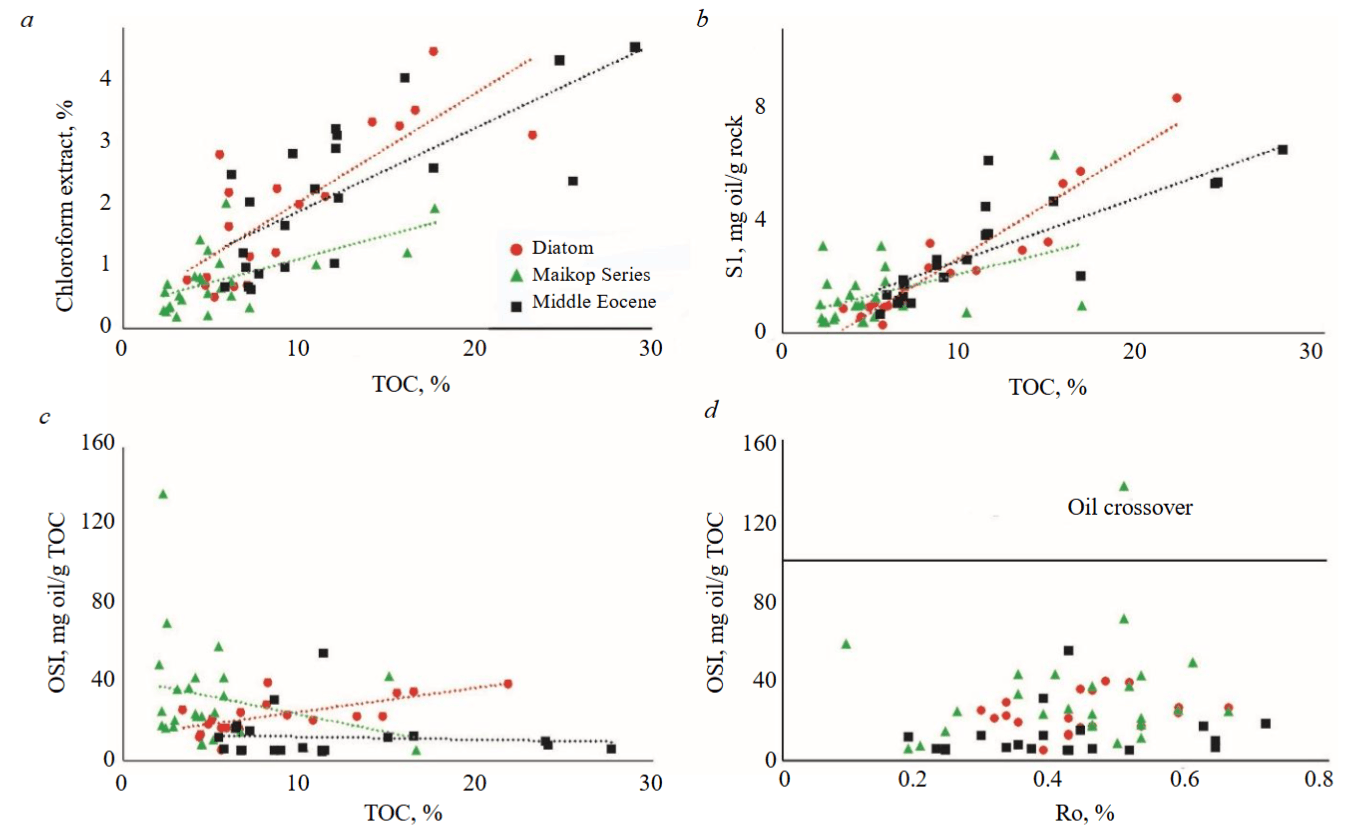
Fig.7. Diagrams illustrating the effect of TOC on the oil-retention capacity of the studied shales: TOC versus chloroform extract content (a); versus free oil content (b); versus OSI (c), and Ro versus OSI (d)
The formation of organic pores can occur not only during thermal cracking of kerogen, but also at earlier stages, in immature organic matter. Study [58] suggests that for Type II kerogens, secondary organic nanopores typically form at Ro of about 0.8 % (Tmax ~445 °C) and OSI > ~90 mg HC/g TOC, which coincides with a decrease in swelling capacity and maximum oil retention. However, in Fig.7, d, most samples show OSI values < 90 mg HC/g TOC at Ro of 0.3-0.6 %, indicating that these kerogens are still in the swelling phase. At this stage, characterized by low maturity and poor development of the pore network, they possess a high capacity to retain oil.
Determinants of gas-bearing capacity of reservoir shales
Mineralogical comparison of clay-siliceous shales (see Fig.3) with commercially significant reference shales of Barnett (USA) shows that the deposits of Eastern Azerbaijan have a relatively high similarity with them in terms of quartz, feldspar, and clay mineral content. At the same time, the increased content of the clay fraction in the studied shales compared to many typical lacustrine formations may act as a factor contributing to enhanced gas adsorption.
Hydrocarbon gases in shale formations occur in three forms – free, adsorbed and dissolved. Free and adsorbed gases are considered the most significant for shale gas production, and their total share in shale rocks reaches 85 % [62]. The presence of adsorbed gas in rocks is related to clay minerals such as kaolinite, illite and montmorillonite, whose pores of size 1-2 nm are ideally suitable for adsorption of methane and other gases due to their large specific surface area. Statistically, the predo-minance of clay minerals in the studied shales (see Fig.3) indicates a high gas adsorption potential. The increased content of quartz in the Maikop oil shales plays a decisive role in the concentration of free gas, which in combination with the gas-generating potential of Type III kerogen determines their total gas-bearing capacity.
Assessment of the adsorption potential of hydrocarbon gases in shale samples revealed CH4 as the predominant component compared to other gas homologs (C2H6, C3H8, and C4H10). Higher CH4 concentrations were observed in samples from Shikhzerli (0.00142 %) and Boyuk Siyeki (0.00130 %) of Central Gobustan. Our analysis shows that shales of the Maikop Series demonstrate a higher sorption potential of hydrocarbon gases than the Middle Eocene and Diatom oil shales.
A number of studies [69] demonstrated that kerogen possesses a greater adsorption capacity toward methane than clay minerals, which have a higher methane capacity than quartz. Shale gas production zones are typically classified as prospective (0.3 % ≤ TOC ≤ 1.5 %), favorable (1.5 % < TOC ≤ 2 %), or target (TOC > 2 %). The abnormally high content of organic matter in the studied shales (see Fig.4, a) creates the impression that this is a favorable factor for the formation of porosity, which can positively affect the adsorption and retention capacity of hydrocarbon gases. However, the study of the relationship between the liptinite content and gas adsorption indicates that kerogen of marine genesis possesses a low gas-sorption capacity. Compared to the gas-source kerogen (Type III), Type II kerogen is characterized by a lower sorption capacity, which is probably due to the reduced degree of aromaticity of its structure. Study [70] emphasized that Type III kerogen, characterized by larger pore sizes due to the high content of vitrinite macerals, positively affects the sorption and storage capacity of gas. Consequently, the high content of organic matter in the rock by itself does not always guarantee an improvement in its gas-containing potential. The type of kerogen, especially the abundance of vitrinite macerals, is a favorable factor for the shale gas potential. Therefore, taking into account the features of kerogen, we assess the adsorption potential of shale gas of the Maikop Series shales as significantly higher than that of other deposits.
Potential for the production of synthetic hydrocarbons from shales of Eastern Azerbaijan
The selection of a rational technology for the development of oil shale resources is determined by a complex of rigid mining and geological criteria. In the world practice of geological and economic evaluation, the minimum threshold of bed thickness for its inclusion into the resource base is traditionally accepted at the level of 2.8-3.0 m. To achieve the commercial profitability of the surface processing method, an effective bed thickness of more than 7 m and a burial depth of up to 300 m under conditions of a low stripping ratio are required. The development of deeply buried resources (up to 3000 m) requires the application of in-situ conversion methods [18], for which a critical condition for thermal efficiency is a deposit thickness of more than 15 m [16]. The efficiency of any method depends not only on reservoir properties and the presence of natural fractures [71, 72], but also on a complex of physicochemical parameters: the type and maturity of kerogen, as well as the kinetics of its thermal decomposition, which determine the final hydrocarbon yield [21, 32].
Analysis of geological data highlights Central Gobustan as a priority target. The uniqueness of this area lies in the fact that the shale strata of the Middle Eocene, Maikop, and the Diatom formations are traced here both at great depths (up to 4 km), as evidenced by their presence in mud volcano ejecta, and in the form of extensive surface outcrops (see Fig.2). Their total thickness reaches 400-500 m, and the thickness of individual beds – up to 40 m [46]. Such geological versatility, backed by favorable tectonics and the absence of socio-environmental barriers (forest cover and settlements), virtually transforms this territory into a natural testing ground for creating an integrated industry both for surface processing technologies and in-situ conversion. Beyond the limits of the Jeyrankechmez-South Caspian Megabasin, extensive shale outcrops are also recorded, forming a reserve for open-pit mining: the Vendam zone (for example, the Diyalli site, Middle Koun), the Talysh zone (Lower Maikop), and the Guba zone (Sarmatian). In the southern coastal areas, the burial of the oil shale-bearing series down to 6 km localizes the prospects of in-situ conversion predominantly within the deposits of the Diatom Formation.
Comprehensive mineralogical and geochemical studies of shales sampled from surface outcrops and mud volcano ejecta confirm their high generation potential. The analyses indicate that, despite the anomalously high concentration of organic matter (see Fig.4, a), the studied samples are characterized by a still low degree of thermal maturity (see Fig.4, b). Based on this body of data, a differentiation of prospective directions of oil and gas generation was carried out: the oil shales of the Middle Eocene and Diatom are highlighted as priority targets for oil generation, whereas the Maikop shales are defined as a target for gas generation.
The results of thermogravimetric analysis indicate that the main stage of organic matter thermal degradation in the oil shales of the Diatom and Middle Eocene formations concludes at temperatures around 475 °C (see Fig.6, a, c). This interval corresponds to the phase of active generation of light and heavy oil fractions. With a further temperature increase up to 650 °C, the processes of secondary cracking and gas generation intensify, accompanied by the aromatization and coking of residual carbon. These high-temperature effects are most pronounced in the Maikop Series shales (see Fig.6, b), which is attributed to the initial predominance of aromatic structures within their kerogen composition. The obtained kinetic parameters are of key practical importance for justifying the optimal temperature regimes of industrial retorting to optimize the yield of target products – synthetic oil and gas.
Conclusions
This study summarizes the results of the geological and geochemical investigation of the Cenozoic Middle Eocene to Upper Miocene shales within the uplifted onshore structural zones of Eastern Azerbaijan, which serve as analogues to the main generation kitchens of the offshore South Caspian, and allows the establishment of the following:
- From a structural-stratigraphic perspective, it has been established that these deposits are traced both within the Jeyrankechmez-South Caspian Megabasin and in adjacent tectonic zones (Guba, Vendam, Lerik-Yardimli). A fundamental difference between the megabasin and adjacent tectonic structures, with their fragmentary shale-bearing nature, is the stratigraphic completeness of the section, where the Middle Eocene (Middle Koun Formation), Oligocene-Lower Miocene (Maikop Series Formation), and Middle-Upper Miocene (Diatom Formation) form a single cyclically stacked (cluster) complex. Lithostratigraphic analysis data indicate that the Upper Maikop section is characterized by the dominance of rhythmic interbedding of numerous thin (centimeter-scale) interbeds, which accounts for its high cumulative shale content, whereas the Lower Maikop, Middle Eocene, and Diatom formations are represented by thicker individual beds.
- The integration of mineralogical, geochemical, and spectroscopic analysis results reveals distinct litho-geochemical differences between the Middle Eocene and Diatom formations, and the Maikop rocks. The quartz-enriched Upper Maikop shales, which contain significantly less organic matter (average TOC = 5.26 %), are characterized by a predominance of terrigenous organic matter, with vitrinite acting as the dominant maceral, indicating conditions of active allochthonous input. In contrast, the Middle Eocene and Diatom oil shales, which exhibit relative carbonate enrichment (> 10 % calcite), were formed under significant marine influence and are distinguished by a predominance of autochthonous organic matter dominated by telalginite, lamalginite, and alginite (with average TOC values of 11.18 and 9.87 %, respectively). FTIR spectroscopy data of the raw and extracted samples indicate similar spectral characteristics, with differences manifesting primarily in the intensity of absorption bands within the 700-2927 cm–1 range, reflecting the predominance of aliphatic C–H bonds. The increased intensity of these bands in the Middle Eocene and Diatom oil shales correlates with their enrichment in chloroform bitumoids, pointing to a predominantly aliphatic nature and a low degree of thermal maturity of the organic matter. TG/DTA and kinetic modeling results show that the organic matter of the Middle Eocene and Diatom oil shales is characterized by lower activation energy (Eₐ) values (69.3 and 67.5 kJ/mol) with a pre-exponential factor (A) on the order of 1013 s–1, leading to its intense thermal degradation within a relatively narrow temperature interval. In the Upper Maikop shales, the degradation of terrigenous organic matter requires higher energy inputs, as reflected by an activation energy of 76.4 kJ/mol and a pre-exponential factor on the order of 1014 s–1. Taken together, the obtained data demonstrate the high oil-generation potential of the Middle Eocene and Diatom formations and the predominantly gas-prone nature of the Maikop shales.
- The absolute dominance of liptinite group macerals (>70 %) in the Eocene and Diatom shales accounts for their high liquid-phase hydrocarbon potential. Fluorescence observed in microfractures and mineral pores indicates favorable conditions for free oil retention during the maturation stage. A comparison of the oil saturation index (OSI < 90 mg HC/g TOC) and thermal maturity (Ro = 0.3-0.6 %) demonstrates that, at the current stage, the kerogen is predominantly in the “swelling” phase. This implies that the bulk of the generated hydrocarbons has not migrated into the mineral matrix but is retained in an adsorbed state within the macromolecular structure of the kerogen.
- The substantial geological resources of immature shales in Eastern Azerbaijan, combined with their high organic richness and favorable geochemical characteristics, make these deposits a promising feedstock base for synthetic hydrocarbon production. The specific geological occurrence conditions support the application of differentiated conversion methods and also form a fundamental scientific basis for stimulating practical initiatives aimed at realizing the region's unconventional energy potential.
References
- Gandossi L., Bocin-Dumitriu A., Spisto A. International Developments in the Field of Inconventional Gas and Oil Extraction. Publication Office of the European Union, 2017. N EUR 28675 EN. DOI: 10.2760/372964
- Ivanov N.A. Shale revolution and global energy transition. Moscow; St. Petersburg: Nestor-Istoriya, 2019, p. 540.
- Shuo Sun, Shuang Liang, Yikun Liu et al. A review on shale oil and gas characteristics and molecular dynamics simulation for the fluid behavior in shale pore. Journal of Molecular Liquids. 2023. Vol. 376. N 121507. DOI: 10.1016/j.molliq.2023.121507
- Caineng Zou, Zhi Yang, Guosheng Zhang et al. Theory, technology and practice of unconventional petroleum geology. Journal of Earth Science. 2023. Vol. 34. Iss. 4, p. 951-965. DOI: 10.1007/s12583-023-2000-8
- Guangyou Zhu, Yan Zhang, Zhiyao Zhang et al. Connotation and extension of non-traditional petroleum geology theory. Natural Gas Geoscience. 2024. Vol. 35. Iss. 5, p. 763-784. DOI: 10.11764/j.issn.1672-1926.2023.09.001
- Jun Liu, Yan-Bin Yao, Elsworth D. Morphological complexity and azimuthal disorder of evolving pore space in low-maturity oil shale during in-situ thermal upgrading and impacts on permeability. Petroleum Science. 2024. Vol. 21. Iss. 5, p. 3350-3362. DOI: 10.1016/j.petsci.2024.03.020
- Kouqi Liu, Hongyan Qi, Zhizhong Wang et al. The organic matrix: An in-depth review of kerogen and its significance. Fuel. 2025. Vol. 397. N 135493. DOI: 10.1016/j.fuel.2025.135493
- Chengzao Jıa. Breakthrough and significance of unconventional oil and gas to classical petroleum geology theory. Petroleum Exploration and Development. 2017. Vol. 44. Iss. 1, p. 1-10. DOI: 10.1016/S1876-3804(17)30002-2
- Soeder D.J. The successful development of gas and oil resources from shales in North America. Journal of Petroleum Science and Engineering. 2018. Vol. 163, p. 399-420. DOI: 10.1016/j.petrol.2017.12.084
- Huairong Zhou, Shuai Zeng, Lei Zhang et al. Modelling and analysis of oil shale refinery process with the indirectly heated moving bed. Computer Aided Chemical Engineering. 2018. Vol. 44, p. 1471-1476. DOI: 10.1016/B978-0-444-64241-7.50240-8
- Zhiqin Kang, Yangsheng Zhao, Dong Yang. Review of oil shale in-situ conversion technology. Applied Energy. 2020. Vol. 269. N 115121. DOI: 10.1016/j.apenergy.2020.115121
- Shujing Bao, Mingna Ge, Peirong Zhao et al. Status-quo, potential, and recommendations on shale gas exploration and exploitation in China. Oil & Gas Geology. 2025. Vol. 46. Iss. 2, p. 348-364. DOI: 10.11743/ogg20250202
- Jinbu Li, Min Wang, Shuangfang Lu et al. A new method for predicting sweet spots of shale oil using conventional well logs. Marine and Petroleum Geology. 2020. Vol. 113. N 104097. DOI: 10.1016/j.marpetgeo.2019.104097
- Hughes J.D. A reality check on the shale revolution. Nature. 2013. Vol. 494. Iss. 7437, p. 307-308. DOI: 10.1038/494307a
- Bao Jia, Jianzheng Su. Advancements and Environmental Implications in Oil Shale Exploration and Processing. Applied Sciences. 2023. Vol. 13. Iss. 13. N 7657. DOI: 10.3390/app13137657
- Shangli Liu, Haifeng Gai, Peng Cheng. Technical scheme and application prospects of oil shale in situ conversion: A review of current status. Energies. 2023. Vol. 16. Iss. 11. N 4386. DOI: 10.3390/en16114386
- Huairong Zhou, Shuai Zeng, Siyu Yang et al. Modeling and analysis of oil shale refinery process with the indirectly heated moving bed. Carbon Resources Conversion. 2018. Vol. 1. Iss. 3, p. 260-265. DOI: 10.1016/j.crcon.2018.08.001
- Bo Chen, Jiatie Cai, Xinran Chen et al. A review on oil shale in-situ mining technologies: Opportunities and challenges. Oil Shale. 2024. Vol. 41. Iss. 1, p. 1-25. DOI: 10.3176/oil.2024.1.01
- Guo Wei, Sun Youhong, Li Qiang et al. Oil shale in-situ conversion technology triggered by topochemical reaction method and pilot test project in Songliao Basin. Acta Petrolei Sinica. 2024. Vol. 45. N 7, p. 1104-1121, 1129. DOI: 10.7623/syxb202407006
- Dazhong Ren, Zhendong Wang, Fu Yang et al. Study on the applicability of autothermic pyrolysis in situ conversion process for low-grade oil shale: A case study of Tongchuan, Ordos Basin, China. Energies. 2024. Vol. 17. Iss. 13. N 3225. DOI: 10.3390/en17133225
- Lian-Hua Hou, Xia Luo, Sen-Hu Lin et al. Assessment of recoverable oil and gas resources by in-situ conversion of shale‒Case study of extracting the Chang 73 shale in the Ordos Basin. Petroleum Science. 2022. Vol. 19. Iss. 2, p. 441-458. DOI: 10.1016/j.petsci.2021.10.015
- Jiale He, Zhihong Zhao, Yiran Geng et al. Effect of fracture fluid flowback on shale microfractures using CT scanning. Journal of Rock Mechanics and Geotechnical Engineering. 2024. Vol. 16. Iss. 2, p. 426-436. DOI: 10.1016/j.jrmge.2023.07.006
- Yang Gao, Tao Wan, Yan Dong, Yingyan Li. Numerical and experimental investigation of production performance of in-situ conversion of shale oil by air injection. Energy Reports. 2022. Vol. 8, p. 15740-15753. DOI: 10.1016/j.egyr.2023.01.119
- Zhiqin Kang, Huanyu Xie, Yangsheng Zhao, Jing Zhao. The feasibility of in-situ steam injection technology for oil shale underground retorting. Oil Shale. 2020. Vol. 37. Iss. 2, p. 119-138. DOI: 10.3176/oil.2020.2.03
- Lei Wang, Dong Yang, Zhiqin Kang. Evolution of permeability and mesostructure of oil shale exposed to high-temperature water vapor. Fuel. 2021. Vol. 290. N 119786. DOI: 10.1016/j.fuel.2020.119786
- Yuan Wang, Nianyin Li, Xiaoqiang Pang et al. Evolutionary mechanisms of pore-fracture network development in oil shale during pyrolysis: current research progress and perspectives. Sustainable Energy & Fuels. 2025. Vol. 9. Iss. 13, p. 3495-3522. DOI: 10.1039/D5SE00396B
- Litvinenko V.S., Petrov E.I., Vasilevskaya D.V. et al. Assessment of the role of the state in the management of mineral resources. Journal of Mining Institute. 2023. Vol. 259, p. 95-111. DOI: 10.31897/PMI.2022.100
- Koteleva N.I., Valnev V.V., Simakov A.S., Shirazi M.M. Digital transformation of industrial machinery repair and maintenance to build an industrial metaverse. Journal of Mining Institute. 2025. Vol. 275. P. 30-41.
- Litvinenko V., Trushko V. Modelling of geomechanical processes of interaction of the ice cover with subglacial Lake Vostok in Antarctica. Antarctic Science. 2025. Vol. 37. Iss. 1, p. 39-48. DOI: 10.1017/S0954102024000506
- Shiwei Ma, Shouding Li, Zhaobin Zhang et al. The feasibility study of in situ conversion of oil shale based on calcium-oxide-based composite materia hydration exothermic reaction. Energies. 2024. Vol. 17. Iss. 8. N 1798. DOI: 10.3390/en17081798
- Yue Li, Jiarui Cheng, Mou Yao et al. Review on in situ conversion of oil shale. Oil Shale. 2025. Vol. 42. Iss. 4, p. 343-372. DOI: 10.3176/oil.2025.4.01
- Changrong Li, Zhijun Jin, Liuping Zhang, Xinping Liang. Thermodynamic and microstructural properties of the lacustrine Chang-7 shale kerogen: Implications for in-situ conversion of shale. International Journal of Coal Geology. 2024. Vol. 283. N 104447. DOI: 10.1016/j.coal.2024.104447
- Zhaobin Zhang, Briceño Montilla M.J., Shouding Li et al. Optimization analysis of in-situ conversion and displacement in continental shale reservoirs. ACS Omega. 2024. Vol. 9. Iss. 38, p. 39972-39985. DOI: 10.1021/acsomega.4c05764
- Litvinenko V.S. A model of mining engineering education for the 21st century. Sustainable Development of Mountain Territories. 2025. Vol. 17. N 2 (64), p. 603-615. DOI 10.21177/1998-4502-2025-17-2-603-615
- Bai Jinmei, Qian Kun, Wu Xiaojun et al. Thermal cracking for upgrading medium-low maturity shale oil: evolution of organic matter occurrence. Scientific Reports. 2025. Vol. 15. N 43054. DOI: 10.1038/s41598-025-27082-x
- Odoma A.N., Joseph G.E. Chemostratigraphy, geomechanical characteristics, and petroleum indicators from southern Bida Basin outcrops, Nigeria. Discover Geoscience. 2026. Vol. 4. N 16. DOI: 10.1007/s44288-026-00392-x
- Yuhao Guo, Liqiang Sima, Liang Wang et al. Quantitative assessment of free and adsorbed shale oil in kerogen pores using molecular dynamics simulations and experiment characterization. Energies. 2025. Vol. 18. Iss. 21. N 5695. DOI: 10.3390/en18215695
- Xiaomei Zhou, Zhengdong Lei, Lei Li et al. Coupled analysis of shale oil occurrence states and spaces: Characteristics and influencing mechanisms. Fuel. 2026. Vol. 410. N 137893. DOI: 10.1016/j.fuel.2025.137893
- Nefedov Y.V., Yashmolkin A.M., Vostrikov N.N. Identification of facies zonation features of aptian deposits in Pokur Suite using seismic data, well logging, and core sedimentological analysis. International Journal of Engineering, Transactions B: Applications. 2025. Vol 38. Iss. 8, p. 1932-1938. DOI: 10.5829/ije.2025.38.08b.17
- Prischepa O.M., Sinitsa N.V. Prospects for oil and gas bearing potential of Paleozoic basement of West Siberian Sedimentary Basin. International Journal of Engineering, Transactions B: Applications. 2025. Vol. 38. Iss. 5, p. 1098-1107. DOI: 10.5829/ije.2025.38.05b.12
- Nefedov Y.V., Vostrikov N.N. Yashmolkin A.M. Impact of tectono-sedimentation factor on prospects of oil and gas potential of Sakhalin offshore of Okhotsk oil and gas province established through stochastic seismic data inversion and constructed digital paleotectonic model. International Journal of Engineering, Transactions A: Basics. 2025. Vol. 38. Iss. 7, p. 1726-1736. DOI: 10.5829/ije.2025.38.07a.22
- Prischepa O.M., Nefedov Y.V., Loginov A.V. et al. Geochemical characterization of Paleozoic source rocks in Nerutinskaya-3 Well, Timan-Pechora Petroleum Province. International Journal of Engineering, Transactions B: Applications. 2026. Vol. 39. Iss. 8, p. 1908-1917. DOI: 10.5829/ije.2026.39.08b.11
- Sinitsa N.V., Prishchepa O.M. A conceptual model for the formation of oil and gas accumulation zone within the Paleozoic basement of the southeastern West Siberian basin. Actual Problems of Oil and Gas. 2023. Iss. 1 (40), p. 14-26 (in Russian). DOI: 10.29222/ipng.2078-5712.2023-40.art2
- Yue Feng, Xianming Xiao, Enze Wang et al. Oil mobility evaluation and light hydrocarbon restoration in shale reservoirs: a review. Gondwana Research. 2026. Vol. 154, p. 122-154. DOI: 10.1016/j.gr.2025.12.010
- Baldermann A., Abbasov O.R., Bayramova A. et al. New insights into fluid-rock interaction mechanisms at mud volcanoes: Implications for fluid origin and mud provenance at Bahar and Zenbil (Azerbaijan). Chemical Geology. 2020. Vol. 537. N 119479. DOI: 10.1016/j.chemgeo.2020.119479
- Abbasov O.R., Baloglanov E.E., Yolchuyeva U.J. et al. Factors controlling the formation and oil-generating potential of the Middle Eocene organic-rich shales of Eastern Azerbaijan. Boletín de la Sociedad Geológica Mexicana. 2025. Vol. 77. Iss. 1. N A020724. DOI: 10.18268/BSGM2025v77n1a020724
- Bayramova A., Abbasov O.R., Aliyev A.A. et al. Tracing water–rock–gas reactions in shallow productive mud chambers of active mud volcanoes in the Caspian sea region (Azerbaijan). Minerals. 2023. Vol. 13. Iss. 5. N 696. DOI: 10.3390/min13050696
- Feyzullayev A.A., Lerche Ian. Temperature-depth control of petroleum occurrence in the sedimentary section of the South Caspian basin. Petroleum Research. 2020. Vol. 5. Iss. 1, p. 70-76. DOI: 10.1016/j.ptlrs.2019.10.003
- Yolchuyeva U.J., Abbasov O.R., Jafarova R.A. et al. A study of asphaltene solubility and aggregation due to sulfur heteroatoms: molecular dynamics simulation. Journal of Molecular Modeling. 2025. Vol. 31. Iss. 5. N 133. DOI: 10.1007/s00894-025-06358-z
- Odonne F., Imbert P., Remy D. et al. Surface structure, activity and microgravimetry modeling delineate contrasted mud chamber types below flat and conical mud volcanoes from Azerbaijan. Marine and Petroleum Geology. 2021. Vol. 134. N 105315. DOI: 10.1016/j.marpetgeo.2021.105315
- Sokol E., Kokh S., Kozmenko O. et al. Mineralogy and geochemistry of mud volcanic ejecta: A new look at old issues
- (a case study from the Bulganak Field, Northern Black Sea). Minerals. 2018. Vol. 8. Iss. 8. N 344. DOI: 10.3390/min8080344
- Gurbanov V.Sh., Narimanov N.R., Nasibova G.J. et al. Qualitative assessment of compressional stresses within the South Caspian megadepression and their impact upon structure formation and hydrocarbon generation. ANAS Transactions, Earth Sciences. 2021. Vol. 2, p. 39-49. DOI: 10.33677/ggianas20210200061
- Odonne F., Imbert P., Dupuis M. et al. Mud volcano growth by radial expansion: Examples from onshore Azerbaijan. Marine and Petroleum Geology. 2020. Vol. 112. N 104051. DOI: 10.1016/j.marpetgeo.2019.104051
- Khuduzade A.I., Abbasov O.R., Guliyev I.S. et al. Geochemical-paleontological study of Mesozoic source rocks, Eurasian–Gondwana junction, Azerbaijan. Episodes. 2026, p. 1-19. DOI: 10.18814/epiiugs/2026/026002
- Kayukova G.P., Mikhailova A.N., Morozov V.P. et al. Comparative study of changes in the composition of organic matter of rocks from different sampling-depth intervals of Domanik and Domankoid deposits of the Romashkino Oilfield. Petroleum Chemistry. 2019. Vol. 59. Iss. 10, p. 1124-1137. DOI: 10.1134/S0965544119100050
- Aghayeva V., Sachsenhofer R.F., van Baak C.G.C. et al. New geochemical insights into Cenozoic source rocks in Azerbaijan: Implications for petroleum systems in the South Caspian Region. Journal of Petroleum Geology. 2021. Vol. 44. Iss. 3, p. 349-384. DOI: 10.1111/jpg.12797
- Xiaomin Xie, Volkman J.K., Jianzhong Qin et al. Petrology and hydrocarbon potential of microalgal and macroalgal dominated oil shales from the Eocene Huadian Formation, NE China. International Journal of Coal Geology. 2014. Vol. 124, p. 36-47. DOI: 10.1016/j.coal.2013.12.013
- Zhi-bing Chang, Mo Chu, Chao Zhang et al. Comparison of pyrolysis characteristics of two Chinese oil shales based on the migration and conversion of organic carbon. Carbon Resources Conversion. 2018. Vol. 1. Iss. 3, p. 209-217. DOI: 10.1016/j.crcon.2018.08.003
- Peng Cheng, Xianming Xiao, Qizhang Fan, Ping Gao. Oil retention and its main controlling factors in Lacustrine shales from the Dongying Sag, Bohai Bay Basin, Eastern China. Energies. 2022. Vol. 15. Iss. 12. N 4270. DOI: 10.3390/en15124270
- Bixiao Xin, Xianzheng Zhao, Fang Hao et al. Laminae characteristics of lacustrine shales from the Paleogene Kongdian Formation in the Cangdong Sag, Bohai Bay Basin, China: Why do laminated shales have better reservoir physical properties? International Journal of Coal Geology. 2022. Vol. 260. N 104056. DOI: 10.1016/j.coal.2022.104056
- Shang Xu, Qiyang Gou. The importance of laminae for China lacustrine shale oil enrichment: A review. Energies. 2023. Vol. 16. Iss. 4. N 1661. DOI: 10.3390/en16041661
- Yue Feng, Xianming Xiao, Enze Wang et al. Oil retention in shales: A review of the mechanism, controls and assessment. Frontiers in Earth Science. 2021. Vol. 9. N 720839. DOI: 10.3389/feart.2021.720839
- Yuanjia Han, Brian Horsfield, Richard Wirth et al. Oil retention and porosity evolution in organic-rich shales. AAPG Bulletin. 2017. Vol. 101. N 6, p. 807-827. DOI: 10.1306/09221616069
- Chaofan Zhu, Wei Guo, Yajun Li et al. Effect of occurrence states of fluid and pore structures on shale oil movability. Fuel. 2021. Vol. 288. N 119847. DOI: 10.1016/j.fuel.2020.119847
- Guohui Chen, Shuangfang Lu, Junfang Zhang et al. A method for determining oil-bearing pore size distribution in shales: A case study from the Damintun Sag, China. Journal of Petroleum Science and Engineering. 2018. Vol. 166, p. 673-678. DOI: 10.1016/j.petrol.2018.03.082
- Wenjun Pang, Jing Li, Shixin Zhou et al. Distribution, origin, and impact on diagenesis of organic acids in representative continental shale oil. Processes. 2024. Vol. 12. Iss. 10. N 2092. DOI: 10.3390/pr12102092
- Chunlong Xue, Deluo Ji, Yutong Wen et al. Promising combination of CO2 enhanced oil recovery and CO2 sequestration in calcite nanoslits: Insights from molecular dynamics simulations. Journal of Molecular Liquids. 2023. Vol. 391. Part A. N 123243. DOI: 10.1016/j.molliq.2023.123243
- Chao Gao, Yiyi Chen, Jintao Yin et al. Experimental study on reservoir characteristics and oil-bearing properties of Chang 7 lacustrine oil shale in Yan’an area, China. Open Geosciences. 2022. Vol. 14. Iss. 1, p. 234-251. DOI: 10.1515/geo-2022-0346
- Yuan-Yuan Sun, Jian-Fei Yan, Yu-Peng Men et al. Geochemical and geological characteristics of the Upper Ordovician–Lower Silurian shales in the Upper Yangtze Basin, South China: Implication for the shale gas exploration. ACS Omega. 2020. Vol. 5. Iss. 18, p. 10228-10239. DOI: 10.1021/acsomega.9b03000
- Alafnan S., Solling T., Mahmoud M. Effect of kerogen thermal maturity on methane adsorption capacity: A molecular modeling approach. Molecules. 2020. Vol. 25. Iss. 16. N 3764. DOI: 10.3390/molecules25163764
- Bin Chen, Barboza B.R., Yanan Sun et al. A review of hydraulic fracturing simulation. Archives of Computational Methods in Engineering. 2022. Vol. 29. Iss. 4, p. 2113-2170. DOI: 10.1007/s11831-021-09653-z
- Hongyan Wang, Shangwen Zhou, Jiehui Zhang et al. Clarifying the effect of clay minerals on methane adsorption capacity of marine shales in Sichuan Basin, China. Energies. 2021. Vol. 14. Iss. 20. N 6836. DOI: 10.3390/en14206836