

The cover shows an exhibit of the Mining Museum – a crystalline-granular copper nugget of a fancy shape with quartz and epidote, Michigan, USA. Native copper not only has an unusual shape (lamellae, spongeous masses and continuum, filamentary and wire-like aggregates, crystals, and dendrites), but also a captivating color – soft pink, copper-red, and brick-red.
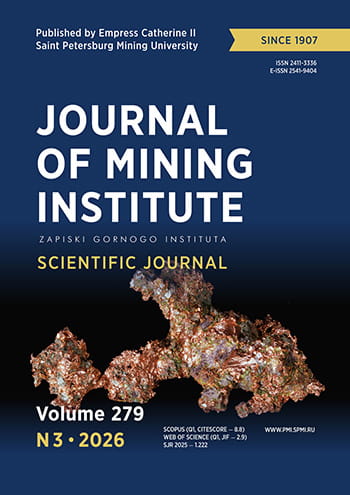
Vol 279
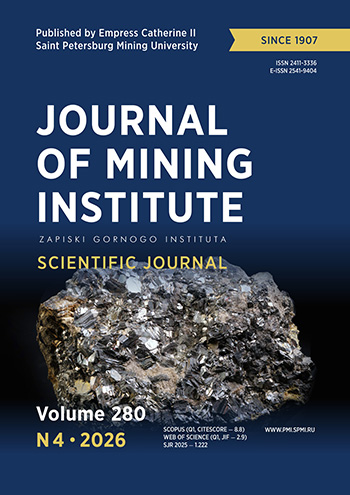
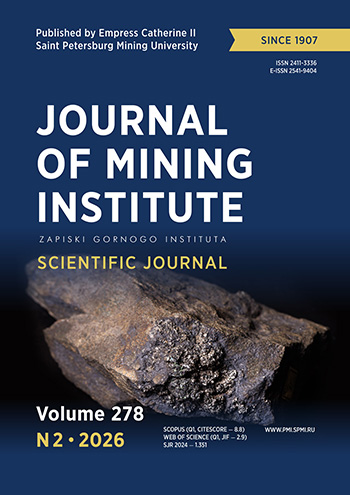
-
Date submitted2025-06-19
-
Date accepted2025-12-09
-
Online publication date2026-04-23
-
Date published2026-07-20
Olivine potential for water transport to the mantle under warm and hot subduction conditions
- Authors:
- Igor N. Kupriyanov
- Aleksandr G. Sokol
This study experimentally investigates the patterns of hydrogenation of olivine crystals by an aqueous fluid in equilibrium with olivine and orthopyroxene at a pressure of 5.5 GPa and temperatures of 850, 940, 1030, and 1100 °C. It is shown that at P-T parameters characteristic of slabs and the portion of the mantle wedge mechanically coupled to slabs under the thermal regimes of warm and hot subduction, the interaction of the aqueous fluid with olivine is largely controlled by the concentration of pre-existing silicon vacancies in olivine crystal structure. As a result, at a temperature of 850 °C, the concentration of OH defects related to Si vacancies increases noticeably relative to the initial value; however, calculated as H2O, it does not exceed 110 ppm. At 1030 °C, no new Si vacancies are formed, and the water content in olivine remains at the same level as after experiments at lower temperatures. The formation of Si vacancies and their protonation during olivine recrystallization in an aqueous fluid are recorded only at 1100 °C, near the peridotite solidus. In newly formed olivine, the water content reaches 350 ppm. It has been established that an increase in oxygen fugacity from the values of the Ni-NiO (NNO) buffer to those of the Fe2O3-Fe3O4 (HM) buffer, as well as an increase in NaCl concentration in the fluid from 0 to 9 wt.%, have little or no effect on the solubility of water in olivine. It is concluded that due to the low solubility of water in olivine immediately following the complete dehydration of serpentinized peridotites at depths of ~150-200 km, the efficiency of water transport into the mantle by slabs under the thermal regimes of warm and hot subduction must decrease sharply. Under such conditions, a significant volume of aqueous fluid is released within the slabs, which can participate in the generation of deep magmas and mantle metasomatism.
-
Date submitted2025-10-04
-
Date accepted2025-12-24
-
Online publication date2026-05-14
-
Date published2026-07-20
Investigation of the mass explosions impact on the off-contour massif
- Authors:
- Evgenii B. Shevkun
- Evgenii A. Shishkin
The stress wave generated by rock blasting causes vibrations in the off-contour massif. The rock strength is significantly reduced in those off-contour massif areas where the permissible velocity is exceeded. This can lead to the collapse of nearby ledges. The aims of the study are to develop a methodology for determining the boundary of the off-contour massif seismically hazardous zone, as well as to assess the well delay interval effect on the hazardous zone boundary position. Elastic vibrations of the off-contour rock under the effect of a blast wave are considered. The dependence of the rock mass displacement under the action of stress is a function of time and distance from the blast site. A series of production experiments were conducted at the “Valley” quarry of Amur Minerals JSC to determine the coefficients values that take into account the attenuation of the stress wave in the rock with increasing distance from the blast site. A method to determine the position of the off-contour massif boundary has been developed. Beyond that boundary the rate of rock displacement does not exceed the permissible value. The initial data for the calculation are the rock mass physical and mechanical characteristics and the parameters of the explosives used. In the Simulink environment a simulation model was developed to implement the described method. A methodology for energy assessment of the process of rock displacement under the effect of a stress wave was developed to verify the modeling results. By analy-zing the results obtained, a conclusion was made about the sufficient accuracy of the proposed method for practical calculations. Displacement energy values of the same point of the off-contour massif are compared at different well delay interval. Rock blasting with increased well delay intervals allows to improve the off-contour massif safety, as well as the overlying horizons ledges. The quality of blasted rock loosening is maintained.
-
Date submitted2025-10-07
-
Date accepted2026-03-04
-
Online publication date2026-05-13
-
Date published2026-07-20
Experience in refining the critical depth of rock burst hazard at the ore deposit during transition to underground mining
The paper considers the problem of refining the critical depth of rock burst hazard for the Nyorkpakhk apatite-nepheline ore deposit in the context of transition to underground mining. The relevance of the study results from the discrepancy between the value of 400 m (according to regulatory documentation) and the actual mining and geological conditions, especially considering the significant impact of the existing open pit on the stress-strain state of the rock mass and other natural factors of the region. The aim of the study is the development and testing of a comprehensive methodology for assessing the critical depth of rock burst hazard, including core discing analysis, seismicity monitoring, spatial numerical modeling of the stress-strain state using the CAE Simulia Abaqus software, assessment of the rock burst hazard potential of rocks based on the Kaiser criterion, and comparison with a geomechanically similar analogue Oleniy Ruchey deposit. Core discing analysis revealed only local stress zones associated with tectonic faults, without characteristics pointing to rock burst hazard down to the +100 m level. The results of numerical modeling confirmed the absence of stress concentrations down to the +35 m level both before the start and after the completion of open pit mining. Comparison using the similarity method showed expected manifestation of rock burst hazard below the +50 m level. The studies, according to the described methodology, enabled scientific justification of increasing the critical depth of rock burst hazard relative to the regulatory value, down to the +100 m level. It has also been determined that for the Khibiny deposits there is no direct correlation between the brittleness criterion and the propensity for rock burst hazard. The proposed methodology is recommended for testing at rock burst hazardous deposits with complex mining and geological conditions.
-
Date submitted2025-06-27
-
Date accepted2026-03-04
-
Online publication date2026-05-14
-
Date published2026-07-20
Microbiota of the weathering crust from the Turgoyakskoye kaolin deposit (Miass district, Southern Urals)
In recent decades, researchers have identified an important and in some cases leading role of biological processes, primarily microbiota activity, in the formation of weathering crusts. The study of new features associated with crust formation is of both theoretical and practical interest. The aim of this work is to clarify the role of microbiota in the formation of the Mesozoic kaolinite-type weathering crust (exemplified by the Turgoyakskoye kaolin deposit) using microprobe analysis and electron microscopy. The research showed active involvement of diverse microbial communities in the formation of kaolin clays: scientists found various fossilized bacterial structures, including mineralized biofilms, pseudomorphs after coccoid and rod‑shaped bacteria, glycocalyx remnants, and filamentous microfossils. This microbiota is morphologically similar to bacterial forms described in laterites, but the biominerals composing them are fundamentally different. In kaolins, they consist of silicates and aluminosilicates, while in laterites they consist of Fe, Al, and Mn oxides and hydroxides, which indicates a different species composition of microbiota involved in the formation of lateritic and kaolinitic weathering crusts. These findings likely show that during weathering, climate controls not only chemical but also bacterial mineral formation. Unlike laterites, the distribution of microorganisms in kaolin clays is uneven – ranging from isolated remnants to mass accumulations. During kaolin formation, microbiota biomechanically destroys the matrix of the parent rock and simultaneously synthesizes new minerals, forming biomorphs from them. Among the latter, biomorphs after “titanium” bacteria are of particular interest. Their discovery confirms Academician V.I.Vernadskii’s view on the predominantly biogenic nature of titanium in rocks of mature weathering crusts.
-
Date submitted2025-05-30
-
Date accepted2026-03-04
-
Online publication date2026-05-15
-
Date published2026-07-20
New data on the manifestation of Baikalian (Timanian) tectono-magmatic activation on West Spitsbergen Island
The Spitsbergen archipelago is at the junction of the northern segment of the Norwegian-Greenland Basin and the western part of the Arctic Ocean, which makes it a key area for deciphering the formation history and geological structure of the region. Crystalline basement rocks and sedimentary cover units outcrop here, including those that constitute the petroleum-bearing complexes of the shelf. There is a clear need to substantiate the presence of evidence for the Baikalian (Timanian) tectono-magmatic activation within the Earth’s crust of the Spitsbergen archipelago, as well as to determine the conditions of its manifestation. To address this objective, a comprehensive description of the Trollheimen volcanogenic formation – whose rocks are known within Oscar II Land – is provided for the first time, based on the authors’ own data. We examine geotectonic features, material composition, age, and geodynamic interpretations of the formation settings. The authors identified that the sedimentary-volcanogenic complex described in the mountainous glacial part of Oscar II Land was formed during the Vendian (574-558 Ma) as a result of tectono-magmatic activation of the epi-Grenvillian paraplatform. They provide the petrographic and petro‑geochemical profile of the identified metabasalts, metaandesites, and metatuffs. The results of studying the petrochemical features of the Trollheimen volcanogenic formation indicate magma generation at great depths; the rift-related nature of these formations is determined. The authors carry out a correlation with the previously identified sedimentary-volcanogenic complex of the Chamberlaindalen Series in the northern part of Wedel Jarlsberg Land. The presented data confirm the previously proposed arguments for the Vendian-Baikalian, Timanian intraplate activation in the archipelago, as well as the widespread development of these complexes within the cover of the epi-Grenvillian paraplatform of Spitsbergen.
-
Date submitted2025-05-06
-
Date accepted2026-03-04
-
Online publication date2026-05-18
-
Date published2026-07-20
Analysis of the influence of viscoelastic properties of a synthetic hydraulic fracturing fluid on proppant transport capacity
One of the pressing scientific challenges in the field of hydrocarbon production enhancement from hard-to-recover reserves using hydraulic fracturing is the insufficient understanding of how the elastic properties of hydraulic fracturing fluids affect proppant retention efficiency during fracture initiation in the near-wellbore zone. Earlier domestic and foreign studies on proppant transport capacity assert that fluid viscosity plays a key role in proppant retention; however, recent data indicate a significant influence of the elastic properties of polymer systems, particularly when using low-viscosity synthetic hydraulic fracturing fluids based on polyacrylamide (PAM). This study aims to provide a fundamental substantiation of the effect of viscoelastic properties of hydraulic fracturing fluids on proppant transport efficiency. The article presents the methodology and results of laboratory tests evaluating the viscoelastic and proppant transport properties of PAM-based and guar polymer-based hydraulic fracturing fluids. The findings demonstrate that PAM-based hydraulic fracturing fluids, despite their low effective system viscosity, exhibit more pronounced elastic properties compared to linear guar gels: the relaxation time and the first normal stress difference for the synthetic hydraulic fracturing fluid are 1.99 and 4 times greater than the corresponding values for the linear guar gel. The test results confirmed that the proppant settling rate in the PAM-based hydraulic fracturing fluid under static conditions was 28 times lower than that in the linear guar gel at equivalent active substance concentrations. The elastic properties of hydraulic fracturing fluids have a substantial effect on proppant transport capacity, supporting the potential of using low-viscosity synthetic PAM-based hydraulic fracturing fluids to enhance hydrocarbon production from reservoirs with permeability less than 1 mD.
-
Date submitted2025-06-25
-
Date accepted2026-04-28
-
Online publication date2026-06-05
-
Date published2026-07-20
Principles for classifying explosive seismic sources using the USBM formula
This article examines the seismic effects of blasting operations on protected structures, highlights the importance of this factor for ensuring occupational safety at mines, and reviews advances in predicting the magnitude of seismic effects. The relevance of applying two classical formulas, Sadovsky’s formula and the USBM formula, is substantiated for predicting the parameters of blast-induced ground vibrations. As the problem of classifying blasting operations according to their seismic effect has already been solved using Sadovsky’s formula, the present study addresses a similar classification problem for the USBM formula, given its widespread use in international practice. The problem was solved based on a statistical analysis of paired values of the seismic coefficient and attenuation exponent for blast-induced ground vibrations, compiled from open literature sources. For the first time, the attenuation exponent is shown to follow a normal distribution, while the seismic coefficient follows a lognormal distribution; the key parameters of these distributions are also estimated. A classification criterion is proposed for explosive seismic sources based on their seismic impact level, distinguishing between high and low seismic effects. The statistical significance of the paired regression is evaluated, leading to the conclusion that the coefficients in the classification criterion are statistically significant. Challenges associated with classifying explosive seismic sources by seismic impact level are discussed for both the USBM and Sadovsky’s formulas. Practical examples are presented to demonstrate the application of the proposed classification for the comparative assessment of seismic effects generated by different explosive sources. Directions for further research are also outlined.
-
Date submitted2025-07-11
-
Date accepted2026-03-04
-
Online publication date2026-06-09
-
Date published2026-07-20
Design of geotechnical complexes for open-pit mines to ensure the sustainable operation of mining enterprises
- Authors:
- Andrey V. Glebov
- Viktor L. Yakovlev
The article describes the problem of reducing the competitiveness of mining enterprises due to the rising costs for transporting the rock mass due to the emergence of a mutual discrepancy between the transport system and the mining and technical system of the open-pit mine. The approach to the design of the mining and technical systems of deep open-pit mines is described being based on the consideration of the reliability of the technical subsystem that ensures the cargo turnover of rock mass. The formation of stable cargo turnover of rock mass is an urgent scientific and practical task to ensure the competitiveness of a mining enterprise. The parameters and indicators of subsystems of the mining and technical system have a large number of interrelations and change during the life of the open-pit mine, their formation is considered as a set of mining and transport equipment that comprise geotechnical complexes – drilling-and-blasting, excavator-and-vehicle, crushing-and-conveyor, crushing-and-reloading, etc., which are the main link for the extraction and delivery of minerals to the daylight surface. The mathematical models of the reliability of cargo flows formed by the technical subsystem of the mining and technical system of open-pit mine are presented, taking into account the relationship between the reliability of the system and the operational reliability of its constituent mining and transport equipment (vehicle, railway and conveyor transport, drilling rigs, excavators) under various interaction schemes. These relationships can be used for modeling both in the process of designing the mining and technical systems of open-pit mines, and in analyzing the reliability of individual schemes for transporting the rock mass and the entire transport system. The purpose of the research is to develop schemes and mathematical models for determining the reliability of cargo turnover provided by the technical subsystem of the open-pit mine (a combination of geotechnical complexes that have a significant impact on the technological subsystem, cargo turnover and productivity of the open-pit mine).
-
Date submitted2025-04-16
-
Date accepted2025-12-24
-
Online publication date2026-06-10
-
Date published2026-07-20
Oxidation kinetics of tetravalent uranium during sulfuric-acid leaching intensification under in-situ recovery conditions
The paper examines how redox phenomena govern the recovery of uranium by in-situ recovery (ISR) technology, with particular emphasis on the role of oxygen and iron in the controlling reactions. A review is presented of the standard electrode potentials of the ionic species participating in the process, followed by a detailed examination of the conversion of Fe(II) to Fe(III) and its effect on uranium dissolution in acidic media. The experimental section addresses the oxygenation of acidic lixiviants through a Venturi-type nozzle. The findings demonstrate that tuning the redox conditions markedly enhances the productivity of ISR. Atmospheric oxygen, owing to its availability and cost efficiency, drives the Fe(II) → Fe(III) transition and thereby raises the solubility of uranium-bearing species. Through experiment, the flow velocity providing the maximum oxygen dissolution was identified. Incorporation of the Venturi nozzle substantially increased the dissolved-oxygen content of the lixiviant, which in turn raised the Fe(III) concentration and improved uranium recovery. The proposed approach yielded a 38.13 % increase in uranium extraction relative to the conventional procedure. The work confirms the importance of redox processes in uranium hydrometallurgy and justifies the need to optimize them for industrial gains. A Venturi nozzle embedded in an acidic recirculation loop, operated without any externally supplied oxidant, sustains an Eh elevation sufficient for the U(IV) → U(VI) transition through enhanced oxidation of Fe2+ to Fe3+. The study quantitatively documents a ~60-70 % rise in dissolved O2, an Eh increment of ~30-80 mV, and a corresponding gain in dissolved uranium.
-
Date submitted2025-03-26
-
Date accepted2025-12-24
-
Online publication date2026-06-25
-
Date published2026-07-20
Prospects of synthetic hydrocarbons in immature Cenozoic onshore shale-bearing strata of Eastern Azerbaijan: geological and geochemical assessment
The formation of the principal hydrocarbon resource base of Eastern Azerbaijan is predominantly associated with deeply buried source kitchens within the Middle Eocene to Upper Miocene succession of the South Caspian Basin offshore area. Analogues of these deposits are widely distributed within uplifted onshore structural zones, where they crop out or occur at relatively shallow depths. Geochemical investigation of outcrop samples and rock fragments from mud volcano ejecta revealed that the Middle Eocene (Middle Koun Formation) and Middle-Upper Miocene (Diatom Formation) oil shales are characterized by exceptionally high organic carbon content. The Oligocene-Miocene Maikop Series, traditionally regarded as the principal source rocks of the region, are markedly inferior to these strata in terms of organic matter enrichment. Rock-Eval pyrolysis, thermogravimetric analysis, and kinetic modeling confirm that the Eocene and Diatom shales contain a Type II oil-generating kerogen characterized by low activation energy and active stepwise degradation. The Maikop shales are source rocks with a predominance of Type III kerogen, the degradation of which requires high activation energies and exhibits gas-generating potential. The mineral composition of the samples, characterized by a low degree of illitization, and FTIR spectroscopy data indicating the pronounced presence of long-chain aliphatic compounds, point to the low thermal maturity of the kerogen, which is corroborated by petrographic analysis results. Microscopic investigations and pyrolysis data suggest that shale oil may be retained within the kerogen matrix in an adsorbed or swollen state. The integration of geological and geochemical parameters that characterize the occurrence of immature, high-carbon strata with an effective thickness of up to 40 m at depths of up to 4 km confirms the high potential of their thermal conversion to synthetic hydrocarbons. The research results form a scientific basis for future projects on the development of unconventional hydrocarbons in oil shale strata.
-
Date submitted2025-07-02
-
Date accepted2025-12-24
-
Online publication date2026-06-26
-
Date published2026-07-20
Conditions of formation of the Gubanov intrusion of rapakivi granites (Wiborg massif)
The article is devoted to determining the P-T conditions and formation mechanisms of the Gubanov intrusion (Wiborg rapakivi granite massif) using a suite of petrographic and geochemical methods combined with thermodynamic modelling (rhyolite-MELTS, machine learning). Microstructural analysis of plagioclase resorption made it possible for the first time to estimate the vertical dimension of the intermediate magma chamber at 1.5-2 km and the crystal accumulation/settling timescale (< 0.2 Ma) as the duration of the early stage of rock crystallization. Combined thermobarometry (mineral equilibria, ML algorithms, rhyolite-MELTS) constrained the crystallization interval to T = 840-660 °C, P = 5.5-4.0 kbar at fO2 ≈ FMQ and H2O in the melt ≈ 6-10 wt.%. It is shown that the rocks of the contact zone between phases formed by partial melting of phase 2 material (producing a melt with 80-84 wt.% SiO2) triggered by phase 3 melt and subsequent mixing of these components. The results refine the evolutionary model of the Wiborg massif and demonstrate the effectiveness of integrating traditional and modelling petrology methods.
-
Date submitted2025-10-20
-
Date accepted2026-04-28
-
Online publication date2026-06-26
-
Date published2026-07-20
Physical modeling of saturation formation in the transition zone of a gas-water contact under the elastic-water drive during underground gas storage in low-permeability reservoirs operation
The growth of gas consumption associated with the Russian regions gasification requires the construction of new underground gas storages (UGS) and increase existing gas storages capacity. The creation of new underground gas storages and the expansion of existing ones involve expensive investments. The most significant items of expenditure are the costs of cushion gas injection, which is necessary to maintain reservoir pressure and UGS capacity during gas extraction period. The gas provides a “dry” region within the location of production wells and forms a transition zone at the gas-water contact under the elastic-water drive. The size of the transition zone in the area of the gas-water contact and the irreducible cushion gas volume required for its formation depend on the type of reservoir and its filtration and capacity properties. During modeling reservoir processes in cycles of gas injection and gas extraction from UGS, gas and water filtration is characterized by hysteresis of relative phase permeability (RPP) dependencies. There is also a shift for relative permeability curves when creating UGS. It has been observed in filtration processes (injection or extraction of gas) of the same flow direction. The paper presents the results of laboratory experiments on filtration modeling of counter-directional filtration flows of gas and water in a carbonate reservoir with an active aquifer in order to determine the number of cycles required to stabilize the position of the relative permeability curves and the points of residual gas and water saturation when modeling injection and production gas from UGS.
-
Date submitted2025-08-07
-
Date accepted2026-04-28
-
Online publication date2026-07-02
-
Date published2026-07-20
Geomagnetic data and the new national models for inclinometry of horizontal oil and gas wells in the Far North and Arctic shelf regions
This article addresses the important challenge of ensuring accurate inclinometer measurements during the construction of directional and horizontal wells in the Far North and Arctic shelf of Russia. In these regions, traditional inclinometer methods based on accelerometers and magnetometers face significant challenges due to significant changes in the geomagnetic field (magnetic storms, secular variations, and other disturbances). Wellbore azimuth measurement errors due to geomagnetic field distortions lead to risks of deviation from the planned trajectory, resulting in financial and techno-logical losses. A detailed analysis has been conducted and requirements for the use of up-to-date geomagnetic data and high-precision mathematical models have been formulated, providing the basis for correcting inclinometer measurements during horizontal drilling at critical latitudes. It is not enough to use outdated or global models (IGRF) in order to compensate for external magnetic disturbances in the Arctic: local, regularly updated high-resolution models (similar to HRGM, IFR-1, IFR-2), taking into account the regional particularities and local lithospheric magnetic anomalies, are needed. The national geomagnetic models (CAMPUS-C, CAMPUS-A, CAMPUS-CA, DIF-1), developed by the Geophysical Center of the RAS and the Institute of Petroleum Geology and Geophysics SB RAS for the oil and gas industry, are presented, and for the first time their applicability as a replacement for foreign models (BGGM/HDGM) for directional drilling tasks in the Arctic conditions is substantiated. The new national geomagnetic models and a detailed justification for the optimal number and location of geomagnetic observatories necessary to ensure reliable monitoring of the magnetic environment are proposed. The application of such specialized models and data helps mitigate the effects of geomagnetic interference, ensuring reliable determination of the drilling tool’s spatial position during horizontal drilling. This helps optimize drilling processes and improve the safety and efficiency of Arctic field development, which is of strategic importance for the Russian Federation.
-
Date submitted2025-03-24
-
Date accepted2026-04-28
-
Online publication date2026-07-03
-
Date published2026-07-20
Methodological aspects of integrated processing of geoscientific data with elements of neural network prediction as the basis for a reservoir model under conditions of low well density in the area
During the comprehensive interpretation of geological and seismic data obtained while studying complex reservoirs in West Siberian fields, the methods and principles for processing field geological data to apply neural network-based porosity prediction for reservoirs were examined. The paper presents results of porosity prediction cubes used to identify reservoirs based on processed seismic data, well logging results, and geological information. The work demonstrates an approach to estimating reservoir porosity. Combining well logging interpretation with data on reservoir density variations and using synchronous seismic inversion methods can help in defining a set of probabilistic algorithms for lithotype identification. Based on the application of interactive tools for probabilistic interpretation of well data and 3D seismic surveying, the study provides a prediction and probabilistic assessment of reservoir location with varying saturation levels (water and gas saturation). The results substantiate the presence of oil and gas saturated sandstone within the studied field and horizon with a probability of 50-95 %.
-
Date submitted2026-07-10
-
Date accepted2026-07-20
-
Online publication date2026-07-20
-
Date published2026-07-20
Retraction of the article “Research of Heat Generation Indicators of Gas Engines”
The Editorial Board of the scientific journal “Journal of Mining Institute” hereby notifies of the retraction of the article Didmanidze O.N., Afanasyev A.S., Khakimov R.T. Research of Heat Generation Indicators of Gas Engines. Journal of Mining Institute. 2018. Vol. 229, p. 50-55. DOI: 10.25515/PMI.2018.1.50 URL: https://pmi.spmi.ru/pmi/article/view/11917 (accessed 15.06.2026) Retraction date: 19.06.2026. Initiator of the retraction: Editorial Board of the Journal of Mining Institute. Reason for retraction: identification of violations of publication ethics – detection of excessive repetition of previously published research results and text (self-plagiarism) in several publications, as well as manipulation of authorship: Khakimov R.T. Experimental Study Results on the Operating Process of a Gas Engine. Technico-tehnologicheskie problemy servisa. 2010. N 3 (13), p. 20-23 (in Russian). URL: https://www.elibrary.ru/item.asp?id=15230213 (accessed 15.06.2026) Khakimov R.T. Analysis of Experimental Studies of Operating Processes of Converted Gas Engines. Izvestiya Saint-Petersburg State Agrarian University. 2010. N 21, p. 297-302 (in Russian). URL: https://www.elibrary.ru/item.asp?id=18026628 (accessed 15.06.2026) The retracted publication does not have a link to the published version of the article. Basis for retraction: Editorial Board decision, proceedings N 44 dated 19.06.2026.
-
Date submitted2026-07-13
-
Date accepted2026-07-20
-
Online publication date2026-07-20
-
Date published2026-07-20
Retraction of the article “Increasing the quality of zeolite-bearing rocks from Eastern Transbaikalia by applying directed energy”
The Editorial Board of the scientific journal “Journal of Mining Institute” hereby notifies of the retraction of the article Razmakhnin K.K., Khatkova A.N., Shumilova L.V. Increasing the quality of zeolite-bearing rocks from Eastern Transbaikalia by applying directed energy. Journal of Mining Institute. 2024. Vol. 265, p. 129-139. URL: https://pmi.spmi.ru/pmi/article/view/15863 (accessed 15.06.2026) Submission date: 20.05.2022. Acceptance for publication date: 20.06.2023. Online publication date: 30.10.2023. Publication date: 29.02.2024. Retraction date: 19.06.2026. Initiator of the retraction: Editorial Board of the Journal of Mining Institute. Reason for retraction: identification of a violation of publication ethics – detection of a duplicate publication as a result of a multiple submission. Razmakhnin K.K., Khatkova A.N., Shumilova L.V. Improving the quality of zeolite-containing rocks of the eastern transbaikal region on the basis of the application of directed energy impacts. Mining Informational and Analytical Bulletin. 2023. N 10-1, p. 361-376 (in Russian). DOI: 10.25018/0236_1493_2023_101_0_361 URL: https://giab-online.ru/files/Data/2023/10/2023_10-361-376.pdf (accessed 15.06.2026) Submission date: 03.07.2023. Receipt after review date: 11.08.2023. Acceptance for printing date: 10.10.2023. Publication date: 10.12.2023. Basis for retraction: Editorial Board decision, proceedings N 44 dated 19.06.2026. Mining Informational and Analytical Bulletin editorial’s comment: the manuscript was processed in accordance with the established procedure, and positive reviews were received. The article is not retracted.
-
Date submitted2026-07-13
-
Date accepted2026-07-20
-
Online publication date2026-07-20
-
Date published2026-07-20
Retraction of the article “Synergetic changes of tribochemical properties in the heterogeneous systems containing surface modified metals”
- Authors:
- A. G. Syrkov
The Editorial Board of the scientific journal “Journal of Mining Institute” hereby notifies of the retraction of the article Syrkov A.G. Synergetic changes of tribochemical properties in the heterogeneous systems containing surface modified metals. Journal of Mining Institute. 2015. Vol. 216, p. 122-130. URL: https://pmi.spmi.ru/pmi/article/view/5174 (accessed 15.06.2026) Publication date: 24.12.2015. Retraction date: 07.07.2026. Initiator of the retraction: Editorial Board of the Journal of Mining Institute. Reason for the retraction: identification of violations of publication ethics – detection of a duplicate publication with excessive overlap of published materials as a result of a multiple submission, as well as manipulation of authorship. Taraban V.V., Syrkov A.G, Silivanov M.O., Nazarova E.A. Tribochemical properties of the heterogeneous systems containing the surface-modified disperse aluminium. Journal of Chemical Physics and Mesoscopy. 2015. Vol. 17. N 4, p. 557-564 (in Russian). URL: https://www.elibrary.ru/item.asp?id=25049700 (accessed 15.06.2026) Publication date: 23.11.2015. The retracted publication does not have a link to the published version of the article. Basis for retraction: Editorial Board decision, proceedings N 45 dated 07.07.2026. Authors’ comment: the author does not deny the existence of significant intersections between articles in journals, but considers publications necessary for different readership.
-
Date submitted2026-07-13
-
Date accepted2026-07-20
-
Online publication date2026-07-20
-
Date published2026-07-20
Retraction of the article “Theoretical aspects of the kinetics of gas hydrates”
- Authors:
- E. P. Zaporozhets
- N. A. Shostak
The Editorial Board of the scientific journal “Journal of Mining Institute” hereby notifies of the retraction of the article Zaporozhets E.P., Shostak N.A. Theoretical aspects of the kinetics of gas hydrates. Journal of Mining Institute. 2014. Vol. 210, p. 11-20. URL: https://pmi.spmi.ru/pmi/article/view/5260 (accessed 15.06.2026) Retraction date: 07.07.2026. Initiator of the retraction: Editorial Board of the Journal of Mining Institute. Reason for the retraction: identification of violations of publication ethics – detection of duplicate publication. Zaporozhets E.P., Shostak N.A. Teoretical models of the formation of the gas hydrates // Scientific Papers of Kuban State Technological University. 2014. Vol. 4, p. 84-100 (in Russian). URL: https://ntk.kubstu.ru/tocs/4 (accessed 15.06.2026) The retracted publication does not have a link to the published version of the article. Basis for retraction: Editorial Board decision, proceedings N 45 dated 07.07.2026. Authors’ comment: the authors do not deny the existence of significant textual and substantive overlaps between two articles published in different journals. The authors request that it be noted that this situation arose due to the authors’ uncoordinated actions when submitting similar versions of the same author’s material for publication, and not as a result of intentional misconduct.
-
Date submitted2026-07-13
-
Date accepted2026-07-20
-
Online publication date2026-07-20
-
Date published2026-07-20
Retraction of the article “Influence of dispersing additives and blend composition on stability of marine high-viscosity fuels”
The Editorial Board of the scientific journal “Journal of Mining Institute” hereby notifies of the retraction of the article Mitusova T.N., Kondrasheva N.K., Lobashova M.M., Ershov M.A., Rudko V.A. Influence of dispersing additives and blend composition on stability of marine high-viscosity fuels. Journal of Mining Institute. 2017. Vol. 228, p. 722-725. DOI: 10.25515/PMI.2017.6.722 URL: https://pmi.spmi.ru/pmi/article/view/11500 (accessed 15.06.2026) Retraction date: 07.07.2026. Initiator of the retraction: Editorial Board of the Journal of Mining Institute. Reason for the retraction: identification of violations of publication ethics – detection of duplicate publications, as well as manipulation of authorship. Mitusova T.N., Kondrasheva N.K., Lobashova M.M., Ershov M.A., Rudko V.A., Titarenko M.A. Determination and Improvement of Stability of High-Viscosity Marine Fuels. Chemistry and Technology of Fuels and Oils. 2017. N 6 (604), p. 22-24. URL: https://www.nitu.ru/xttm/2017_6.pdf (accessed 15.06.2026) The retracted publication does not have a link to the published version of the article. Basis for retraction: Editorial Board decision, proceedings N 45 dated 07.07.2026. Authors’ comment: the author (Rudko V.A.) does not deny the existence of significant textual and substantive overlaps between the two articles published in different journals. The author states that the co-authors from the Mining University (Rudko V.A. and Kondrasheva N.K.) were unaware of the work with other journal and the inclusion of a new co-author. The duplicate publication occurred due to uncoordinated actions by the author team. No comments were received from the remaining co-authors.
-
Date submitted2026-07-13
-
Date accepted2026-07-20
-
Online publication date2026-07-20
-
Date published2026-07-20
Retraction of the article “Control of Inhomogeneous Materials Strength by Method of Acoustic Emission”
- Authors:
- V. V. Nosov
The Editorial Board of the scientific journal “Journal of Mining Institute” hereby notifies of the retraction of the article Nosov V.V. Control of Inhomogeneous Materials Strength by Method of Acoustic Emission. Journal of Mining Institute. 2017. Vol. 226, p. 469-479. DOI: 10.25515/PM1.2016.4.469 URL: https://pmi.spmi.ru/pmi/article/view/11331 (accessed 15.06.2026) Submission date: 31.10.2016. Publication date: 24.08.2017. Retraction date: 07.07.2026. Initiator of the retraction: Editorial Board of the Journal of Mining Institute. Reason for the retraction: identification of violations of publication ethics – detection of excessive repetition and duplication of previously published research results and text (self-plagiarism) in several publications, as well as manipulation of authorship. Excessive overlap between text and article: Nosov V.V., Matviyan I.V., Yamilova A.R., Zelensky N.A. Assessment of technical objects state on the basis of modeling of material strength inhomogeneity. The scientific journal Modeling, Optimization and Information Technology. 2016. N 3 (14), p. 9 (in Russian). URL: https://moitvivt.ru/ru/journal/article?id=298 (accessed 15.06.2026). Publication date: 30.09.2016. The retracted publication does not have a link to the published version of the article. The text is completely identical: Nosov V.V., Makhmudov Kh.F. Strength Control of Heterogeneous Materials Using the Acoustic Emission Method. Aktualnye naučnye issledovaniâ v sovremennom mire. 2017. N 10-4 (30), p. 108-125 (in Russian). URL: https://www.elibrary.ru/item.asp?id=30563611 (accessed 15.06.2026) Publication date: October 2017. Basis for retraction: Editorial Board decision, proceedings N 45 dated 07.07.2026. Author’s comment: the author acknowledges the existence of significant textual and substantive overlaps between articles published in different journals, but does not consider such actions to be a violation of publication and scientific ethics. The author considers such actions to be a means of disseminating scientific knowledge within the scientific community.