


Assessment of interaction effects between the foundation and the base using numerical simulation methods for conditions of undermining the Mariinskii Theatre building in Saint Petersburg
- 1 — Ph.D. Associate Professor Empress Catherine ΙΙ Saint Petersburg Mining University ▪ Orcid
- 2 — Postgraduate Student Empress Catherine ΙΙ Saint Petersburg Mining University ▪ Orcid
- 3 — Ph.D. Head of Section Empress Catherine ΙΙ Saint Petersburg Mining University ▪ Orcid
- 4 — Ph.D. Head of Laboratory Empress Catherine ΙΙ Saint Petersburg Mining University ▪ Orcid
- 5 — Head of Section SPb GKU Transport Construction Directorate ▪ Orcid
Abstract
In the current mine surveying practice, when assessing the harmful impact of underground construction on the earth's surface and undermined objects, the geotechnical system underground structure – rock mass is traditionally considered, which does not include the surface infrastructure. Such an approach can lead to distorted estimates of load levels, impacts and potential deformations for both buildings and the earth's surface. In order to determine the influence of the building and assess the interaction of elements of the geotechnical system tunnel – rock mass – building, the study analyses the undermining of the historical stage building of the Mariinskii Theatre by a complex of workings in Saint Petersburg metro station Teatralnaya. Numerical simulation by the finite element method in the PLAXIS 3D software package is used, the geotechnical model is calibrated in accordance with data of the field mine surveying and geodetic measurements. The models show that during undermining of buildings, their heterogeneous structure, weight and spatial rigidity significantly affect the distribution of deformations in the base of the construction, which is confirmed by localization of cracks in load-carrying structures that appeared after the start of mining operations. When assessing and predicting deformations by numerical methods, it is not always sufficient to simulate the rock mass – tunnel system, since this can lead to overestimated predicted values of the earth’s surface deformations, underestimated values of subsidence, and an incorrect assessment of the harmful effect on the undermined object. It was concluded that only an integrated approach using simulation, field measurements and survey data can ensure a correct analysis of the interaction of the rock mass, underground structures and above-ground infrastructure facilities with complex spatial geometry and allow a reliable assessment of the harmful effect on the undermined object with reference to structural damage. This contributes to adoption of adequate and timely protection measures for buildings and structures.
None
Introduction
Protection of buildings and structures during underground construction in a megalopolis requires a comprehensive approach, especially in historical centres of the cities. Measures to protect historical buildings require special mine surveying and geodetic support [1, 2]. Mine surveying and geodetic monitoring allows improving control over deformations of the earth’s surface and undermined objects [3, 4]. In order to reproduce the entire deformation pattern of soil mass and above-ground infrastructure, taking into account important geotechnical factors, it is necessary to use the methods of physical and numerical simulation [5, 6]. To assess possible damage to buildings and structures, modern numerical 3D models should include not only the geometry of the underground structure, stages of mining operations and geological structure of the rock mass, but also consider the nonlinear behaviour of soils and the presence of a building on the earth’s surface. Such models allow to consider the task of assessing potential damage to buildings as a result of undermining in a comprehensive manner as a tunnel – soil – building system [7] or a tunnel – rock mass – building system. Conventionally, these models can be called conjugated.
Conjugated models are necessary for analysing the interaction of the undermined earth’s surface and the building during construction of the underground structures as well as in the course of underground mining [8, 9]. If we consider the problem in terms of assessing the damage to the undermined structure, it is necessary to apply different structural models that take into account the nonlinear behaviour of masonry, concrete and other materials that represent the main load-carrying elements of the building [10, 11]. In case where the goal is to determine the earth’s surface deformations at the base of the building, an equivalent body with a uniformly distributed load is often used as the undermined structure [12, 13], but such approach cannot consider the unevenness of load from the load-carrying structures. Some studies present detailed models of both the soil mass and the ground structure [14, 15], but such investigations are so far not widespread due to the difficulties in describing the properties of heterogeneous structures and interactions at contacts of media as well as high computing costs [15]. Therefore, when solving such problems, it is necessary to maintain a balance between the complexity of the model and the reliability of simulation results.
In this article, a conjugated computational scheme for the rock mass model, an underground complex of workings at Teatralnaya metro station, and the undermined historical stage building of the Mariinskii Theatre in Saint Petersburg was considered. Such analysis allows to determine how the presence of the building affects the development of deformations on the earth’s surface. This study is intended to bring closer the solution to the problem of interaction between the rock mass (foundation soil) and the building during its undermining, and will help justify the use of conjugated models in underground construction, in order to control the earth's surface shifts and deformations at the base of buildings in the course of mining operations.
Object of study
Construction of Teatralnaya metro station in the historical centre of Saint Petersburg
The Lakhtinsko-Pravoberezhnaya metro line is the shortest and least congested transport route in Saint Petersburg. In 2016, to improve transport accessibility to the central part of the Vasileostrovskii and Admiralteiskii districts, construction of a new section of the Lakhtinsko-Pravoberezhnaya line beyond the Spasskaya station started. The construction of two new deep-level stations was organized: Teatralnaya (the subject of this study) and Gornyii Institut (opened on December 27, 2024) [16]. The 3.65 km long start-up line, in addition to the two stations, comprises four ventilation shafts and a complex of station-to-station and auxiliary workings.
A significant part of the Admiralteiskii District centre is represented by historical buildings [17], therefore, during construction of Teatralnaya metro station, many buildings and structures, including cultural heritage sites, fell into the influence zone of construction of the underground workings complex. The historical stage of the Mariinskii Theatre has the status of a cultural heritage site of federal importance. The Theatre building is in close proximity to mine workings of the station, as a result of which the harmful impact exerted on it by the underground construction was quite significant compared to other objects that fell into the undermining zone.
The building of the State Academic Theatre (Fig.1, a) was constructed in 1860 according to the design of the architect A.K.Kavos on the site of the equestrian theatre-circus which burned down in 1849 [18]. In the following years of the XIX century, the Theatre building was repeatedly completed and reconstructed under the supervision of architects V.A.Shreter and N.L.Benois [19]. In 1968-1970, a ballet building was added to the historical part of the Theatre, the stage was reconstructed and a new ventilation was installed.
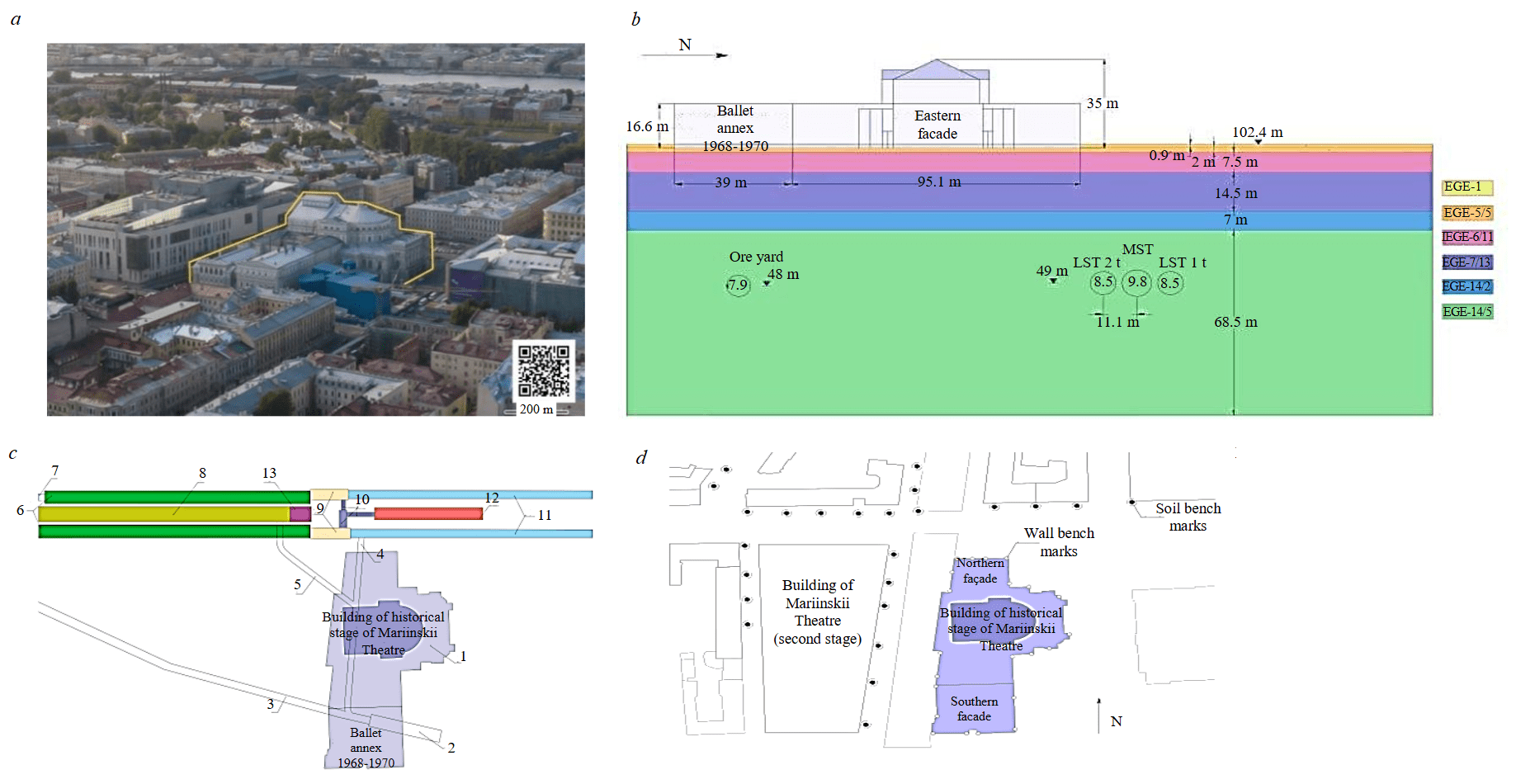
Fig.1. Construction site of Teatralnaya station complex: a – view of the New Stage and historical building of Mariinskii Theatre (Yandex Maps); b – geological structure of Teatralnaya metro station construction area; c – location of workings relative to historic stage building of Mariinskii Theatre; d – layout of observation station near the Theatre
1 – Theatre building; 2 – ore yard; 3 – ventilation tunnel LVU (lower ventilation unit); 4 – approach working N 1; 5 – approach working N 2; 6 – lateral station tunnels of tracks 1 and 2; 7 – pilot tunnel of lateral station tunnel of track 1; 8 – middle station tunnel; 9 – shift chambers of tracks 1 and 2; 10 – personnel and cable passages; 11 – station-to-station tunnels of tracks 1 and 2; 12 – traction step-down substation (TSDS); 13 – tension station
From the geometric point of view, the historical stage building of the Mariinskii Theatre is a complex construction developed in plan, in which three main blocks can be conventionally distinguished – two five-story wings (northern and southern) and the central nine-story building with the stage and auditorium. Structural schemes of the blocks are different and asymmetrical, and their spatial rigidity and stability are ensured by a system of longitudinal and transverse walls as well as wooden and concrete floors. Masonry of the walls built before the XX century is of red solid clay brick on lime mortar, the new walls of the post-war construction were made on cement mortar. Wall thickness varies from 530 to 1150 mm. Strip foundations are made of hewn limestone blocks, with wooden sleepers at the base, and the height of foundation varies from 1.35 to 1.70 m. Constant reconstructions and renovations of the Theatre resulted in a complex and irregular internal structure and geometry of the building.
The article focuses on the analysis of deformations in the central and northern parts of the building, since they were the ones that received the greatest deformations during mining operations in the course of Teatralnaya station construction.
Geological structure of the construction site and relative position of the workings and historical stage building of the Mariinskii Theatre
The construction of Teatralnaya metro station is accomplished at a depth of about 50 m, in the Verkhnekotlinskii Proterozoic clay strata characterized by a high degree of lithification [20]. The distance from the upper arch of the station tunnel to the contact of the Proterozoic clays (EGE-14/5) with dislocated dense clays is approximately 12-13 m. Thickness of dislocated clays is about 7 m (EGE-14/2). Thickness of the Quaternary deposits is about 25 m. In ascending order, the Quaternary deposits are composed of loams with gravel and inclusions of bedrock clay of semi-solid consistency (EGE-7/13) with thickness 14.5 m, layered loams of fluid-plastic consistency (EGE-6/11) – 7.5 m, water-bearing fine sands with plant remains (EGE-5/5) – 2 m, a fill layer of sand and sandy loams with plant remains and construction waste (EGE-1) – 0.9 m (Fig.1, b).
Figure 1, c shows a scheme of the main workings of the underground complex at Teatralnaya station, the impact of which on the earth's surface and the building of Theatre 1 was most noticeable. Construction of Teatralnaya station began with construction of a vertical shaft, ore yard 2 and ventilation tunnel LVU 3 with diameters 7.9 and 5.63 m, then approach workings 4 and 5 were driven. Almost all auxiliary workings were driven directly under the Theatre building, which determined the primary conditions for the subsidence of walls and bench marks laid in the sole plate of the building on the southern and western sides. In addition, the degree of undermining and the level of damage to the Theatre were affected by structures near the Theatre Square – shifting chambers 9 with diameter 7.9 m, TSDS chamber 12, station-to-station tunnels of the 1st and 2nd tracks 11 and other auxiliary workings.
The constructed complex of station workings includes a middle station tunnel (MST) with diameter 9.8 m, two lateral station tunnels with diameter 8.5 m (LST of the 1st track and LST of the 2nd track) and a large tension station which is an extension of the MST. Due to the large cross-section of the workings and their close location to each other, their driving in the area of the eastern end of the station should have a significant impact on the earth's surface and increased the level of damage to the Theatre building.
To date, the construction of the underground complex at Teatralnaya metro station was completed, its impact on the earth's surface was assessed, and no significant increase in deformations is expected in the future. The estimate of deformations and the impact of undermining was previously made without considering the undermined buildings proper. Therefore, it is advisable to assess the impact of such large structures as the historical stage building on the development of deformations on the earth's surface and of the buildings proper during mining operations under them. This should expand the understanding of the mechanisms of the tunnel – rock mass – building system, when it is necessary to assess the large weight of the building, the unevenness of its distribution over the surface and the non-uniform rigidity of the main load-carrying elements.
Materials and methods
Monitoring system near the Mariinskii Theatre building
The analysis of deformation of the Mariinskii Theatre building used the data obtained by mine surveying and geodetic monitoring of soil and wall bench marks at the observation station. The part of the observation station, with the help of which the process of shifting and deformation of the Theatre building was monitored, includes 23 wall bench marks. The wall bench marks are located along the perimeter of the building and are laid at the foundation level, soil bench marks are at a significant distance from the Mariinskii Theatre near other buildings, which subsequently did not allow a correct assessment of shifting and deformation of the earth's surface under the Theatre building using field data (Fig.1, d). Measurements were made by geometric levelling methods of the II-III class.
Numerical analysis
To analyse the interaction of the earth's surface and the Mariinskii Theatre building, to determine the influence of the building on the processes of the base deformation, numerical models were built in the PLAXIS 3D software package, which allows simulating the stagewise process of construction of the underground complex of workings and successive deformation of the rock mass with the above-ground infrastructure. The level of detail of the finite element models was reduced to taking into account the main structural elements: a set of lining rings for the tunnel and the main walls, floors and foundation elements for the building.
When simulating the rock mass, it was assumed that the rock (soil) layers occurred horizontally, and their thickness was maintained over the area. The occurrence of groundwater was not considered when simulating the construction site due to a low influence of hydrodynamic processes in the enclosing clay rocks and the limited engineering and geological data.
The use of the Hardening Soil model is justified as a more accurate description of the behaviour of Proterozoic clays in Saint Petersburg [21, 22]. To assign the hardening model, in addition to the well-known parameters characterizing the strength properties (cohesion с), angle of internal friction φ, dilatancy angle ψ, the description of soil rigidity through three deformation moduli was used: Е50 – secant modulus of deformation under stress, half of the destructive modulus, Еur – modulus of deformation under unloading/repeated loading, Еoed – oedometric modulus of deformation (from compression tests), as well as Poisson's ratio ν [21].
A specific feature of the applied soil model is a hyperbolic relationship between longitudinal deformations ε1 and stress deviator q [23]. Physical and mechanical properties of Quaternary soils and Proterozoic clays, which were used for numerical simulation, are presented in Table 1.
Table 1
Parameters of engineering-geological elements
|
EGE layer |
γsat, kN/m3 |
m,m |
𝐸50, MPa |
𝐸𝑜𝑒𝑑, MPa |
𝐸𝑢𝑟, MPa |
𝑐, kPa |
φ, deg |
ψ, deg |
ν |
|
1 |
20 |
0.9 |
10 |
10 |
30 |
5 |
10 |
0 |
0.3 |
|
5/5 |
19.5 |
2 |
15 |
15 |
45 |
1 |
32 |
0 |
0.36 |
|
6/11 |
19.2 |
7.5 |
7.5 |
7.5 |
22.5 |
16 |
15 |
0 |
0.35 |
|
7/13 |
21 |
14.5 |
16 |
16 |
48 |
38 |
23 |
0 |
0.35 |
|
14/1 |
21.5 |
7 |
50 |
50 |
150 |
50 |
21 |
0 |
0.35 |
|
14/2 |
21.8 |
68.5 |
100 |
100 |
300 |
130 |
23 |
0 |
0.35 |
The process of construction of the underground workings complex was modelled stage by stage taking into account the actual advance of the mining front. The working support was modelled using two-dimensional elements (shells) with linear elastic properties simulating the behaviour of the tubing lining. The equivalent thickness of these elements was set depending on the type and parameters of the lining. Face loading and temporary support in the near-face part were not taken into account in modelling. To model the behaviour of the rock mass in the periphery of the underground structure, the mode of assigned displacements of the working contour (surface contraction) was applied, the parameters were calibrated according to the field observation data in areas with a steady-state deformation mode.
The calculations take into account the mechanical characteristics of the materials of linings of underground structures (Table 2). Monolithic linings of underground structures are of concrete with compressive strength class B15, reinforced with metal arches, prefabricated linings of underground structures of the metro are of concrete with compressive strength class B40.
Table 2
Concrete parameters for elastic model
|
Model parameter |
Value of model parameter |
|
|
B15 |
B40 |
|
|
Poisson’s ratio ν |
0.2 |
0.2 |
|
Modulus of total deformations Eref , MPa |
4130 |
9479 |
|
Bulk density γ, kN/m3 |
25 |
25 |
|
Thickness, m |
0.35 |
0.35 |
To model a building when determining the interaction of the tunnel – rock mass – building system, two approaches can be used: a simplified one, with creation of an equivalent volumetric/flat element and an applied distributed load simulating the weight of the building [24, 25], or a detailed one, with construction of a structural model of the main elements of the building [26, 27]. In the latter case, the foundation and superstructure are simulated with high geometric precision. Modelling the influence of a building by the simplified scheme does not consider a significant unevenness of load distribution from the load-carrying structures to the base and a non-uniform structural rigidity of the building, and the increase in complexity of the model and labour intensity of calculations are not critical, so the second approach was implemented. The Mariinskii Theatre building was simulated without the 1970 extension, since the main (old) part of the 1860 construction, which was to be investigated, suffered the maximum deformations and damage. Workings of the underground complex, which are very remote from the analysis site (the old part of the building), were excluded from the model for simplicity.
When simulating the inner and outer walls, as well as floors of the building, two-dimensional flat elements with linear-elastic properties were used. Due to specific features of the joint mechanical work of the base and foundation soils, the use of volumetric elements was justified for the foundation. The absence of the need for a detailed study of the operation mechanism of rubble foundation, the damping action of the sleepers and other factors in the study of macro-effects from operation of the building during its undermining made it possible to justify the use of a linear-elastic model for such a foundation.
Parameters of physical and mechanical properties of the structural elements of the Mariinskii Theatre building, established in accordance with data of field measurements of the strength of masonry in the main load-carrying elements and the requirements of SP 15.13330.2020 “Stone and reinforced masonry structures”, are presented in Table 3.
Table 3
Parameters of elements of the Theatre building model
|
Model parameter |
Value of elastic model parameter |
|||
|
Outer walls |
Inner walls |
Floors |
Foundation |
|
|
Poisson’s ratio ν |
0.15 |
0.15 |
0.2 |
0.2 |
|
Modulus of total deformations Eref , MPa |
1480 |
1480 |
1500 |
1700 |
|
Bulk density γ, kN/m3 |
18.5 |
18.5 |
19.0 |
20.0 |
|
Thickness, m |
0.8 |
0.8 |
0.4 |
1.4 |
Boundary conditions in the model are standard – horizontal displacements are prohibited along the vertical boundaries; the lower boundary of the model is fixed in any direction. The structural design of the model is presented in Fig.2.
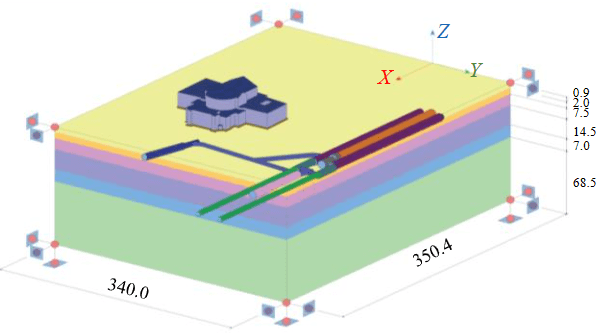
Fig.2. Structural design of conjugated model
The model allowed considering the stagewise scheme of driving the workings in the underground complex and the impact on the undermined objects. The general quantitative reliability of shifts and deformations on the surface was ensured by verification based on real data on subsidence in the construction area and calibration of numerical models through the surface contraction parameter of the conditional loss of volume when driving the workings. Detailing the mechanisms of changing the SSS (stress-strain state) of rocks during cyclic erector driving of station tunnels was not considered (in accordance with the Saint-Venant principle) due to a large distance from the working faces to the building foundation.
The evaluation of the tunnel – rock mass – building system operation using numerical simulation was carried out through a comparative analysis of deformations and shifts of the earth's surface with and without a building in the model; the calculations were considered at the stage of completion of the construction of the underground complex of workings.
Discussion of results
Analysis of the earth’s surface shifts in the undermining zone
To analyse the earth’s surface shifts and deformations, we used data on subsidence of soil bench marks in longitudinal and transverse profiles of the shift trough (Fig.3) at the time of completion of the main workings at the station complex. In the diagram (Fig.3, a, b), the value X = 0 corresponds to position of the axis of the middle station tunnel (station axis). Fig.3, c shows the longitudinal profile of the trough, the value X = 0 corresponds to the initial survey mark of the station complex. The correspondence of numerical simulation to the field data (difference between field data and numerical simulation is no more than 15 %) can be seen in the left part of the shift trough from the side of the Mariinskii Theatre building; there, the deviations in subsidence are mainly associated with the influence of buildings. At the same time, major deviations in subsidence of soil bench marks in the right part of the trough can be recorded. This is due to the fact that for some buildings above the station complex (on the opposite side from the Theatre), the design provided for compensatory injection into the soil mass under the buildings using the cuff technology (Fig.3, c). When modelling the station complex, injection under the structures that fell into the undermining zone was not considered.
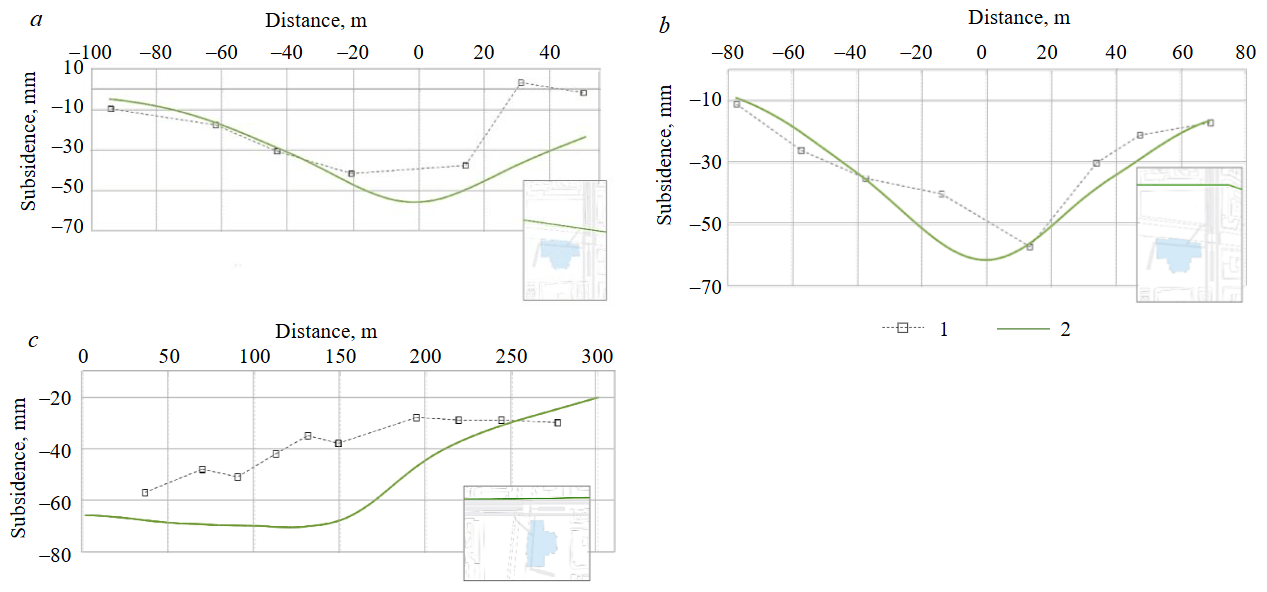
Fig.3. Transverse (a, b) and longitudinal (c) profiles of the shiftt trough
1 – subsidence according to field observations; 2 – subsidence obtained in the model
Analysis of interaction of the earth's surface and the undermined building
Analysis of the influence of the building included a comparison of the calculation results of similar models with and without the building. Fig.4, a, b show the surface shifts and displacements of bench marks in the sole plate of the Mariinskii Theatre, which were caused by construction of the workings of the station complex at the time of completing the construction of the main tunnels. The presented profiles of the foundation and earth's surface subsidence at the location of the foundation, obtained using numerical simulation, correspond to two calculation options – with and without the building. From the diagrams it can be seen that the foundation subsidence profile (model with the building) is smoother in comparison with the earth's surface subsidence profile (model without the building) due to the influence of rigidity of the complex of load-carrying elements of the building and more accurately describes the subsidence in the sole plate of the Theatre. A noticeable increase in maximum subsidence can be recorded, which is obviously determined by the influence of the building weight.
A similar situation can be observed on the northern facade of the building (Fig.4, b). Due to geometry of the northern facade (length and height of the building are commensurate there), spatial rigidity and position of the building in the trough, shifts in the base of the Theatre are monotonous both according to the simulation data and field data, slope deformations prevail. It should be noted that the model with the building in both the first (Fig.4, a) and the second (Fig.4, b) case shows a clear influence of the building on deformations of the earth's surface, when deformations in the area of the bench marks in the base of the Theatre are underestimated. Such a discrepancy between simulation data and field data can be caused by a number of assumptions that were made when simulating the building structures, as a result of which the effects of overestimation are observed in calculations of the real spatial rigidity of the building.
Using the example of the western facade (Fig.4, c), it can be seen that when considering the Theatre building in the model, deformations of slope and curvature in the foundation in individual sections are reduced to 40 % (slope) and 75 % (curvature) compared to deformation levels in models with a free, undermined earth’s surface.
In further analysis of the interaction of the building and the earth's surface, the distribution of soil deformation in the base of the Theatre over the entire area is considered. The results of calculating the earth's surface deformations are presented as isolines and profiles of the distribution of shifts and deformations (sections of shift troughs). The development of deformations was analysed at the time of completing the construction of the underground workings complex.
Figure 5 shows the distribution of the earth's surface subsidence in isolines, both with and without the building. Sections 1-1, 2-2 and 3-3 coincide with longitudinal axes of the Theatre building.
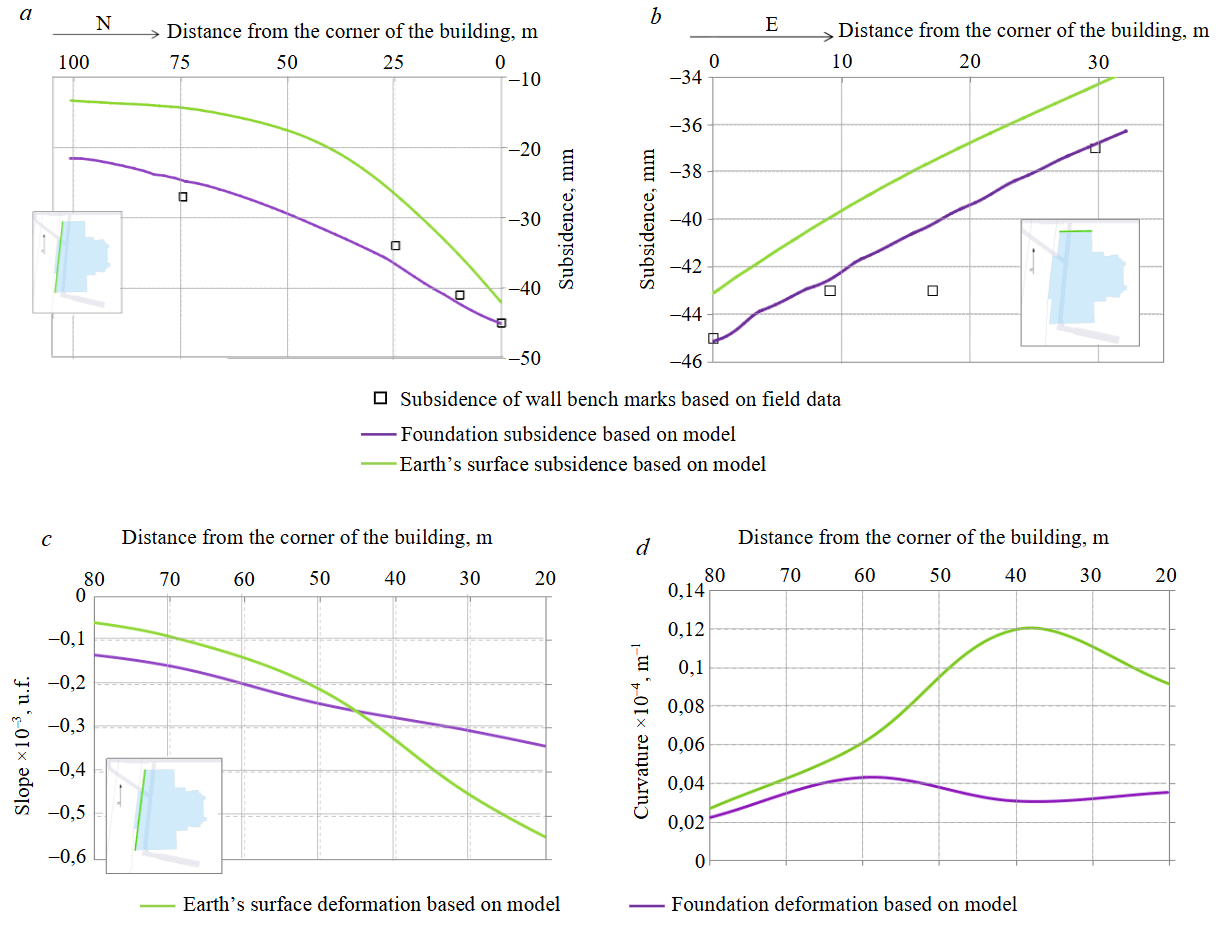
Fig.4. Distribution of shifts (a, b) and deformations (c, d) of the earth's surface and foundation of the Theatre: a – subsidence along the western facade of the building; b – subsidence along the northern facade of the building; c – deformations of slopes; d – deformation of curvature along the western facade of the building
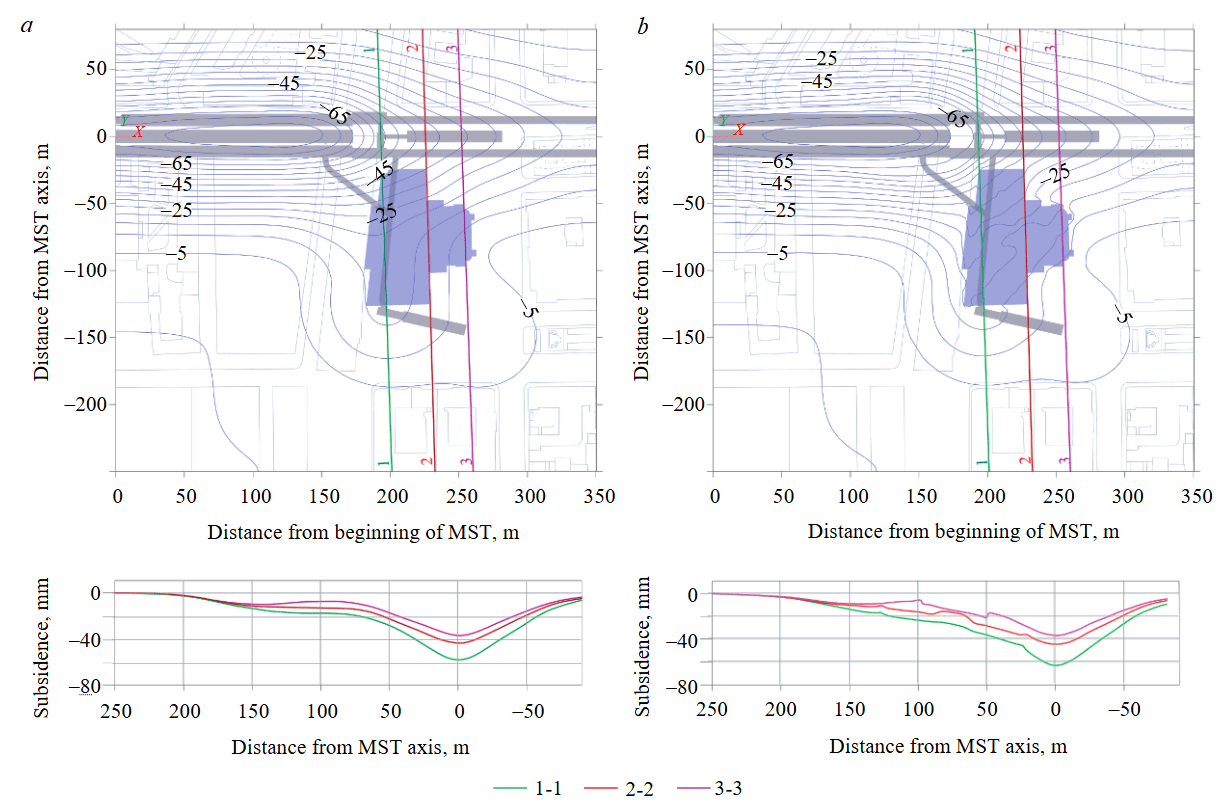
Fig.5. Contours of subsidence distribution and transverse profiles of shift trough without considering the building (a),considering the building(b) (July 2022, LST 2 t.)
Analysing Fig.5, one can note a large difference between the shift trough profiles constructed without and with the building. It is clear how the weight and rigidity of the building lead to a change in the shift trough cross-section. Within the building, an increase in absolute values of vertical displacements (subsidence) by 1-3 mm is observed. Such a difference can be considered significant in some cases. Thus, if we operate with values of maximum subsidence in accordance with SP 22.13330.2016 (for cultural monuments they are equal to 10 and 5 mm for the I and II categories of technical condition, respectively) in the predictive assessment of the earth's surface deformation, such a difference in values can affect the conclusion about the hazard of deformations and the decision-making on the elaboration of measures to protect the undermined object. In addition to the effect of growing subsidence under the building, the effect of alignment is clearly traced (trough within the building is flattened), curvature deformations are reduced. This is explained by the structural spatial rigidity of the building, the effect of which on the shifting process is commensurate with the effect of deformations from tunnelling. The expected effect of an abrupt change in subsidence and marked increase in curvature deformations in the near-surface zone of the rock mass along the contour of the building is directly related to this effect.
Analysis of the distribution of deformations of the earth's surface slopes is presented in Fig.6, a – without considering the influence of the building; Fig.6, b – considering the influence of the building. Due to a marked change in intensity of subsidence development along the contour of the building, the slopes (uneven subsidence) and the curvature of the earth's surface increase in this place, which can negatively affect the condition of underground communications and other structures in these areas (Fig.6, c, d). A tendency of slope reduction in the northern and southern wings directly under the building is clearly visible, this is due to the influence of spatial rigidity of the building. At the same time, in the audience space of the building, on the contrary, increased values of slopes are recorded.
For greater clarity, distributions of slope and curvature deformations in section 2-2 are presented (Fig.6, c, d). In Fig.6, c it is evident that under the northern and southern facades of the building the values of slope deformations are practically stable at their levels, which naturally leads to minimization of curvature deformation values in these zones.
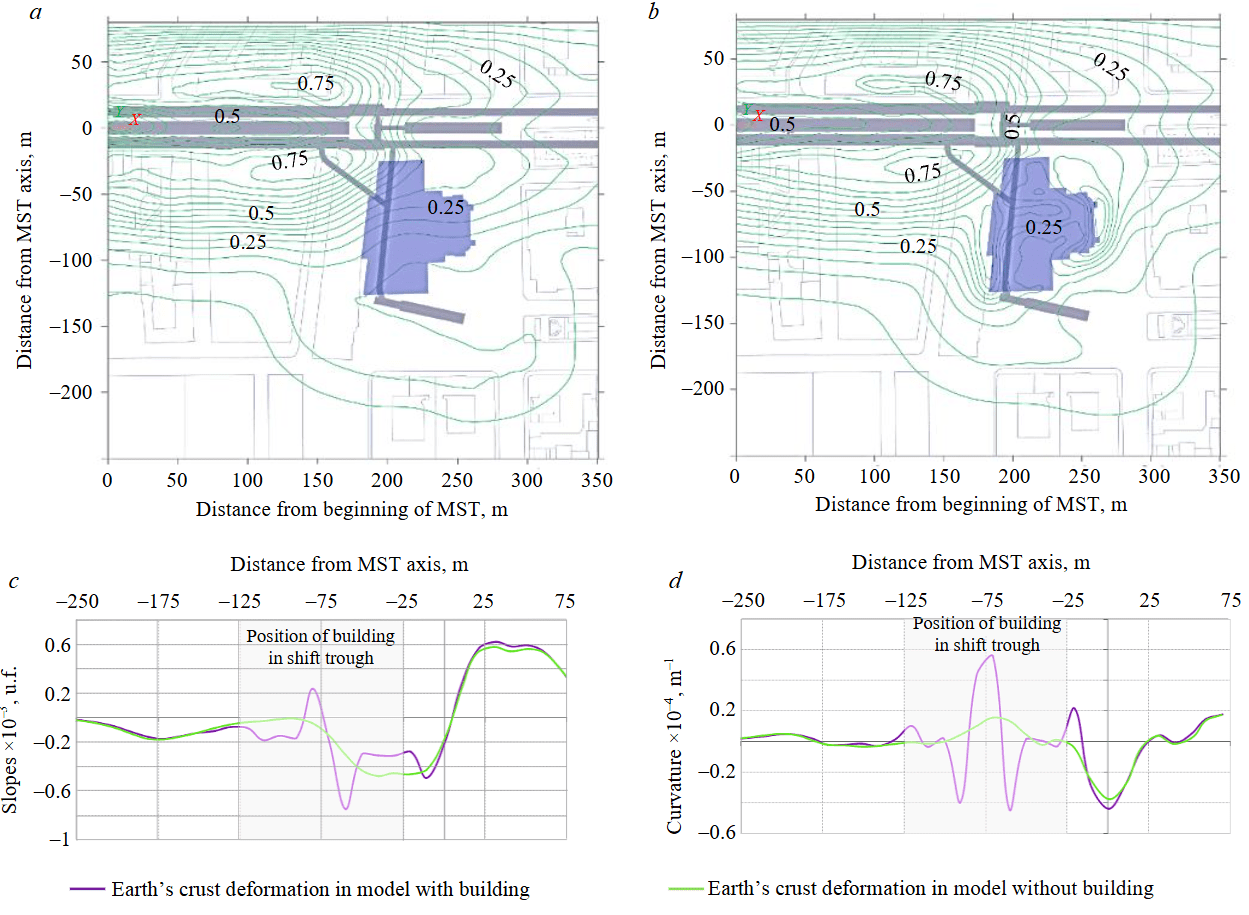
Fig.6. Distribution contours of absolute slopes of the earth's surface (10−3 u.f.) above the construction site of Teatralnaya station (July 2022, LST 2 t.)
During visual assessment of the deformation state of the building, it was noted that the number of cracks in separation walls of the audience (central) space noticeably decreases from the 5th to the 1st tier, their opening also diminishes, an assumption was made that this part of the building was on the positive curvature of the shift trough. The simulation results confirm this assumption – along the western (long) side of the building, the main (general) curvature is positive (Fig.6, d), and the building, thus, experiences the corresponding additional loads and deformations. This leads to development of additional tensile deformations (in the upper tiers of the building), to which the stonework is unstable, and, as a consequence, to the appearance of new cracks and the development (opening) of old ones.
The diagrams show signs of effects that are not immediately obvious, but important. In section 2-2 (Fig.6, d), a local zone of increased deformations of the earth's surface curvature is clearly visible, which is at a distance of 75 m from the axis of the middle station tunnel. It is in this place that the auditorium and the stage of the Mariinskii Theatre are located. Manifestation of this zone can be explained by a significant and concentrated load from load-carrying, self-supporting and non-load-carrying walls on the base from the northern and southern sides of the audience space and the stage as well as the absence of a major load on the foundation and base in the auditorium and the stage area (Fig.7). During undermining of the object in question, a conditional unloading zone and a secondary zone of positive curvature form in this place, which can be regarded as an unfavourable scenario for the development of deformations in the lower part of the building, since the presence of a positive curvature in the base leads to development of additional tensile deformations in the structural elements under the stalls and the stage. A marked difference in load on the foundation and base in zones at the edges of the stage and stalls creates conditions for the development of tangential stresses and manifestation of shear deformations in the base, foundation and walls adjacent to the zones. Since the specified features of the base loading were initially incorporated into the structure, it is possible to assume the influence of such processes after construction and reconstruction of the Theatre building, and the deformation processes considered there during undermining can be regarded a factor in activation of deformations and awakening of old crack systems. This effect can explain the manifestation of two new crack systems (classified as hazardous), which are localized symmetrically in the wall of the orchestra pit (Fig.7).
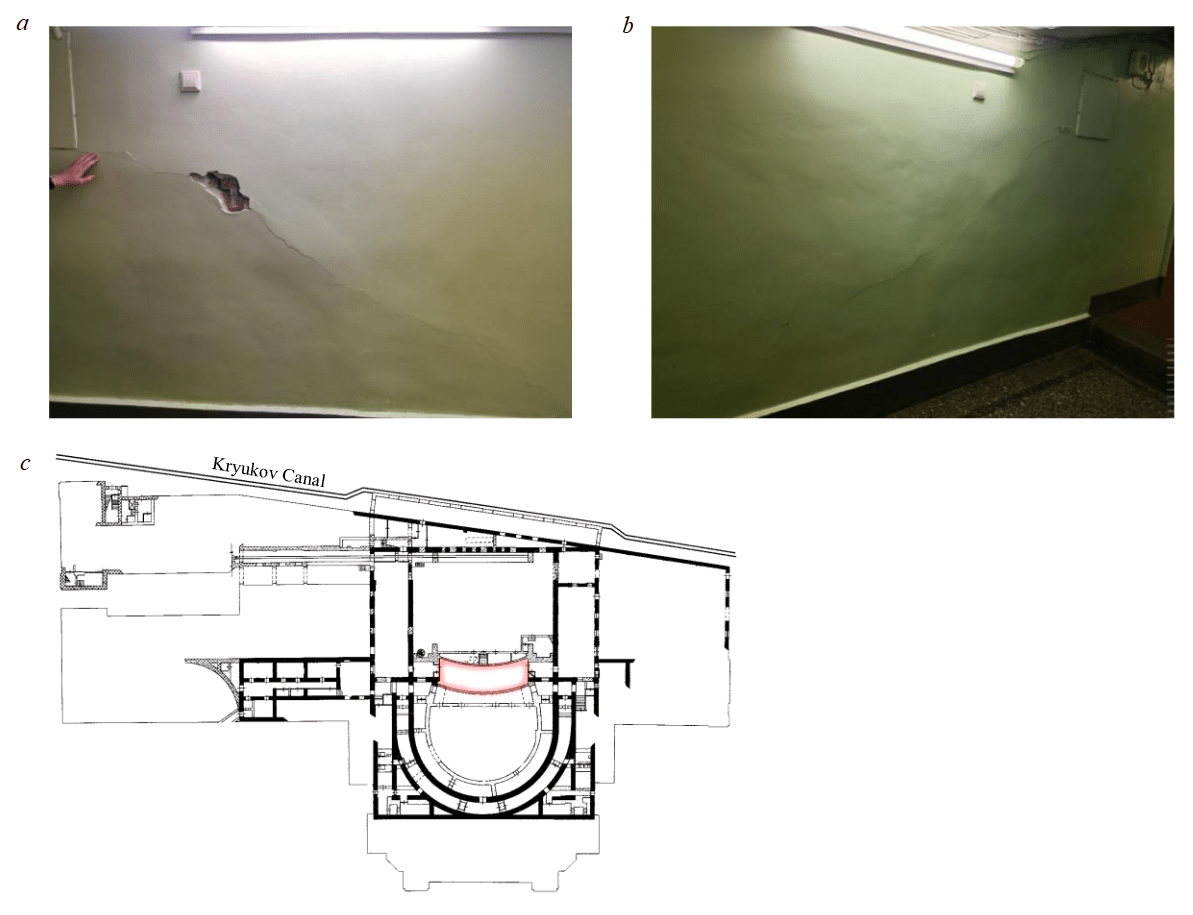
Fig.7. Condition of walls of the orchestra pit in Mariinskii Theatre (a, b); area of damage under consideration and the plan of basement premises (c) of Mariinskii Theatre
These cracks were discovered only in 2020, which conditionally allowed to associate them with mining operations (at that time, driving of two approach workings under the building was completed). Now, when this effect is detected on models, we can talk about a high probability of their initiation by mining operations.
In such studies, it is usually assumed that the effects of interaction between the base rocks and the structure mainly reduce the deformations due to undermining predicted by classical methods, which is confirmed by our study. A decrease in deformations (as the first derivatives of subsidence) is traced on the façade walls, where the so-called effects of hanging and cutting-in occur [28]. External positivity of simulation results and such discussions about a decrease in deformations should not exclude from consideration and analysis of the above-mentioned effects, which can significantly change the stress-strain state of the foundation rocks and building structures. An increase in subsidence on the building sole plate in the cutting-in zones (mainly due to the building own weight) can indicate the development of additional loads and redistribution of stresses in the foundation rocks, in the foundations and walls with development of additional vertical deformations in the base, while a decrease in subsidence in the hanging zones cannot indicate favourable operating conditions for the structures, since a significant redistribution of stresses in the foundations and walls occurs there. When a building is deformed in the mode of adhesion with foundation rocks (see Fig.5, a, b), redistribution does not always noticeably smooth out the unevenness of subsidence and reduce the deformation indices. It can be noted that incorrect interpretation of such effects leads to erroneous assessments of possible damage to buildings caused by their undermining and high risks of actual occurrence of damage, especially against the background of the masking effect of decreasing deformation indices.
Conclusions
The task of the work was to assess the influence of a large and unique building on deformation of foundation rocks in the conditions of undermining by underground workings in metro. Typification of such objects is impossible, since, in addition to design features, the studied undermined object has geometric dimensions commensurate with the shift trough. Therefore, to solve the task, conjugated complex finite element models were used for the tunnel – rock mass and tunnel – rock mass – building systems, the comparative assessment of which made it possible to identify and assess the influence of the building proper on deformations of the earth's surface in the area of the building and along its foundation. Design and current technological data on construction of Teatralnaya metro station, data from visual inspections of the old building of the Mariinskii Theatre historical stage as well as data from mine surveying and geodetic monitoring at observation stations made it possible to construct and calibrate three-dimensional conjugated complex finite element models.
Due to the complex geometry of the building, the Theatre was simulated with a high geometric precision using two-dimensional elements whose properties were assigned based on field measurements of the strength of masonry. The analysis revealed the effects of increasing vertical displacements (subsidence) and changes in deformation along the building contour and directly beneath it; these phenomena should not be neglected when assessing the impact of the earth’s surface deformations on buildings and structures under undermining conditions. The conjugated model helped to interpret the development of new hazardous cracks in walls of the Theatre orchestra pit, which confirms the relevance of using this approach for a more efficient assessment of response of the building to the earth’s surface deformations.
When verifying the soil mass simulation data, it was noted that the right part of the shift trough cross-section cannot be correlated with field observations, since it was in this part of the underground construction influence zone on the earth's surface that measures were taken to protect the ground infrastructure, which included compensatory injection into the rock mass. These effects were not taken into account in the model. When analysing the Theatre foundation shifts and deformations, it was noted that the foundation model is characterized by a more rigid behaviour, which can indicate the need to consider the previous damage and defects in the building foundation. It should be noted that there are no soil bench marks around the Theatre building, which prevented the determination of soil shifts and deformations relative to the structure. All this indicates the inadequacy of the observation station and the need to use modern mine surveying [29, 30] and geotechnical [31-33] monitoring, including remote methods [34, 35].
The study showed the relevance of using conjugated numerical simulation with data from mine surveying and geodetic monitoring and visual inspection of the building to determine the causes of observed damage and deformations in the building as well as to take into account important geotechnical aspects (geometry of the complex of underground workings, construction stages of underground structure) which affect the simulation result.
It can be concluded that the assessment and prediction of potential damage to buildings and structures under undermining conditions only based on obtaining shifts and deformations of the earth's surface cannot always give a reliable result. There is a need to study the influence of the rigidity of type buildings and their weight on redistribution of deformations of the earth's surface at the base of structures. When assessing the impact of undermining of the geometrically and structurally heterogeneous building of the Mariinskii Theatre and determining the level of its deformation using numerical simulation, it is necessary to consider the geotechnical system as a whole on the basis of conjugated models. The assessment and prediction of deformations based on simulation of only the rock mass and the underground complex of workings can give underestimated values of vertical displacements and overestimated values of deformations of the earth's surface at location of the undermined objects.
References
- Hatoum H.M., Mustafin M.G. Optimization of locating robotic total stations for determining the deformations of buildings and structures. Geodesy and Cartography. 2020. Vol. 81. N 9, p. 2-13 (in Russian). DOI: 10.22389/0016-7126-2020-963-9-2-13
- Valkov V.A., Vinogradov K.P., Valkova E.O., Mustafin M.G. Creating highly informative rasters based on laser scanning and aerial photography data. Geodesy and Cartography. 2022. Vol. 83. N 11, p. 40-49 (in Russian). DOI: 10.22389/0016-7126-2022-989-11-40-49
- Vystrchil M.G., Gusev V.N., Sukhov A.K. A method of determining the errors of segmented GRID models of open-pit mines constructed with the results of unmanned aerial photogrammetric survey. Journal of Mining Institute. 2023. Vol. 262, p. 562-570.
- Pospehov G.B., Savón Y., Delgado R. et al. Inventory Of Landslides Triggered By Hurricane Matthews In Guantánamo, Cuba. Geography, Environment, Sustainability. 2023. Vol. 16. N 1, p. 55-63. DOI: 10.24057/2071-9388-2022-133
- Protosenya А.G., Alekseev А.V., Verbilo P.E. Prediction of the stress-strain state and stability of tunnel face at the inter-section of disturbed zones of the soil mass. Journal of Mining Institute. 2022. Vol. 254, p. 252-260. DOI: 10.31897/PMI.2022.26
- Karasev M.A., Sotnikov R.O. Prediction of the stress state of the shotcreting support under repeated seismic load. Journal of Mining Institute. 2021. Vol. 251, p. 626-638. DOI: 10.31897/PMI.2021.5.2
- Volohov E.M., Kozhukharova V.K., Britvin I.A. et al. Assessment of impact of mining operations on surface infrastructure. Mining Informational and Analytical Bulletin. 2023. N 8, p. 72-93 (in Russian). DOI: 10.25018/0236_1493_2023_8_0_72
- Kazanin O.I., Sidorenko A.A., Evsiukova A.A., Liu Zilu. Justification of the longwall panel entries support technology when mining gently inclined coal seams at large depths. Mining Informational and Analytical Bulletin. 2023. N 9-1, p. 5-21 (in Russian). DOI: 10.25018/0236_1493_2023_91_0_5
- Jun-qiang Ma, Xue-hua Li, Qiang-ling Yao et al. Numerical simulation on mechanisms of dense drilling for weakening roofs and its application in roof control. Journal of Central South University. 2023. Vol. 30. Iss. 6, p. 1865-1886. DOI: 10.1007/s11771-023-5345-1
- Gajjar P.N., Ali M., Sayet T. et al. Numerical study on the nonlinear thermomechanical behaviour of refractory masonry with dry joints. Engineering Structures. 2023. Vol. 291. N 116468. DOI: 10.1016/j.engstruct.2023.116468
- Giordano E., Masciotta M.G., Clementi F., Ghiassi B. Numerical prediction of the mechanical behavior of TRM composites and TRM-strengthened masonry panels. Construction and Building Materials. 2023. Vol. 397. N 132376. DOI: 10.1016/j.conbuildmat.2023.132376
- Bilotta E., Paolillo A., Russo G., Aversa S. Displacements induced by tunnelling under a historical building. Tunnelling and Underground Space Technology. 2017. Vol. 61, p. 221-232. DOI: 10.1016/j.tust.2016.10.007
- Namazi E., Mohamad H., Hajihassani M. 3D Behaviour of Buildings due to Tunnel Induced Ground Movement. Transpor-tation Geotechnics. 2021. Vol. 31. N 100661. DOI: 10.1016/j.trgeo.2021.100661
- Burd H.J., Yiu W.N., Acikgoz S., Martin C.M. Soil-foundation interaction model for the assessment of tunnelling-induced damage to masonry buildings. Tunnelling and Underground Space Technology. 2022. Vol. 199. N 104208. DOI: 10.1016/j.tust.2021.104208
- Pascariello M.N., Luciano A., Bilotta E. et al. Numerical modelling of the response of two heritage masonry buildings to nearby tunneling. Tunnelling and Underground Space Technology. 2023. Vol. 131. N 104845. DOI: 10.1016/j.tust.2022.104845
- Alkhimova N.V., Mazein S.V. St. Petersburg metro: expecting rapid development. Metro i tonneli. 2023. N 1, p. 18-23.
- Molotkova E.G. Experience in the Settlement of Buildings on the Admiralty Island. 1805–1840s. Academia. Architecture and Construction. 2022. N 1, p. 94-103 (in Russian). DOI: 10.22337/2077-9038-2022-1-94-103
- Kolodnikov I.V. Wood in Modern Construction Projects of Opera Houses and Concert Halls: Major Developmental Trajec-tories of Architecture and Design. Terra Artis. Art & Design. 2021. N 3, p. 6-19 (in Russian). DOI: 10.53273/27128768_2021_3_06
- Davidich T. Analysis of the development of “brick style”, its leading representatives Victor Schroeter and Jerome Kitner. ScienceRise. 2019. N 4 (57), p. 6-13 (in Russian). DOI: 10.15587/2313-8416.2019.165104
- Dashko R.E., Lokhmatikov G.A. The Upper Kotlin clays of the Saint Petersburg region as a foundation and medium for unique facilities: an engineering-geological and geotechnical analysis. Journal of Mining Institute. 2022. Vol. 254, p. 180-190. DOI: 10.31897/PMI.2022.13
- Alekseev A.V., Iovlev G.А. Adjustment of hardening soil model to engineering geological conditions of Saint-Petersburg. Mining Informational and Analytical Bulletin. 2019. N 4, p. 75-87 (in Russian). DOI: 10.25018/0236-1493-2019-04-0-75-87
- Iovlev G.A., Piscunov N.S., Bahvalov E.D., Ochkurov V.I. Optimizing nonlinear soil body models for geotechnical conditions of Saint-Petersburg. Mining Informational and Analytical Bulletin. 2022. N 7, p. 148-163 (in Russian). DOI: 10.25018/0236_1493_2022_7_0_148
- Wu J.T.H., Tung S.C.-Y. Determination of Model Parameters for the Hardening Soil Model. Transportation Infrastructure Geotechnology. 2020. Vol. 7. Iss. 1, p. 55-68. DOI: 10.1007/s40515-019-00085-8
- Miliziano S., Caponi S., Carlaccini D., de Lillis A. Prediction of tunnelling-induced effects on a historic building in Rome. Tunnelling and Underground Space Technology. 2022. Vol. 119. N 104212. DOI: 10.1016/j.tust.2021.104212
- Franza A., Zheng C., Marshall A.M., Jimenez R. Investigation of soil–pile–structure interaction induced by vertical loads and tunneling. Computers and Geotechnics. 2021. Vol. 139. N 104386. DOI: 10.1016/j.compgeo.2021.104386
- Jinyang Fu, Zhiwu Yu, Shuying Wang, Junsheng Yang. Numerical analysis of framed building response to tunnelling in-duced ground movements. Engineering Structures. 2018. Vol. 158, p. 43-66. DOI: 10.1016/j.engstruct.2017.11.039
- Amorosi A., Sangirardi M. Coupled three-dimensional analysis of the progressive tunnelling-induced damage to masonry buildings: is it always worth it? Tunnelling and Underground Space Technology. 2021. Vol. 118. N 104173. DOI: 10.1016/j.tust.2021.104173
- Franza A., Acikgoz S., DeJong M.J. Timoshenko beam models for the coupled analysis of building response to tunneling. Tunnelling and Underground Space Technology. 2020. Vol. 96. N 103160. DOI: 10.1016/j.tust.2019.103160
- Hao Yang, Xiangyang Xu. Structure monitoring and deformation analysis of tunnel structure. Composite Structures. 2021. Vol. 276. N 114565. DOI: 10.1016/j.compstruct.2021.114565
- Afonin D.A., Kavkazsky V.N., Nikitchin A.A. Operational Geodetic Check of Bottom-Hole Zone Deformations at Innova-tive Tunneling Technologies. Proceedings of Petersburg Transport University. 2022. Vol. 19. Iss. 3, p. 432-443 (in Russian). DOI: 10.20295/1815-588X-2022-3-432-443
- Mamaev D.S., Bugakov P.Yu. Software development for geodynamic and geotechnical GNSS monitoring. XVII Mezhdunarodnyi nauchnyi kongress “Interekspo GEO-Sibir-2021”: Materialy Mezhdunarodnoi nauchnoi konferentsii “Molodezh. Innovatsii. Tekhnologii”, 19-21 May 2021, Novosibirsk, Russia. Novosibirsk: Sibirskii gosudarstvennyi universitet geosistem i tekhnologii, 2021. Vol. 7. N 2, p. 114-119 (in Russian).
- Kolotovichev Yu.A., Shakhramanyan A.M. An automated structural health monitoring system developed for Ekaterinburg Arena. Vestnik MGSU. 2022. Vol. 17. Iss. 3, p. 314-330 (in Russian). DOI: 10.22227/1997-0935.2022.3.314-330
- Lebedev M.O., Egorov G.D. Geotechnical monitoring in construction of escalator tunnels. Mining Informational and Ana-lytical Bulletin. 2019. N 10, p. 146-159 (in Russian). DOI: 10.25018/0236-1493-2019-10-0-146-159
- Ru Wang, Mengshi Yang, Jie Dong, Mingsheng Liao. Investigating deformation along metro lines in coastal cities considering different structures with InSAR and SBM analyses. International Journal of Applied Earth Observation and Geoinformation. 2022. Vol. 115. N 103099. DOI: 10.1016/j.jag.2022.103099
- Vasilev B.Yu., Mustafin M.G. Digital relief models of open-pit mining facilities: Analysis and optimization. Mining Infor-mational and Analytical Bulletin. 2023. N 9, p. 141-159 (in Russian). DOI: 10.25018/0236_1493_2023_9_0_141