Submit an Article
Become a reviewer
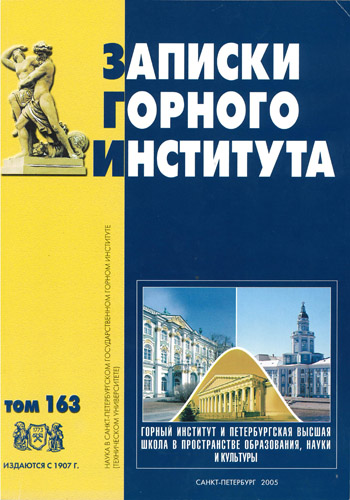
Vol 163
Pages:
146-148
Download volume:
RUS
Article

Modern problems of the theory of cognition in the philosophy course

Authors:
I. G. Rebeshchenkova
About authors
  • G.V. Plekhanov Saint Petersburg Mining Institute
Date submitted:
2004-10-09
Date accepted:
2004-11-07
Date published:
2005-07-06

Abstract

The theory of cognition is an important part of philosophy. Recently, the role of this theory is increasing in the process of training a specialist, in the environment of a humanistic university. This is due to the progress of knowledge, the connection of the theory of cognition with humanistic and anthropological problems, the formation of information society. Modern problems of epistemology are the problems of the evolution of knowledge, the prospects of its development in the future. The most important prospect is the development and introduction into all spheres of activity of biocomputers - new subjects of cognition - parts of a new reality. The inclusion of modern problems of epistemology in the course of philosophy is necessary to prepare the young generation for activity and life in a significantly changing environment.

Область исследования:
(Archived) Contemporary traditions of training organization at the Mining Institute
Go to volume 163

Similar articles

Environmental and political potential of higher school as an institution of civil society
2005 L. N. Kharchenko
Probe diagnostics of the angular structure of the electron distribution function in anisotropic plasma
2005 A. S. Mustafaev, A. P. Mezentsev, V. L. Fedorov
Academician N.M. Krylov (125th anniversary of his birth)
2005 L. V. Barbochenko, E. L. Bart, M. Yu. Sysoeva
Parameterization of functionals from solutions of differential equations
2005 I. A. Lebedev
The influence of mechanics on the development of mining engineering up to the beginning of the twentieth century
2005 A. P. Gospodarikov, S. A. Tolstunov
Features of teaching the history of world culture in the framework of the course "Cultural Studies" at the St. Petersburg State Technological Institute (on the example of the history of ancient culture)
2005 A. I. Klimin