

Activation of bioremediation processes in oil-contaminated terrestrial ecosystems using a composition of organomineral ameliorants
- 1 — Ph.D. Head of Laboratory Institute of Mining of the Ural Branch of the RAS ▪ Orcid
- 2 — Researcher Institute of Mining of the Ural Branch of the RAS ▪ Orcid
- 3 — Ph.D., Dr.Sci. Chief Researcher Institute of Mining of the Ural Branch of the RAS ▪ Orcid
- 4 — Researcher Institute of Mining of the Ural Branch of the RAS ▪ Orcid
Abstract
This study evaluates the effectiveness of bioremediation of oil-contaminated terrestrial ecosystems using a composition of organomineral ameliorants. The aim of the study is to establish the influence of ameliorants on reducing the phytotoxicity of oil-contaminated organogenic soils and to track the dynamics of the decline in oil concentration in the soil under their influence. The study is directed at developing an ecologically safe and sustainable method for cleaning soils from oil contamination, which minimizes the negative impact on the environment and contributes to the restoration of soil fertility. As a result, the optimal ratio of components of the peat-diatomite ameliorant (PDA) for activating bioremediation processes in oil-contaminated soils was experimentally substantiated. The following component ratio of PDA was recognized as the most effective for the bioremediation of oil-contaminated soils: peat 51.5-53.5 %; sapropel 31.0-33.5 %; diatomite 15.0-15.5 % (by mass of air-dry matter). A direct dependence of the efficiency of oil destruction in oil-contaminated ecosystems on the application of PDA in the recommended composition was established. The results of the research confirm the effectiveness of the developed PDA.
This article was prepared within the framework of State assignment N 075-00410-25-00 PR. Topic 2 (2025-2027). Geoinformation support for the systematic assessment of nature conservation strategies in the development of subsoil resources (FUWE-2025-0002), N 1022040300092-1-1.5.1.
Introduction
Russia is one of the worldʼs leaders in hydrocarbon production and export, relying on an extensive pipeline network with a total length of approximately 55 thousand km on the territory of the Russian Federation. However, during the processes of extraction and transportation, emergency situations occur related to pipeline ruptures, the cause of which, as a rule, is corrosion (>90%), resulting in large areas of land resources being withdrawn from economic use [1-3].
According to data from the Ministry of Natural Resources and Ecology of the Russian Federation, annual losses amount to more than 100 thousand t of oil, which causes large-scale negative impacts on terrestrial ecosystems and leads to significant transformation of the physicochemical properties and structure of all components of the natural environment, while the scale of reclamation efforts remains critically low. The area of disturbed lands resulting from the activities of oil and gas producing companies reached 596,7 thousand ha by the end of 2023, with a total reclaimed area of only 23,3 thousand ha (<4%).
Oil and gas fields in Russia are explored and developed across various soil-climatic zones; however, they are predominantly located in the middle taiga zone, within the boundaries of raised bogs, which are represented by organogenic (peat) soils. In this regard, these types of terrestrial ecosystems are more susceptible to the risk of negative impacts from accidental oil spills [4-6].
For organogenic soils, the residual oil concentration varies depending on the region and ranges from 1 to 15 g/kg on agricultural lands and from 1 to 67 g/kg on forestry lands [7, 8]. In the Russian Federation, there are no unified maximum permissible concentrations of oil in soils, which is explained by the exceptional complexity and variability of the chemical composition characteristic of both the soils themselves and the wide range of oil products [9], therefore, individual oil-producing regions of Russia have established standards for the permissible residual content of oil and its transformation products following reclamation works.
Numerous studies have established that with increasing oil concentration in terrestrial ecosystems, the concentration of agrochemical elements available to microorganisms and plants – such as nitrate nitrogen, mobile phosphorus, and exchangeable potassium – decreases. Furthermore, the increasing amount of carbon resulting from contamination disrupts the carbon-to-nitrogen balance in the soil, thereby reducing its fertility [10-12]. This is caused by the ongoing processes of soil particle encapsulation by a dense oil film, which inhibits chemical and biochemical processes in terrestrial ecosystems, impeding the biodegradation of petroleum hydrocarbons.
Soil contamination with petroleum hydrocarbons significantly alters the composition and availability of elements for plants. Currently, the most effective method for cleaning oil-contaminated soil is bioremediation, the essence of which lies in creating optimal conditions for the development of hydrocarbon-oxidizing microflora [13-15]. To activate bioremediation processes, chemical fertilizers are generally applied to the soil, with the molecular ratios of nutrients – carbon (C), nitrogen (N), phosphorus (P), and potassium (K) – required to be as follows: C:N:P = 100:9:1, C:N:P = 100:7.5:0.66, C:N:P = 100:3.75:0.25, and C:N:K = 100:17:6. The development of hydrocarbon-oxidizing microorganisms also requires soil saturation with water and oxygen, as well as a pH close to neutral [16-18]. Such conditions can be established by applying chemical fertilizers or organomineral ameliorants.
Unlike ameliorants, chemical fertilizers have a number of significant drawbacks, as their excessive application promotes the migration of constituent components into groundwater and various water bodies. Furthermore, the results of long-term studies show that the use of chemical fertilizers leads, after several years, to a negative impact on the agrochemical and biological properties of the soil and, consequently, to the suppression of vegetation even after the planting of green manure crops [19-21].
Given the above, it is necessary to comprehensively assess the effectiveness of using a composition of organomineral ameliorants for activating bioremediation processes in oil-contaminated terrestrial ecosystems. To achieve the stated objective, the following tasks have been formulated: to investigate the influence of the organomineral ameliorant composition on reducing the phytotoxicity of oil-contaminated organogenic soils; to establish the dynamics of the decline in oil concentration by the end of the experimental research phase; to evaluate the ecological effectiveness of the organomineral ameliorant composition and to provide recommendations on the percentage ratio of components – peat, sapropel, and diatomite.
Methods
Experimental studies were conducted using containers with a volume of 500 ml in three replicates over a period of 1 month. The use of containers of this volume was determined by the need to create a limited space for the development of the root system, which allows modeling conditions of restricted access to nutrients and moisture. This volume ensures that the root system will inevitably and rapidly come into contact with the contaminated substrate, thereby accelerating the manifestation of the effect and reducing the duration of the experiment. Otherwise, in larger vessels, the plant could avoid the toxicant for a longer period by developing roots in an uncontaminated zone.
Observations during the first month were the most informative, as they allowed a full assessment of germination, initial growth, and the severity of toxic stress in plants. Shortening the duration of the experiment to 1 month enables rapid acquisition of data on the primary impact of pollutants and allows a conclusion to be drawn regarding the feasibility or non-feasibility of further field studies.
The containers used for the studies were made of colored polypropylene. A fixed photoperiod was maintained – the duration of the light period was 14 h. Phytolamps with a spectral composition optimized for the process of photosynthesis were used as the light source. Ten seeds of common oat (Avena sativa) were planted in each container.
Four hundred ml of oil per 1kg of soil was applied to the soil, which amounted to 63g/kg according to the Method for measuring the mass concentration of oil products in soil and bottom sediment samples using the AN-2 analyzer (FR.1.31.2011.11314). Carbon tetrachloride was used as the extractant. Preliminary studies established that at the given level of oil contamination on this soil type, germination of common oat seeds was absent over the course of one month. This fact served as the basis for selecting the indicated pollutant concentration as the model concentration for subsequent experiments. A composition of ameliorants comprising various proportions of components – peat, sapropel, and diatomite – was then applied to the oil-contaminated soil at a rate of 10% of the air-dry soil mass. Moisture content was maintained at 60-70% of the total water-holding capacity of the contaminated soil with the applied ameliorants, which corresponds to the optimal moisture conditions.
Taking into account the possible nonlinear nature of the response function, three variation levels were defined for each factor. The determination of the maximum and minimum values of these levels was carried out with consideration of economic feasibility and the availability of raw materials in Russia. As a result, peat dominates in the composition of the mixture, followed by sapropel and diatomite. For computational convenience, the variation level values are presented in grams, which were then recalculated as percentage ratios (Table 1): peat (Х1) 0.720-1.098, sapropel (Х2) 0.450-0.801, diatomite (Х3) 0.216-0.288.
The basic level X0i and the variation interval ΔХi were calculated using the formulas
where i is the factor number; Xui, Xli are the upper and lower levels of the factors.
The factors, levels, and variation intervals are summarized in Table 1, which lists the composition components in grams/percentages.
A matrix of experimental studies was compiled, and the number of experiments and the values of factor levels in each of them were determined (Table 2).
Table 1
Factors and their variation levels
|
Levels |
Peat (Х1) |
Sapropel (Х2) |
Diatomite (Х3) |
|
Upper |
1.098/59.8 |
0.801/46.0 |
0.288/15.7 |
|
Basic |
0.909/50.7 |
0.626/35.3 |
0.252/14.1 |
|
Lower |
0.720/41.5 |
0.450/24.5 |
0.216/12.5 |
When using a second-order composite design, two additional levels are also applied – star arms α and −α, which are added to the upper level and subtracted from the lower level of variation, thereby ensuring the orthogonality of the second-order central composite design. Therefore, the number of experiments is determined by the formula
where n is the number of factors; n0 is the number of experiments at the zero level, n0 = 1.
Taking into account the number of experiments conducted, the star arm is calculated using the formula
Table 2
Matrix of experimental studies
|
Experiment |
Peat (Х1) |
Sapropel (Х2) |
Diatomite (Х3) |
|
1 |
1.098 |
0.801 |
0.288 |
|
2 |
0.720 |
0.801 |
0.288 |
|
3 |
1.098 |
0.450 |
0.288 |
|
4 |
0.720 |
0.450 |
0.288 |
|
5 |
1.098 |
0.801 |
0.216 |
|
6 |
0.720 |
0.801 |
0.216 |
|
7 |
1.098 |
0.450 |
0.216 |
|
8 |
0.720 |
0.450 |
0.216 |
|
9 |
1.335 |
0.626 |
0.252 |
|
10 |
0.569 |
0.626 |
0.252 |
|
11 |
0.909 |
0.974 |
0.252 |
|
12 |
0.909 |
0.356 |
0.252 |
|
13 |
0.909 |
0.626 |
0.348 |
|
14 |
0.909 |
0.626 |
0.171 |
|
15 |
0.909 |
0.626 |
0.252 |
Thus, the orthogonality of the central composite design is ensured by the corresponding star arms α = 1.215 and α = −1.215. For this purpose, one of the upper-level factors of the experimental composition is increased by 21.5 %, and the lower level is decreased by 21.5 %, while the remaining factors are fixed at zero level. For example, the upper level of the peat concentration in the peat-diatomite ameliorant (PDA) composition amounted to 1.335, and the lower level to 0.569, with the zero levels of sapropel fixed at 0.450 and diatomite at 0.216 (Table 2, experiments 9, 10).
As the responses by which the decision on the optimal composition of the organomineral ameliorant mixture was made, the following were recorded YT (T,%) – the phytotoxicity level of oil-contaminated terrestrial ecosystems [22], YNd(Nd, g/kg) – the oil destruction indicator (reduction in oil concentration in the study object after one month), g/kg.
In the study of phytotoxicity, a comprehensive analysis was used, taking into account the germination of common oat seeds, the length of the above-ground and below-ground parts of the plant, as well as the phytomass. When assessing the degree of phytotoxicity, the samples were compared with a control (uncontaminated) sample [23].
The processing of the obtained data was carried out using methods of mathematical statistics, ensuring high reliability and objectivity of the results. To implement these methods, a suite of modern software was applied, including Microsoft Excel for basic processing, Design-Expert 13, and “Trendy FSP-1” (igduran.ru/soft/trends2) for in-depth analysis and experimental design [16, 24].
Materials
Oil
Commercial crude oil from the Lyantorskoye oil and gas field was used as the contaminant. The main physicochemical parameters of the oil are as follows: chloride salt content – 0.1%; total sulfur – 0.99% (sulfurous); paraffinic hydrocarbons – 2.4%; density – 894 kg/m3 (heavy crude oil).
Composition of organomineral ameliorants
In order to enhance the efficiency of oil destruction using the natural potential of peat, diatomite, and sapropel, a composition – the peat-diatomite ameliorant – was developed[25]. The PDA comprises:
- Raised bog milled peat with a particle fraction of 0 to 10 mm. Raised bog peat is a product of incomplete decomposition of plants under conditions of elevated moisture and acidity, which determines its specific properties. The moisture content of the peat used ranged from 40 to 60%, and the pH of the aqueous extract was in the range of 4.5-5.5, indicating an acidic reaction of the medium. The degree of decomposition of organic matter in the raised bog peat did not exceed 25%, indicating its relatively weakly altered structure and high porosity. The ash content of the peat was negligible, amounting to less than 5%. The main inorganic compounds contained in the peat included total
nitrogen (up to 1.5%), and total phosphorus, potassium, and calcium (combined up to 0.6%). The humic substance content was 31.5-32.5%. - Diatomite conforming to TU 5761-001-59266087-2005. This natural material is a sedimentary rock composed predominantly of fossilized remains of diatom algae. The composition of diatomite, %: SiO2 73.98±0.07; Al2O3 9.04±0.12; TiO2 0.50±0.02; Fe 3.8±0.20; MgO 1.45±0.02; CaO 1.50±0.14; Na2O 0.21±0.01; K2O 0.60±0.01; P2O5 0.15±0.00. Loss on ignition 9.2±0.00 %, pH 6.25±0.25. The uniqueness of diatomite lies in its high silica content (more than 70 %) and, consequently, its well-developed porosity. It is precisely this high porosity that accounts for the enhanced sorption capacity of diatomite with respect to hydrocarbons, as confirmed by a number of scientific studies [26, 27]. In the framework of this study, diatomite flour with a particle fraction of less than 1mm and a moisture content not exceeding 5% was used, which ensured optimal conditions for adsorption and further analysis.
- Sapropel conforming to TU 0135-001-94744244-2007. Sapropel is a unique mineral resource formed at the bottom of freshwater bodies under conditions of oxygen deficiency and high organic matter content. A characteristic feature of sapropel is the manifestation of a reductive nature of its oxidation-reduction potential (Eh < 19 mV), which creates favorable conditions for the development of anaerobic microorganisms and promotes the processes of organic matter decomposition. The sapropel represented a homogeneous mass of dark brown color. Its moisture content did not exceed 60%, and the pHH2O value was in the range of 8.1-8.5, indicating a weakly alkaline reaction. The mass fraction of organic matter, recalculated on a dry matter basis, was not less than 52%, and the ash content was not more than 48%. Furthermore, the sapropel contained a significant amount of macro-elements essential for plant nutrition – total nitrogen not less than 1.67%, total phosphorus not less than 0.25%, total potassium not less than 0.3%, and total magnesium not less than 0.6%, recalculated on an absolutely dry matter basis. CaO 6.2%, Fe2O3 0.98%, and SO3 9.7% by mass fraction on an absolutely dry matter basis were also detected in the composition.
For the conduct of the experiment, an organomineral PDA composition was prepared from the three listed components. The mixing process was carried out until a homogeneous mass was obtained, ensuring uniform distribution of the components.
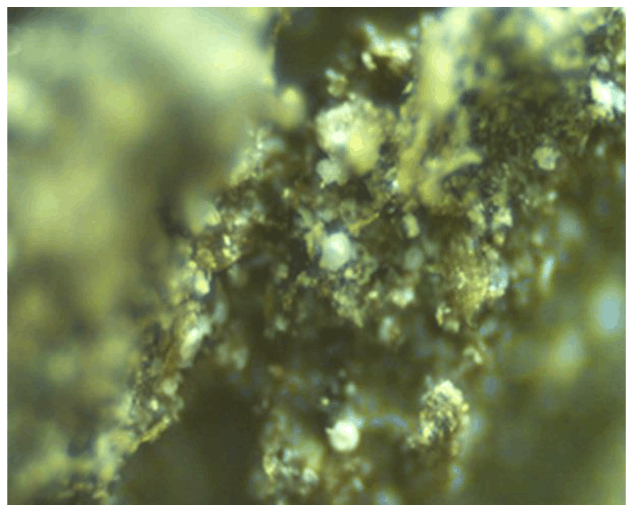
Fig.1. Surface morphology of the PDA
The size of the mixture fraction was 0-10 mm, which ensured the optimal structure of the material and the availability of nutrients and moisture for the plants. As the size of the material fraction decreases, the sorption capacity for oil products increases due to an increase in the specific surface area. This justifies the choice of a fine fraction, as particles with a size of several millimeters have the maximum contact area with oil-contaminated soil and oil, which accelerates the sorption and biodegradation of hydrocarbons. Thus, the addition of well-structured material with a fraction of 0-10 mm increases the total porosity, improves infiltration and capillary rise of moisture, which is critical for the restoration of root systems and the activity of soil microbiota in contaminated areas [28]. A homogeneous fine fraction also ensures uniform distribution of the ameliorant throughout the profile during mechanized application and mixing with the soil (milling, cultivation), while larger particles (> 10-20 mm) are unevenly distributed throug-hout the soil profile.
In order to prevent sticking and clumping, the moisture content of the PDA mixture was maintained at a level not exceeding 15% before application (Fig.1).
Test object
According to the results of theoretical studies, biological plant resources are widely used for the purpose of soil bioremediation from various pollutants[8, 13, 29]. Planting plants promotes the development of oil-oxidizing microorganisms in the rhizosphere. In this study, oats (Avena sativa), an annual grain crop reaching 3-6 mm in stem diameter and 170 cm in height, was used as a test object. Characteristic features are rough leaves up to 45 cm long, having a green or bluish tint, often covered with a waxy coating. Resistance to high acidity (pH 5-6) makes oats suitable for the development of peat and swampy lands. The seeding rate is 130-150 kg/ha, but if the soil is contaminated with oil, the seeding rate should be increased to 200 kg/ha. [1]. The use of oats as a test object is also regulated by regulatory documents (MR 2.1.7.2297-07. Justification of the hazard class of production and consumption waste based on phyto-toxicity) [30].
Oil-contaminated soil
Due to the fact that a significant share of hydrocarbon production and transportation in the Russian Federation takes place in regions with a predominance of swampy and peaty soils, raised bog peat was used as a model oil-contaminated ecosystem in laboratory experiments. In this case, peat was considered not as an analogue of a specific genetic type of peaty soil, but as a standardized organic substrate with a high content of organic matter and developed porosity, which are characteristic of the marsh ecosystems of the northern regions. The degree of peat decomposition R is 26%, the ash content A is 14%, the moisture content W is 45-60%, the humic acid content is 32.5%, and the fractional composition is from 0 to 20 mm. The oil contamination level is 63 g/kg, which allows us to create conditions typical of emergency spill zones, conduct controlled experiments, and obtain reliable data on self-purification processes and bioremediation capabilities.
Discussion
The results of the experiments (Table 3) revealed a significant effect of PDA on the processes of detoxification of oil-contaminated soil. The analysis of phytotoxicity showed a decrease from 1 (control) to 0.063%, which reflects a significant improvement in the conditions for vegetation restoration. At the same time, there was a decrease in the concentration of oil from 63 (control) to 41.5 g/kg, which indicates the activation of hydrocarbon biodegradation processes under the influence of PDA.
Table 3
Experimental design matrix with response results
|
Experiment |
Peat (Х1) |
Sapropel (Х2) |
Diatomite (Х3) |
YT,% |
YNd, g/kg |
|
1 |
1.098 |
0.801 |
0.288 |
0.237±0.017 |
46.8±5.9 |
|
2 |
0.720 |
0.801 |
0.288 |
0.147±0.014 |
48.9±6.3 |
|
3 |
1.098 |
0.450 |
0.288 |
0.063±0.011 |
48.9±5.4 |
|
4 |
0.720 |
0.450 |
0.288 |
0.192±0.010 |
47.0±5.9 |
|
5 |
1.098 |
0.801 |
0.216 |
0.138±0.013 |
52.5±7.0 |
|
6 |
0.720 |
0.801 |
0.216 |
0.128±0.011 |
45.1±5.6 |
|
7 |
1.098 |
0.450 |
0.216 |
0.074±0.012 |
44.2±5.4 |
|
8 |
0.720 |
0.450 |
0.216 |
0.134±0.020 |
41.5±4.9 |
|
9 |
1.335 |
0.626 |
0.252 |
0.015±0.013 |
43.2±5.2 |
|
10 |
0.569 |
0.626 |
0.252 |
0.178±0.017 |
49.9±6.5 |
|
11 |
0.909 |
0.974 |
0.252 |
0.220±0.019 |
43.8±5.3 |
|
12 |
0.909 |
0.356 |
0.252 |
0.154±0.015 |
42.6±5.1 |
|
13 |
0.909 |
0.626 |
0.348 |
0.306±0.067 |
47.3±6.0 |
|
14 |
0.909 |
0.626 |
0.171 |
0.250±0.022 |
48.4±6.2 |
|
15 |
0.909 |
0.626 |
0.252 |
0.177±0.017 |
50.8±6.6 |
Given the complexity and nonlinearity of bioremediation processes [31-33], a functional-factor power model was selected:
where σ is the root mean square error of determination.
The functional-factorial power model appears to be more adequate than a simple linear model, and it allows us to identify the key factors that determine the effectiveness of the ameliorant. The interaction of the three components can lead to a synergistic or antagonistic effect. The power functions in the model allow us to account for the nonlinearity of the influence of each component, and the interaction term A4x1mn1x2mn2x3mn3 allows us to assess the synergism or antagonism between the components of the ameliorant. The individual terms A1x1m1 reflect the individual contribution of each component, and the constant term В – represents the base value of the soil parameter (YNd, g/kg; YT, %). After estimating the model parameters, it can be used to optimize the composition of the ameliorant to achieve the best soil purification results.
The developed mathematical models are designed to analyze changes in phytotoxicity and oil degradation indicators, which allows us to understand the processes occurring in the samples under study,
Graphical representations of the models for three factors using formulas (1), (2) are shown in Fig.2, 3. Microsoft Excel was used to create the response surfaces.
Phytotoxicity
Based on the experimental data (Table 3), using the obtained regression equation(1), graphs (Fig.2) were constructed for the phytotoxicity indicator T of oil-contaminated soil at different ratios of organomineral ameliorants added to it.
Fig.2 shows that the main contribution to reducing the phytotoxicity of oil-contaminated soil is made by increasing the concentration of peat in the composition of organomineral ameliorants, with a minimum and average content of diatomite ranging from 0.216 to 0.252 g. The substrate variant with a minimum proportion of peat and sapropel, regardless of the variations in the concentration of the latter, demonstrates the highest level of phytotoxicity, ranging from 0.175 to 0.225%. Increasing the concentration of sapropel in the composition of organomineral ameliorants slightly reduces the phytotoxicity index.
As a result, it was found that the experimentally determined indicator of phytotoxicity of oil-contaminated soil changes monotonously under the influence of four factors – the additive (independent) effects of each component and the multiplicative (interconnected) effect of the entire mixture.
The change in the T indicator is described by the YТ, functional-factorial model, which consists of the sum of the initial indicator (before the introduction of cleaning components into the soil) and four power functions that reflect the additive and multiplicative effects of the reclamation components on reducing phytotoxicity.
The T index of oil-contaminated soil, due to a change in the proportional ratio of the PDA component in the amount of 10 % of its conventionally dry weight, decreases with a mean square error of 0.028 % in the sum of power functions interacting additively and multiplicatively with the degree indices of the corresponding components 2.04; 1.09; –4.69 and 0.33; 1.05; 0.22, the function is monotonically concave, such that with fixed contents of peat 1.1 g, sapropel 0.450 g, diatomite 0.216 g, it decreases from the initial value of T = 0.33% to the minimum value of T = 0.066%.
Based on the results of the developed models, it can be noted that by the end of the experimental studies, the lowest values of the T coefficient were 0.066%. At the same time, the optimal values of the PDA components for achieving the best phytotoxicity indicators were as follows: peat (X1)–1.094-1.098, sapropel (X2)–0.450-0.463 and diatomite (X3)–0.216-0.252.
Thus, optimizing the composition of PDA by increasing the peat content and maintaining an optimal level of diatomite content is a key factor in activating the bioremediation processes of oil-contaminated soils in terms of reducing their phytotoxicity. The reduction of phytotoxicity is achieved through the synergistic effect of peat and diatomite. Peat binds and neutralizes the toxic components of oil, while diatomite improves soil structure and maintains the moisture necessary for bioremediation. Sapropel contributes to increasing fertility, but its effect is less pronounced than that of peat.
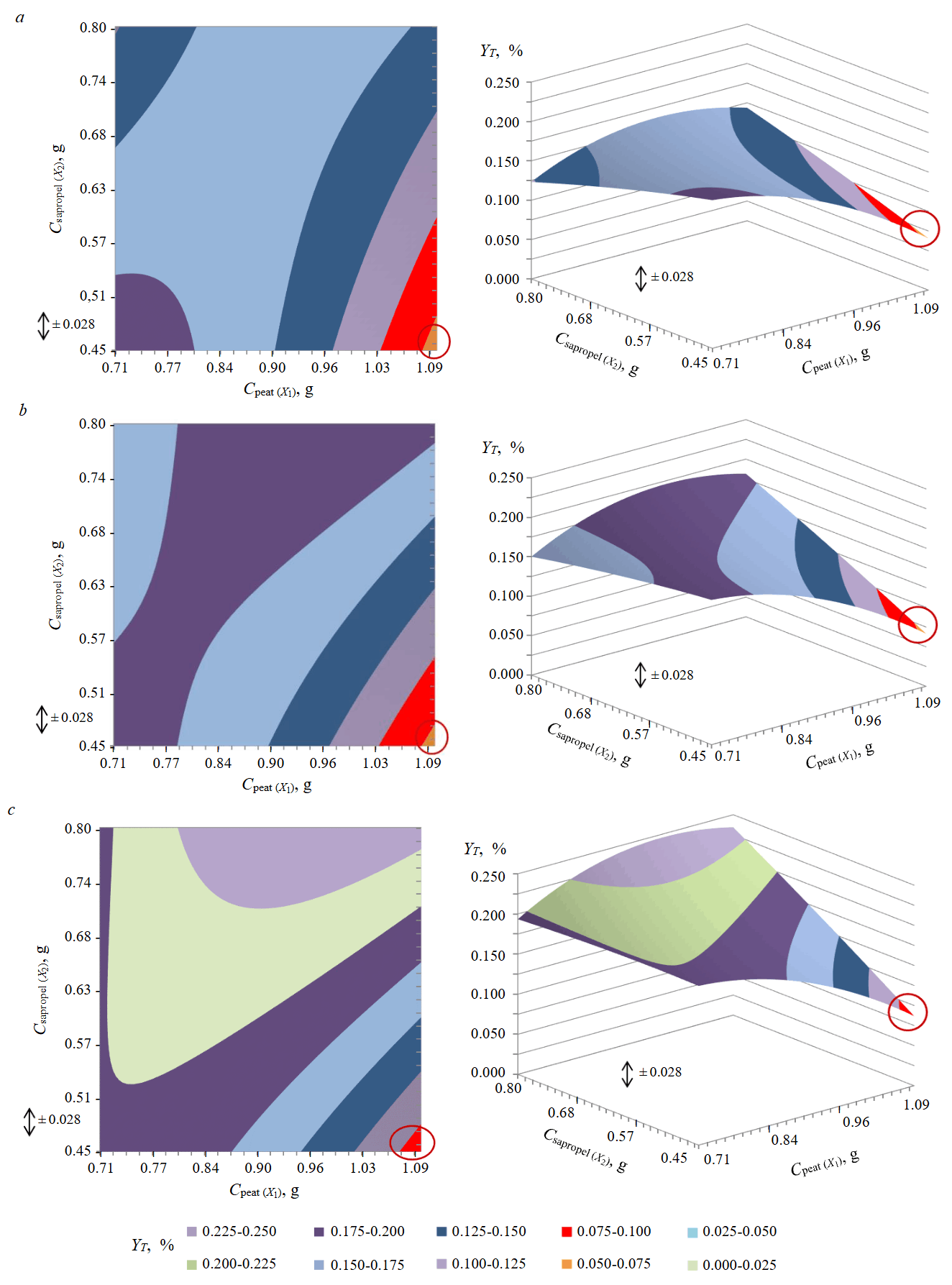
Fig.2. Changes in the phytotoxicity of an oil-contaminated terrestrial ecosystem with different ratios of PDA components and concentrations of diatomite 0.216 g (a); 0.252 g (b); 0.288 g (c).
The red circle indicates the optimal parameter, and the arrow indicates the mean square error of the determination
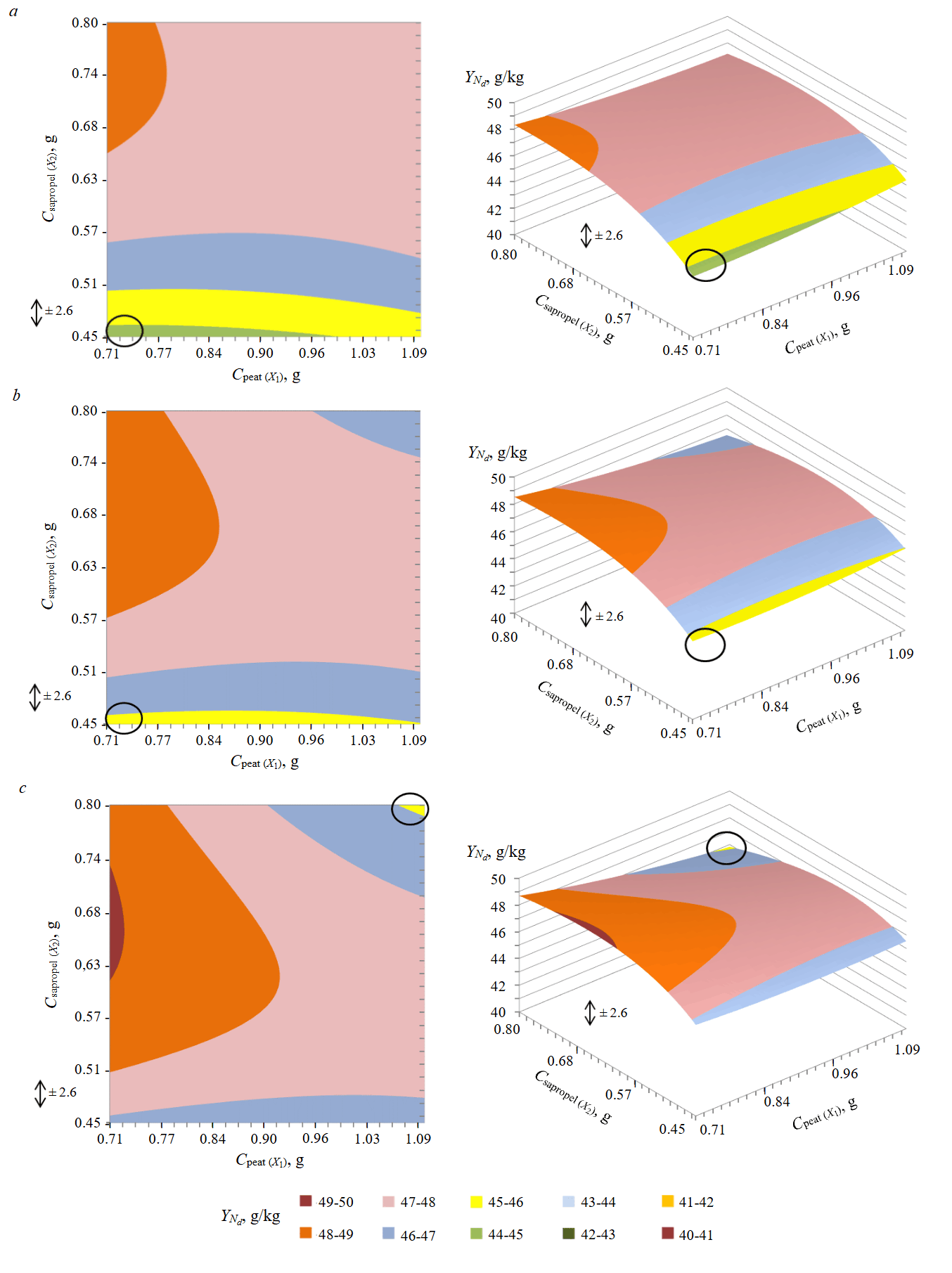
Fig.3. Changes in the concentration of oil in an oil-contaminated terrestrial ecosystem with different ratios of PDA components and concentrations of diatomite 0.216 g (a); 0.252 g (b); 0.288 g (c).
The black circle indicates the optimal parameter, and the arrow indicates the mean square error of the determination
Destruction of oil
Bioremediation of oil-contaminated terrestrial ecosystems is based on reducing the negative impact of petroleum hydrocarbons on the soil environment. The key process is the biological degradation of complex compounds by microorganisms. The goal is to break down petroleum hydrocarbons into their simplest and non-toxic components, such as water (H2O) and carbon dioxide (CO2).
The degradation process involves the active participation of both aerobic and anaerobic microorganisms, each of which plays a specific role in the decomposition of oil. Aerobic microorganisms use oxygen to oxidize hydrocarbons, while anaerobic microorganisms, which operate in an oxygen-free environment, use other substances, such as sulfates or nitrates, to break down the oil. The interaction between these two groups of microorganisms effectively degrades the oil contamination, restoring the soilʼs natural properties and creating conditions for the restoration of vegetation and the entire ecosystem. The effectiveness of bioremediation is determined by the rate of hydrocarbon decomposition and the degree of reduction in the toxicity of contaminated soil.
The selection of the optimal composition of the ameliorants plays an important role in the bioremediation of oil-contaminated soils, as it allows for the targeted correction of abiotic factors that limit the activity of hydrocarbon-oxidizing microorganisms and plant growth, providing the necessary nutrients (nitrogen, phosphorus, and potassium), reducing the phytotoxicity of oil, and normalizing the pH and Eh of the soil, which significantly increases the speed and efficiency of the biodegradation of petroleum hydrocarbons and restores the ecological function of the contaminated soils.
The results of experimental studies prove that the indicator of destruction of oil pollution of the soil Nd at different proportional ratio of organomineral ameliorants in PDA changes monotonously under the influence of four factors – additive (independent) influences of each component and multiplicative (interconnected) influence of their mixture (Fig.3).
The indicator of soil oil pollution destruction is described by the functional model YNd, which consists of the sum of the initial indicator (before the application of PDA to the soil) and four power functions that reflect the additive and multiplicative effect of these components on reducing the degree of pollution. Due to a change in the proportional ratio of the organomineral ameliorants in the volume of 10% of its conditionally dry weight, Nd decreases with a relative error of 5.6% in the sum of power functions interacting additively and multiplicatively with exponents of the corresponding components 1.86; –1.3; 0.95 and 0.74; 0.9; 1.1, the function is monotonically concave, such that it is demonstrated that with optimal peat contents of 0.720 g, sapropel 0.450 g and diatomite 0.216 g, the initial oil concentration of 63 g/kg decreases by 34% to a minimum value of 41.5 g/kg within a month. For comparison, the oil concentration decreased by 6% over the same period without the use of ameliorants.
The intensification of biodegradation of petroleum hydrocarbons is observed when the pH of the medium shifts from the acidic region to values close to neutral (pHH2O 4.5-6.3), which is due to more favorable conditions for the implementation of the catalytic functions of oil-degrading microorganisms. Optimizing the redox potential of the soil environment from 187 to 213 mV also contributes to the activation of the catabolic enzymatic systems responsible for the metabolism of hydrocarbon substrates, due to the enhancement of aerobic conditions and the predominance of oxidative reactions[15]. An increase in the sapropel concentration in the PDA composition causes the most pronounced shift of the medium reaction to the alkaline region.
Conclusion
Based on the analysis of the data obtained during the experiment and processed in the Design-Expert 13 program, the optimal ratio of PDA components was determined to achieve the specified target values for two key responses: YT (phytotoxicity indicator) and YNd(oil destruction indicator). The optimization was conducted with two important conditions in mind – maximizing the inclusion of peat in the mixture, which has economic and environmental benefits, and ensuring a balanced response across all target indicators.
The priority of the YNdresponse value during optimization indicates the special importance of this characteristic, as the main purpose of using PDA is the decomposition of oil products, so the composition of the mixture was selected to ensure maximum efficiency of this process.
The use of Design-Expert 13 allowed not only to determine the optimal percentage of components, but also to take into account the complex interactions between them, which increases the reliability and reproducibility of the results, as well as provides the possibility of further scaling and industrial application of the developed PDA.
From Fig.4,a, it can be seen that in order to achieve an optimal balance between oil destruction and phytotoxicity reduction, the following ratio is required: peat 0.778 g, sapropel 0.479 g, and diatomite 0.229 g. In parallel, the environmental parameters are maintained at a pH of approximately 5.91 and an Eh of approximately 206.51 mV. The following results are achieved – residual oil content of 45.3 g/kg and a phytotoxicity index of 0.176%. In the graph (Fig.4,b), which focuses on reducing the oil concentration, there is a change in the component ratio that leads to a decrease in the oil content of YNdto 42.2 g/kg. Comparing these two options allows you to choose the composition of the PDA based on the specific goals of reclamation.
Thus, as a result of the conducted research, the optimal ratio of peat, sapropel, and diatomite raw materials, which form the basis of PDA, has been substantiated. The optimal ratios of PDA components in grams/percentages by weight of air-dry matter are presented in Table 4.
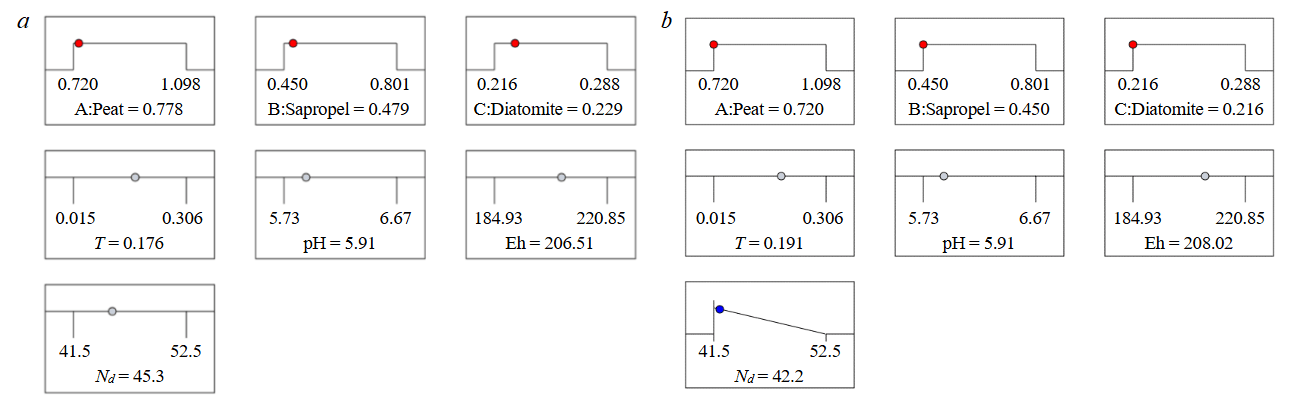
Fig.4. Component ratio to achieve the best ratios of PDA components, reaching the target response levels YT, YNd : a – under equal conditions of response values; b – YNd in priority
Table 4
The optimal ratio of PDA components
|
Raw materials |
Minimum |
Maximum |
|
Peat |
0.720/51.5 |
0.770/53.5 |
|
Sapropel |
0.450/31.0 |
0.470/33.5 |
|
Diatomite |
0.216/15.0 |
0.223/15.5 |
Peat raw materials predominate in PDA, which is due to the presence of metabolically active hydrocarbon-oxidizing microorganisms in peat [34, 35], as well as the porous structure of peat, which can adsorb free oil, increasing the survival rate of plants and microorganisms. Sapropel demonstrates a complex positive effect on the agrochemical properties of oil-contaminated soils, combining the functions of a ameliorant and a bioactivator, improving the agrochemical indicators (C:N:P:K) of the contaminated soil and stabilizing the pH, which is especially important in peat bogs with a low pH level (4.0-4.5). Diatomite is essential for seed germination and improving the moisture capacity of the ameliorant due to its high silicon content. Its porous structure increases the water-holding capacity of the ameliorant, ensuring a uniform supply of moisture and nutrients to the roots, which creates favorable conditions for plant growth. For example, when the concentration of diatomite in the PDA was high, the germination rate was 40 % during the first week of the experiment and 83 % during the second week, while when the concentration of diatomite was low, the germination rates were only 16.7 % and 64 %, respectively. By the end of the experimental period, the laboratory germination rate of seeds in the variants with a high concentration of diatomite reached 98%, which was 6% higher than the maximum value in the variants with a minimum dose of diatomite (92%).
Thus, the optimal ratio of peat, sapropel, and diatomite raw materials, which form the basis of PDA and ensure maximum efficiency of bioremediation of oil-contaminated soils, has been experimentally determined. The effectiveness of oil degradation in oil-contaminated terrestrial ecosystems was found to depend on the application of PDA in the following ratio of organic and mineral ameliorants: peat 51.5-53.5%, sapropel 31.0-33.5%, and diatomite 15.0-15.5% by weight of air-dry matter.
References
- Usmanov A.I., Antoninova N.Yu., Usmanova V.A., Gorbunov A.V. On the use of reclamation techniques for the formation of biogeochemical barriers. News of the Ural State Mining University. 2025. Iss. 1 (77), p. 116-128 (in Russian). DOI: 10.21440/2307-2091-2025-1-116-128
- Shchemelinina T.N., Anchugova E.M. Integrated biotechnology for oil-polluted soil cleanup. Povolzhskiy Journal of Ecology. 2023. N 2, p. 246-256 (in Russian). DOI: 10.35885/1684-7318-2023-2-246-256
- Grechishcheva N.Yu., Zaporozhskaya A.A., Altanbagana N. Assessment of the self-cleaning ability of oil-contaminated soils of the northern regions. ChemChemTech. 2023. Vol. 66. N 10, p. 114-120 (in Russian). DOI: 10.6060/ivkkt.20236610.6770
- Bykova M.V., Pashkevich M.A. Assessment of oil pollution of soils of production facilities of different soil and climatic zones of the Russian Federation. News of the Tula State University. Sciences of Earth. 2020. Iss. 1, p. 46-59 (in Russian). DOI: 10.46689/2218-5194-2020-1-1-46-59
- Koshelkov A.M., Mayorova L.P. Oil Pollution Assessment of Soils in Khabarovsk. Ecology and Industry of Russia. 2021. Vol. 25. N 12, p. 65-71 (in Russian). DOI: 10.18412/1816-0395-2021-12-65-71
- Turov Yu.P., Guznyaeva M.Yu., Lazarev D.A. et al. Study of Sorption and Removal of Oil Hydrocarbons in Soil Samples. Eurasian Soil Science. 2022. Vol. 55. N 6, p. 830-839. DOI: 10.1134/S1064229322060151
- Gaivoronskiy V.G., Kuzina A.A., Kolesnikov S.I. et al. A method for determining the environmentally safe residual content of oil and petroleum products in soils. Hygiene and Sanitation. 2023. Vol. 102. N 9, p. 987-992 (in Russian). DOI: 10.47470/0016-9900-2023-102-9-987-992
- Buzmakov S.A., Andreev D.N., Nazarov A.V. et al. Development of Environmental Criteria for the Permissible Content of Oil and Products of its Transformation in the Soils of the Perm Region. Ecology and Industry of Russia. 2021. Vol. 25. N 9, p. 62-67 (in Russian). DOI: 10.18412/1816-0395-2021-9-62-67
- Trofimov S.Ya., Kovaleva E.I., Avetov N.A., Tolpeshta I.I. Studies of Oil-Contaminated Soils and Prospective Approaches for Their Remediation. Moscow University Soil Science Bulletin. 2023. Vol. 78. N 4, p. 387-395. DOI: 10.3103/S0147687423040099
- Fedorov D.V., Serebrennikova O.V., Elchaninova E.A., Kadychagov P.B. Composition and Distribution of Organic Compounds in Oil-Contaminated Peat Soils of the Mamontovskoye Field (KhMAO–Yugra). Solid Fuel Chemistry. 2024. Vol. 58. N 2, p. 129-139. DOI: 10.3103/S0361521924020022
- Minnikova T.V., Kolesnikov S.I. Environmental assessment of biochar application for remediation of oil-contaminated soils under various economic uses. Journal of Mining Institute. 2025. Vol. 271, p. 84-94.
- Sozina I.D., Danilov A.S. Microbiological remediation of oil-contaminated soils. Journal of Mining Institute. 2023. Vol. 260, p. 297-312. DOI: 10.31897/PMI.2023.8
- Yulin Zou, Yuanyuan Hu, Sicheng Li et al. Remediation of crude oil contaminated soil through an integrated biological-chemical-biological strategy. Science of the Total Environment. 2024. Vol. 919. N 170756. DOI: 10.1016/j.scitotenv.2024.170756
- Vasilyeva G., Mikhedova E., Zinnatshina L. et al. Use of natural sorbents for accelerated bioremediation of grey forest soil contaminated with crude oil. Science of the Total Environment. 2022. Vol. 850. N 157952. DOI: 10.1016/j.scitotenv.2022.157952
- Popoola L.T., Yusuff A.S., Adeyi A.A., Omotara O.O. Bioaugmentation and biostimulation of crude oil contaminated soil: Process parameters influence. South African Journal of Chemical Engineering. 2022. Vol. 39, p. 12-18. DOI: 10.1016/j.sajce.2021.10.003
- Totubaeva N., Tokpaeva Z., Izakov J., Moldobaev M. Bioremediation approaches for oil contaminated soils in extremely high-mountainous conditions. Plant, Soil and Environment. 2023. Vol. 69. Iss. 4, p. 188-193. DOI: 10.17221/433/2022-PSE
- Koohkan H., Mortazavi M.S., Golchin A. et al. The effect of petroleum levels on some soil biological properties under phytoremediation and bioaugmentation. Environmental Science and Pollution Research. 2023. Vol. 30. Iss. 21, p. 60618-60637. DOI: 10.1007/s11356-023-26730-x
- Yijie Dong, Zhiyang Zheng, Lei liao et al. Natural Degradation Simulation and Phytoremediation of Oil-Contaminated Soil. IOP Conference Series: Earth and Environmental Science. 2021. Vol. 680. N 012115. DOI: 10.1088/1755-1315/680/1/012115
- Zhenhua Zhang, Chao Hua, Ayyamperumal R. et al. The impact of specialization and large-scale operation on the application of pesticides and chemical fertilizers: A spatial panel data analysis in China. Environmental Impact Assessment Review. 2024. Vol. 106. N 107496. DOI: 10.1016/j.eiar.2024.107496
- Katiyar A., Gedam V.V. Life cycle assessment of urea production: Environmental impact comparison of two fertilizer techno-logies in Northern India. Science of the Total Environment. 2025. Vol. 971. N 179034. DOI: 10.1016/j.scitotenv.2025.179034
- Singh S., Singh R., Singh K. et al. Smart fertilizer technologies: An environmental impact assessment for sustainable agriculture. Smart Agricultural Technology. 2024. Vol. 8. N 100504. DOI: 10.1016/j.atech.2024.100504
- Antoninova N.Yu., Usmanov A.I., Sobenin A.V., Gorbunov A.A. Effect of peat-diatomite ameliorant on grass cover persistency in disturbed land reclamation. Mining Informational and Analytical Bulletin. 2022. N 5, p. 131-141 (in Russian). DOI: 10.25018/0236_1493_2022_5_0_131
- Sivkov Y.V., Nikiforov A.S. Study of Oil-Contaminated Soils Phytotoxicity During Bioremediation Activities. Journal of Ecological Engineering. 2021. Vol. 22. Iss. 3, p. 67-72. DOI: 10.12911/22998993/132435
- Antonov V.A. Experimental mathematical modeling in solving scientific and practical problems of mining production. Problems of Subsoil Use. 2022. N 2 (33). p. 92-102. DOI: 10.25635/2313-1586.2022.02.092
- Usmanov A.I., Gorbunov A.V. Change in properties of manmade soil in reclamation using peat–diatomite improver. Mining Informational and Analytical Bulletin. 2021. N 5-2, p. 283-294 (in Russian). DOI: 10.25018/0236_1493_2021_52_0_283
- Łach M., Pławecka K., Marczyk J. et al. Use of diatomite from Polish fields in sustainable development as a sorbent for petroleum substances. Journal of Cleaner Production. 2023. Vol. 389. N 136100. DOI: 10.1016/j.jclepro.2023.136100
- Yiqing Xu, Xianwei Zhang, Xinyu Liu, Gang Wang. Alterations of physical properties and microstructure of marine diatomite owing to variation of diatom content. Marine Georesources & Geotechnology. 2023. Vol. 41. Iss. 4, p. 376-387. DOI: 10.1080/1064119X.2022.2046664
- Krasnoperova S.A. The evaluation of the effectiveness of sorbents used for the removal of oil and petroleum products. Management of the Technosphere. 2021. Vol. 4. Iss. 4, p. 413-423 (in Russian). DOI: 10.34828/UdSU.2021.83.79.007
- Yurak V.V., Usmanov A.I. Disturbed land restoration in mountain ecosystems. Sustainable Development of Mountain Territories. 2023. Vol. 15. N 4, p. 901-911 (in Russian). DOI: 10.21177/1998-4502-2023-15-4-901-911
- Bortnikova S.B., Artamonova V.S., Abrosimova N.A. et al. Results of phytoremediation experiments with sowing oats (Avena sativa) on different types of mine tailings. Bulletin of the Tomsk Polytechnic University. Geo Аssets Engineering. 2022. Vol. 333. N 11, p. 7-23 (in Russian). DOI: 10.18799/24131830/2022/11/3762
- Huseynova M.A., Jalalli E.Kh. Numerical simulation of bioremediation method of soils purification from oil pollution. Oil and Gas Technologies. 2024. N 2 (151), p. 35-39 (in Russian). DOI: 10.32935/1815-2600-2024-151-2-35-39
- Anekwe I.M.S., Isa Y.M. Application of biostimulation and bioventing system as bioremediation strategy for the treatment of crude oil contaminated soils. Soil and Water Research. 2024. Vol. 19. Iss. 2, p. 100-110. DOI: 10.17221/66/2023-SWR
- Zainab R., Hasnain M., Ali F. et al. Exploring the bioremediation capability of petroleum-contaminated soils for enhanced environmental sustainability and minimization of ecotoxicological concerns. Environmental Science and Pollution Research. 2023. Vol. 30. Iss. 48, p. 104933-104957. DOI: 10.1007/s11356-023-29801-1
- Manucharova N.A., Ksenofontova N.A., Belov A.A. et al. Prokaryotic Component of Oil-Contaminated Oligotrophic Peat Soil under Different Levels of Mineral Nutrition: Biomass, Diversity, and Activity. Eurasian Soil Science. 2021. Vol. 54. N 1, p. 89-97. DOI: 10.1134/S1064229321010105
- Danilov A.S., Sosnina I.D., Serdyukova E.A. Development of a composition and evaluation of the effectiveness of a bio-based product for cleaning oil-contaminated soils. Journal of Mining Institute. 2026. Vol. 277, p. 3-12.