Submit an Article
Become a reviewer
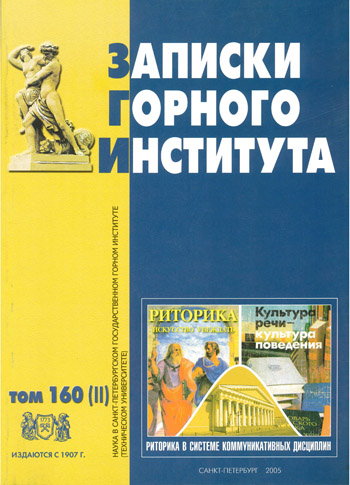
Vol 160 Iss. 2
Pages:
121-122
Download volume:
RUS
Article

On the ethical aspect of speech culture

Authors:
E. E. Molchanova
About authors
  • Astrakhan State University
Date submitted:
2004-07-27
Date accepted:
2004-08-12
Date published:
2005-01-11

Abstract

Negative changes in the field of language consciousness and speech behavior of individuals, caused by extra-linguistic factors, are closely related to the ethical aspect of speech culture. Language competence is necessary for a person as an individual to establish, maintain and successfully complete verbal communication. The pragmatics of modern verbal communication testifies to the inattention of the participants of communication to each other, failure to take into account the most important personal characteristics, without which it is impossible to optimally build a dialog. This finds expression either in simplification or in complication of speech behavior, which leads to infringement of the rights of each of the communicators and is expressed in communicative failure. A linguistic personality respecting the addressee first of all declares himself by means of speech based on the mastery of literary and linguistic norms.

Область исследования:
(Archived) Speech culture of society: language processes - theory of speech - "Russian language and culture of speech" as an academic discipline
Funding:

None

Go to volume 160

Similar articles

Asystemicity as a result of analogy and as a consequence of contamination
2005 R. S. Stoyanova
Rhetoric as an educational and cultural aspect of professional training of a modern pharmacist
2005 G. P. Burova
Speech self-portrait of schoolchildren in the system of genre varieties of portrait characterization
2005 P. B. Volchenkova
Independent work of students in the course "Russian language and culture of speech" and its rhetorical component
2005 A. I. Sokolov
Russian language, literature and rhetoric at school
2005 Z. S. Sandzhi-Garyaeva
Historical component in Russian language lessons as a way to form rhetorical thinking
2005 O. N. Zaitseva