

Reconstruction of the geodynamic history of the Marun-Keu complex, the Polar Urals: a multidisciplinary approach
- 1 — Ph.D. Senior Researcher Institute of Precambrian Geology and Geochronology RAS ▪ Orcid
- 2 — Ph.D. Researcher Institute of Precambrian Geology and Geochronology RAS ▪ Orcid
- 3 — Ph.D., Dr.Sci. Chief Researcher Zavaritsky Institute of Geology and Geochemistry of the Ural Branch of RAS ▪ Orcid
Abstract
A comprehensive study of the evolutionary history of the Marun-Keu complex in the Polar Urals is presented. Utilizing both original data and published earlier information, this work establishes the temperature and pressure ranges corresponding to the magmatic and metamorphic stages of rock evolution, as well as estimates the geothermal gradient and continental crust thickness. Thermobarometric calculations for the magmatic stage were performed using machine learning techniques, specifically the “random forest” algorithm, based on experimental datasets and require minimal petrochemical input regarding rock composition. The pressure-temperature (PT) conditions of the metamorphic stage were evaluated using the THERIAK-DOMINO software package. The host rocks of the eclogites are interpreted as products of partial melting of continental crust induced by interaction with heated basic-ultramafic melts. Peak metamorphic pressures for the eclogites are estimated not to have exceeded approximately 21 kbar, with corresponding temperatures ranging 730-750 °C. Subsequent retrograde metamorphism within the Marun-Keu eclogites was constrained to temperatures below 640 °C and pressures above 5 kbar. The geothermal gradient during protolith formation of the eclogites was calculated to be approximately 13 °C/km, consistent with contemporary estimates for continental crustal settings. Furthermore, the subduction parameters were inferred, yielding an estimated slab dip angle of 6-8°, and a subduction velocity between 2.2 and 2.9 cm/year, which does not contradict the hypothesis of continental subduction.
This research was funded by Russian Science Foundation, grant number N 22-17-00177.
Introduction
The Ural Orogen represents a classical example of a folded belt that has undergone a complete geodynamic evolutionary cycle [1]. This orogenic belt hosts a substantial number of mineral deposits of diverse types [2-4]. Within the Polar Urals, the Marun-Keu complex constitutes a key locality for the occurrence of eclogites, which are principal indicators of specific geodynamic settings. Due to its remote location and complex geological architecture, the Marun-Keu complex remains relatively understudied. Fundamental aspects such as its precise age [5-7], the nature of the eclogite protoliths [8, 9], the conditions of rock formation [10-12], and its role within the regional tectonometamorphic evolution [13-15] remain subjects of ongoing debate. Most investigations of the Marun-Keu complex have been concentrated in the Slyudyanaya gorka area, where eclogites developed from a range of protoliths – including ultrabasic rocks and dolerite porphyrites – are exposed over a limited spatial extent (~5 km2).
A seminal contribution to the understanding of this complex was made by N.G.Udovkina, who, in 1971, published the monograph “Eclogites of the Polar Urals”, summarizing detailed geological and petrographic work conducted in 1956 and 1962 [8]. Eclogite occurrences are characterized by blocks and lens-shaped bodies hosted within gneisses, occasionally associated with amphibolite zones. Garnetite and kyanite-bearing parageneses commonly develop within these eclogites.
Eclogitization is spatially controlled by deformation zones [14], which function as conduits for fluid migration. These zones manifest as shear zones ranging in thickness from 1 cm to 10 m. Outside these deformation zones, primary magmatic textures and mineral assemblages of the original intrusive rocks are generally preserved. Within the deformation zones, networks of veinlets frequently form, composed of both eclogitic material and monomineralic zoned aggregates dominated by omphacite, garnet, and amphibole. The eclogite-facies metamorphism has generated complex interrelations between eclogites and amphibolites, which can complicate pressure-temperature (PT) reconstructions.
Research on Marun-Keu eclogites primarily focuses on three directions: characterization of mineral phase compositions, determination of PT conditions for mineral paragenesis formation, and estimate of formation time aimed at geodynamic interpretation. However, most studies have analyzed a limited number of samples – typically no more than a dozen, often only one to three specimens [10-12]. This restricted sampling scope often results in divergent hypotheses, as different authors base their conclusions on samples from a single outcrop. Moreover, sample selection criteria vary depending on research objectives (e.g., geochronology versus mass-balance calculations for metasomatites), leading to disparate outcomes. This variability is reflected in the wide scatter of PT estimates reported for the Marun-Keu complex (Fig.1), which in turn underpins competing geodynamic models.
Metamorphic processes are predominantly localized within zones of fracturing and deformation, disproportionately affecting small eclogite xenoliths. Nevertheless, occurrences of massive eclogite bodies lacking visible evidence of metasomatic alteration have also been documented. It is noteworthy that existing literature does not provide quantitative estimates of the proportion of metamorphically altered rocks across the entire Marun-Keu complex. Assuming that only a minor fraction of the rock volume has undergone significant metamorphic modification (with heavily altered rocks excluded from the present dataset), the analysis of a comprehensive compositional database facilitates identification of characteristic features representative of the complex as a whole. Over six decades of study, an extensive body of geochemical data has been amassed for the Marun-Keu rocks; however, much of this information has been utilized in a descriptive capacity rather than subjected to integrative interpretative analysis.
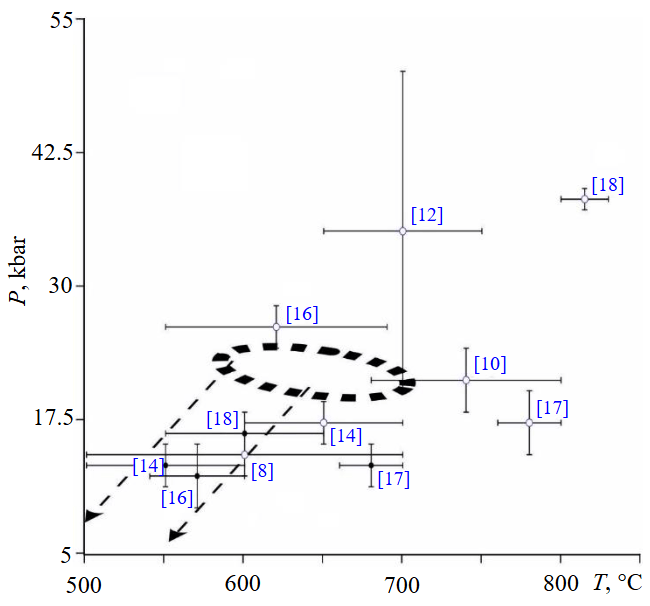
Fig.1. Summary diagram of PT parameters for rocks of the Marun-Keu complex based on published data. White markers are parameters of the “peak” stage, black markers are parameters of the regressive stage of metamorphism. Horizontal and vertical “whiskers” correspond to calculated errors in PT parameters. The area of estimated peak metamorphism parameters is indicated by an ellipse with a dashed boundary. The lines with arrows limit the PT area for the regressive stage of metamorphism
The objective of the present study is to elucidate the principal evolutionary trends of the Marun-Keu complex through synthesis of a large dataset encompassing whole-rock compositions and corresponding mineral parageneses. Specifically, this investigation evaluates whether early PT parameter estimates, derived from limited representative samples, are consistent with a genera-lized evolutionary model constructed from retrospective compositional data, including cases where mineral composition data are lacking. The study further assesses the evolution of the Marun-Keu eclogite protoliths from their magmatic origins through peak metamorphic conditions. For the first time, the genesis of gneisses hosting eclogite and ultrabasic rock blocks is established.
Samples and research methods
In addition to original analyses, data on the chemical composition of rocks were compiled from published sources. Including the authors’ own dataset (15 samples), the study analyzed a total of 66 eclogite samples and 19 samples of gneisses and granites associated with the eclogites. For compositional modeling, all rock compositions were normalized to 100 % excluding MnO and P2O5.
The initial objective was to determine the temperature and pressure conditions corresponding to the magmatic stage of rock formation. Classical thermobarometric methods are typically employed for such purposes [19-21]; however, their application to the present dataset is often limited due to the partial or complete absence of detailed mineral compositional information in the literature. Consequently, alternative thermobarometric approaches based on machine learning techniques have been increasingly utilized in recent studies. For example, utilizing over 2,900 experimental data points from 135 experiments, the study [22] demonstrated that temperature can be estimated with an uncertainty of approximately 50 °C and pressure within 2 kbar, relying solely on the bulk chemical composition of major elements in the rocks. The computational approach involves normalizing petrogenic oxides (excluding P2O5 and MnO) to 100 % for each experimental data point. The presence of stable mineral phases from ten mineral groups (Ol, Opx, Cpx, Plag, Amph, Bt, Ksp, Qtz, Ox, Gt, following [22]) was also recorded. The random forest algorithm, a machine learning method that constructs multiple decision trees and outputs averaged parameter estimates (e.g., temperature or pressure), was applied to this experimental dataset.
Applying this method to 66 ultrabasic and basic rocks (including eclogites), crystallization temperatures and pressures were estimated to range from 1,340 to 1,100 °C and 10 to 4 kbar, respectively. The average errors for these calculations do not exceed 75 °C for temperature and 2.5 kbar for pressure. Comparison with previous estimates reported by [10] reveals good agreement for pressure (6-8 kbar in [10] versus 6-9 kbar herein) and reasonable concordance for temperature (1,253±15 °C in [10] versus 1,192±37 °C in this study). To calculate the densities of silicate melts as functions of petrogenic oxides (within a 10-component system), pressure, and temperature, we employed the methodology described in [23], implemented in Python. The calculated density errors did not exceed 0.02 g/cm³. To investigate the potential genesis of metamorphosed acidic to intermediate rocks containing eclogites and ultrabasic components, simulations of their formation via partial melting of Precambrian continental crust under the influence of basic-ultramafic melts were conducted using the Rhyolite-MELTS software package [24, 25].
To elucidate the general trend of metamorphic evolution, physicochemical modeling was performed using the THERIAK-DOMINO software suite [26]. Major element compositions of rocks and literature data on mineralogical assemblages – such as pyroxenes, olivine, and spinel for the subsolidus magmatic association, and garnet, omphacite, amphibole, and chlorite for the metamorphic assemblage – were incorporated. The adapted ds55 database [27] was utilized in two variants (basic and acidic rock versions) due to frequent lack of detailed mineral compositional data. Calculations were carried out assuming the conditional presence of mineral phases at fixed PT conditions. For modeling the Ol – Opx – Cpx assemblage, the JUN92.bs database, which includes standard thermodynamic properties and solid solution mixing parameters, was used [28]. To estimate temperatures and pressures during the transition from the magmatic stage to peak metamorphism (eclogite facies), the stability of the Ol – Opx – Cpx assemblage – commonly preserved as relicts in eclogites – was modeled separately. Modeling assumed excess H2O, estimated by comparison of model results with petrographic observations. Fe3+ content was approximated based on the abundance of epidote, biotite, or amphibole in the samples. Mineral abbreviations follow [29], unless otherwise specified.
Discussion of results
The calculations conducted in this study indicate that the crystallization of ultrabasites and basites (including the protoliths of eclogites) occurred within a temperature range of 1,340 to 1,100 °C and pressures between 11 and 4 kbar. These conditions are consistent with the mineral parageneses observed in the samples (Ol, Opx, Cpx, Plag). Such data enable direct estimation of the densities of the basic-ultramafic melts intruded into the crustal substrate. Assuming hydrostatic equilibrium within the crust-intrusion system, melt densities approximate those of the surrounding crustal material, effectively representing a section of the crust (Fig.2, a). The maximum calculated density of approximately 3.06 g/cm3 corresponds to the highest pressure-temperature conditions, decreasing to about 2.60 g/cm3.
Crustal thickness during melt emplacement was estimated differentially based on variations in density and pressure (Fig.2, a), assuming all pressure to be lithostatic. The resulting estimates range from 38 to 40 km, which aligns well with contemporary values reported for continental crust [30]. Based on Fig.2, it can be inferred that some of the highest-temperature ultramafic rocks may represent primary mantle-derived material formed near the crust-mantle boundary or, as in the case of localized high-density ultramafic bodies (~1,170 °C), may have a cumulate origin. It is posited with reasonable confidence that the ultramafic and mafic rocks of the Marun-Keu complex predominantly represent partial melts derived from the upper mantle, whereas certain host rocks containing eclogite and ultramafic blocks may have originated through partial melting of continental crustal material. A novel method for estimating the geothermal gradient is proposed herein, based on the genetic relationship between acidic rocks – interpreted as products of partial melting of the continental crust – and the thermal influence exerted by basic-ultramafic melts. It is assumed that the continental crustal rocks are preheated to a certain temperature consistent with the ambient geothermal gradient. In a first-order approximation, melting of the host continental crust commences concurrently with the intrusion of basic melts. Crystallization of minerals from “near-contact” melting zones, characterized by acid-intermediate compositions, begins only after thermal equilibrium is achieved between the magmatic chamber and the surrounding crust. Accordingly, the direct temperature difference between calculated crystallization temperatures of basic and acid-intermediate compositions should be proportional to the temperature increase experienced by the continental crustal rocks, as determined by the geothermal gradient. To minimize errors associated with individual measurements, the entire pressure range was subdivided into 1 kbar intervals, and the average temperature difference within each interval was computed (the methodology is illustrated in Fig.2, b). As shown in Fig.2, c, the calculated gradient points define a linear trend whose slope corresponds to a geothermal gradient of approximately 13 °C/km. These results should be regarded as preliminary given the limited dataset available for analysis.
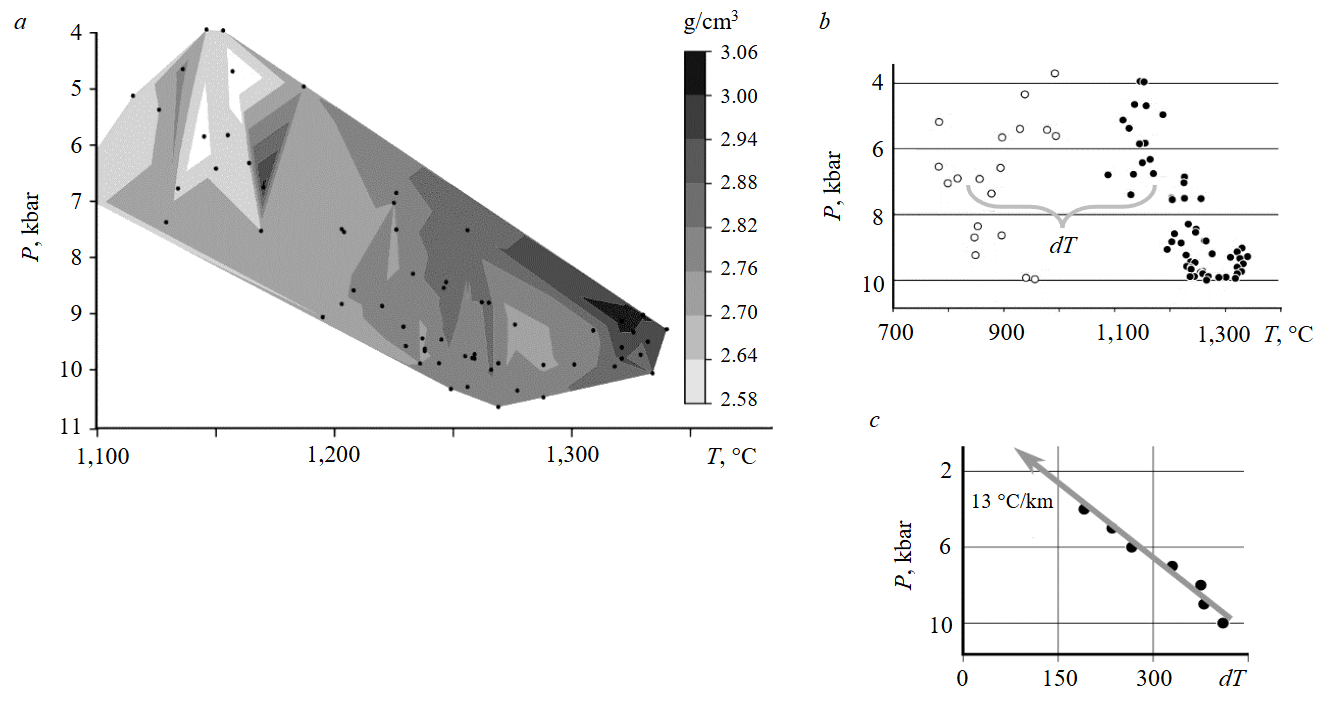
Fig.2. Distribution of eclogite protolith densities in the PT field, the dots show the data for which the calculation was performed (a); the position in the PT space of the calculated parameters for acidic and intermediate rocks (white circles) and ultrabasic rocks (black circles), the gray bracket and the designation dT show the difference in rock crystallization temperatures at the same pressure (b); the estimate of the temperature gradient in Fig.b in the continental crust (Fig.c).
The calculation step is 1 kbar
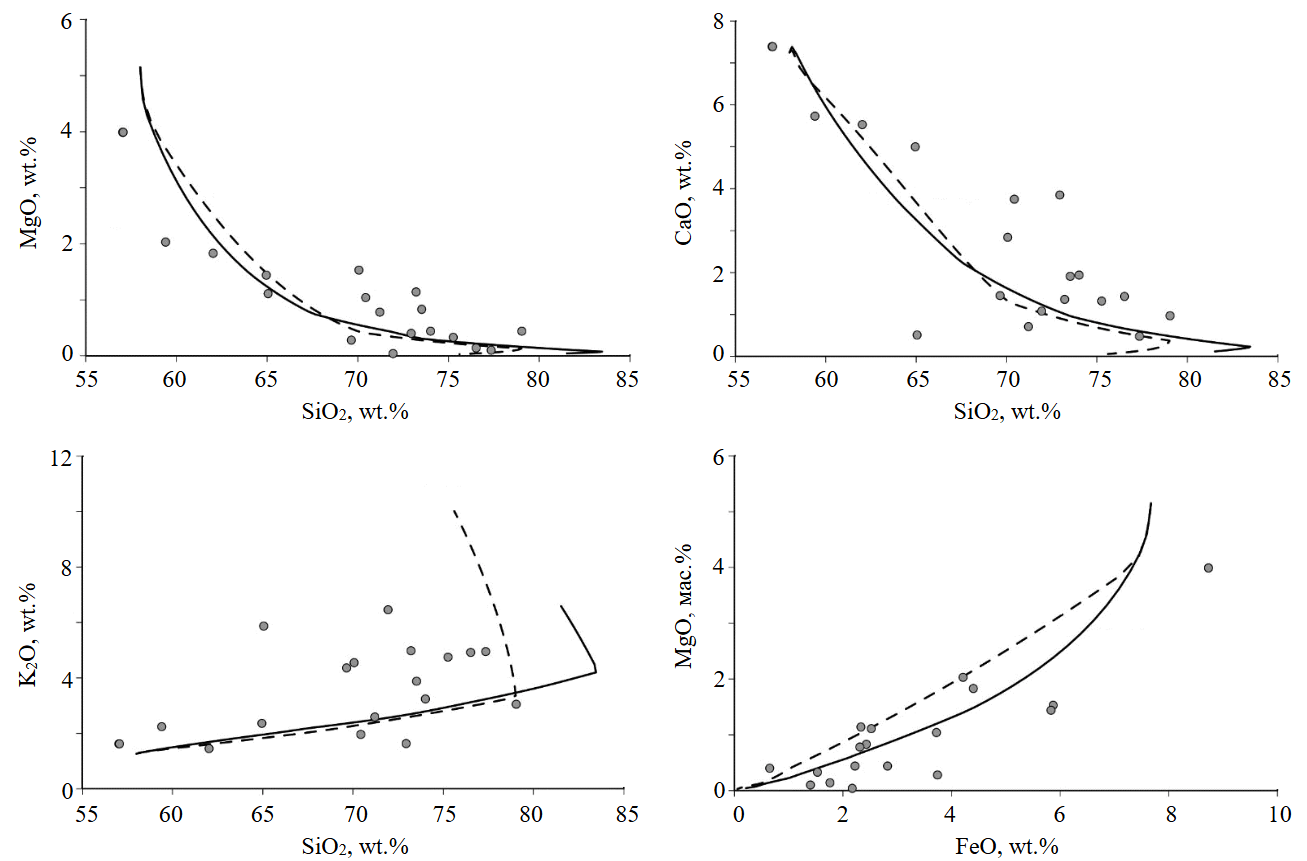
Fig.3. Variation diagrams for the rocks of the Marun-Keu eclogite matrix with model trajectories of partial melting of the continental crust at pressures of 5 (dashed line) and 10 (solid line) kbar
As illustrated in Fig.3, the distribution of compositional data points for rock bodies comprising basic (including eclogites) and ultrabasic lithologies is satisfactorily explained by the model of equilibrium partial melting of continental crustal material, as described in [25]. This model assumes a constant bulk composition of the crustal source at depths corresponding to pressures between 4 and 10 kbar. The varying degrees of partial melting required to produce the observed compositions can be attributed to different thermal regimes acting upon the crust, which are influenced by factors such as the volume of magmatic chambers, thermophysical properties, and melt composition. It is noteworthy that the maximum temperatures necessary for generating these melts correspond closely with the previously calculated crystallization temperatures for the eclogite protoliths, without exceeding them. Deviations of certain compositional points from the modeled melting trajectories – particularly with respect to alkali elements – may reflect their substantial mobility during the partial melting process.
Estimates of peak pressure and temperature conditions associated with the eclogite-facies metamorphism of the Marun-Keu complex exhibit considerable variability. Some studies have proposed ultra-high-pressure conditions reaching up to 50 kbar [12]. However, we consider the most reliable peak metamorphic parameters to be those derived from multimineral thermobarometric methods, as reported in [10], where peak conditions of approximately 22 kbar and 680 °C were estimated. Comparable values – 20.5 kbar and 790 °C – are presented in [17], where they are interpreted within the context of a progressive metamorphic evolution encompassing a transition from eclogite facies through granulite to amphibolite facies.
As demonstrated in Fig.4, the compositional data points of the studied rocks delineate an elongated zone characterized by a negative slope corresponding to a geothermal gradient of approximately 13 °C/km. The compositional field defined by the Ol – Cpx – Opx assemblage does not intersect with the domain representing magmatic protoliths. This discrepancy arises because the thermodynamic database JUN92.bs [28], which underpins the standard mineral prop erties and solid-solution mixing models employed here, lacks data pertinent to melts. Given the intersection of the inferred geothermal gradient trend with the peak metamorphic conditions of eclogite facies and the absence of coesite in the Marun-Keu complex eclogites, it is reasonable to infer that the peak metamorphic temperature likely ranges between 600 and 800 °C, consistent with previously published values, while the peak pressure does not exceed 25 kbar. In interpreting Fig.4, it is important to acknowledge that ultrabasic rocks undergoing metamorphism may enter the stability fields of amphibole and chlorite, resulting in the formation of characteristic parageneses. It should also be emphasized that the linear constraints depicted as gradient lines in the figure do not imply a linear evolutionary trajectory from igneous to metamorphic rocks but rather serve to delimit the plausible range of metamorphic conditions.
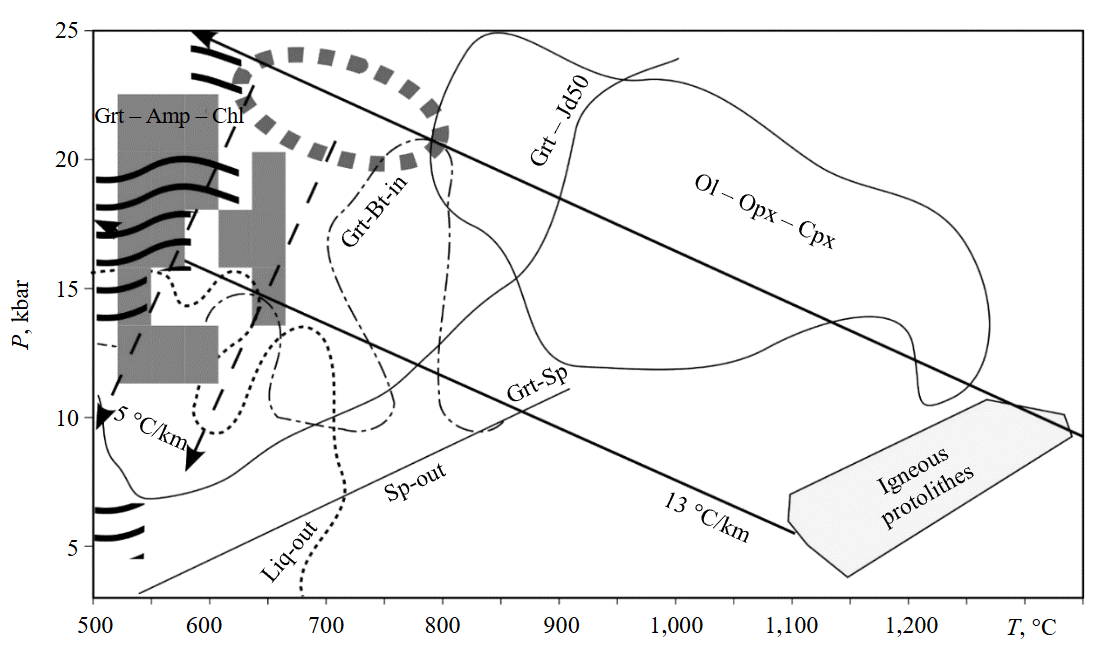
Fig.4. Summary diagram of stability fields of mineral associations in Marun-Keu rocks, constructed based on the results of modeling
Association: Ol – Opx – Cpx – olivine-orthopyroxene-clinopyroxene (postmagmatic, pre-peak), Grt – Amp – Chl – garnet-amphibole-chlorite (dark gray field), Grt – Jd50 – garnet-omphacite; Grt-Bt-in – boundary of the stability field of the garnet-biotite association (dash-dotted line); Sp-out – stability boundary of spinel inclusions (solid line); Liq-out – approximate boundary of the onset of melting for the rocks of the matrix, including eclogite blocks (dashed line); parageneses with talc (black wavy lines); area of inferred peak parameters of metamorphism (ellipse with gray dotted boundary); calculated gradients: progressive stage (solid lines with arrows), regressive (dashed lines with arrows). The light gray field for the magmatic stage of rock evolution is given according to Fig.2, a
Assuming synchronous movement of the eclogites and their host rocks, the direction of metamorphic transformations can be further constrained using stability fields of garnet, biotite, and epidote, as well as the conditions for the initiation of melting within the eclogitic matrix. Thermodynamic modeling indicates that the garnet-biotite assemblage, commonly observed in gneisses, becomes unstable at pressures exceeding 21 kbar. The stability field of the garnet-biotite-epidote paragenesis is even more restricted, limited to pressures between 7 and 13 kbar and temperatures below approximately 730 °C. Under these conditions, partial melting of the acidic crustal substrate leading to migmatite formation is minimal, a conclusion fully supported by both field observations and existing literature [8].
Regarding the retrograde, post-eclogite metamorphic stage, both the present study and earlier investigations [18] document the presence of amphibole and chlorite inclusions within garnet grains, with mineral compositions closely matching those of the matrix. This evidence allows for stringent constraints on equilibrium temperatures, limiting them to approximately 670 °C, while pressure estimates are constrained to no less than 11 kbar. Additionally, talc – likely formed through the alteration of olivine – has been identified in some garnet grains. Modeling results indicate that talc stability occurs below 20 kbar and near 640 °C, partially overlapping with the garnet-amphibole-chlorite stability field and thereby defining a compact stability region extending down to pressures below 11 kbar and temperatures near 500 °C. Combining peak metamorphic parameter estimates with retrograde metamorphic data permits calculation of the geothermal gradient during exhumation, which is estimated at 5±2 °C/km.
The authors propose that the Marun-Keu complex formed in association with subduction-related processes followed by subsequent exhumation during continental collision. To accurately estimate the rate of subsidence, it was necessary to determine the angle of inclination of the subducting slab. Calculations employing empirical relationships [31] yield an estimated slab dip angle between 6° and 8°, which is consistent with values reported [32].
Taking the maximum pressure of the magmatic stage as 11 kbar and the peak eclogite metamorphic pressure as 21 kbar, and assuming lithostatic pressure conditions – which remain valid to depths of 60-80 km [33] – the vertical subsidence rate is estimated to be approximately 0.23-0.37 cm/year. Approximating the subducting slab as a rigid planar surface, and applying the derived dip angles, the subduction velocity is estimated to range from 2.2 to 2.9 cm/year. These estimates consider the age of magmatic protolith emplacement at 470-500 million years and the timing of eclogite-facies metamorphism at 360-370 million years [17, 34, 35]. At present, precise determinations of the timing of retrograde paragenesis formation are lacking, precluding accurate estimation of exhumation rates for the complex.
Discussion and conclusions
The calculations performed in this study indicate that the magmatic stage of protolith formation occurred within a temperature range of 1,100-1,340 °C and under pressures between 4 and 11 kbar. These conditions for eclogites correspond well with contemporary models of continental crustal structure. Considering the densities of the rock types, it is evident that the most ultrabasic varieties were situated in the lower crust. The calculated geothermal gradient of approximately 13 °C/km supports this interpretation and further suggests an upper age limit for the crustal material on the order of 2.5 billion years [36]. Conversely, the lower geothermal gradient of approximately 5 °C/km, associated with the regressive metamorphic stage, effectively constrains the maximum age of retrograde metamorphism to roughly 600 million years. Consistent with established data [17, 34, 35], the authors adopt an age range of 470-500 million years for the magmatic protoliths of eclogites and granites, and 3,600-370 million years for the timing of eclogite-facies metamorphism.
The current coexistence of eclogites and their host matrix rocks can be interpreted as follows. The intrusion of basic and ultrabasic melts into the crustal substrate likely induced partial melting of the surrounding crustal material. This inference is supported by the close similarity in zircon core ages from both eclogitic and acidic rocks, which cluster around 500 million years [36]. However, given the relatively small volumes of intracrustal magmatic reservoirs composed of basic-ultramafic melts, the overall proportion of such melts was likely minor. It should also be noted that subsequent stages of geological evolution – namely eclogite metamorphism and the exhumation of rocks to shallower crustal levels – occurred after significant time intervals, during which primary contacts between different lithologies were disrupted or tectonically modified. Furthermore, it is plausible that relic blocks of ancient continental crust are preserved within the Marun-Keu complex. For instance, anorthosites – commonly regarded as constituents of the lower continental crust [25], including those subjected to eclogitization – have been documented in the Slyudyanaya gorka area. An alternative interpretation of these anorthosites as cumulate rocks remains a viable possibility.
An alternative hypothesis positing that all rocks of the eclogite matrix represent tectonically juxtaposed crustal materials is challenged by the compositional diversity observed within the matrix, which ranges from intermediate to nearly ultra-acidic compositions. Moreover, isotope-geochemical analyses of zircon from matrix rocks indicate that these rocks experienced eclogite-facies metamorphism contemporaneously with the basic and ultrabasic lithologies in the region [35].
The peak conditions of eclogite-facies metamorphism likely did not exceed pressures of 21 kbar and temperatures in the range of 730-750 °C. These values align well with previous estimates reported by [10]. Furthermore, it should be noted that omphacite with a jadeite mole fraction XJd greater than 0.5 – which would indicate higher peak pressures – has not been identified within the eclogite assemblages of the Slyudyanaya gorka locality. The presence of rutile inclusions within both garnet and sodic pyroxene, according to thermodynamic modeling, constrains the minimum pressure of eclogitic metamorphism to approximately 18 kbar; however, such inclusions are not ubiquitously present. It is important to emphasize that during the transition from crustal to eclogite-facies conditions, the rocks followed diverse baric paths corresponding to variable depths, reaching pressures up to 15-16 kbar.
The parameters derived herein differ substantially from those obtained via conventional geothermobarometers applied to garnet-orthopyroxene pairs, which have yielded temperature and pressure estimates of approximately 830 °C and 39 kbar, respectively [18]. This discrepancy can be attributed to the critical influence of minor elemental contents – specifically aluminum in pyroxene and chromium in garnet – on the accuracy of such determinations. Given their typically low concentrations and the limitations inherent in mineral compositional analyses, these factors may lead to significant overestimations of pressure and temperature. In [16], a pressure estimates of 27 kbar were proposed, with polycrystalline quartz inclusions in garnet interpreted as pseudomorphs after coesite. However, the predominance of ordinary quartz inclusions in most garnet grains suggests that peak pressures did not exceed the stability field of coesite.
A hypothesis proposing pressures up to 50 kbar [12] is based primarily on the interpretation of carbonate segregations, without adequately considering their potential formation as a consequence of carbonate fluid infiltration during retrograde metamorphism. The localized occurrence of such segregations within a single outcrop further indicates their limited spatial distribution. Additionally, the stability of rare earth element (REE)-rich apatite at such elevated pressures remains uncertain.
The retrograde mineral assemblage observed in the eclogites – typically comprising chlorite, amphibole, and talc – defines the post-peak evolutionary trajectory. Pressure estimates for this stage range from 5 to 11 kbar, with temperatures below approximately 640 °C. The calculated geothermal gradient associated with this retrograde evolution is approximately 5 °C/km, a notably low value that likely reflects the combined effects of rock exhumation and cooling. Further detailed investigations are necessary to refine estimates of exhumation rates and precise PT conditions.
The genesis of gneisses, including those hosting eclogites, may be interpreted in terms of partial melting of ancient crustal material. Nevertheless, the possibility that some acidic rocks originated from metasedimentary protoliths cannot be excluded. Resolving this uncertainty will require additional geochemical and isotope-geochemical data.
The angle of slab subduction during the formation of the Marun-Keu complex has been estimated at 6-8°, with a corresponding subduction rate of approximately 2.2-2.9 cm/year. This estimate concurs closely with the previously reported value of 2.8 cm/year derived from geological data [37]. Considering the subisothermal nature of the rocks’ post-peak metamorphic evolution, a plausible mechanism for their development can be framed within the continental subduction model. Thermomechanical simulations conducted previously [38] have demonstrated that continental subduction proceeds at slower rates (1-3 cm/year) compared to oceanic subduction, with the reduced velocity resulting in comparatively limited rock deformation. Such dynamics permit subsidence of the continental margin to relatively shallow depths, with only a subset of subducted rocks attaining high-pressure PT conditions. This scenario accounts for the considerable variability observed in pressure and temperature estimates within relatively localized regions.
References
- Ivanov K.S., Puchkov V.N. Structural-Formational Zoning of the Ural Fold Belt: An Overview and New Approach. Geotectonics. 2022. Vol. 56. N 6, p. 747-780. DOI: 10.1134/S0016852122060036
- Kissin A.Yu., Pritchin M.E., Ozornin D.A. Geological and structural position of the Svetlinsky gold deposit (the Southern Urals). Journal of Mining Institute. 2022. Vol. 255, p. 369-376. DOI: 10.31897/PMI.2022.46
- Nedosekova I.L. Carbonatite complexes of the South Urals: geochemical features, ore mineralization, and geodynamic settings. Journal of Mining Institute. 2022. Vol. 255, p. 349-368. DOI: 10.31897/PMI.2022.28
- Popov M.P. Peculiarities of rare-metal mineralization and genetic relationship of mineral associations in the eastern rim of Murzinsko-Aduysky anticlinorium (the Ural Emerald Belt). Journal of Mining Institute. 2022. Vol. 255, p. 337-348. DOI: 10.31897/PMI.2022.19
- Shatskii V.S., Simonov V.A., Jagoutz E. et al. New Data on the Age of Eclogites from the Polar Urals. Doklady Earth Sciences. 2000. Vol. 371. N 3, p. 534-538.
- Andreichev V.L., Ronkin Yu.L., Serov P.A. et al. New Data on the Precambrian Age of Marunkeu Eclogites (Polar Urals). Doklady Earth Sciences. 2007. Vol. 413A. N 3, p. 347-350. DOI: 10.1134/S1028334X07030051
- Glodny J., Austrheim H., Molina J.F. et al. Rb/Sr record of fluid-rock interaction in eclogites: The Marun-Keu complex, Polar Urals, Russia. Geochimica et Cosmochimica Acta. 2003. Vol. 67. Iss. 22, p. 4353-4371. DOI: 10.1016/S0016-7037(03)00370-3
- Udovkina N.G. Eclogites of the Polar Urals (on the example of south part of Marun-Keu Ridge). Moscow: Nauka, 1971, p. 191 (in Russian).
- Udovkina N.G. Eclogites of USSR. Moscow: Nauka, 1985, p. 288 (in Russian).
- Liu Y.Y., Perchuk A.L., Ariskin A.A. High Pressure Metamorphism in the Peridotitic Cumulate of the Marun-Keu Complex, Polar Urals. Petrology. 2019. Vol. 27. N 2, p. 124-145. DOI: 10.1134/S0869591119020061
- Liu Y.Y., Perchuk A.L., Philippot P. Eclogites from the Marun-Keu Complex, Polar Urals, Russia: a record of hot subduction and sub-isothermal exhumation. Geological Society, London, Special Publications. 2019. Vol. 474, p. 255-274. DOI: 10.1144/SP474.6
- Shmelev V.R., Meng F.-C. Evidence of Ultrahigh-Pressure Evolution of Garnet Peridotites in the Polar Urals. Doklady Earth Sciences. 2023. Vol. 513. Part 1, p. 1167-1172. DOI: 10.1134/S1028334X2360175X
- Glodny J., Pease V., Montero P. et al. Protolith ages of eclogites, Marun-Keu Complex, Polar Urals, Russia: implications for the pre- and early Uralian evolution of the northeastern European continental margin. Geological Society, London, Memoirs. 2004. Vol. 30, p. 87-105. DOI: 10.1144/GSL.MEM.2004.030.01.09
- Molina J.F., Austrheim H., Glodny J., Rusin A. The eclogites of the Marun-Keu complex, Polar Urals (Russia): fluid control on reaction kinetics and metasomatism during high P metamorphism. Lithos. 2002. Vol. 61. Iss. 1-2, p. 55-78. DOI: 10.1016/S0024-4937(02)00070-1
- Molina J.F., Poli S., Austrheim H. et al. Eclogite-facies vein systems in the Marun-Keu complex (Polar Urals, Russia): textural, chemical and thermal constraints for patterns of fluid flow in the lower crust. Contributions to Mineralogy and Petrology. 2004. Vol. 147, p. 484-504. DOI: 10.1007/s00410-004-0569-z
- Gulbin Yu.L., Mikhalsky E.V. Modeling of Mineral Parageneses and Thermobarometry of Metavolcanic Rocks of the Ruker Group in the Southern Prince Charles Mountains, East Antarctica. Geology of Ore Deposits. 2020. Vol. 62. N 7, p. 584-598. DOI: 10.1134/S1075701520070053
- Abdrakhmanov I.A., Gulbin Y.L., Skublov S.G., Galankina O.L. Mineralogical Constraints on the Pressure–Temperature Evolution of Granulites in the Bunger Hills, East Antarctica. Minerals. 2024. Vol. 14. Iss. 5. N 488. DOI: 10.3390/min14050488
- Nikitina L.P., Marin Yu.B., Koreshkova M.Yu. et al. Xenoliths of High-Alumina Pyroxenites in the Basalts of the Sigurd Volcano, Spitsbergen Island (Svalbard Archipelago), as Indicators of the Paleozoic Geodynamics of the Regional Lithosphere. Russian Geology and Geophysics. 2022. Vol. 63. N 10, p. 1093-1110. DOI: 10.2113/RGG20214389
- Weber G., Blundy J. A Machine Learning-Based Thermobarometer for Magmatic Liquids. Journal of Petrology. 2024. Vol. 65. Iss. 4. N egae020. DOI: 10.1093/petrology/egae020
- Iacovino K., Till C.B. DensityX: A program for calculating the densities of magmatic liquids up to 1,627 °C and 30 kbar. Volcanica. 2019. Vol. 2. N 1, p. 1-10. DOI: 10.30909/vol.02.01.0110
- Gualda G.A.R., Ghiorso M.S., Lemons R.V., Carley T.L. Rhyolite-MELTS: a Modified Calibration of MELTS Optimized for Silica-rich, Fluid-bearing Magmatic Systems. Journal of Petrology. 2012. Vol. 53. Iss. 5, p. 875-890. DOI: 10.1093/petrology/egr080
- Rudnick R.L., Fountain D.M. Nature and composition of the continental crust: A lower crustal perspective. Reviews of Geophysics. 1995. Vol. 33. Iss. 3, p. 267-309. DOI: 10.1029/95RG01302
- de Capitani C., Petrakakis K. The computation of equilibrium assemblage diagrams with Theriak/Domino software. American Mineralogist. 2010. Vol. 95. Iss. 7, p. 1006-1016. DOI: 10.2138/am.2010.3354
- Holland T.J.B., Powell R. An internally consistent thermodynamic data set for phases of petrological interest. Journal of Metamorphic Geology. 1988. Vol. 16. Iss. 3, p. 309-343. DOI: 10.1111/j.1525-1314.1998.00140.x
- Berman R.G. Internally-Consistent Thermodynamic Data for Minerals in the System Na2O-K2O-CaO-MgO-FeO-Fe2O3-Al2O3-SiO2-TiO2-H2O-CO2. Journal of Petrology. 1988. Vol. 29. Iss. 2, p. 445-522. DOI: 10.1093/petrology/29.2.445
- Warr L.N. IMA–CNMNC approved mineral symbols. Mineralogical Magazine. 2021. Vol. 85. Iss. 3, p. 291-320. DOI: 10.1180/mgm.2021.43
- Hacker B.R., Kelemen P.B., Behn M.D. Continental Lower Crust. Annual Review of Earth and Planetary Sciences. 2015. Vol. 43, p. 167-205. DOI: 10.1146/annurev-earth-050212-124117
- Kulikova K.V., Varlamov D.A. Eclogite-gneisses complex of Marun-Keu Ridge (the Polar Urals). Geodinamicheskaya evolyutsiya litosfery Tsentralno-Aziatskogo podvizhnogo poyasa (ot okeana k kontinentu): Materialy soveshchaniya, 15-18 oktyabrya 2014, Irkutsk, Rossiya. Irkutsk: Institut zemnoi kory SO RAN, 2014. Iss. 12, p. 177-179 (in Russian).
- Selyatitskii A.Yu., Kulikova K.V. Chemical evolution of garnet during metamorphism of peridotites from UHP Marun-Keu Сomplex, Polar Ural. Vestnik of the Institute of Geology of the Komi Science Centre UB RAS. 2017. N 8, p. 36-43 (in Russian). DOI: 10.19110/2221-1381-2017-8-36-43
- Jiashun Hu, Gurnis M. Subduction Duration and Slab Dip. Geochemistry, Geophysics, Geosystems. 2020. Vol. 21. Iss. 4. N e2019GC008862. DOI: 10.1029/2019GC008862
- Gavrilov S.V., Kharitonov A.L. Geodynamic Model of the Deep Structure of a Paleo Subduction Zone on the East Edge of the Russian Paleo Plate and Distribution of the Oil and Gas Deposits. Bulletin of Perm University. Geology. 2020. Vol. 19. N 1, p. 1-12 (in Russian). DOI: 10.17072/psu.geol.19.1.1
- Yamato P., Agard P., Burov E. et al. Burial and exhumation in a subduction wedge: Mutual constraints from thermomechanical modeling and natural P-T-t data (Schistes Lustrés, western Alps). Journal of Geophysical Research: Solid Earth. 2007. Vol. 112. Iss. B7. N B07410. DOI: 10.1029/2006JB004441
- Udoratina O.V., Kulikova K.V., Shuyskiy A.S et al. Granitoid magmatism in the north of the Urals: U–Pb age, evolution, sources. Geodynamics & Tectonophysics. 2021. Vol. 12. Iss. 2, p. 287-309. DOI: 10.5800/GT-2021-12-2-0525
- Salimgaraeva L., Berezin A., Sergeev S. et al. Zircons from Eclogite-Associated Rocks of the Marun-Keu Complex, the Polar Urals: Trace Elements and U–Pb Dating. Geosciences. 2024. Vol. 14. Iss. 8. N 206. DOI: 10.3390/geosciences14080206
- Nicoli G., Moyen J.-F., Stevens G. Diversity of burial rates in convergent settings decreased as Earth aged. Scientific Reports. 2016. Vol. 6. N 26359. DOI: 10.1038/srep26359
- López-Carmona A., Tishin P.A., Chernyshov A.I. et al. UHP metamorphism in the Polar Urals: evidences from the Marun-Keu Complex (Russia). Petrology of magmatic and metamorphic complexes. Proceeding of science meeting. Tomsk: Tomsk CSTI Publishing house. 2016. Iss. 8, p. 15-19.
- Ivanov K.S. Estimation of Paleovelocities of Subduction and Collision during the Formation of the Urals. Doklady Earth Sciences. 2001. Vol. 377. N 2, p. 164-167.
- Zavialov S.P., Zakharov V.S. Paleoproterozoic continental subduction: conditions and features from supercomputer simulation results. Bulletin of Moscow Society of Naturalists. Geological Series. 2016. Vol. 91. Part 4-5, p. 103-116 (in Russian).