Submit an Article
Become a reviewer
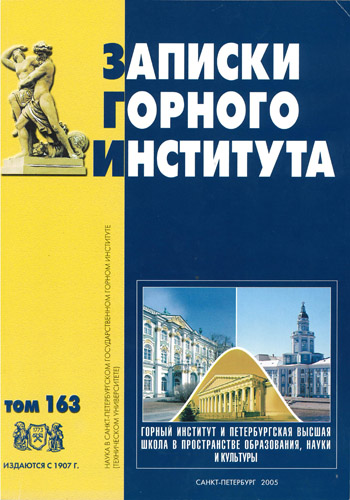
Vol 163
Pages:
249-251
Download volume:
RUS
Article

Mythology in modern cinema: visual art in the course "Cultural Studies"

Authors:
I. V. Trofimova
About authors
  • G.V. Plekhanov Saint Petersburg Mining Institute
Date submitted:
2004-10-01
Date accepted:
2004-11-05
Date published:
2005-07-06

Abstract

The article is devoted to the issue of the concept of mythological plot in the animated movie "The Lion King" produced by Walt Disney Studios. Its components are miraculous birth, acquisition of magical fragility, heroic deeds and trials, short-term death and rebirth, wisdom of rule and mystical death of the hero. The plot of The Lion King develops on the symbolic model of cosmogonic myth and heroic initiation. The hierarchy associated with the roles of the central characters and narrative persons is based on Egyptian myth (Osiris). The climax of the movie is the duel between the protagonist and his antagonist. In this conflict, the model of eschatological myth can be traced. The narrative artistic space of the movie and the heroics represent different aspects of mythological thinking.

Область исследования:
(Archived) Humans, society, culture: actual socio-humanitarian problems
Funding:

None

Go to volume 163

Similar articles

Elements of speech technique in the process of teaching rhetoric
2005 T. M. Sinelnikova
Environmental and political potential of higher school as an institution of civil society
2005 L. N. Kharchenko
Prominent characters of Russian history of the late 18th - early 19th centuries in their involvement in the stages of development of the Mining Institute
2005 L. M. Shalygin, Zh. A. Polyarnaya, E. A. Brylevskaya
Traditions of teaching mining engineering disciplines at the St. Petersburg Mining Institute
2005 O. V. Kovalev, S. P. Mozer, I. Yu. Tkhorikov
History of the Mining Institute in term papers of the Department of Informatics and Computer Technologies
2005 O. G. Bykova
The necessity to take into account fundamental trends in the development of nature in natural science research
2005 I. A. Odesskii