Submit an Article
Become a reviewer
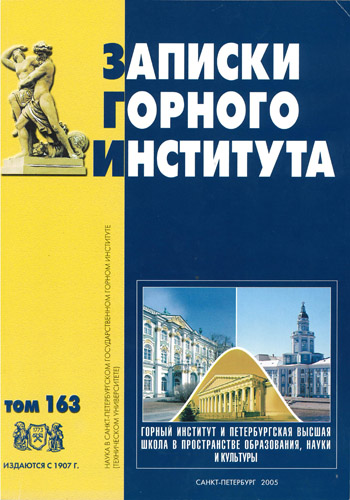
Vol 163
Pages:
242-245
Download volume:
RUS
Article

Corruption as a socio-political phenomenon and object of research

Authors:
S. I. Sorokin
About authors
  • G.V. Plekhanov Saint Petersburg Mining Institute
Date submitted:
2004-10-26
Date accepted:
2004-11-22
Date published:
2005-07-06

Abstract

This article considers theoretical and methodological problems of corruption in public administration, presents the formulation of the object and subject of the study. It reveals socio-economic, political, ideological and moral prerequisites for the sustainability of corruption as a socio-political phenomenon, areas and forms of its manifestation. Special attention is paid to the study of this phenomenon in the context of modernization of modern Russian society. The possibilities of modeling corruption based on the generalization of international experience of anti-corruption activities are also considered. The article substantiates the main directions of activities of government bodies and public institutions aimed at reducing and eradicating the causes that give rise to corruption.

Область исследования:
(Archived) Humans, society, culture: actual socio-humanitarian problems
Go to volume 163

Similar articles

Traditions of teaching mining engineering disciplines at the St. Petersburg Mining Institute
2005 O. V. Kovalev, S. P. Mozer, I. Yu. Tkhorikov
The influence of mechanics on the development of mining engineering up to the beginning of the twentieth century
2005 A. P. Gospodarikov, S. A. Tolstunov
Innovations in the process of teaching foreign languages to the undergraduate students at the St. Petersburg Mining Institute
2005 K. V. Fedorov
Development of the education system in Russia under Nicholas I: the choice of evaluation criteria
2005 F. L. Sevastyanov
Foreign experience of gender symmetry formation: expediency of its application in Russian conditions
2005 N. A. Ivanova
Management of mining education in the system of higher and central institutions of the Russian Empire (19th - early 20th centuries)
2005 A. R. Sokolov