Submit an Article
Become a reviewer
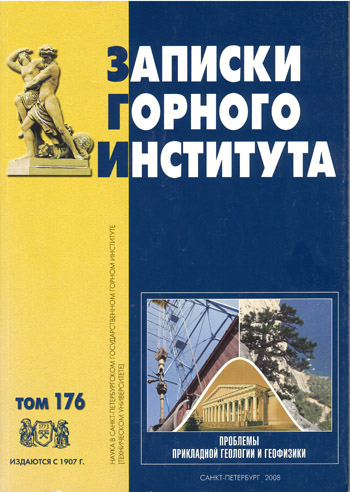
Vol 176
Pages:
213-216
Download volume:
RUS
Article

Influence of buried bogs on the formation of engineering-geological and geo-ecological conditions in the underground space of St. Petersburg

Authors:
E. G. Zakharova
About authors
  • G.V. Plekhanov Saint Petersburg Mining Institute
Date submitted:
2007-09-15
Date accepted:
2007-11-28
Date published:
2008-10-06

Abstract

In work the influence of the buried bogs on negative transformations spreading grounds and occurrence of some exogenous processes, including biochemical phenomena. Such processes in many respects define safety of development and use of underground space of city. The special attention is inverted on marsh microflora, its number and variety of physiological groups, and also gross weight bacterial of weight. Under the certain hydrodynamical conditions marsh microbiota migrate downwards on a particles of rock. The sharp increase bacterial of weight in grounds under the buried bogs is marked in comparison with not waterlogged by sites. Is emphasized, that especially negative influence is rendered by the buried bogs on sandy adjourment, which frequently are transformed in are floating earth.

Область исследования:
(Archived) Problems of hydrogeological and engineering-geological conditions assessment in the development of territories
Funding:

None

Go to volume 176

Similar articles

Leningrad oil shale deposit: hydrogeological, environmental and economic problems
2008 N. S. Petrov
Engineering-geological conditions of construction of the new Polunochnoe-Obskaya railroad line
2008 V. S. Frolov, Ya. N. Volzhonok, V. I. Voitsekhovskaya
Results of magnetotelluric studies on the Batolit profile (south of the Siberian platform)
2008 A. M. Pashevin, V. A. Tupitsin, V. V. Gomulskiy
About some conversion works of Central Research Institute Gidropribor, connected with environmentalism, oil search, lifting of products from the sea bottom
2008 L. M. Wolfson
Frequency-time analysis of time series of magnetotelluric sounding
2008 M. M. Pechenkin
Use of isotope data (δ2H, δ18O, 234U/238U) in the study of permafrost degradation processes as a result of long-term climate variations
2008 I. V. Tokarev