

Hydrochemical evolution of groundwater as a result of 10-year development of apatite-nepheline ore deposit in the southeastern part of the Khibiny alkaline massif
- 1 — Ph.D., Dr.Sci. Chief Researcher Institute of North Industrial Ecology Problems, KSC of the RAS ▪ Orcid
- 2 — Ph.D. Chief Specialist Geological Institute, KSC of the RAS ▪ Orcid ▪ Elibrary ▪ Scopus
- 3 — Ph.D. Head of Research Sector Institute of North Industrial Ecology Problems, KSC of the RAS ▪ Orcid ▪ Elibrary ▪ Scopus ▪ ResearcherID
Abstract
Groundwater is one of the key natural resources, so maintaining its high quality is one of the main problems in mining. The aim of the article is to study the dynamics of the level and hydrochemical regime of groundwater in the influence zone of apatite-nepheline ore mining in the southeastern part of the Khibiny alkaline mountain massif. Over the 10-year history of the Oleniy Ruchey Mining and Processing Plant of North-West Phosphorous Company JSC, significant changes in the chemical composition of the studied groundwater of the aquifers of the Upper Quaternary Ostashkov fluvioglacial horizon f,lgQIIIos and Paleozoic intrusions yPz have occurred. The content of the main ions in groundwater increased from 2 to 20 times, nitrates up to 50 times (exceeding the maximum permissible concentrations of 45 mg/l), and NO–3 entered the category of the main ions of groundwater. The source of the main ions and the increase in mineralization in groundwater is the weathering and leaching of the main ore minerals – apatite and its varieties, nepheline, sulphide minerals, as well as the use of explosives containing nitrogen compounds. As a result of this hydrochemical evolution of groundwater, the ratio of the main ions has changed – natural water of hydrocarbonate-sodium composition with neutral pH values has now become hydrocarbonate-calcium, NO–3 are in the second place among anions, and Na+– among cations. In the hydrodynamic regime of groundwater at the Oleniy Ruchey deposit, spring and autumn maximums of groundwater levels are clearly expressed. During a decrease in the level, contaminated more mineralized mine waters are drawn to the wells, and during an increase in the level, low-mineralized waters of atmospheric precipitation infiltrate into the aquifers. A decrease in average annual groundwater levels has been established, which is associated with an increase in the quarry depth and the water intake of groundwater for water supply to the mine.
The work was carried out within the framework of the research topics of the KSC of the RAS N FMEZ-2024-0014 and FMEZ-2024-0004.
Introduction
Groundwater is one of the main sources of water supply for the population and industrial enterprises and plays a vital role in economic development in many countries of the world [1-3]. Due to its better quality compared to surface water, it is preferable to use groundwater for water supply [4]. In the Murmansk Region, groundwater is used for water supply of the city of Kirovsk and the village of Koashva, as well as mining enterprises Apatit JSC, North-West Phosphorous Company JSC (NWPC), etc. However, urbanized areas and sites of industrial enterprises, including mining and energy enterprises are characterized by significant negative transformation of groundwater [5].
Mining operations are always associated with an impact on the adjacent landscape and the geoecological state of the links of the environment. During the extraction of minerals, billions of tons of rock are extracted to the surface every year, which leads to changes in geochemical processes, increased migration of chemical elements in the spheres of the Earth and deterioration of the quality of natural waters, including underground waters [6-8]. Polluted runoff from mining enterprises is a serious problem for water quality faced by countries developing mineral deposits [9-11]. Hydrochemical evolution of the quality of groundwater occurs due to the violation of the natural hydrodynamic and hydrochemical regime in adjacent landscapes [12, 13]. Hydrochemical evolution here refers to irreversible hydrochemical transformations and qualitative changes in the chemical composition of groundwater in the zone of influence of a mining enterprise under the conditions of deposit development as a result of pollutants entering the process of technological cycle of extraction and enrichment of ore minerals, as well as dissolution and leaching of enclosing rocks. As a result of these transformations, the ratio of the main ions changes and the mineralization of groundwater increases [14]. Contaminated mine waters are a source of highly toxic compounds entering surface waters of the territories adjacent to mining enterprises [15]. Pollutants accumulated in tailings ponds of mining and processing plants can have a negative impact on public health, including children’s health [16, 17]. A topical issue of the impact of the mining industry on the quality of surface and groundwater is their pollution with nitrogen compounds, especially nitrates [18] and sulfates, due to the oxidation of sulfide minerals that make up the ore and minor minerals of the developed mineral deposits (coal, copper-nickel, lead-zinc, etc.) [12, 19, 20]. For characterizing the hydrochemical evolution, the analysis of hydrochemical and hydrodynamic parameters of groundwater is especially effective [21-23]. Hydrochemical methods, such as the ratios of major ions and isotopes of elements, mathematical statistics, and hydrochemical modeling are widely used to analyze the hydrochemical evolution [24-26]. The hydrochemical evolution of groundwater is dominated by such processes as leaching and dissolution of minerals, ion exchange, and changes in the parameters of the groundwater flow [27, 28].
In the mining industry, to ensure the safety of mining operations, constant drainage of mine workings is necessary, which inevitably leads to a decrease in the groundwater level [29, 30]. The level regime on the territory of mining enterprises affects the hydrochemical composition of waters [31, 32]. To identify the mechanism of hydrochemical evolution associated with mining activities, it is necessary to conduct joint hydrochemical and hydrodynamic analyses, as in previously conducted studies [18, 21, 28].
The aim of the work is to study the dynamics of the level and hydrochemical regimes, as well as the hydrochemical evolution of groundwater in the apatite-nepheline ore mining zone in the southeastern part of the Khibiny alkaline massif.
Methods
Changes in the chemical composition and level of groundwater were studied in the period 2009-2023 in observation wells 43 and 59, located in the quarry and near the processing plant tailings pond, and equipped with a water-bearing complex of Paleozoic intrusions yPz, as well as observation wells 51 and 6e, located near the tailings pond and at the mining and processing plant water intake, and equipped with a water-bearing Upper Quaternary Ostashkov fluvioglacial horizon f,lgQIIIos (Fig.1). Groundwater samples in the wells were collected by employees of JSC NWPC 4 times a year: at the end of winter, during flood, in summer low water, and at the beginning of the winter period. Water levels in the wells were measured once a week. The pH values, ion content HCO-3, SO2-4, Cl–, NO-3, NO-2, F–, Na+, K+, Ca2+, Mg2+, NH+4 and trace elements Al, Fe, Mn, Sr, Cu, Zn, Ni, Co, Cr, Cd, Pb were determined in groundwater samples. Chemical analysis of groundwater samples was performed in the laboratory of JSC Kola Geological Information and Laboratory Center (Apatity), which has an accreditation certificate.
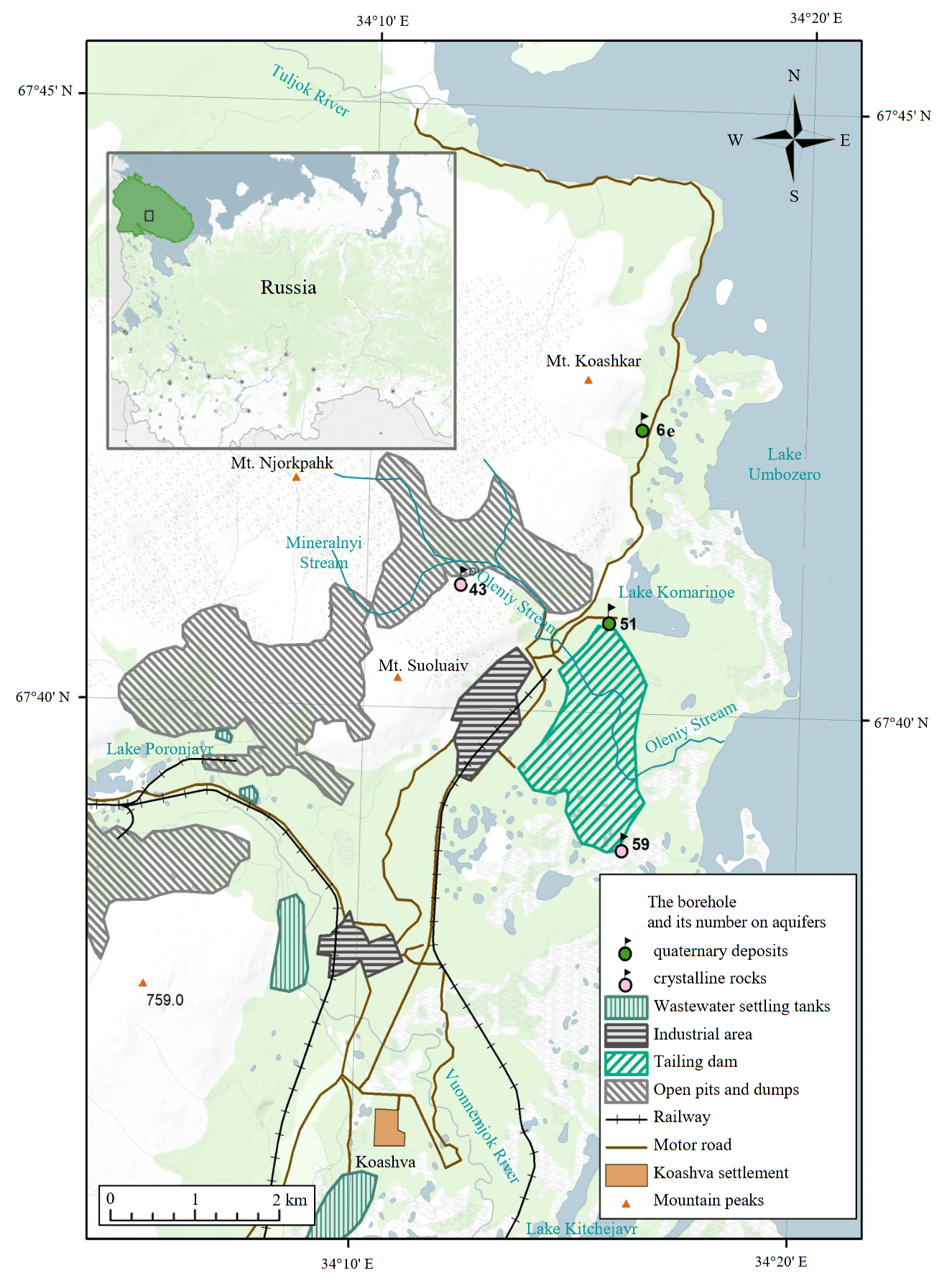
Fig.1. Map-scheme of the location of the industrial site of the Oleniy Ruchey MPP and hydrogeological wells
Discussion of results
JSC NWPC has been developing the Oleniy Ruchey apatite-nepheline ore deposit since 2012, when the construction of the first stage of the mining and processing plant of the same name was completed, commissioning work of the processing plant was carried out, and the first tons of apatite concentrate were obtained. The water intake of the Oleniy Ruchey Mining and Processing Plant (MPP) (Fig.1, well 6e) is located 3 km north-east of the mine and 1 km west of the coast of Lake Umbozero and has been supplying water to the administrative and household complex since 2012. The amount of water extracted from the Upper Quaternary Ostashkov fluvioglacial aquifer f,lgQIIIos by two production wells at the water intake over the past 10 years is in the range of 220-260 thousand m3/year (600-700 m3/day). The history of development and the results of studies of surface waters in the zone of influence of the Oleniy Ruchey deposit development are described in the authors’ publications [33-35].
The geological structure of the Oleniy Ruchey deposit includes intrusive rocks of the Khibiny alkaline massif and the ultrametamorphosed and intrusive Archean formations that host them, which are covered by Quaternary deposits in most of the study area. The Khibiny alkaline massif is a complex multiphase Paleozoic intrusion of the central type. The contacts of the intrusive massif with the host rocks are vertical or steeply dipping (65-80°) toward the center of the massif. The massif has autonomous tectonics, not associated with the structure of the host rocks, and in plan is characterized by a ring-shaped arrangement of the constituent intrusive complexes.
The predominant rocks in the Khibiny massif are nepheline syenites, represented by khibinites and foyaites. Massive and trachytoid khibinites, related to two different phases of intrusion, make up the outer zones of the Khibiny, while arfvedsonite trachytoid and aegirine-arfvedsonite trachytoid foyaites are confined to the inner parts. In addition, the structure of the massif includes aegirine and gneissic rischorrites, which occupy the second place in distribution. On the northeastern flank of the Oleniy Ruchey deposit, khibinites are traced near the contact with foyaites. Gneissic rischorrites and khibinites are spatially confined to the Eveslogchorr tectonic shear zone, which passes through the eastern flank of the deposit. The rocks of the ijolite-urtite series, with which all known apatite-nepheline deposits of the Khibiny, including the Oleniy Ruchey deposit, are spatially and genetically related, are represented by feldspar, pegmatoid, massive urtites; trachytoid ijolites and feldspar trachytoid; trachytoid malignites.
Quaternary deposits within the study area, represented by glacial (gIIIos) and fluvioglacial (f,lgQIIIos) deposits of the Ostashkov period, are very widely developed in the form of a discontinuous cover with a thickness of 5 to 50 m, and are absent only on steep mountain slopes. The thickness of the Quaternary deposits increases noticeably in areas of hilly-moraine, terminal-moraine and fluvioglacial relief.
In hydrogeological terms, the Oleniy Ruchey deposit is characterized by a well-dissected erosional relief, clearly defined watershed boundaries, unstable seasonally changing water level and flow regime, relatively low thickness of Quaternary deposits and the presence of uneven tectonic fracturing of crystalline rocks.
The section of Quaternary and Paleozoic aquifers is represented by permeable sand, gravel-pebble glacial and fluvioglacial deposits with thin layers of silty sandy loam and fractured rocks of nepheline syenites. The close connection of the groundwater regime with atmospheric precipitation defines these waters as waters of local origin, whose feeding and distribution areas coincide. The lakes closest to the deposit, located at different levels, serve as the bases for surface and underground runoff. The discharge of aquifers of Quaternary deposits and fractured crystalline rocks is carried out by the valleys of the Mineralny and Oleniy streams into the lakeside lowland of Umbozero (Fig.2). The lowest water level in Umbozero reaches 150 m. The closest lake to the Oleniy Ruchey deposit, Komarinoe, has a water level of 174 m. The amplitude of fluctuations in the level during the year for the groundwater aquifer of Quaternary deposits is 15-30 m; for the horizon of crystalline rocks – 20-30 m (in stream valleys), 40-90 m (on mountain slopes).
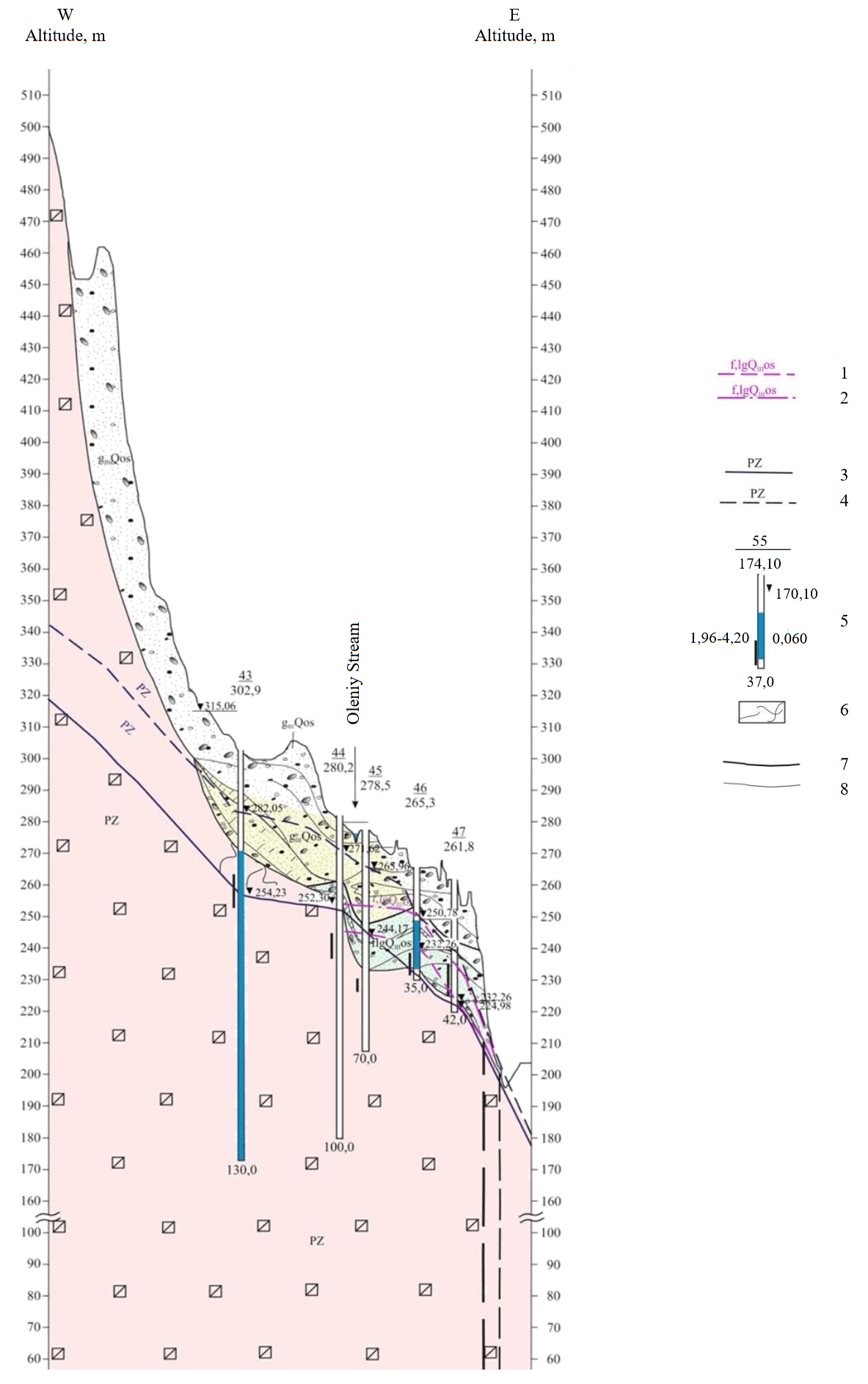
Fig.2. Hydrogeological section of Quaternary (Ostashkov glacial (gIIIos) and fluvioglacial (f,lgQIIIos) groundwater horizons) and Paleozoic (aquifer complex of Paleozoic intrusions уPz) rocks from west to east
1, 2 – groundwater level lines of the ground (Ostashkov) horizon (1 – at low water (April 2018), 2 – at flood (June 2018); 3, 4 – groundwater level lines of the aquifer complex of crystalline rocks (3 – at low water (April 2018), 4 – at flood (June 2018); 5 – hydrogeological (observation) well (top: numerator – well number, denominator – absolute wellhead elevation, m; bottom – well depth, m; near the arrow – absolute water level elevation, m; black line on the left – filter installation interval); 6 – fracturing; 7 – boundary between aquifer units; 8 – boundary between lithological differences
The aquiferous Upper Quaternary Ostashkov water-glacial horizon of groundwater f,lgQIIIos and the aquiferous complex of Paleozoic intrusions yPz have a hydraulic connection with each other, with atmospheric precipitation, and surface waters. Water levels in wells change in accordance with the seasons of the year and precipitation. During snowmelt and rain, the groundwater level rises sharply, and during low-water periods in winter and summer without precipitation, it decreases (Fig.3). In wells 43 and 6e, over more than ten years of extraction of apatite-nepheline raw materials, a reliable decrease in average annual water levels by 10 and 2 m, respectively, was established, associated with an increase in the quarry depth and a decrease in the level during pumping water from the quarry, as well as during the intake of groundwater from the complex of Paleozoic intrusions and the Ostashkov horizon. Wells 43 and 6e show the most distinct seasonal fluctuations and the greatest amplitude of groundwater levels – up to 40 and 7 m, respectively (Fig.3). In wells 51 and 59, seasonal fluctuations are not so noticeable (especially in well 59), since they are located next to the tailings storage facility of the processing plant, where the level of pulp and wastewater is not subject to significant changes and its fluctuations do not depend on the water regime of surface waters.
The underground waters of the Khibiny alkaline massif, according to their chemical composition, belong to low-mineralized waters with neutral pH values, hydrocarbonate class, and sodium group [36].
Well 43 was drilled in 2008, and water samples were taken before the start of field development, therefore the results of chemical analysis of the sample taken in 2009 are taken as background (Table 1). In well 43, located next to the quarry and equipped with an aquifer complex of Paleozoic intrusions Pz, before the start of field development (November 2009), the water was characterized by a sodium hydrocarbonate composition (Fig.4, a), low mineralization (47 mg/l) and a pH value on the border between slightly acidic and neutral (6.51). Currently, the mineralization of the water has increased fourfold to 186 mg/l, the pH value to 8.89, which corresponds to the alkaline value. When extracting apatite-nepheline ores, the mine uses nitrogen-containing explosives, which, when they enter underground water, dissolve and increase the content of nitrogen-containing ions, mainly NO-3. The nitrate content in the water of well 43 increased more than 50 times, exceeding the maximum permissible concentrations (MPC) of 45 mg/l according to the Russian Sanitary Rules and Norms (RSRN) 1.2.3685-21 “Hygienic standards and requirements for ensuring the safety and (or) harmlessness of environmental factors for humans” (Table 1). An increase in content NO-3 since the beginning of the field development has been recorded in the water of all wells (Fig.5). The graphs of the dynamics of the content in all studied wells are approximated by a power dependence. Before the deposit development, the main source of nitrogen group compounds were surface waters with their small (tenths of mg/l) contents [33]. After the mine began operating, soluble forms of nitrogen compounds (mainly NO-3) from explosives began to enter groundwater in large quantities, increasing. This is due to the growth in the extraction of apatite-nepheline ore and the increase in the mass of explosives used.
Nitrate ion, like other mineral nitrogen compounds, is a highly soluble ion in water and is extremely difficult to remove from mine wastewater using sorption filters, unlike, for example, heavy metal compounds. Relatively young, but extremely promising biological treatment methods are used to remove nitrate ion from mine water [37]. Their essence lies in the use of microorganisms to purify water from unwanted components. The pollutants (nitrate ion) that need to be removed act as a nutrient substrate for the vital activity of microorganisms. The Constructed wetlands (CW) technology has been developed, which consists of constructing pools of arbitrary shape with a filter bed made of various substrates located inside, such as sand and crushed stone. Aquatic plants are planted in the filter bed, in the root part of which microorganisms are located. Plants can cover the entire pond or only a certain part. Polluted water, as it passes through thickets, root layers, sand and crushed stone, is purified to standard levels without any negative impact on the environment.
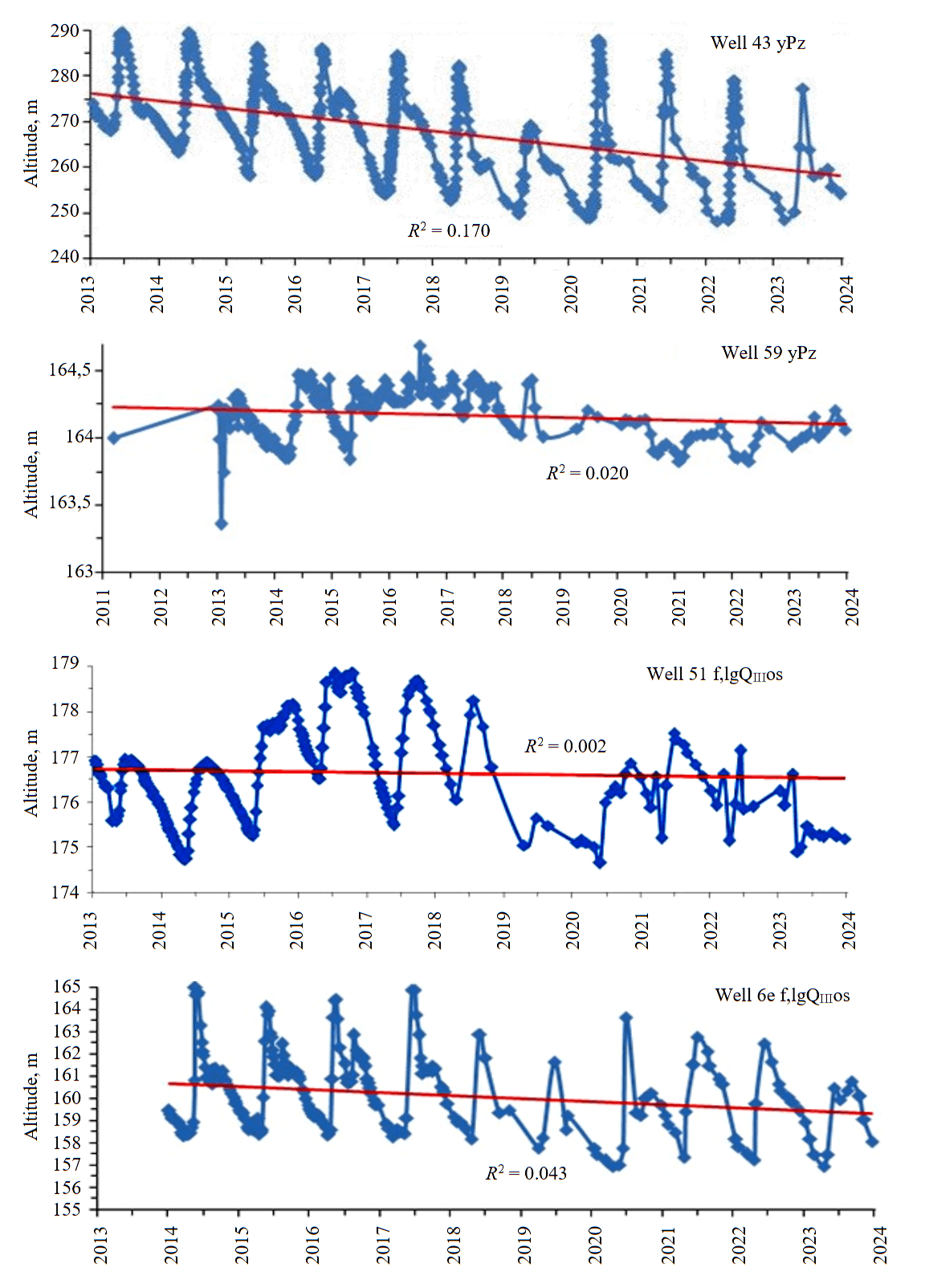
Fig.3. Dynamics of water levels in hydrogeological wells during the period of operation of the Oleniy Ruchey MPP
Table 1
Values of water level, pH, content of main ions and mineralization M in water of well 43 of Oleniy Ruchey MPP for the period 2009-2020
|
Date |
Level, m |
pH |
Ca2+ |
Mg2+ |
Na+ |
K+ |
HCO-3 |
SO2-4 |
Cl– |
NO-3 |
М, mg/l |
|
13.11.09 |
272.37 |
6.51 |
2.6 |
0.24 |
8.6 |
2.9 |
26.8 |
4.9 |
0.18 |
1.1 |
47 |
|
28.03.13 |
268.90 |
9.10 |
4.0 |
0.48 |
9.4 |
3.1 |
22.6 |
4.9 |
0.18 |
12.2 |
57 |
|
09.04.14 |
263.72 |
8.90 |
5.8 |
0.24 |
12.2 |
3.8 |
23.8 |
4.5 |
1.33 |
18.3 |
70 |
|
17.06.14 |
289.38 |
8.84 |
14.0 |
0.73 |
16.9 |
5.7 |
21.4 |
29.8 |
1.77 |
35.6 |
126 |
|
27.08.14 |
278.77 |
9.07 |
12.0 |
1.45 |
15.3 |
5.6 |
20.7 |
31.4 |
1.90 |
27.5 |
116 |
|
23.10.14 |
275.33 |
6.22 |
12.2 |
0.48 |
16.0 |
7.1 |
24.4 |
31.9 |
2.16 |
23.4 |
118 |
|
02.04.15 |
261.97 |
8.05 |
4.6 |
0.36 |
7.5 |
2.2 |
25.6 |
2.8 |
2.13 |
6.9 |
52 |
|
16.06.15 |
285.93 |
5.50 |
18.4 |
0.97 |
20.7 |
7.5 |
22.0 |
38.1 |
2.67 |
52.4 |
163 |
|
20.08.15 |
276.64 |
9.15 |
21.2 |
0.97 |
21.5 |
9.9 |
17.1 |
53.7 |
2.54 |
46.2 |
173 |
|
29.10.15 |
272.69 |
8.69 |
10.8 |
0.36 |
14.2 |
4.8 |
21.4 |
25.0 |
1.79 |
19.6 |
98 |
|
07.04.16 |
258.64 |
6.40 |
9.8 |
0.48 |
14.4 |
4.7 |
37.2 |
5.2 |
2.40 |
28.7 |
103 |
|
06.07.16 |
274.69 |
8.61 |
12.2 |
0.61 |
16.6 |
5.5 |
21.4 |
24.1 |
2.25 |
35.1 |
118 |
|
01.09.16 |
276.38 |
5.75 |
19.2 |
0.48 |
18.8 |
6.6 |
21.4 |
36.9 |
2.72 |
46.5 |
152 |
|
26.10.16 |
273.36 |
9.12 |
11.8 |
0.48 |
16.3 |
5.7 |
23.2 |
26.3 |
2.00 |
28.4 |
114 |
|
22.06.17 |
278.75 |
9.05 |
12.2 |
0.85 |
16.2 |
5.5 |
37.8 |
9.2 |
2.41 |
33.7 |
118 |
|
01.11.17 |
269.92 |
8.94 |
7.2 |
0.36 |
12.0 |
4.2 |
36.6 |
6.3 |
2.06 |
10.8 |
80 |
|
13.09.18 |
259.53 |
8.91 |
19.2 |
1.94 |
19.6 |
7.0 |
64.7 |
10.7 |
2.97 |
43.3 |
169 |
|
01.11.18 |
261.02 |
8.74 |
18.2 |
1.57 |
21.0 |
7.4 |
68.3 |
9.4 |
2.57 |
39.0 |
167 |
|
27.06.19 |
268.21 |
8.83 |
17.2 |
0.12 |
18.7 |
6.4 |
47.6 |
6.6 |
2.90 |
49.6 |
149 |
|
29.08.19 |
261.48 |
8.89 |
22.6 |
0.97 |
22.4 |
7.5 |
63.4 |
10.3 |
3.10 |
55.6 |
186 |
|
25.06.20 |
281.27 |
8.81 |
9.8 |
0.48 |
15.9 |
5.0 |
42.7 |
10.6 |
2.00 |
20.7 |
107 |
|
20.08.20 |
262.24 |
8.72 |
13.0 |
1.45 |
17.1 |
5.3 |
40.9 |
11.9 |
2.20 |
37.9 |
130 |
The source of Ca2+ entering groundwater is the weathering of the main ore mineral, fluorapatite (Ca5(PO4)3F), and the source of alkali metal ions Na+ and K+ is another ore mineral, nepheline (Na, K)AlSiO4. Other varieties of apatite are found in apatite-nepheline rocks – carbonate-fluorapatite Ca5[PO4,CO3(OH)]3F, chlorapatite (Ca5(PO4)3Cl), and strontioapatite Sr3Ca2[PO4]3F [35]. Sulfide minerals contained in the ore bodies of the Oleniy Ruchey deposit, such as sphalerite ZnS, chalcopyrite CuFeS2, chalcocite Cu2S, and many others, are the source of SO2-4 ions entering surface and groundwater [35]. Therefore, the main ions enter the groundwater in the process of weathering and leaching of these minerals in increased concentrations. The content of Ca2+ in the water of well 43 increased by an order of magnitude, Cl– – by almost 20 times, alkaline earth Sr – by 5 times, other main ions(HCO-3, SO2-4 Na+ and K+) – by more than 2 times. As a result of this hydrochemical evolution, the water became hydrocarbonate-calcium in terms of predominant ions, with NO-3 in second place among anions and Na+ among cations (see Fig.4, b).
In the Khibiny small mountain lakes located at altitude of more than 400 m, the ratio of equivalent concentrations of the main anions [HCO-3]/[SO2-4] is on average 2.4; [HCO-3]/[Cl–] – 6.3; the sum of ions of alkaline earth and alkali metals [Ca2+ + Mg2+]/[Na+ + K+] – 0.13[33]. In groundwater samples collected from well 43 before the development of the Oleniy Ruchey deposit, the ratios between the main ions were higher – 4.3; 89 and 0.33, respectively, which is due to the longer contact time with rocks, as well as the greater influence of leaching and dissolution processes on the formation of the chemical composition of groundwater compared to surface water. At present, the ratios between the main ions in the water of well 43 are 4.9; 12; 1.04, which also indicates a large participation of leaching, dissolution of apatite varieties and impurities in the formation of the chemical composition of groundwater after the start of development of the deposit.
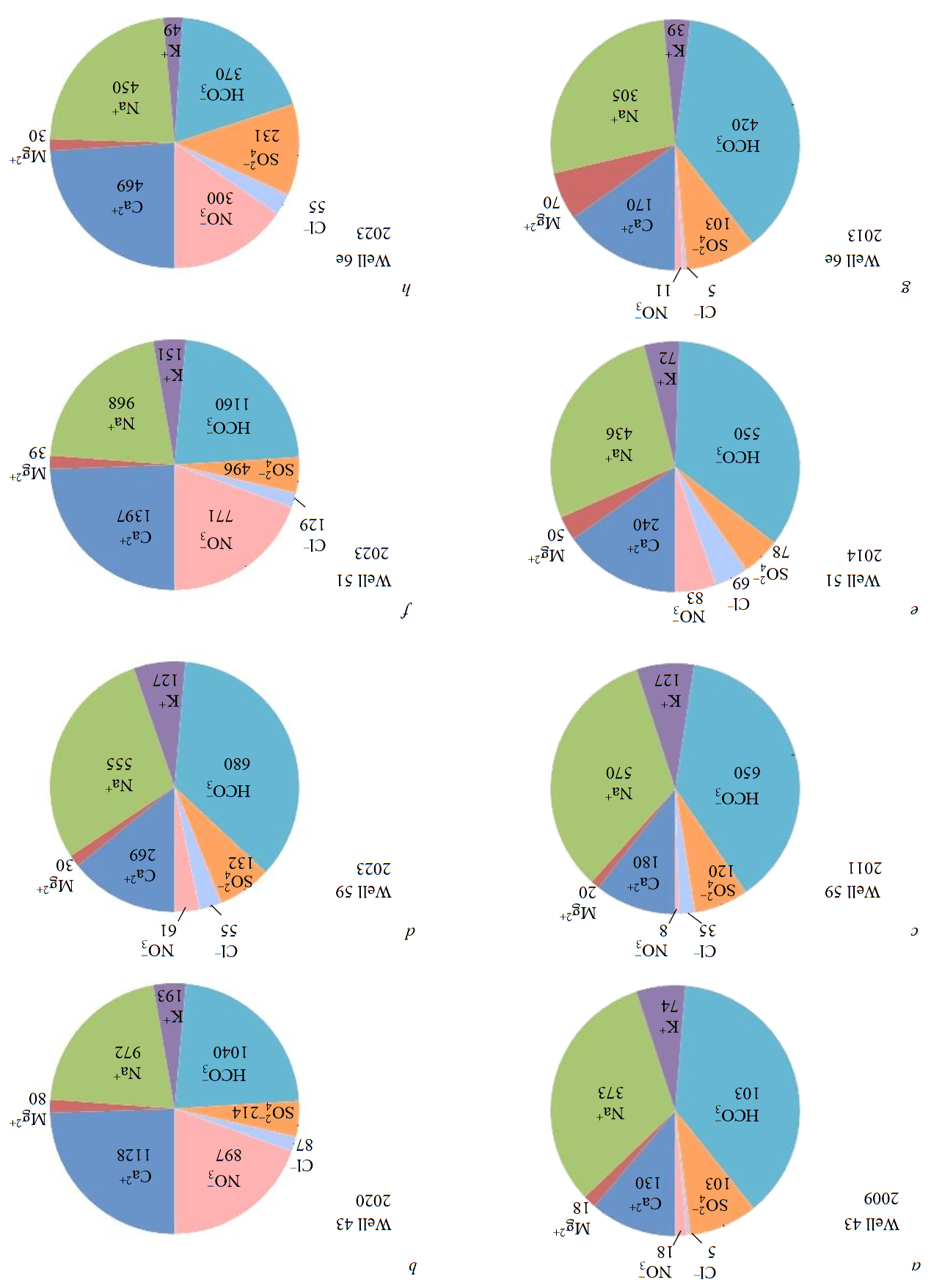
Fig.4. Dynamics of equivalent concentrations (μeq/l) of the main ions in groundwater during the period of operation of the Oleniy Ruchey MPP
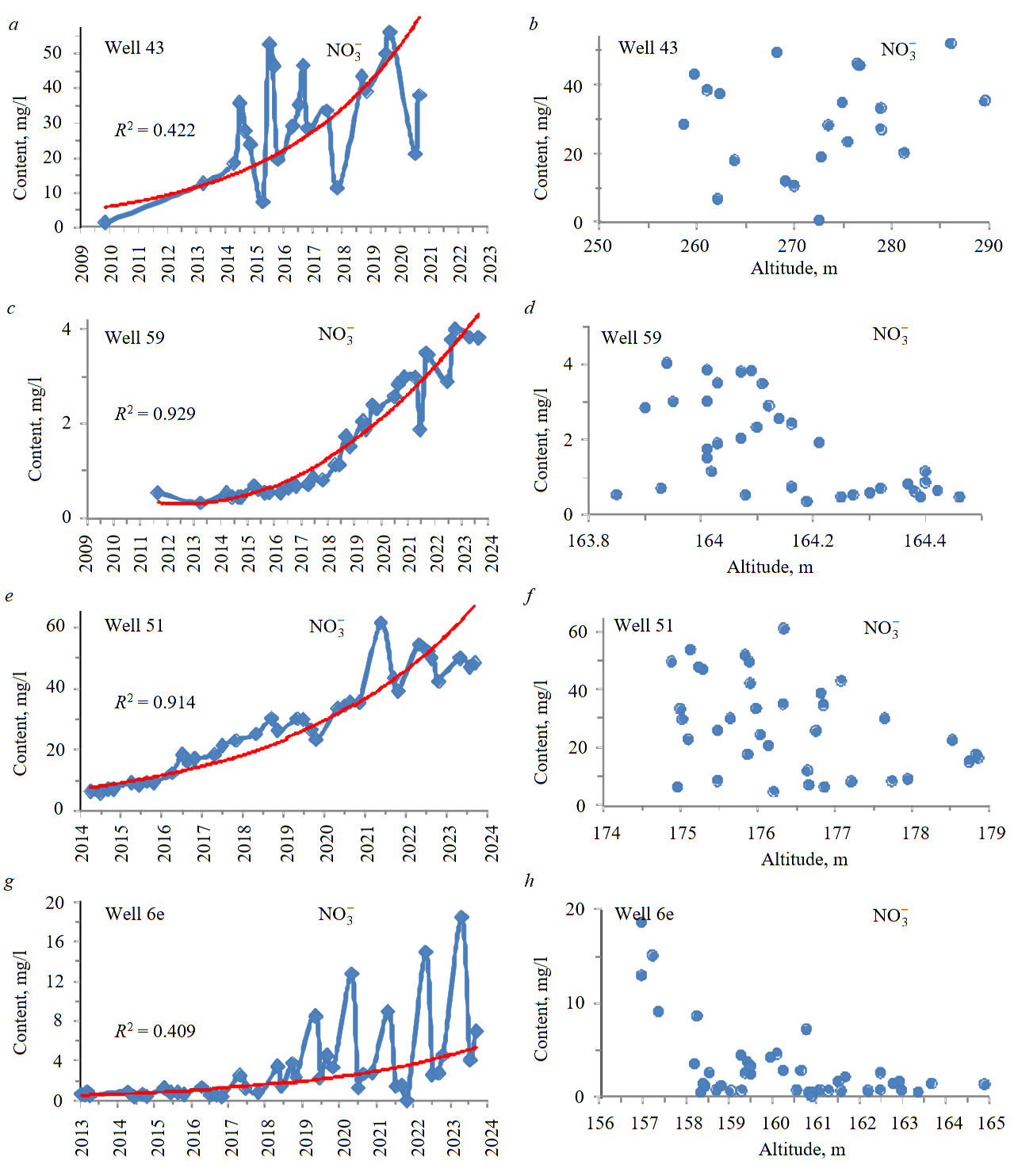
Fig.5. Dynamics (a, c, e, g) and dependence of nitrate content on water level (b, d, f, h) in the studied well
The wastewater from the underground mine and quarry of the Oleniy Ruchey MPP has a sodium hydrocarbonate composition, with a large proportion of nitrate ion, which is in second place among the anions [35]. The ratios of equivalent concentrations of the main ions [HCO-3]/[SO42–] are 1.9 and 1.4; [HCO-3]/[Cl–] – 8.7 and 9.4; [Ca2+ + Mg2+]/[Na+ + K+] – 0.19 and 0.60 in the waters of the underground mine and quarry, respectively. This already indicates a greater participation of the processes of leaching and dissolution of nepheline and sulphides in the formation of wastewater from a mining enterprise.
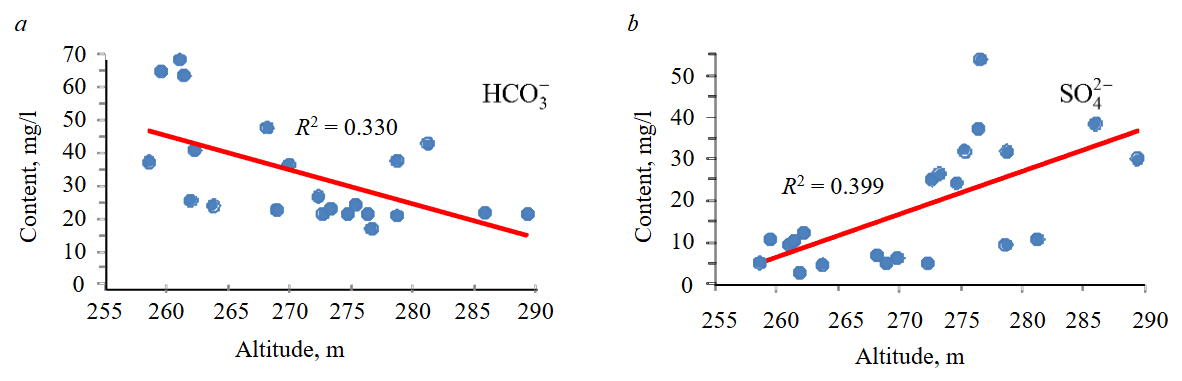
Fig.6. Dependence of the content of hydrocarbonates and sulfates on the water level in well 43
The underground apatite-nepheline Rasvumchorr mine of Apatit JSC, located in the southwestern part of the Khibiny mountain range and operating since the mid-1950s, discharges mineralized wastewater (mineralization of 840 mg/l approaches brackish water) into the Yuksporryok River of the Bolshoy Vudjavr Lake catchment area and is characterized by a sulfate-sodium composition with a high content of and K+ ions, which are in second place among anions and cations [35]. The ratios of equivalent concentrations of the main ions [HCO-3]/[SO42–] , [HCO-3]/[Cl–] and [Ca2+ + Mg2+]/[Na+ + K+] in the wastewater of this mine, which has been operating for almost 70 years, differ and are equal to 0.57; 16.6 and 0.09, which indicates an even greater participation of the processes of leaching and dissolution of nepheline and sulfides in the formation of the chemical composition of the wastewater.
Reliable multidirectional dependencies of the change in the concentrations of the main ions on the position of the water level in well 43 were recorded for the anions [HCO-3] and SO42– (Fig.6). When the water level in the aquifer increases due to the infiltration of melted snow and precipitation containing insignificant concentrations of hydrocarbonates, their content decreases due to dilution. Another mechanism may be involved in the formation of sulfate content. When the groundwater level in the aeration zone decreases, oxidation of sulfide minerals to sulfates occurs in the presence of film water, atmospheric oxygen and the active participation of sulfur bacteria, and when the level increases, the resulting sulfates increase their content in groundwater.
Of the two wells located near the tailings storage facility of the processing plant, the greatest changes in chemical composition occurred in well 51, equipped with an Ostashkov water-glacial groundwater horizon f,lgQIIIos (Table 2). This well shows more noticeable seasonal variations than well 59 (see Fig.3). Over the years of operation of the processing plant, water mineralization has increased more than 3 times (from 63 to 203 mg/l), the nitrate content – by an order of magnitude (up to 48 mg/l in 2023, which is higher than the MPC for drinking water of 45 mg/l, according to RSRN 1.2.3685-21), Ca2+ – by 6 times, Sr – by an order of magnitude, and the water, as in well 43 became hydrocarbonate-calcium in composition with a significant proportion of nitrates and sodium. This well is located near Lake Komarinoe, which currently serves as a settling tank for wastewater from the Oleniy Ruchey MPP. The water in the lake has undergone significant qualitative changes during the operation of the Oleniy Ruchey MPP and is close in content of the main ions to the water from well 51, which indicates their probable hydraulic connection [35]. The water of Lake Komarinoe is hydrocarbonate-sodium, but Ca2+is almost exactly close to Na+, and [SO42–] – HCO-3 to . The ratio of the main ions in well 51 and Lake Komarinoe is slightly different, which indicates different mechanisms for the formation of the chemical composition in surface and groundwater. The ratio [Ca2+ + Mg2+]/[Na+ + K+] in the water of well 51 and Lake Komarinoe is 1.28 and 0.83, and [HCO-3]/[SO42–] – 2.3 and 1.2, which indicates a greater enrichment of the minerals included in the rocks of the developed deposit with the products of dissolution and leaching in the water of well 51 than in Lake Komarinoe. The higher mineralization of the water in well 51 compared to Lake Komaniroe (153 mg/l) also confirms this assumption. Less mineralized waters of surface runoff with an insignificant period of contact with rocks also enter Lake Komarinoe.
Table 2
Average (in the numerator), minimum and maximum (in the denominator) values of pH, content of main ions and mineralization M in the water of the studied wells of the Oleniy Ruchey MPP for the entire observation period 2009-2023
|
Well number |
pH |
Ca2+ |
Mg2+ |
Na+ |
K+ |
HCO-3 |
SO42– |
Cl– |
NO3– |
М, mg/l |
|
43 |
8.22/ 5.5-9.15 |
12.6/ 2.6-22.6 |
0.73/ 0.12-1.9 |
16.0/ 7.5-22.4 |
5.6/ 2.2-9.9 |
33.2/ 17.1-68 |
17.9/ 2.8-54 |
2.1/ 0.2-3.1 |
30.6/ 1.1-56 |
119/ 47-186 |
|
59 |
8.41/ 6.26-9.2 |
4.5/ 2.6-8.6 |
0.65/ 0.12-1.9 |
12.6/ 10.7-14 |
5.2 / 4.6-6.0 |
43.3/ 37.2-48 |
5.2/ 3.3-9.5 |
1.9/ 0.2-5.2 |
1.7/ 0.3-4.0 |
75/ 68-84 |
|
51 |
7.59/ 6.07-8.5 |
18.3/ 4.6-43.2 |
1.48/ 0.24-3.6 |
19.3/ 9.4-37.8 |
5.4/ 2.7-10.2 |
61.9/ 31.7-112 |
21.0/ 2.9-82.1 |
3.9/ 1.8-6.7 |
27.6/ 5.2-61.1 |
159/ 61-304 |
|
6э |
7.97/ 5.65-8.6 |
4.3/ 2.8-9.4 |
0.59/ 0.12-1.7 |
7.8/ 6.4-11.7 |
1.6/ 1.1-2.7 |
25.6/ 18.3-31 |
4.1/ 0.5-11.1 |
1.5/ 0.2-3.0 |
3.2/ 0.1-18.6 |
49/ 39-76 |
In well 59, equipped with a water-bearing complex of Paleozoic intrusions yPz, there were no noticeable changes in the chemical composition of the water, the water retains the natural ratio of the main ions, it remains hydrocarbonate-sodium, only the nitrate content increased (from 0.5 to 3.8 mg/l). Mineralization, and along with it the content of the main ions, increased slightly – from 69 to 77 mg/l. The lower hydraulic connection of the Paleozoic aquifer complex with the waters of the tailings storage facility, compared to the water-glacial horizon of groundwater in well 51, is probably associated with the lower fracturing of the bedrock in the southern part of the tailings storage facility. This is also confirmed by a similar ratio of the main ions in the water of well 43, sampled before the start of development in 2009, and the water of well 59, collected in 2023: [Ca2+ + Mg2+]/[Na+ + K+] – 0.33 and 0.44; [HCO-3]/[SO42–] – 4.3 и 5.2 respectively (see Fig.4, a, d), as well as minor fluctuations in the water level in well 59 compared to well 51 (see Fig.3).
The water in the observation well at underground water intake 6e, which originally had a sodium hydrocarbonate composition, has been transformed over the years of operation of the Oleniy Ruchey MPP into a hydrocarbonate-calcium with a significant share of NO-3 and Na+, which are slightly lower in content than the prevailing ions (370 and 300 μeq/l – HCO-3 and NO-3; 470 and 450 μeq/l – Ca2+ and Na+). The chloride content has increased by an order of magnitude – from 0.18 to 2.0 mg/l, the sulfate content – more than 2 times, and the mineralization of the water – almost 2 times (from 44 to 76 mg/l). Before the start of operation of the Oleniy Ruchey MPP, the chemical composition of the water in well 6e was similar to the composition of the nearby Tepliy Stream (with a mineralization of 40 mg/l), which does not receive direct wastewater from the plant [35]. The ratio of equivalent concentrations [HCO-3]/[SO42–] in well 6e and Tepliy Stream was equal to 4.1 and 5.3, and [Ca2+ + Mg2+]/[Na+ + K+] – 0.70 and 0.45. At present, after a decade of development of the Oleniy Ruchey deposit, the share of SO42– and Ca2+ has increased and the ratios of [HCO-3]/[SO42–] and [Ca2+ + Mg2+]/[Na+ + K+] have become 1.6 and 1.0. This indicates an increase in the share of contaminated mine waters in the recharge of groundwater of the Ostashkov fluvioglacial horizon. A tendency towards a decrease in the content of the main ions ( HCO-3, SO42–, Ca2+ and Na+) was established in well 6e, as well as mineralization, Sr and NO-3 with an increase in the water level (Fig.7 and 5, h). The values of the correlation coefficient between the hydrochemical indicators (except Sr) and the water level in well 6e are greater than the critical value (r > 0.39 at the significance level a = 0.01 and the samples n = 42) and are in the range from –0.51 to –0.69. During a decrease in the level, contaminated mine waters are drawn to the well, and during the period of snow melting and rainfall, dilution with low-mineralized waters occurs due to the infiltration of atmospheric precipitation into the first aquifer from the surface. The increase in the role of mine waters in the formation of the chemical composition of groundwater in well 6e is also evidenced by the increase in the share of nitrates – the ratio between [HCO-3]/[NO-3] over ten years of field development has decreased from 37 to 1.2 (see Fig.4, g, h).
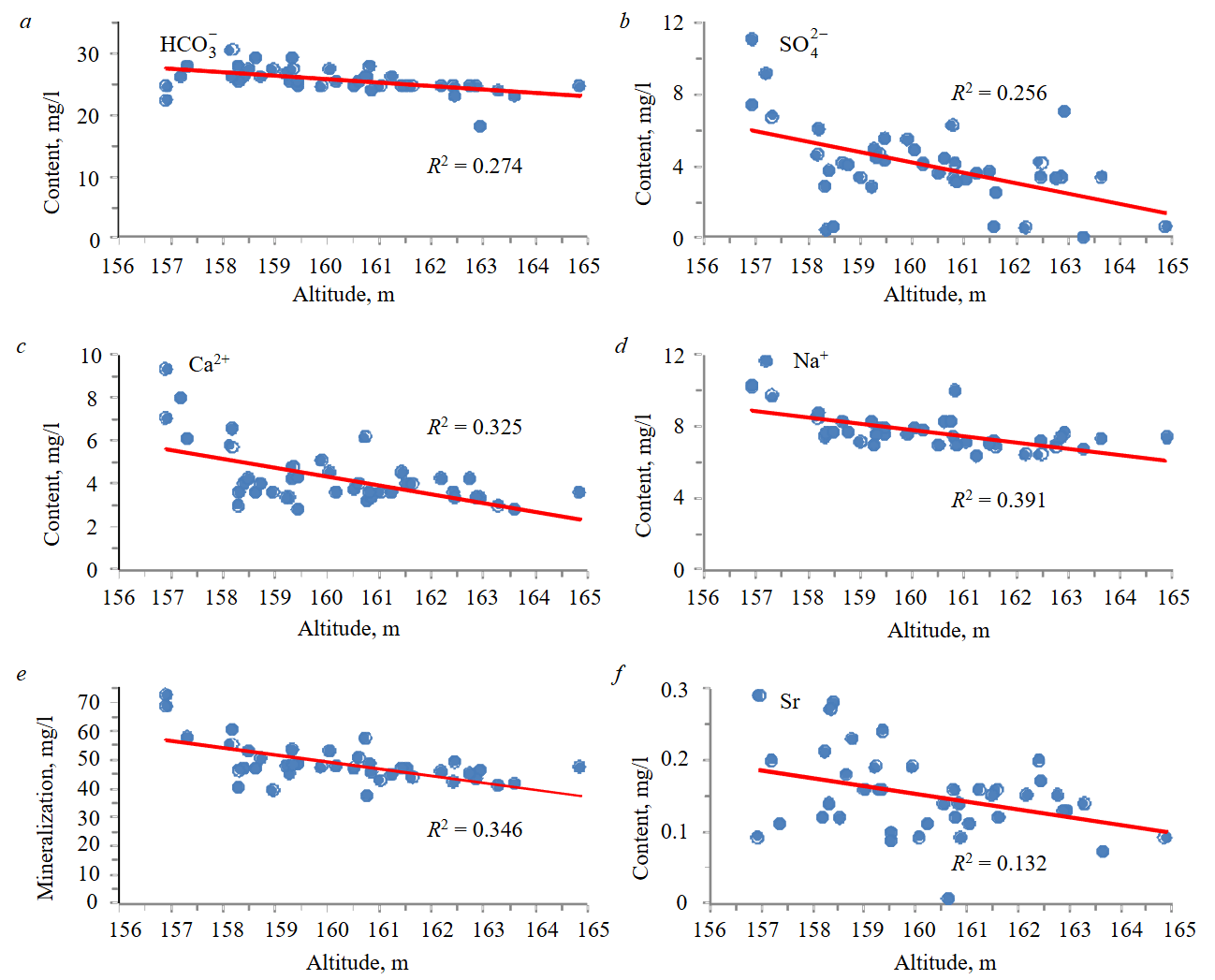
Fig.7. Dependence of content of main ions (a, b, c, d), mineralization (e) and strontium (f) on the water level in well 6e
The studied trace elements did not show significant seasonal or annual changes and dependencies of content on the groundwater level, and the concentrations of many were below the detection limits of analytical devices, so they are not discussed in this manuscript.
Conclusion
As a result of the studies of the chemical composition and levels of groundwater in observation wells in the territory of the apatite-nepheline Oleniy Ruchey mine, the hydrochemical evolution of groundwater was established. At present, after a decade of development of the Oleniy Ruchey deposit, the quality of groundwater and the ratio of the main ions have changed, and mineralization has increased. The composition of the waters is mainly controlled by weathering and leaching of the main ore minerals: apatite and its varieties, nepheline, sulphide minerals, as well as the use of explosives containing nitrogen compounds, and changes in groundwater levels as a result of increasing the depth of mine workings, pumping groundwater for mine water supply. The increase in hydrochemical parameters (mineralization, pH value and content of main ions) as a result of ten-year studies of groundwater is noted directly within the mining operations at the Oleniy Ruchey mine and at a distance of the first kilometers (quarry, tailings storage facility, water intake). Further studies of the chemical and level regime of groundwater are necessary both in the zone of influence of the mining enterprise at the observation wells, for which the results are presented in this article, and at a distance from it, to establish the boundaries of the distribution and dynamics of the hydrochemical evolution of groundwater. For example, at the Koashvinsky water intake, located near the village of Koashva (7 km from the Oleniy Ruchey Mining and Processing Plant and 5 km from the Vostochny mine of Apatit JSC) and exploiting the Ostashkov water-glacial groundwater horizon f,lgQIIIos since 1978. The underground waters of the Koashvinsky water intake currently meet the quality standards for domestic and drinking water supply with a mineralization range from 30 to 190 mg/l depending on the season. Nepheline syenites of the Khibiny alkaline massif are characterized by a large number of minerals with a high content of trace elements (Rb, Sr, other alkaline and alkaline earth metals, F, Mo, other heavy metals in the composition of sulfides, rare earth elements, Ti, Nb, Ta). Therefore, for detailed studies of the hydrochemical evolution of groundwater in the zone of influence of apatite-nepheline mining enterprises, it is necessary to determine the content of trace elements using precise analytical devices, such as mass spectrometers with inductively coupled plasma, which are in the instrumental analytical base of the Federal Research Center of the KSC of the RAS.
References
- Pashkevich N.V., Golovina E.I. Topical issues of the management of extraction of underground waters on the territory of the Russian Federation. Journal of Mining Institute. 2014. Vol. 210, p. 99-107 (in Russian).
- Bierkens M.F.P., Wada Y. Non-renewable groundwater use and groundwater depletion: a review. Environmental Research Letter. 2019. Vol. 14. N 6. N 063002. DOI: 10.1088/1748-9326/ab1a5f
- Tarasenko I., Kholodov A., Zinkov A., Chekryzhov I. Chemical composition of groundwater in abandoned coal mines: Evidence of hydrogeochemical evolution. Applied Geochemistry. 2022. Vol. 137. N 105210. DOI: 10.1016/j.apgeochem.2022.105210
- Golovina E.I., Grebneva А.V. Management of groundwater resources in transboundary territories (on the example of the Russian Federation and the Republic of Estonia). Journal of Mining Institute. 2021. Vol. 252, p. 788-800. DOI: 10.31897/PMI.2021.6.2
- Erzova V.A., Rumynin V.G., Nikulenkov A.M. et al. Forecast of radionuclide migration in groundwater of the zone affected by construction drainage at the Leningrad NPP-2. Journal of Mining Institute. 2023. Vol. 260, p. 194-211. DOI: 10.31897/PMI.2022.27
- Semyachkov A.I., Pochechun V.A., Semyachkov K.A. Hydrogeoecological conditions of technogenic ground water in waste disposal sites. Journal of Mining Institute. 2023. Vol. 260, p. 168-179. DOI: 10.31897/PMI.2023.24
- Pashkevich M.A., Alekseenko A.V., Nureev R.R. Environmental damage from the storage of sulfide ore tailings. Journal of Mining Institute. 2023. Vol. 260, p. 155-167. DOI: 10.31897/PMI.2023.32
- Plyusnin A.M., Voronina Yu.S., Ukraintsev A.V. et al. Atmospheric Pollution from a Storage of Tungsten–Molybdenum Ore Mining and Processing Wastes. Geochemistry International. 2023. Vol. 61. N 12, p. 1293-1307. DOI: 10.1134/S0016702923110095
- Legostaeva Ya.B., Gololobova A.G., Popov V.F., Makarov V.S. Geochemical properties and transformation of the microelement composition of soils during the development of primary diamond deposits in Yakutia. Journal of Mining Institute. 2023. Vol. 260, p. 212-225. DOI: 10.31897/PMI.2023.35
- Chunlu Jiang, Ming Li, Chang Li et al. Combining hydrochemistry and 13C analysis to reveal the sources and contributions of dissolved inorganic carbon in the groundwater of coal mining areas, in East China. Environmental Geochemistry and Health. 2023. Vol. 45. Iss. 10, p. 7065-7080. DOI: 10.1007/s10653-023-01726-1
- Fengxia Liu, Guangcai Wang, Xiangyang Liang et al. Temporal variation of groundwater hydrochemistry and water stable isotopes under long-term mining disturbance in a coal mine, northwest China. Applied Geochemistry. 2023. Vol. 158. N 105802. DOI: 10.1016/j.apgeochem.2023.105802
- Di Chen, Qiyan Feng, Min Gong. Contamination Characteristics and Source Identification of Groundwater in Xishan Coal Mining Area of Taiyuan Based on Hydrochemistry and Sulfur–Oxygen Isotopes. Water. 2023. Vol. 15. Iss. 6. N 1169. DOI: 10.3390/w15061169
- Shen Qu, Guangcai Wang, Zheming Shi et al. Impact of Mining Activities on Groundwater Level, Hydrochemistry, and Aquifer Parameters in a Coalfield’s Overburden Aquifer. Mine Water and the Environment. 2022. Vol. 41. Iss. 3, p. 640-653. DOI: 10.1007/s10230-022-00875-6
- Yanan Li, Qianqian Wang, Chunlu Jiang et al. Spatial characteristics and controlling indicators of major hydrochemical ions in rivers within coal-grain composite areas via multivariate statistical and isotope analysis methods. Ecological Indicators. 2024. Vol. 158. N 111352. DOI: 10.1016/j.ecolind.2023.111352
- Shaji E., Sarath K.V., Santosh M. et al. Fluoride contamination in groundwater: A global review of the status, processes, challenges, and remedial measures. Geoscience Frontiers. 2024. Vol. 15. Iss. 2. N 101734. DOI: 10.1016/j.gsf.2023.101734
- Reutova N.V., Reutova T.V., Dreeva F.R., Shevchenko A.A. Long-term impact of the Tyrnyauz tungsten–molybdenum mining and processing factory waste on environmental pollution and children's population. Environmental Geochemistry and Health. 2022. Vol. 44. Iss. 12, p. 4557-4568. DOI: 10.1007/s10653-022-01221-z
- Qifa Sun, Guohui Lang, Tao Liu et al. Health risk analysis of nitrate in groundwater in Shanxi Province, China: A case study of the Datong Basin. Journal of Water and Health. 2024. Vol. 22. Iss. 4, p. 701-716. DOI: 10.2166/wh.2024.320
- Obasi P.N., Okolo C.M., Edene E.N. Hydrochemistry and structural control of groundwater flow in the mining areas of Abakaliki, southeast Nigeria. Sustainable Water Resources Management. 2023. Vol. 9. Iss. 1. N 32. DOI: 10.1007/s40899-022-00798-8
- Mykrä H., Aroviita J., Tolonen K. et al. Detecting mining impacts on freshwater ecosystems using replicated sampling before and after the impact. Environmental Monitoring and Assessment. 2024. Vol. 196. Iss. 7. N 635. DOI: 10.1007/s10661-024-12812-x
- Chen Li, Herong Gui, Yan Guo et al. Study on the Influence of Mining Activities on the Quality of Deep Karst Groundwater Based on Multivariate Statistical Analysis and Hydrochemical Analysis. International Journal of Environmental Research and Public Health. 2022. Vol. 19. Iss. 24. N 17042. DOI: 10.3390/ijerph192417042
- Yong Xiao, Jingli Shao, Frape S.K. et al. Groundwater origin, flow regime and geochemical evolution in arid endorheic watersheds: a case study from the Qaidam Basin, northwestern China. Hydrology and Earth System Sciences. 2018. Vol. 22. Iss. 8, p. 4381-4400. DOI: 10.5194/hess-22-4381-2018
- Liang Guo, Guangcai Wang, Yizhi Sheng et al. Groundwater microbial communities and their connection to hydrochemical environment in Golmud, Northwest China. Science of the Total Environment. 2019. Vol. 695. N 133848. DOI: 10.1016/j.scitotenv.2019.133848
- Nuan Yang, Pengpeng Zhou, Guangcai Wang et al. Hydrochemical and isotopic interpretation of interactions between surface water and groundwater in Delingha, Northwest China. Journal of Hydrology. 2021. Vol. 598. N 126243. DOI: 10.1016/j.jhydrol.2021.126243
- Haitao Zhang, Guangquan Xu, Hongbin Zhan et al. Identification of hydrogeochemical processes and transport paths of a multi-aquifer system in closed mining regions. Journal of Hydrology. 2020. Vol. 589. N 125344. DOI: 10.1016/j.jhydrol.2020.125344
- Xiaobo Zhang, Xue Li, Xubo Gao. Hydrochemistry and coal mining activity induced karst water quality degradation in the Niangziguan karst water system, China. Environmental Science and Pollution Research. 2016. Vol. 23. Iss. 7, p. 6286-6299. DOI: 10.1007/s11356-015-5838-z
- Shen Qu, Guangcai Wang, Zheming Shi et al. Using stable isotopes (δD, δ18O, δ34S and 87Sr/86Sr) to identify sources of water in abandoned mines in the Fengfeng coal mining district, northern China. Hydrogeology Journal. 2018. Vol. 26. Iss. 5, p. 1443-1453. DOI: 10.1007/s10040-018-1803-5
- Yan Guo, Jiuchuan Wei, Herong Gui et al. Evaluation of changes in groundwater quality caused by a water inrush event in Taoyuan coal mine, China. Environmental Earth Sciences. 2020. Vol. 79. Iss. 24. N 528. DOI: 10.1007/s12665-020-09243-5
- Shen Qu, Fu Liao, Guangcai Wang et al. Hydrochemical evolution of groundwater in overburden aquifers under the influence of mining activity: combining hydrochemistry and groundwater dynamics analysis. Environmental Earth Sciences. 2023. Vol. 82. Iss. 6. N 135. DOI: 10.1007/s12665-023-10817-2
- David K., Timms W.A., Barbour S.L., Mitra R. Tracking changes in the specific storage of overburden rock during longwall coal mining. Journal of Hydrology. 2017. Vol. 553,p. 304-320. DOI: 10.1016/j.jhydrol.2017.07.057
- Post D.A., Crosbie R.S., Viney N.R. et al. Impacts of coal mining and coal seam gas extraction on groundwater and surface water. Journal of Hydrology. 2020. Vol. 591. N 125281. DOI: 10.1016/j.jhydrol.2020.125281
- Pu Liu, Hoth N., Drebenstedt C. et al. Hydro-geochemical paths of multi-layer groundwater system in coal mining regions – Using multivariate statistics and geochemical modeling approaches. Science of The Total Environment. 2017. Vol. 601-602, p. 1-14. DOI: 10.1016/j.scitotenv.2017.05.146
- Ge Zhu, Xiong Wu, Jianping Ge et al. Influence of mining activities on groundwater hydrochemistry and heavy metal migration using a self-organizing map (SOM). Journal of Cleaner Production. 2020. Vol. 257. N 120664. DOI: 10.1016/j.jclepro.2020.120664
- Dauvalter V.A., Denisov D.B., Dinu M.I. et al. Biogeochemical Features of Functioning of Small Arctic Lakes of the Khibiny Mountains under Climatic and Environmental Changes. Geochemistry International. 2022. Vol. 60. N 6, p. 560-574. DOI: 10.1134/S0016702922050044
- Dauvalter V.A., Sandimirov S.S., Denisov D.B. et al. Ecological and Geochemical Assessment of Snow Cover in the Area Affected by the Apatite–Nepheline Production of the Kola Peninsula. Geochemistry International. 2023. Vol. 61. N 12, p. 1308-1322. DOI: 10.1134/S0016702923120029
- Dauvalter V.A., Sandimirov S.S., Denisov D.B. et al. Geochemical Surface–Water Modification of the Khibiny Mountains since the Launching of a New Mining Enterprise. Geochemistry International. 2024. Vol. 62. N 5, p. 529-546. DOI: 10.1134/S0016702924700204
- Dauvalter V.A., Dauvalter M.V. Ecological state of groundwaters of the Vostochny mine of JSC “Apatit”. Proceedings of the Fersman Scientific Session GI KSC RAS. 2019. N 16, p. 131-135 (in Russian). DOI: 10.31241/FNS.2019.16.027
- Mo Wang, Dong Qing Zhang, Jian Wen Dong, Soon Keat Tan. Constructed wetlands for wastewater treatment in cold climate – A review. Journal of Environmental Sciences. 2017. Vol. 57, p. 293-311.DOI: 10.1016/j.jes.2016.12.019